

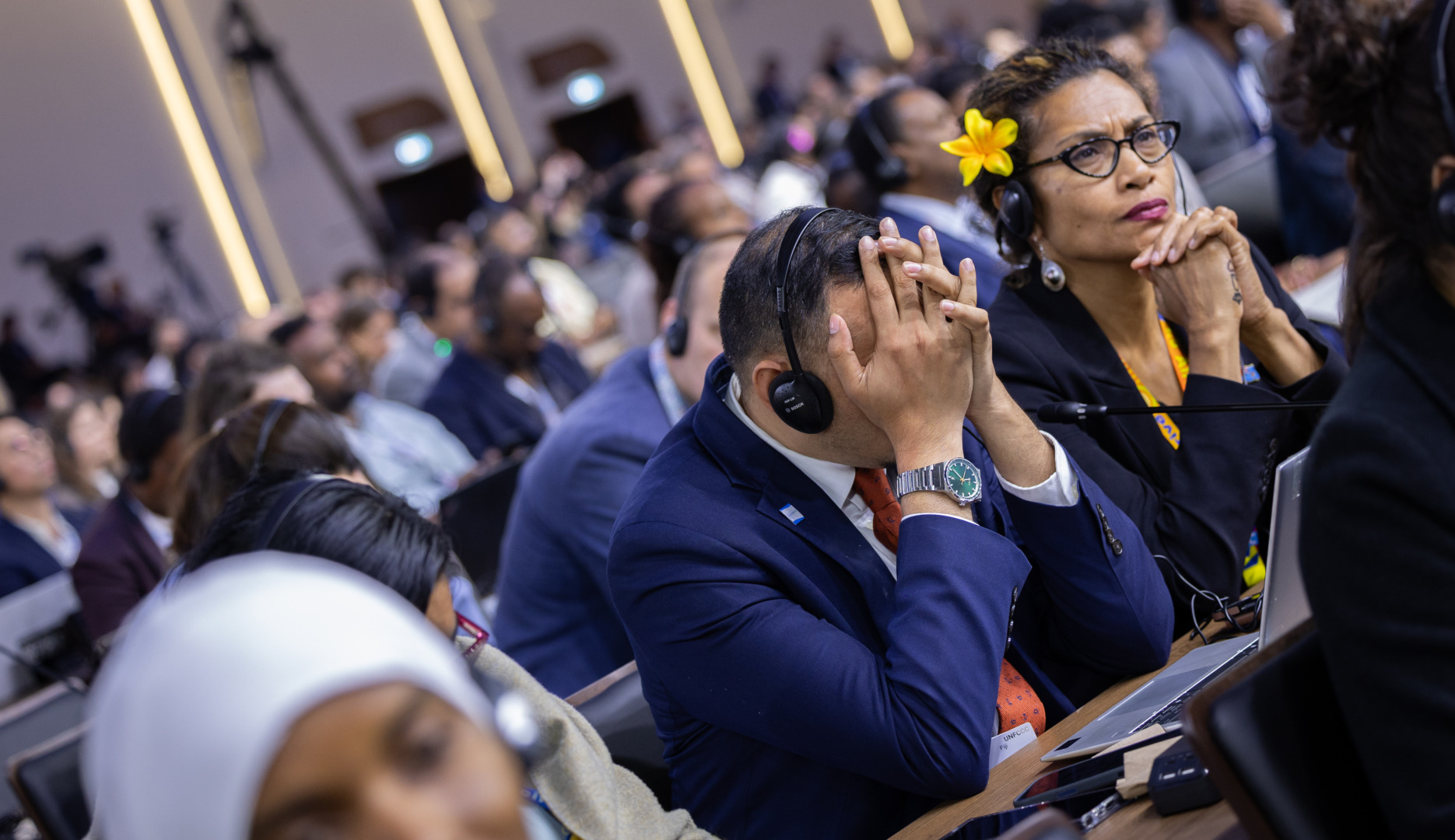
The 31st United Nations Climate Change Conference (COP31) ended on November 22 with no deal. It was the first collapse of its kind since 2009.
Despite around 130 countries demanding that the “Antalya pact” endorses the transition away from fossil fuels, the world failed to agree on such a deal. A few oil states said no, and under the summit’s rules — which say decisions can only be made by consensus — no deal was made, and the blockers won.
Who was against including fossil fuels in the ‘Antalya pact’?
Saudi Arabia led the charge, and it did not act alone. At the closing session, its negotiator, Mohammad Ayoub, spoke for the 22 member states of the League of Arab States, defending a text that left fossil fuels out. Negotiators say Riyadh refused any mention of them all through the second week.
Russia stood with them. Its delegate said he could not agree “to any formulation on fossil fuels”. Other big fossil fuel users, including China and India, did not formally object to the fossil-free text.
Because the summit’s decisions need consensus, that resistance was enough. The Turkish and Australian leaders of the talks dropped the language to try to save a deal. The final draft, known as the Antalya Pact, contained no mention of fossil fuels.”
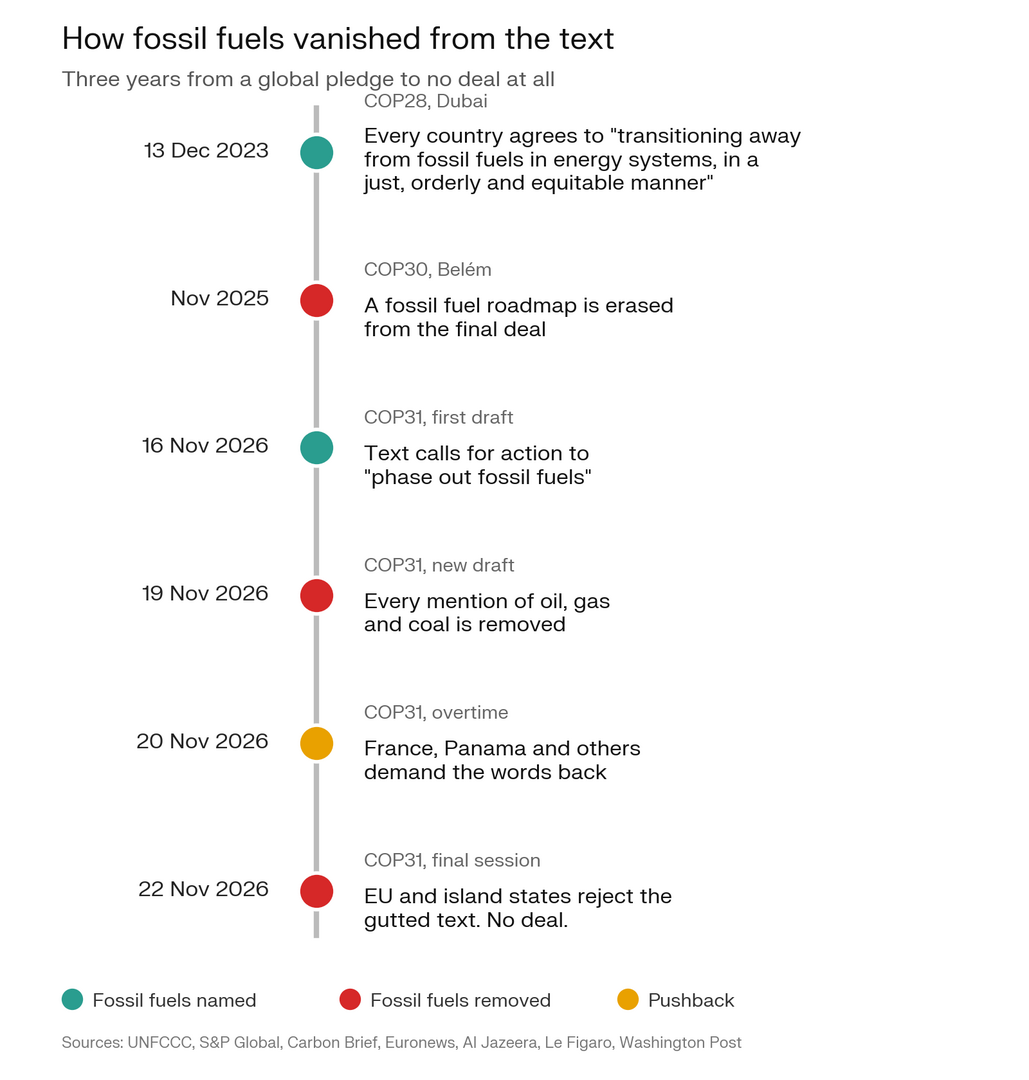
These countries didn’t just block the tougher wording in the first draft — they blocked any mention of fossil fuels, including the line every country signed up to at COP28 back in 2023: “transitioning away from fossil fuels in energy systems, in a just, orderly and equitable manner.” Riyadh has been trying to walk that back ever since. In Antalya, it erased its own signature.
The oil states say cutting supply means higher prices and shortages. But oil dependence is what is hurting people now. Prices have climbed almost 60% since the war on Iran choked the Strait of Hormuz. Meanwhile, more than 90% of new utility-scale renewable power projects were cheaper than the lowest-cost fossil alternative last year.
When the European Union (EU) and island nations were handed the gutted text, they refused it. “We will not endorse a decision that does not even mention fossil fuels, the key driver of climate change, and not accept a COP that greenwashes fossil fuels,” said Darragh O’Brien, Ireland’s climate, energy and environment minister, speaking on behalf of the EU.
The removal of fossil fuels from the ‘Antalya pact’
On November 19, the day fossil fuels were removed from the draft, Donald Trump, Xi Jinping and Vladimir Putin met in Shenzhen, China. Their joint statement promised to “increase the production and supply of refined petroleum products for the benefit of all nations.”
The United States was not even represented in Antalya, which negotiators say strengthened Riyadh’s hand. China had a delegation at the climate talks while its president signed the oil pledge. Ghana’s lead negotiator said backtracking on past promises would be “hypocrisy in the whole process.”
“The industry was in the building too. Campaigners found 103 companies and trade groups with records of obstructing climate policy, 60 of them from the fossil fuel industry. ExxonMobil alone sent 13 people. Thirty-one delegates from these groups sat on countries’ official negotiating teams.
This is nothing new. At COP30 in Brazil last year, the same campaigners counted more than 1,600 fossil fuel lobbyists—one in every 25 people at the summit. They outnumbered every national delegation except the host’s.”
They did not leave empty-handed. The draft that left out fossil fuels added a new carbon capture goal, a key ask of fossil fuel companies. Five oil majors earned $56.3 billion in three months this year. As UN chief António Guterres put it: “The dinosaurs did not have a lobby. But fossil fuels do.”
| Who | What they did |
| Saudi Arabia, speaking for the 22-member Arab League | Refused any mention of fossil fuels and defended the text that left them out |
| Russia | Rejected “any formulation on fossil fuel” |
| United States | Stayed away from the talks and signed the Shenzhen oil pledge |
| China | Signed the Shenzhen oil pledge and did not object to the fossil-free text |
| Fossil fuel industry | 60 companies and trade groups inside the summit, and a carbon capture goal added to the draft |
The COP rule that lets this happen
There is no vote at COPs; a deal passes only if no country objects. A rule allowing a vote as a last resort was drafted in 1995 and never adopted. Al Gore said it is “literally insane” that one oil state can block what the whole world wants. His fix is to let a large majority decide.
A version already exists. Mexico and Papua New Guinea proposed it in 2011: try for full agreement first, and if that fails, hold a vote that passes with three-quarters support. Under that rule, 130 votes in favor would beat as many as 43 objections. The proposal has sat on the shelf ever since.
The catch, as Australia’s climate minister Chris Bowen put it, is that “you also need consensus to change consensus.” The states that hold the veto must agree to give it up. The UN Security Council has the same flaw, with five countries holding a permanent veto.
So what now?
The next climate summit, COP32, will take place in Ethiopia in November 2027. If the rule stays, the result will likely be the same, because the same few states will hold the same veto. The majority has a tool it has never used. The climate treaty lets countries change it by a three-quarters vote when agreement fails. The 130 countries that signed a letter in Antalya could force that vote. Until they do, every summit will continue to risk belonging to whoever is most willing to say no.
Editor’s Note: The opinions expressed here by the authors are their own, not those of Impakter.com