

Today’s ESG Updates
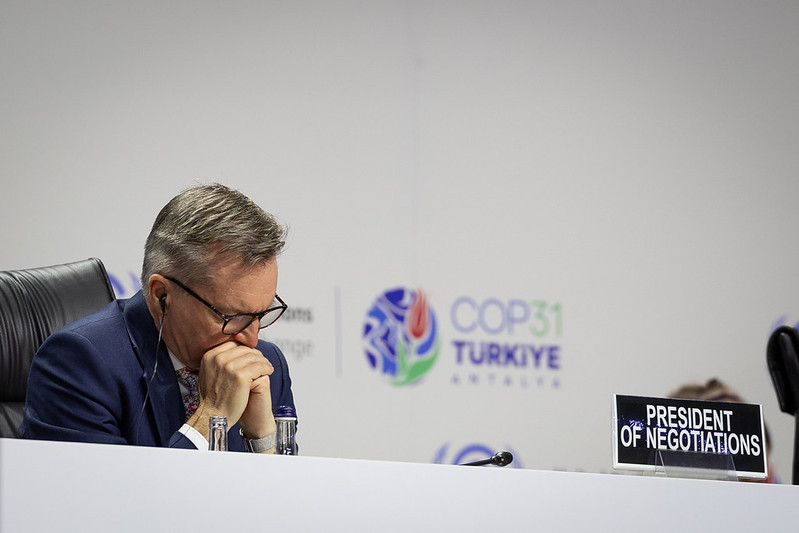
- COP31 Fails to Reach Agreement: Only 25 countries have published plans to transition away from fossil fuels, while the EU bloc and other developed nations refuse to sign the new agreement, which doesn’t mention fossil fuels.
- Bangladesh Garment Manufacturers Offer 15% Pay Rise: Workers have asked for a more than double increase in the minimum wage, in a country reliant on garments, which make up 80% of exports. Industry leaders said any increase above 15% is untenable.
- US Senate Passes Bill to Speed Up Energy Projects: A somewhat bipartisan bill, the change in legislation would allow energy projects to bypass present hurdles to allow shorter waiting times in an environment of increasing energy costs.
Diplomatic failure at COP31
Diplomatic collapse came at COP31 after the EU, UK, Norway, and Canada, as well as other developing nations, refused to sign the agreement, which failed to mention fossil fuels. Oil-reliant countries such as Saudi Arabia and Russia objected to the phase-out of oil, coal, or gas.
Three years after 200 countries decided to move away from fossil fuels, parties are accused of “negotiating backward in time”, and the summit “highjacked by fossil fuel producers,” in comments made by the EU’s rotating climate minister from Ireland, Darragh O’Brien. The conflict was partly ignited by a recent UN report that said global temperatures would rise to the lower threshold of 1.5C above pre-industrial levels.
Three years after 200 countries decided to move away from fossil fuels, countries such as Saudi Arabia and others insisted on promoting carbon capture and storage. Mohammad Ayoub, a climate negotiator representing Saudi Arabia, highlighted that Arab countries were only responsible for 2 per cent of historical emissions.
India’s representative criticised the EU for placing “red lines” on finance directed to countries struggling with climate change. Brussels called the issue “dead in the water.” India’s environment minister Bhupender Yadav pushed for richer countries to hit net zero emissions by 2030, far sooner than the current trajectory.
By the end of COP31, around 25 countries published or announced plans to transition away from fossil fuels.
Klimado – Navigating climate complexity just got easier. Klimado offers a user-friendly platform for tracking local and global environmental shifts, making it an essential tool for climate-aware individuals and organizations.
Bangladeshi garment manufacturers propose a 15% wage hike for workers

Bangladesh, the world’s second-largest garment exporter, faced protests starting mid-November as workers demand to more than double the minimum wage. Demands are for a rise from 12,500 taka to 30,000 taka ($242) per month. Industry leaders speaking to Reuters said a raise above 15% was untenable amid rising costs and weak demand globally. Garment manufacturing generates more than 80% of Bangladesh’s export earnings.
A survey by the Bangladesh Garment Manufacturers and Exporters Association found disruptions over just 18 days caused losses of around $428 million.
Related Articles
Here is a list of articles selected by our Editorial Board that have gained significant interest from the public:
US Senate passes bill to hasten energy projects
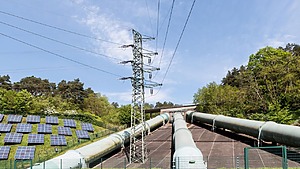
On Thursday, the US Senate passed legislation allowing changes to federal permitting rules. The bill would allow for faster federal approval of long-distance power lines, wind and solar farms, gas-fired power plants, and more. The bill passed the Senate by 62 to 33, and experts say it represents the biggest change to environmental law in a generation.
All Republican Senators – bar two – voted for the bill, supported by the Trump administration, business, developers, and labor unions. Most Democrats opposed the bill: only 15 senators from the party voted for the measure.
The bill is a response to complaints that building in the United States is too challenging. A wind farm and power line in New Mexico took nearly 20 years to complete, while a natural gas pipeline in Virginia and West Virginia was delayed for a decade. Republicans have long supported legislation to streamline federal permitting, but Democrats are now increasingly interested. Some highlight rising affordability issues and the need to tackle climate change.
Energy bills have risen about a third since 2019, and studies indicate that the bill could lower energy costs by single-digit percentage points. However, major groups such as the Sierra Club and Natural Resources Defense Council opposed the bill, as well as 17 Democratic state attorneys general.

Editor’s Note: The opinions expressed here by the authors are their own, not those of impakter.com — Cover Photo Credit: UNFCCC on Flickr