Impakter
  • Environment
    • Biodiversity
    • Climate Change
    • Circular Economy
    • Energy
  • FINANCE
    • ESG News
    • Sustainable Finance
    • Business
  • TECH
    • Start-up
    • AI & Machine Learning
    • Green Tech
  • Industry News
    • Entertainment
    • Food and Agriculture
    • Health
    • Politics & Foreign Affairs
    • Philanthropy
    • Science
    • Sport
  • Editorial Series
    • SDGs Series
    • Shape Your Future
    • Sustainable Cities
      • Copenhagen
      • San Francisco
      • Seattle
      • Sydney
  • About us
    • Company
    • Team
    • Global Leaders
    • Partners
    • Write for Impakter
    • Contact Us
    • Privacy Policy
No Result
View All Result
Impakter logo
No Result
View All Result
Half of World’s Glaciers Set to Disappear by 2100 – and That’s Probably the Best Case Scenario

Half of World’s Glaciers Set to Disappear by 2100 – and That’s Probably the Best Case Scenario

Under the 2015 Paris Agreement, countries agreed that to limit global warming to 1.5° above pre-industrial levels was adequate “damage control.” New research shows us that it is not

Olivia Sophia EgglestonbyOlivia Sophia Eggleston
January 10, 2023
in Environment
0

A new study, published in January 2023, has established that the rate of glacial loss is far greater than expected. Even if global warming is kept to “only” 1.5°C above pre-industrial temperatures, it found that 49% of the world’s glaciers are likely to disappear by the end of the century. 

If warming continues at the current rate, glacier loss is expected to be around 68% by 2100. This would mean a near-total loss of glaciers in the US, western Canada and Europe by the end of the century. 

The paper, published last week in Science, projects that “glaciers will lose substantially more mass and contribute more to sea level rise than current estimates indicate.” The study follows research from 2021 which established that the speed at which glaciers are melting has doubled in the past 20 years. 

Along with threatening the water supply of over two billion people, sea levels would rise by around 115mm, and even at 1.5°C, the rise would be approximately 90mm. Glacier loss is directly linked to increasing global temperature. The researchers wrote:

“The rapidly increasing glacier mass losses as global temperature increases beyond 1.5C stresses the urgency of establishing more ambitious climate pledges to preserve the glaciers in these mountainous regions.”

Small glaciers are the most vulnerable to rising temperatures and will be the first to be totally lost. The consequences of these losses will be both environmental and economic as small glaciers provide not only water to the communities around them but also financial gain from tourism.


Related Articles: Could the Rate at Which Glaciers Are Melting Cause the Next Pandemic? | Alps’ Glaciers Melting at Record Rate | 5 Visible Signs of Climate Change in Antarctica | Unprecedented Worldwide Water Crisis in 2021 

Dr. David Rounce, the study’s lead author, has said that glaciers can really be “at the core of the societies and economies of those locations.”

Along with small glaciers, it is those in lower mountain ranges like the Alps and Pyrenees that are most vulnerable. Alpine glaciers will likely be 70% smaller already by 2050, with many of the smaller ones having completely disappeared.

But glacier loss is not a looming issue of the future. Shocking photographs of the Glacier 3000 ski resort in Switzerland show the Tsanfleuron pass in an unnatural bareness without the ice that has covered it for over two millennia.

What will glaciers take with them? 

When glaciers disappear, effects on ecosystems will be devastating, with biodiversity plummeting as a result of bare rock replacing snow tops. A paper published in Frontiers in Ecology and Evolution lays out how the land laid bare by glacial retreat will allow more invasive plant species to take over, driving delicate alpine flowers out of their natural habitat. 

Of course, the consequences of a species dying out does not end with that species. Extinction in ecosystems generally has a knock-on effect as dependent species can no longer survive – the basic science of the food chain. 

The study’s lead researcher, Dr. Losapio of Stanford University, explains that these alpine plants are “primary producers” and that they provide “food for all of the ecosystem – the consumers, predators, parasites, herbivores and pollinators.” 

In addition to biodiversity loss, studies such as this one warn that viruses and bacteria that have been locked in glacial ice could be released due to glacial melt, posing health risks to both animals and humans. 

In 2016, an outbreak of anthrax in Northern Siberia was attributed to the release of spores through the thawing of permafrost after the region experienced abnormally high temperatures. The outbreak caused the death of a 12 year-old boy and hospitalisation of at least 72 others. 

The study from Dr. Rounce and his colleagues is yet another emphasis that the most devastating effects of climate change are beginning now, if they haven’t begun already. The urgency of rapid action and inadequacy of current targets and efforts are not to be understated. 

But the scientists who are publishing these studies all agree that the worst damage is, as yet, avoidable. “There is a small ray of hope and a positive message in our study,” says Professor Regine Hock, Dr. David Rounce’s co-author. “It tells us that we can make a difference, that actions matter.”

Putting pressure on governments and policy-makers to effect large-scale emission reduction remains incredibly important, and is the most promising way to make a difference in the fight against climate decline.


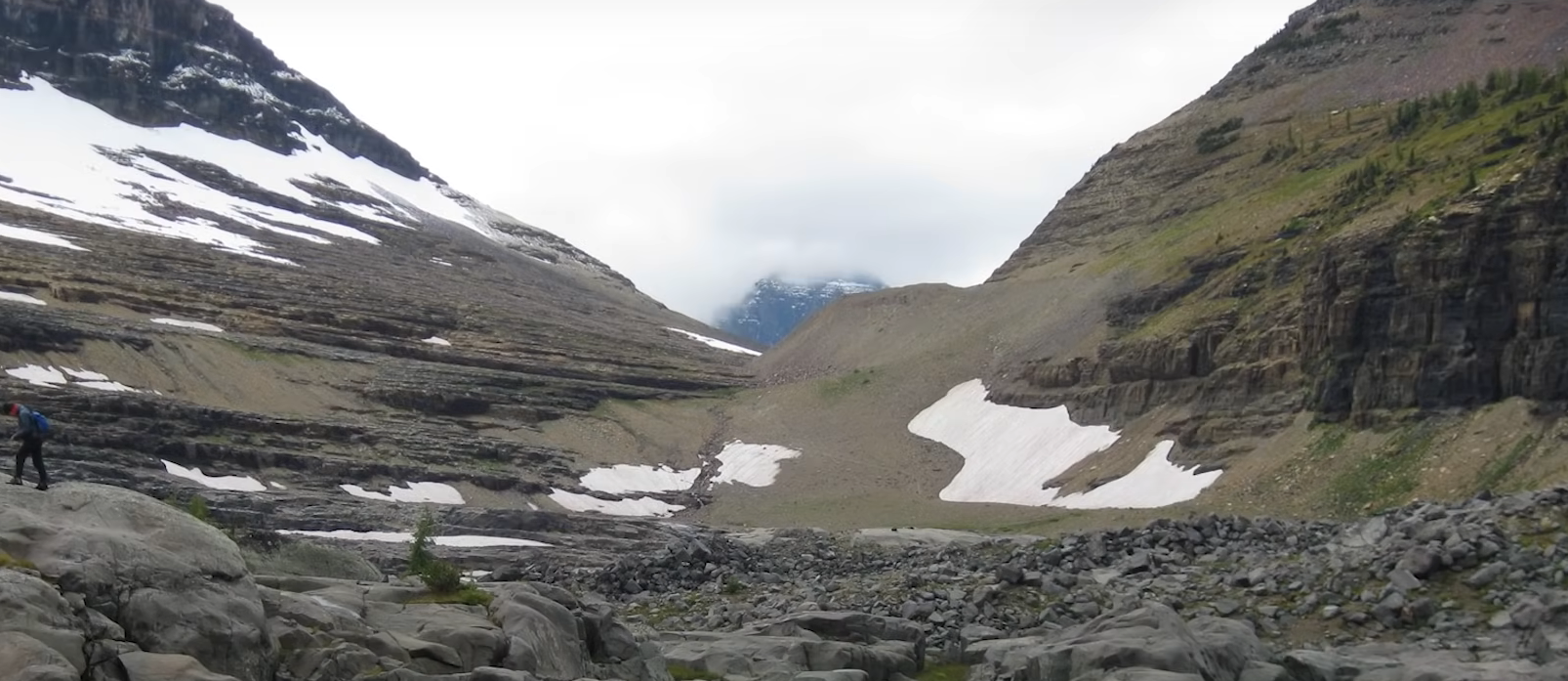
Editor’s Note: The opinions expressed here by the authors are their own, not those of Impakter.com — In the Featured Photo: Glacier National Park, Montana, US. Featured Photo Credit: NatGeo YouTube video (screenshot) https://www.youtube.com/watch?v=ur4I8tYnxP4

–.
Tags: Biodiversity LossClimate ChangeglaciersGlobal warming
Previous Post

Sustainability Takes Center Stage at CES 2023

Next Post

Contemporary Feminism at the Cybernetic Crossroads

Related Posts

ESG news regarding: a push for wind power in Europe, possible massive metal fraud, wind power in Western Australia, and Citi layoffs.
Business

Europe’s Answer to Trump: More Wind Power

Today’s ESG Updates New Draft Reveals Europe’s Massive Wind Power Push: Nine European nations are defying U.S. criticism by signing...

byEge Can Alparslan
January 23, 2026
Climate Change Charities
Business

Beyond Carbon Offsets: 7 Climate Change Charities Tackling Root Causes in 2026

Philanthropy is surging again. U.S. charitable giving reached a record $592.50 billion in 2024, and, for the first time since...

byHannah Fischer-Lauder
January 23, 2026
Three sponsors for the 2026 Winter Olympics in Italy could generate 1.3 million tons of CO2
Climate Change

Winter Olympics Sponsorship Emissions: Who Are the Main Offenders?

The 2026 Winter Olympic Games are set to begin in Italy next month. Scattered across towns in northern Italy, from...

bySarah Perras
January 22, 2026
Food Waste in India
Climate Change

India’s Food Waste Is Turning Into an Environmental Time Bomb

India, a key player in this fight, is currently battling a confluence of climate-driven disasters. Last year’s punishing extreme heatwave,...

byPranjali Chowdhary - Research and Policy Associate at the Institute for Governance and Sustainable Development, Indiaand1 others
January 22, 2026
The Imperative of a Nature-Positive Future
Biodiversity

The Imperative of a Nature-Positive Future

For most of human history, survival was a gamble. Half of all children never reached puberty. Life expectancy hovered around...

byMarco Lambertini
January 16, 2026
coal mine
Business

Can the War on Coal Still Be Won?

Ten years ago, I embedded in the war on coal. I spent a month inside the Sierra Club’s Beyond Coal campaign, watching an organization...

byCanary Media
January 6, 2026
Impakter’s Most-Read Stories of 2025
Society

Impakter’s Most-Read Stories of 2025

In 2025, as in previous years, Impakter readers turned in large numbers to stories examining climate change and pollution, environmental...

byImpakter Editorial Board
December 31, 2025
Year in Review: Trump 2.0 and the Environment
Editors' Picks

Year in Review: Trump 2.0 and the Environment

So much has happened this year. It seems that every day there is a new headline that is just as...

bySarah Perras
December 30, 2025
Next Post
Contemporary Feminism at the Cybernetic Crossroads

Contemporary Feminism at the Cybernetic Crossroads

Recent News

Green Energy Without Panels: A Homeowner’s Guide to 100% Renewable Power in 2026

Green Energy Without Panels: A Homeowner’s Guide to 100% Renewable Power in 2026

January 23, 2026
Dental Office desk

How to Spot and Prevent Embezzlement in Your Dental Office

January 23, 2026
News regarding the environmental impact of dog food

The Environmental Impact of Dog Food — and How to Reduce It

January 23, 2026
  • ESG News
  • Sustainable Finance
  • Business

© 2025 Impakter.com owned by Klimado GmbH

No Result
View All Result
  • Environment
    • Biodiversity
    • Climate Change
    • Circular Economy
    • Energy
  • FINANCE
    • ESG News
    • Sustainable Finance
    • Business
  • TECH
    • Start-up
    • AI & Machine Learning
    • Green Tech
  • Industry News
    • Entertainment
    • Food and Agriculture
    • Health
    • Politics & Foreign Affairs
    • Philanthropy
    • Science
    • Sport
  • Editorial Series
    • SDGs Series
    • Shape Your Future
    • Sustainable Cities
      • Copenhagen
      • San Francisco
      • Seattle
      • Sydney
  • About us
    • Company
    • Team
    • Global Leaders
    • Partners
    • Write for Impakter
    • Contact Us
    • Privacy Policy

© 2025 Impakter.com owned by Klimado GmbH