Impakter
  • Environment
    • Biodiversity
    • Climate Change
    • Circular Economy
    • Energy
  • FINANCE
    • ESG News
    • Sustainable Finance
    • Business
  • TECH
    • Start-up
    • AI & Machine Learning
    • Green Tech
  • Industry News
    • Entertainment
    • Food and Agriculture
    • Health
    • Politics & Foreign Affairs
    • Philanthropy
    • Science
    • Sport
  • Editorial Series
    • SDGs Series
    • Shape Your Future
    • Sustainable Cities
      • Copenhagen
      • San Francisco
      • Seattle
      • Sydney
  • About us
    • Company
    • Team
    • Global Leaders
    • Partners
    • Write for Impakter
    • Contact Us
    • Privacy Policy
No Result
View All Result
Impakter logo
No Result
View All Result
Governments Are Hiding Data, Threatening Democracy. Here’s How It Affects You

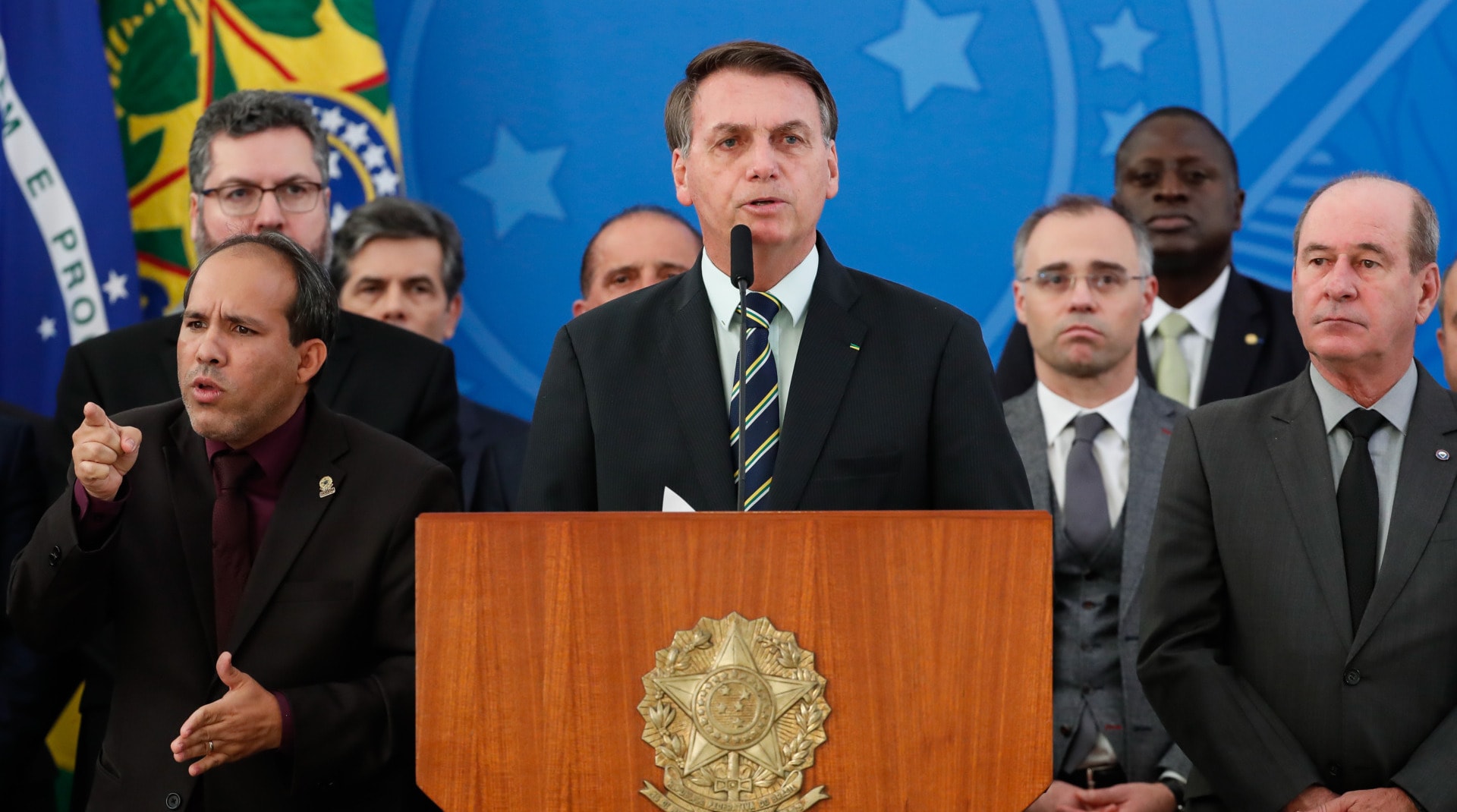
Governments around the world are engineering ‘information scarcity’ to escape democratic accountability. In Brazil during the COVID-19 pandemic, the administration of former President Jair Bolsonaro (centre) halted the publication of key health statistics. Photo Credit: Alan Santos/PR.

Governments Are Hiding Data, Threatening Democracy. Here’s How It Affects You

From being custodians of public knowledge, governments are turning to architects of manufactured ignorance. Amid disappearing evidence, citizens are struggling to hold power to account

Daniel Angus - Professor at the Queensland University of Technology & Director of its Digital Media Research CentreT. J. Thomson - Senior Lecturer at RMIT & Co-Lead of its News, Technology, and Society NetworkMathias-Felipe de-Lima-Santos - Lecturer at the University of New South Wales.byDaniel Angus - Professor at the Queensland University of Technology & Director of its Digital Media Research Centre,T. J. Thomson - Senior Lecturer at RMIT & Co-Lead of its News, Technology, and Society Networkand2 others
December 4, 2025
in Politics & Foreign Affairs, Society
0

Around the world, governments are quietly deleting, manipulating, or withholding public data at an unprecedented scale, which is a direct threat to democratic accountability.

As official information becomes harder to access, journalists struggle to hold the powerful to account, watchdog agencies lose track of policy failures, and citizens are left increasingly in the dark.

This trend stretches far beyond countries with fragile or emerging democracies. Authoritarian governments such as Venezuela, Indonesia, or the Philippines have long treated data as a political weapon. Similar practices are now surfacing in nations with long-standing democratic institutions such as Australia, Italy, and the United States.

In the United States, the Trump administration removed thousands of public datasets from federal websites—many relating to climate change, environmental monitoring, and federal misconduct. In India, the Modi government has faced allegations of suppressing or altering statistics on issues including extreme poverty and environmental concerns. Meanwhile, Argentina’s Decree 780/2024 places new restrictions on public information access and dismantles long-standing protections for journalistic anonymity, raising alarm among press freedom advocates.

Australia is not immune. Analysts have documented a steady decline in government compliance with Freedom of Information (FOI) requests, alongside significant expansion in Public Interest Immunity claims that allow officials to legally shield documents from scrutiny. Together, these shifts point to growing institutional resistance to transparency, even though digital tools should, in theory, make public records easier than ever to share.

The problem goes beyond access. In many countries, the way data is collected or categorised can distort the reality they claim to measure. Crime statistics have been repeatedly reshaped by governments to influence public perception. In Queensland, Australia, for example, changes to the classification of “minor” versus “serious” offences under the Liberal-National Party coalition government created a new statistical baseline that made crime trends appear more favourable.

Such tactics complicate comparisons over time and leave journalists and researchers struggling to understand what is actually happening on the ground.

When information disappears, is delayed, or becomes prohibitively expensive to obtain, newsrooms face mounting barriers. FOI processes increasingly function as a form of pre-publication control known as SLAPP orders that lead to drawn-out legal delays, exhaustive appeals, and rising processing fees to deter investigations.

In Australia, the backlog for FOI reviews now averages around 16 months. This is long enough for an investigation or story to lose momentum — or for the political conditions to shift entirely, therefore, preventing publication.

Related Articles

Here is a list of articles selected by our Editorial Board that have gained significant interest from the public:

  • How Misinformation, Disinformation and Hate Speech Threaten Human Progress
  • UK Government Is Ignoring Public Opinion on Climate Change
  • Toward Global Instability and Autocracy? A Critical Examination of the Trump Regime’s Global Impact

An artificial “information scarcity”

These are not isolated incidents but signs of a global movement toward engineering  “information scarcity”. Governments are moving from being custodians of public knowledge to architects of what Dan Agin calls “manufactured (public) ignorance.” Whether through the erasure of climate records or USAID transparency in the United States, restricted transparency in India and Argentina, or record-low Senate order compliance and FOI refusals in Australia, the result is the same: diminished access to data affects accountability and weakens democratic oversight.

And the stakes are now even higher. As governments around the world turn to artificial intelligence to inform policy, automate services, and shape public decisions, the quality and independence of training data become crucial.

When official datasets are incomplete, obscured, or politically manipulated, the AI systems built on them risk replicating and magnifying those distortions. In this moment of rapid technological adoption, shrinking access to reliable public data is more than a transparency issue; it is a structural threat to the integrity of the future of our society.

As governments dismantle their own information systems, democracies face an uncomfortable question: how can citizens meaningfully hold power to account when the evidence itself is disappearing?

A stark example of resistance to this democratic backsliding comes from Brazil. During the height of the COVID-19 pandemic, the Bolsonaro administration halted the publication of key national health statistics, including infection rates, death counts, and hospital capacity data. The move triggered widespread concern among scientists, journalists, and international health agencies, who warned that suppressing pandemic data in the middle of a public health emergency could cost lives.

In response, a group of volunteer programmers and journalists launched Brasil.IO, a crowdsourcing platform that collected data and reconstructed COVID-19 figures from state health secretariats. Their work became the country’s most reliable source of pandemic data, used by newsrooms, researchers, and even local governments.

Brazil’s experience highlights what happens when official transparency collapses: civil society is forced to rebuild the public record from scratch, often under intense political pressure, simply to ensure citizens have access to life-saving information.

** **

This article was published by 360info™.


Editor’s Note: The opinions expressed here by the authors are their own, not those of Impakter.com — Cover Photo Credit: Alan Santos/PR.

Tags: 360infoaccountabilityDemocracyinformationpublic datapublic informationpublic knowledgeSLAPP
Previous Post

Indonesians Blame Deforestation for Recent Floodings

Next Post

Great British Energy Unveils 2030 Clean Power Strategy

Related Posts

Staving Off Dictatorship: Innovative Tactics and Strategies
Politics & Foreign Affairs

Staving Off Dictatorship: Innovative Tactics and Strategies

In a tale of three dates — ICE Operation Midway Blitz on September 30, No Kings Day protests on October...

byDr. Annis Pratt
November 26, 2025
AI in Journalism
AI & MACHINE LEARNING

AI in Journalism and Democracy: Can We Rely on It?

Our world is in the midst of a disruption triggered by the development of Artificial Intelligence (AI). Companies selling AI...

byDr Jake Goldenfein, University of Melbourneand2 others
November 26, 2025
How Authoritarians Twist Language Into Weapons
Editors' Picks

How Authoritarians Twist Language Into Weapons

The world finds itself in a cultural setting in which large swathes of democratic countries place their faith in faux salvific “strongmen,”...

byMatthew Sharpe - Head of the School of Philosophy at the Australian Catholic University
October 27, 2025
No Kings protest
Society

No Kings: A Warning From the Edge of Democracy

This is not the first time in history that mankind has stepped to the edge of destruction, but it is...

byRichard Seifman - Former World Bank Senior Health Advisor and U.S. Senior Foreign Service Officer
October 21, 2025
youth political participation
Society

Redefining Participation: The Politics of a New Generation

Talking about youth political participation means confronting two main issues. On one hand, there is a dominant narrative portraying young generations...

byAntonio Campati - Assistant Professor at the Catholic University of the Sacred Heartand1 others
July 4, 2025
Going Over the Falls in a Barrel: Can Democracy Survive in America?
Politics & Foreign Affairs

Going Over the Falls in a Barrel: Can Democracy Survive in America?

In the United States today, democracy is under siege. The Executive Branch of our government, led by the President, is...

byDr. Annis Pratt
June 16, 2025
climate finance gap Europe
Climate Change

Climate Cash Crisis: Can Investment Planning Fix Europe’s Finance Adaptation Gap?

The escalating impacts of climate change are deepening a critical finance gap across the European Union (EU), as investments in...

byPhoebe Koundouri - President of the World Council of Environmental and Natural Resource Economists Associations, Chair of the SDSN Global Climate Huband2 others
May 26, 2025
italy populism
Politics & Foreign Affairs

Meloni’s Italy at a Crossroads: Pragmatism or Populism?

Global and European political shifts could push Italy, under Prime Minister Giorgia Meloni, towards a more radical stance. Since 2022,...

byValerio Alfonso - Research Fellow at Università Cattolica del Sacro Cuore
February 21, 2025
Next Post
Crypto Portfolio Margin Access defined

What Is Crypto Portfolio Margin Access?

Recent News

ESG News covering Great British Energy’s 2030 clean-power strategy, UK government investment, nationwide renewable expansion, community energy projects, offshore wind development, and job creation in the energy transition.

Great British Energy Unveils 2030 Clean Power Strategy

December 4, 2025
Crypto Portfolio Margin Access defined

What Is Crypto Portfolio Margin Access?

December 4, 2025
Governments Are Hiding Data, Threatening Democracy. Here’s How It Affects You

Governments Are Hiding Data, Threatening Democracy. Here’s How It Affects You

December 4, 2025
  • ESG News
  • Sustainable Finance
  • Business

© 2025 Impakter.com owned by Klimado GmbH

No Result
View All Result
  • Environment
    • Biodiversity
    • Climate Change
    • Circular Economy
    • Energy
  • FINANCE
    • ESG News
    • Sustainable Finance
    • Business
  • TECH
    • Start-up
    • AI & Machine Learning
    • Green Tech
  • Industry News
    • Entertainment
    • Food and Agriculture
    • Health
    • Politics & Foreign Affairs
    • Philanthropy
    • Science
    • Sport
  • Editorial Series
    • SDGs Series
    • Shape Your Future
    • Sustainable Cities
      • Copenhagen
      • San Francisco
      • Seattle
      • Sydney
  • About us
    • Company
    • Team
    • Global Leaders
    • Partners
    • Write for Impakter
    • Contact Us
    • Privacy Policy

© 2025 Impakter.com owned by Klimado GmbH