
Last week, France made history by becoming the first EU member state and first nation worldwide to impose restrictions on air travel over concerns for its environmental impact. Will France’s ban on short-haul flights be the first step towards meaningful change in the impactful patterns of human behaviour, or will this be nothing more than a short-term experiment?
How did France pass a ban on short-haul flights?
The original idea for the flight ban was proposed by France’s Citizens’ Convention on Climate, which is self-described as “an unprecedented democratic experiment in France, which aimed to give citizens a voice to accelerate the fight against climate change in the spirit of social justice.” The mandate of the convention was to define a series of measures that will allow France to achieve a reduction of at least 40% in greenhouse gas emissions by 2030 (compared to 1990). The accepted proposals from France’s citizens informed the “Climate and Resilience Law”, which was passed by the French parliament in August of 2021.
The ban was also the result of a stipulation that the French government had placed on Air France as part of its 2020 pandemic bailout package. Air France was given more than $7 billion alongside a set of conditions, once of which required that the airline do more to combat the negative effects of its operations on the environment.
This eventually resulted in the choice to reduce the number of Air France’s short-haul flights, since the national carrier operates the majority of flights along the shortest domestic routes within the nation. The measure was written into law partially in order to discourage other carriers from filling the vacancy and flying the same short routes, effectively undermining Air France’s effort to be more sustainable.
The proposed ban originally applied to all domestic air travel that could be replaced by a rail alternative within four hours. However, after the law faced backlash from the Union of French Airports (UAF) and the European branch of the Airports Council International (ACI Europe), the European Commission stepped in. They decided that the validity of the law rested on whether genuine rail alternatives were available for the routes being banned, which meant several direct connections each way every day.
On December 1, the European Commission released its decision, which gives France the go-ahead for the ban, albeit with a few extra restrictions. The original proposal, which originally included eight routes, was reduced to three routes where the journey could be taken by train in less than two and a half hours, instead of four hours.
As of now, the measure only affects routes between Paris Orly airport and Nantes, Lyon, and Bordeaux.
Two other proposed routes from Paris Charles de Gaulle to Bordeaux and Nantes were exempted from the measure because the train journeys between these cities are above the two-and-a-half-hour limit.
The other routes that were removed from the ban by the European Commission were from Paris Charles de Gaulle to Lyon and Rennes, and from Lyon to Marseille. Although these journeys satisfy the time requirement, the trains do not run early or late enough for travellers to reasonably reach the cities’ airports for early morning flights or to return after late night flights. These routes could be included in the future, if rail services improve.
France’s original ban also included a proposed exemption to domestic flights that are part of a multi-stop international journey, but this exemption was removed by the Commission.
This planned exception was intended to keep international routes on Air France competitive in the greater marketplace, so that customers would not choose London or Amsterdam as a hub instead due to the hassle of having to connect between airports by train. The European commission vetoed this planned exception because it would have allowed most of the flights to continue operating.
The Commission also imposed a time limit on the ban. It will only remain effective for three years, but a review will take place by the European Commission that could allow it to be renewed.
It is worth noting that this ban only applies to commercial airlines and has placed no restrictions on the operation of private jets.
Related Articles: How Commercial Aviation is Addressing Climate Change | UK Airlines Miss All But One Climate Goal | Icelandair Announces Carbon-Free Flights by 2030
How will this affect France’s progress towards its climate targets?
A disproportionate amount of a single flight’s carbon emissions occurs during takeoff and landing, so the emissions produced per passenger per kilometer on a domestic route are 70% higher than long-haul flights and six times higher than the same journey by train (that’s why a lot of attention is now focussing on sustainable aviation fuel, a potential gamechanger).
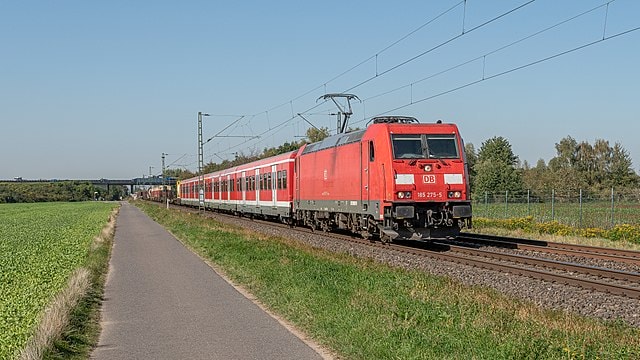
Rail is already one of the most energy efficient modes of transport in the EU, and much of the system has been decarbonised as trains by-and-large operate using electricity. Full decarbonisation, of course, relies on the energy sources powering the grid itself.
According to the Community of European Railway (CER), rail transport is responsible for less than 1% of the EU’s transport emissions and 2% of the total energy consumption in transport, whilst ferrying 13% of goods and 7% of passengers.
Greenpeace EU has stated that the ban was “far too limited”:
“The measure taken by the French government was not at all up to the challenge of the fight against climate change, due to its extremely limited scope.”
Sarah Fayolle, transport campaign manager at Greenpeace France, also weighed in saying
“Admittedly, the European Commission is beefing up the ban a bit by including connecting flights, but it is weakening it at the same time by only authorising it for three years.”
This ban leaves a huge number of short-haul flights still in operation, including the Paris-Marseille route, which is one of the top three domestic flights in terms of greenhouse gas emissions, according to Greenpeace EU spokesperson John Hyland.
A report published by Greenpeace in October 2021 demonstrated that a ban on the busiest flights in the European Union, when a train connection of less than six hours exists, would save 3.5 million tons of carbon per year.
According to EU statistics, 17 of the 20 busiest air routes in Europe cover distances of less than 434 miles overland, which provide ideal opportunities for intercity trains to offer faster, cleaner and more sustainable journeys.
Elsewhere in Europe:
Expanding a similar ban outside France’s borders is a decision to be made by the EU and would have to rely on cross-border agreements. However, there does seem to be a growing wave of sentiment that the bloc should look into legislating a similar ban; according to the European Investment Bank, 62% of Europeans would support a ban on short-distance flights.
Germany is hoping to capitalise on this public sentiment without imposing a ban in its own right. In 2021, Germany’s Aviation Association and Deutsche Bahn (the country’s main rail company) signed an agreement to offer more high-speed train connections in an effort to incentivise train travel over flying and make it more convenient for travellers to choose the less carbon-intensive option. This plan, which would give about 20% more people the option to travel by train instead, could reduce the carbon dioxide emissions generated by German domestic air travel by a sixth.
The Austrian government has also considered utilising their national rail infrastructure to reduce emissions. The bailout of Austrian Airlines included a similar condition to that of Air France, and the flight route between Vienna and Salzburg was replaced by more frequent rail services in 2020 without requiring a ban.
Although the actual impact France’s ban in its final form on the nation’s gross emissions might not significantly move the needle of climate change, France is harnessing the spirit of liberté, egalité, fraternité to set a precedent by allowing the people to choose what sacrifices they are willing to make.
But really, is giving up the hassle of going to the airport that much of a sacrifice? Especially as train travel often bypasses the discomforts of commuting to the outskirts of a city, queuing for security, and being forced to schedule bathroom breaks around a blinking light that often seems to be the sadistic plaything of a bored or forgetful pilot.
However, the true spirit of egalité requires that this legislation be applied to all strata of society. As long as the ultra-wealthy are allowed to bypass the discomforts that apply to everyone else and jet-set forty minutes down the road, the pursuit of any common environmental goal will continue to be sidetracked by class wars, in true French style.
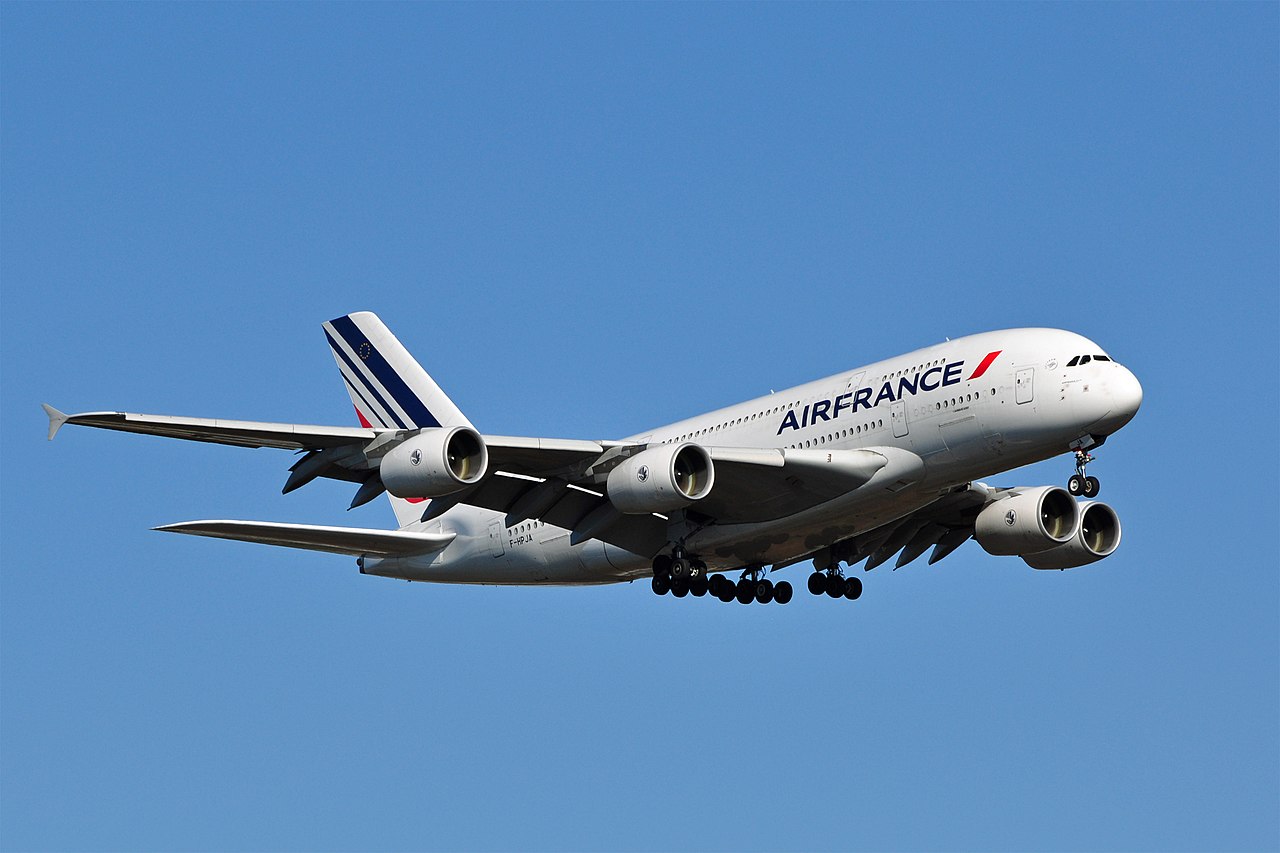
Editor’s Note: The opinions expressed here by the authors are their own, not those of Impakter.com — In the Featured Photo: An Air France Airbus. Featured Photo Credit: Wikimedia.