
Henrik Lerner’s 2025 “first of its kind One Health book,” Ethics for One Health Approaches: A Roadmap for Future Directions, analyzes the literature of the One Health Initiative (OHI) team as part of a thematic review of the field’s development from 2004 to June 2023. Overall, the book’s historical perspective is the antithesis of others that frequently offer “D.R.I.P. (Data Rich, Information Poor).”
Almost uniformly missing or only mentioned in passing from others, but noted in this book is the bottom-line foundation of the One Health concept (formerly “One Medicine”), i.e., the narrative is built upon the historical contributions of four key figures, two physicians and two veterinarians, who bridged the gap between human and animal health; nowadays advocates and supporters have expanded exponentially to a marvelous and invaluable plethora of professional and occupational venues worldwide. The book correctly characterizes it as having a diverse, interdisciplinary coalition extending beyond traditional medical fields:
- Rudolf Virchow, MD (1821–1902): Considered by many to be the “Father of Comparative Pathology,” Dr. Virchow famously proclaimed that there are no “dividing lines” between human and animal medicine. He coined the term zoonosis to describe diseases transmitted from animals to humans and was an early advocate for meat inspection to prevent parasitic infections.
- William Osler, MD (1849–1919): A student of Virchow and a founding father of Johns Hopkins. Dr. Osler is called the “Father of Veterinary Pathology” in North America. He taught both medical and veterinary medical students at McGill University, where he emphasized the shared biological basis of disease(s) across species. His activities helped promote comparative medicine.
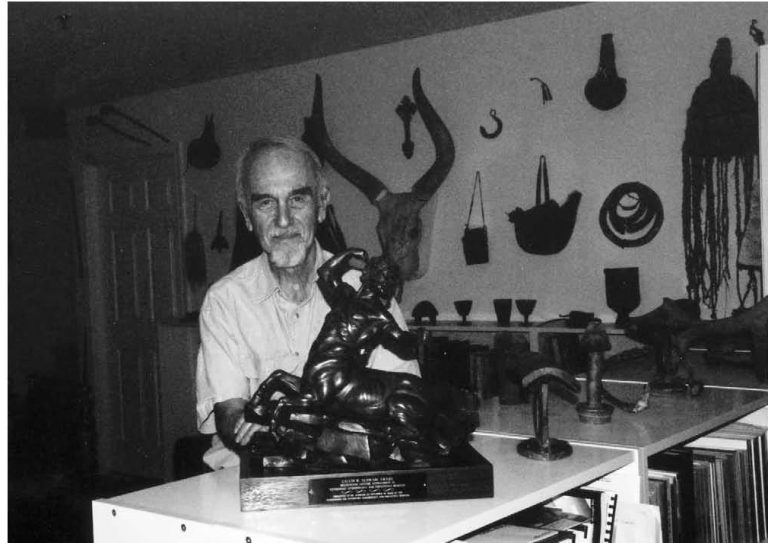
- Calvin W. Schwabe, DVM, MPH, ScD (1927–2006): Identified as the “Father of Veterinary Epidemiology,” Dr. Schwabe modernized the field by coining the term “One Medicine” in his 1964 textbook, Veterinary Medicine and Human Health and subsequent editions. He reasoned cogently for a unified approach between veterinary and human health professionals to combat zoonotic diseases, which has provided the intellectual framework for the modern One Health movement.
- James H. Steele, DVM, MPH (1913–2013): Acknowledged as being the “Father of Veterinary Public Health,” Dr. Steele founded the Veterinary Public Health Division at the CDC in 1947, which evolved into the One Health Office. He was instrumental in integrating veterinarians into the U.S. Public Health Service and worked closely with Schwabe to foster institutionalizing the collaboration between animal and human health sectors.
Dr. Lerner specifically discusses and cites various types of One Health Initiative-related publications, e.g., referring to the One Health Initiative Mission Statement as a foundational text for defining the scope and scientific aims of the “One Health” movement in “One World, One Medicine, One Health” publications by the OHI team (Kahn et al.) that popularized the “One Health umbrella” concept.

Lerner uses these to trace the transition from “One Medicine” (Calvin Schwabe) to modern-day “One Health.”
How Schwabe’s Book Influenced the One Health Initiative
Dr. Calvin Schwabe’s seminal book, Veterinary Medicine and Human Health (first published in 1964) followed by further editions, provided the foundational framework for the modern One Health Initiative by establishing the “One Medicine” concept. Schwabe’s influence manifests primarily in these key ways:
- Coined the term “One Medicine”: Credited with coining the term “One Medicine,” emphasizing that no paradigm shift exists between human and veterinary medicine. Both disciplines are essential to good public health and they should collaborate closely to solve global public health and research clinical biomedical issues. This book establishes a modern foundation for One Health by providing the intellectual bridge that transformed historical observations of animal-human disease, highlighting similarities commiserate with a formal 20th-century interdisciplinary, transdisciplinary, collaborative movement and scope. It brilliantly called for having a unified approach to combat zoonotic diseases, for safeguarding food handling and distribution, and recognizing the need for maintaining environmental quality.
- As a catalyst for professional alliance: It served as a “lodestar” that eventually led major professional bodies like the American Medical Association (AMA) and the American Veterinary Medical Association (AVMA) to formally adopt the historic One Health resolution in 2007.
- As the “father of modern epidemiology,” Schwabe’s vision led to the creation of the first Department of Epidemiology and Preventive Medicine at the UC Davis school of veterinary medicine. He integrated human and animal health into their curriculum. This evolved into a legacy through various networks where many of his students and collaborators became leaders in international health policy utilizing the principles from his book to help promote the One Health concept/approach across global institutions.

Accurate Analysis of “The ‘One Medicine’ Perspective”
The One Health Initiative team’s historical perspectives were published in 2023 in a seminal article titled “One Medicine–One Health’: An Historic Perspective,” which appeared in the World Medical Journal (Vol. 69, Nr. 2, pp. 18–27). This publication documents the collaboration between the OHI team and various health advisors to promote interdisciplinary/transdisciplinary approaches through several key elements, e.g., it documents the collaboration between the OHI team and other health advisors to promote collaborative approaches.
Identifies an Early Call to Action (2007-2009): Chapter 3 (“Ethical Attempts for One Health Approaches”) among others, references the OHI team’s early efforts around 2009 to advocate for the incorporation of One Health into global health policy. The book describes a key period in the One Health movement, characterized by the development of global strategies for addressing health risks at the human-animal-ecosystem interface. More information can be found in the chapter.
Related Articles
Here is a list of articles selected by our Editorial Board that have gained significant interest from the public:
With these publications Lerner primarily demonstrates that the OHI team successfully and significantly helped establish the scientific and interdisciplinary goals of the movement. Nonetheless, their early core texts and those of other One Health advocates often lack the explicit ethical frameworks (such as pluralistic bioethics or ecocentric justice) that Lerner’s 2025 roadmap advocates for.
In summary: The book’s author identifies the One Health Initiative team as central to the modern development of the “One Health” approach. He analyzes their definitions and the “umbrella” depiction of One Health that they helped popularize.
He discusses the OHI campaign for “One World, One Medicine, One Health,” often tracing their work back to the “One Medicine” concept of Calvin Schwabe. The book does this and concomitantly expresses a fulsome account of other current and past One Health leaders and activist organizations within the field while expounding a non-biased, ethical all-inclusive Universalist (embracing all, promoting unity) and Non-sectarian (not limited to one group) text.
** **
This article was authored by Laura H. Kahn, MD, MPH, MPP Bruce Kaplan, DVM Thomas P. Monath, MD Thomas M. Yuill, PhD Helena J. Chapman, MD, MPH, PhD Craig N. Carter, DVM, PhD Becky Barrentine, MBA Richard Seifman, JD, MBA.
Editor’s Note: The opinions expressed here by Impakter.com columnists are their own, not those of Impakter.com — In the Cover Photo: Dr. Calvin W. Schwabe, the “Father of Veterinary Epidemiology.” Cover Photo Credit: Association for Veterinary Epidemiology and Preventive Medicine.