In a landmark move, the US Federal Communications Commission (FCC) has imposed its inaugural fine for space debris violation, a significant step forward in the battle against burgeoning space clutter.
The fine was levied against Dish Network, an American satellite television provider, for breaching anti-space debris regulations pertaining to its EchoStar-7 satellite, launched into geostationary orbit in 2002.
Once it completed its mission, the satellite was supposed to be moved to a “graveyard orbit” 300 km above its operational location, ensuring it would not pose a threat to other active satellites. However, deviating from the plan, Dish sent the satellite into a “disposal orbit” that, as the FCC writes, is “well below the elevation required by the terms of its license.”
More precisely, the satellite ended up 178 km away from where it was supposed to be. “At this lower altitude, it could pose orbital debris concerns,” the FCC says.
By failing to properly deorbit its EchoStar-7 satellite, Dish Network “violated the Communications Act, the FCC rules, and the terms of the company’s license,” the FCC explains. It must now admit liability, agree to adhere to a compliance plan, and pay a $150,000 fine.
“This is a breakthrough settlement, making very clear the FCC has strong enforcement authority and capability to enforce its vitally important space debris rules,” said FCC Enforcement Bureau Chief, Loyaan A. Egal. “As satellite operations become more prevalent and the space economy accelerates, we must be certain that operators comply with their commitments.”
The significance of this fine reaches beyond Dish Network, resonating across the satellite industry. Dr. Megan Argo, senior lecturer in astrophysics at the University of Central Lancashire, stressed that this enforcement of regulatory powers by the FCC is likely to make the industry take notice and adapt, given the potential risks posed by accumulating space debris.
Space debris is defined as “artificial material that is orbiting Earth but is no longer functional,” such as spacecraft parts or old satellites.
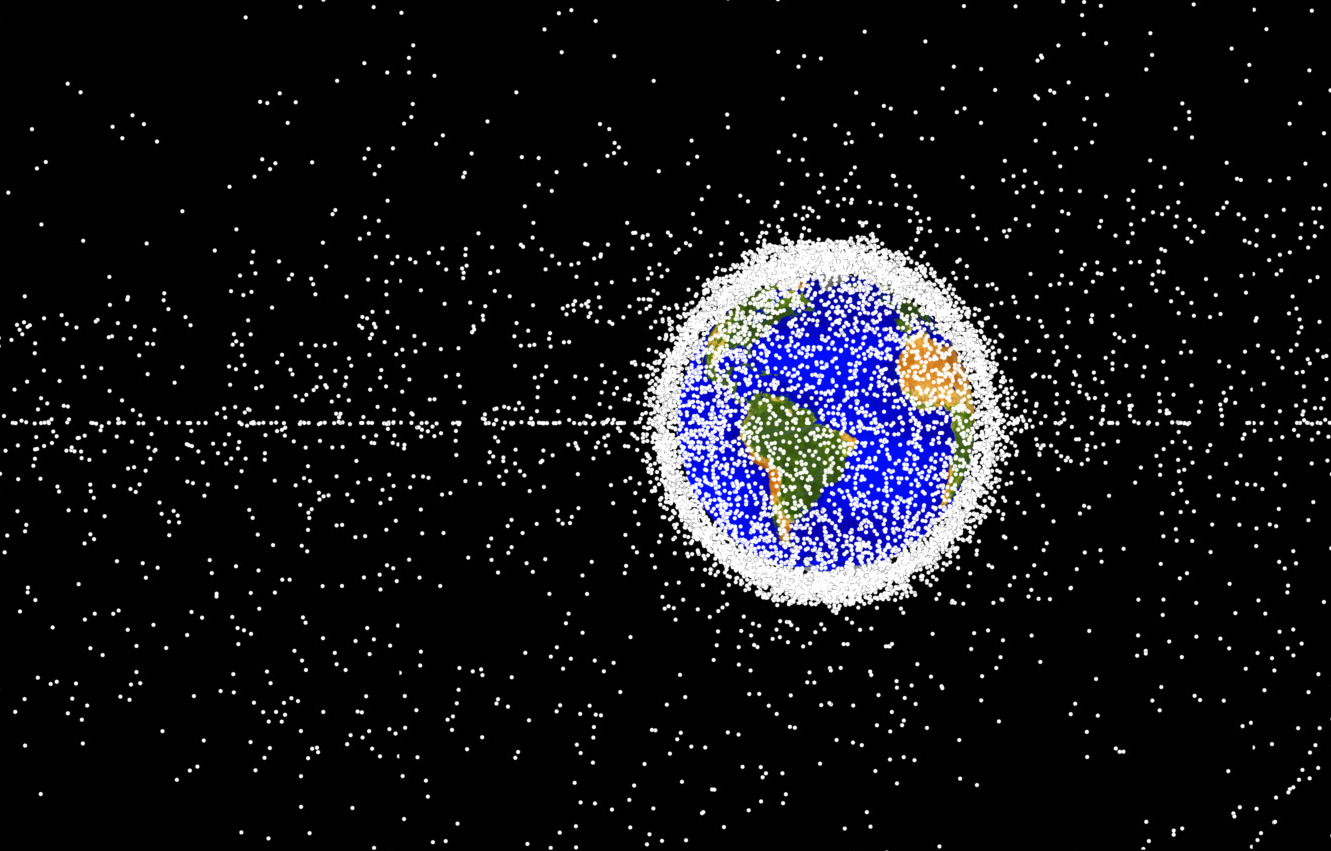
The space junk issue, acknowledged as a major concern by space agencies worldwide, has been exacerbated by the rapid increase in satellites launched into orbit since the start of the space age.
An estimated 10,000 satellites have been launched since 1957 and over half of them are now inactive. In Earth’s orbit alone, there are over a million pieces of junk bigger than one centimeter, according to the European Space Agency — enough to “disable a spacecraft.”
“The more things we have in orbit, the more risk there is of collisions, causing high-speed debris. [This could] go on and potentially hit other satellites, causing yet more debris and potentially cause a cascade reaction,” Dr Argo said.
To get a better idea of the number of satellites orbiting Earth, here’s an animation showing the Starlink satellites currently around our planet:
All the Starlink satellites now around Earth pic.twitter.com/cdDypr6uSo
— Latest in space (@latestinspace) September 27, 2023
As the FCC’s first space debris fine sets a precedent for regulatory enforcement, it underlines the need for responsible space operations to ensure a sustainable and secure space environment for future exploration and advancements.
“Right now there are thousands of metric tons of orbital debris in the air above – and it is going to grow,” FCC Chair of the FCC said in 2022, when the FCC instituted the rule mandating satellite operators to dispose of their satellites within five years of mission completion. “We need to address it. Because if we don’t, this space junk could constrain new opportunities.”
While the FCC has now taken the necessary first step in addressing the space debris problem, the junk is still in space and won’t go away unless regulations continue to be imposed.
Editor’s Note: The opinions expressed here by the authors are their own, not those of Impakter.com — In the Featured Photo: The GEO images are images generated from a distant oblique vantage point to provide a good view of the object population in the geosynchronous region (~35,785 km altitude). Featured Photo Credit: NASA.