The era of disposable fashion and the “wear it once” mentality is fading as fashion-conscious consumers demand the latest trends and eco-conscious choices aligned with their values. In a sustainability-focused world, fast-fashion giants like H&M and Zara hold a privileged position to embrace greener practices. But how exactly have both of these heavyweights fared in this shifting landscape?
Zara
Zara’s statement on sustainability
Zara’s sustainability strategy acknowledges the complexity of the path towards a greener fashion industry, emphasizing the need for transformation:
“At Zara, we are working to integrate sustainability in daily decisions with the objective of advancing toward a more sustainable model that helps us reduce our environmental footprint and protect the planet and the people who inhabit it.”
The statement outlines a holistic approach to sustainability, spanning various stages of their value chain, from product design to logistics and customer engagement. They highlight their efforts to extend the life of garments through repair, resale, and used clothing donation programs.
By 2025, Zara plans to introduce more eco-friendly alternatives, such as 100% sustainable linen and either recycled or sustainable polyester. Looking ahead to 2040, they have set a goal to achieve zero net emissions. While their sustainability goals appear ambitious, how effectively they can translate them into tangible actions remains to be seen.
Related articles: From Pranksters to Protestors: Disruptions Shake Up New York Fashion Week | Shein and Forever 21 Merger: Fast Fashion’s Troubling Tango | Battle of the Vegan Skincare Brands: Pai Skincare vs. Biossance | 3 Companies Leading the Way in Circular Fashion
Greenwashing scandals
Like many fashion brands, Zara has faced its share of greenwashing allegations. In 2022, the company unveiled a limited-edition line of “sustainable clothing” crafted from polyester derived from captured carbon emissions. While this move garnered attention, critics argued that Zara’s continued promotion of over-production and over-consumption contradicts these efforts. Another point of contention was Zara’s announcement of a pre-owned project set to launch before the end of 2022.
However, critics argue that these steps are insufficient to combat the fast fashion model’s current environmental impact and high carbon footprint in supply chains, which Zara has yet to address. Concerns about transparency persist as the brand’s sustainability goals face scrutiny amid allegations of greenwashing.
Greenwash.com has raised concerns about Zara’s take-back schemes, accusing the company of virtue signaling. Zara professes to breathe new life into customers’ old clothes. Still, Greenwash argues that they must provide concrete evidence to support this claim. Given that only 1% of recycled clothes are typically made into new garments, the absence of evidence strongly suggests that the clothes from Zara’s scheme may ultimately end up in landfills, much like before.
Labor rights
In their official statement, Zara asserts its commitment to workers and to ensuring labor rights:
“Our socially responsible strategy seeks to guarantee workplaces where human and labor rights are respected and promoted, developing programs to identify the needs of workers and their environment.”
Despite these claims, Zara has faced numerous accusations and criticisms that contradict its objectives. While Zara’s sustainability strategy and marketing campaigns may project a green and socially responsible image, there are troubling realities for many contract workers within the company’s supply chain who continue to experience exploitation and precarious working conditions.
The Asia Floor Wage Alliance (AFWA) has long been a vocal critic of Zara’s labor practices, shedding light on garment workers’ challenges in the fashion giant’s supply chain. AFWA’s work in advocating for the rights and well-being of these workers recently earned them recognition by Vogue in this year’s Vogue Business 100 Innovators: Sustainability thought leaders.
One of the most pressing issues that AFWA has raised pertains to the impact of the COVID-19 pandemic on garment workers. In the wake of the global crisis, AFWA has denounced Zara for its treatment of workers, including sudden layoffs, the imposition of forced unpaid overtime, wage reductions, and even the cancellation of contracts to deny workers essential social benefits.
Abiramy Sivalogananthan, the South Asia Coordinator for Asia Floor Wage Alliance (AFWA), succinctly captured the ongoing concern, stating:
“Three years after the pandemic, ZARA is nowhere close to resolving these cases, and continues to neglect the well-being of garment workers in their supply chain.”
This statement underscores workers’ persistent challenges and the apparent gaps in Zara’s response to safeguarding the rights and livelihoods of those contributing to the brand’s global production network.
Zara’s Sustainability Rating: D (insufficient)
In Impakter’s Sustainability Index, Zara receives a grade of D (insufficient). This score reflects the need for increased transparency and accountability in their sustainability efforts despite positive steps taken in some areas.
Despite Zara’s Join Life initiative and its commitment to incorporating environmentally friendly practices and materials, a lack of transparency and recent scandals earned the company its slower rating. Zara needs a dedicated sustainability report, and this opacity makes it challenging to monitor their advancements in waste reduction and carbon emissions.
H&M
H&M’s statement on sustainability
Like Zara, H&M recognizes the intricate journey toward a more sustainable fashion industry. Their sustainability strategy emphasizes the imperative for transformation:
“At H&M Group, we consider the needs of present and future generations and conduct our business in a way that is economically, socially, and environmentally sustainable. This is why we set clear ambitions and bold goals.”
H&M highlights its commitment to sustainability reporting, unlike Zara. They believe transparency fosters comparability and accountability and empowers consumers and businesses to make informed decisions.
However, the company has faced scrutiny and skepticism regarding its sustainability goals’ actual implementation and impact. Critics argue that while they set ambitious targets, translating them into tangible actions and results remains challenging.
Greenwashing scandals
Much like Zara, H&M has found itself under greenwashing allegations, raising questions about the authenticity of its sustainability claims. In 2022, a damning investigation by Quartz accused H&M of misleading the public by making exaggerated or false sustainability assertions. The investigation particularly scrutinized the use (or misuse) of the Higg Index, H&M’s sustainability certification system, intended to provide transparency and credibility to its sustainability efforts.
1. Fast-fashion retailer H&M had misled and deceived consumers about the environmental impacts of its clothing, an investigation has found.
According to Quartz, environmental scorecards on H&M’s websites sometimes included data that was “the exact opposite of reality”. pic.twitter.com/8HXHiqWzDk
— BFM News (@NewsBFM) July 1, 2022
Additionally, H&M faced criticism for continuing practices such as its large-scale production and reliance on non-renewable materials. In response, H&M pledged to step up its sustainability efforts and commit to greater transparency by 2023. They vowed to provide a comprehensive list of suppliers and disclose the environmental impact of each product, among other relevant data.
However, crucial data on key aspects of sustainability remains conspicuously absent from H&M’s reporting. This omission has led to skepticism about the true extent of their commitment to transparency and sustainability.
Labor rights
In their official statements, H&M emphasizes their commitment to workers and the promotion of labor rights. Their claims reflect an intention to prioritize workers’ well-being and rights:
“As a large global company, we have responsibilities for all of our 150,000 employees — but also for the around 1.3 million textile workers employed by our suppliers. We want everyone to be treated with respect and work in a safe and healthy environment.”
For years, H&M has faced countless controversies, from failing to ensure a living wage for workers to allegations of exploitation and precarious working conditions. These issues have impacted the brand’s commitment to labor rights and worker welfare.
Just this month, abuse allegations emerged regarding workers in Myanmar. A UK-based human rights advocacy group tracked 156 alleged worker abuses in Myanmar’s garment factories. These reports highlight a deteriorating worker rights situation since the military coup the country faced in February 2021. Allegations range from wage reduction and theft to unfair dismissal, inhumane work rates, and forced overtime.
H&M’s Sustainability Rating: C (mediocre)
According to Impakter’s Sustainability Index, H&M receives a grade of C (mediocre). This rating encapsulates H&M’s journey toward sustainability, showcasing both strides and critical shortcomings.
H&M’s ambitious climate goals, aiming for net-zero emissions by 2040 and a 56% reduction in absolute emissions by 2030, deserve recognition. The company has made tangible progress in various areas, notably increasing the use of recycled materials in its clothing from 5.8% to 17.9%. Moreover, H&M has actively pursued sourcing certified materials, minimizing water usage, and adopting more eco-friendly packaging.
Nevertheless, H&M has not been immune to controversy concerning human rights issues. Accusations of greenwashing have lingered, casting doubts on their commitment to sustainability. These setbacks highlight that H&M’s path towards sustainability remains challenging.
Zara or H&M which fast-fashion giant is the winner?
H&M leads the charge with a C rating on Impakter’s Sustainability Index. Despite its share of controversies and greenwashing allegations, H&M’s tangible efforts in reducing emissions, increasing the use of recycled materials, and actively seeking sustainable sourcing showcase a commitment to a more sustainable future.
On the other hand, Zara’s D rating reflects its challenges with a lack of transparency and greenwashing. The brand’s commitment to sustainability goals remains marred by skepticism and unanswered questions regarding its true impact on waste reduction and carbon emissions.
However, while H&M has made noteworthy strides, greenwashing allegations and ongoing human rights concerns demand concrete action and measurable results.
The true “winner” in the sustainability race will ultimately be determined by their ability to effect substantial change, reduce their environmental footprint, and prioritize the well-being of workers throughout their supply chains. Until then, both companies remain in the “in progress” category, with much work still to be done to achieve a genuinely sustainable fashion industry.
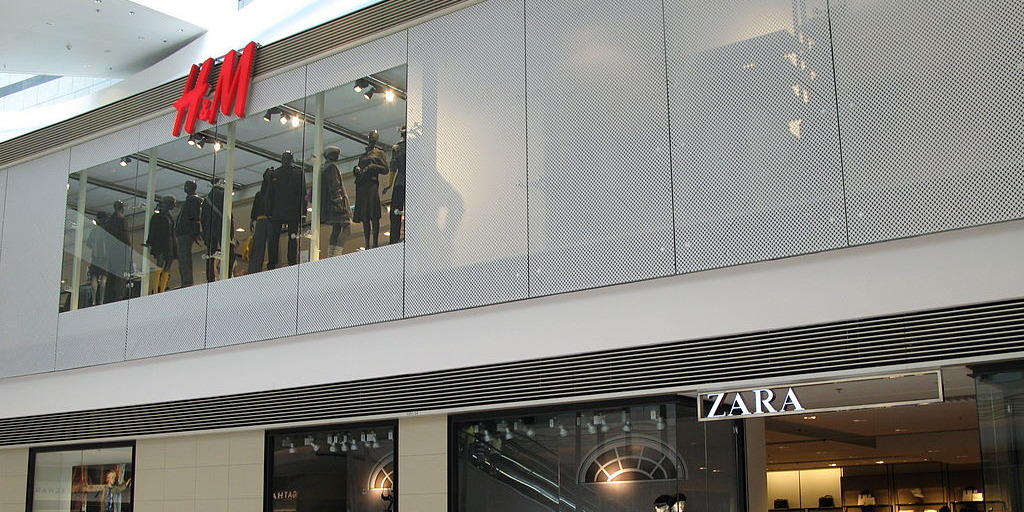
Editor’s Note: The opinions expressed here by the authors are their own, not those of Impakter.com — In the Featured Photo: H&M and Zara Shops. Featured Photo Credit: Wikimedia Commons.