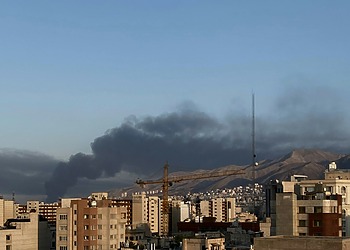
The Caribbean and the Arctic seem to have little in common. The same cannot be said of Venezuela and Greenland, which, with the turn of the new year, have found themselves on the same geopolitical menu — based on a contemporary version of the Monroe Doctrine, the declaration by President James Monroe warning European powers against further colonisation or interference in the Western Hemisphere. It declared the Americas closed to future colonisation, asserted the U.S. sphere of influence, and pledged non-interference in European affairs.
There has been much speculation, and it continues to grow, regarding the real motivations behind the U.S. intervention in Caracas and the increasing ambitions toward the island of ice. Some analysts have highlighted economic motives, traceable to the rich deposits of oil and rare earth elements present in both the Venezuelan and Greenlandic subsoil.
Others have emphasized the geopolitical angle, citing, on one hand, deposed Venezuelan President Nicolas Maduro’s close ties with Russia’s leader Vladimir Putin and China’s Xi Jinping, and on the other, the Sino-Russian military and commercial penetration of the Arctic. Still others have not ruled out psychoanalytical motivations, pointing to the U.S. President’s will to power.
Whatever the ultimate reasons, and whatever fate awaits Caracas and Nuuk — now rightly in the spotlight — the most profound discontinuity of the new Trumpian course lies primarily in rhetoric.
What is surprising is not (only) the actions, which, however sensational, do not in themselves constitute an absolute break in history, but rather the discourse and attitudes that accompany them.
President Donald Trump’s narrative stands at the polar opposite of his predecessors’. There is no exporting democracy or defence of human rights. Aside from a few mild references to the freedom and well-being of Venezuelans, the impression is that Trump does not even attempt to cloak his geopolitical aims in a veneer that would make them more acceptable to international public opinion. Power politics and raison d’état are exhibited without pretense.
The erosion of institutional soft power
U.S. soft power, which has already been in decline for at least two decades — primarily due to Middle Eastern wars — has perhaps never been so deeply called into question. Here, the reference goes particularly to the ruling classes and public opinion of those countries — especially Europeans — that, until recently, believed or deluded themselves into thinking they had a special relationship, almost an amicable one, with the hegemonic power.
Soft power is not only undermined by the President’s communication: its historical institutional roots have been, and are being, hit at their core. From USAID (United States Agency for International Development) — the humanitarian arm of American soft power — which was dissolved and its functions partially absorbed by the State Department; to the USAGM (United States Agency for Global Media), which oversees Voice of America and Radio Free Europe/Radio Liberty (pillars of U.S. soft power during the Cold War), whose budget was reduced and placed under greater political control; and finally to the NED (National Endowment for Democracy), downsized and now under the aegis of the State Department.
These measures seem to stem not only from a desire to strike institutions opposed to the new course but also from a specific vision of international politics and American power.
Hard power reasserted
This vision is clearly captured in the speech Vice President J.D. Vance delivered on May 23, 2025, at the conclusion of the academic year at the U.S. Naval Academy in Annapolis. “In the wake of the Cold War,” Vance explained, “our leaders traded hard power for soft power. We stopped making things… because too many of us believed that economic integration would naturally lead to peace by making countries like China more like the United States.”
The hopes of that era have faded, and the entire scaffolding of soft power is seen as nothing more than dead weight: the new administration intends to rely on hard power. This does not only mean strengthening the armed forces and boosting the military industry, but returning — even from a rhetorical standpoint — to inspiring fear.
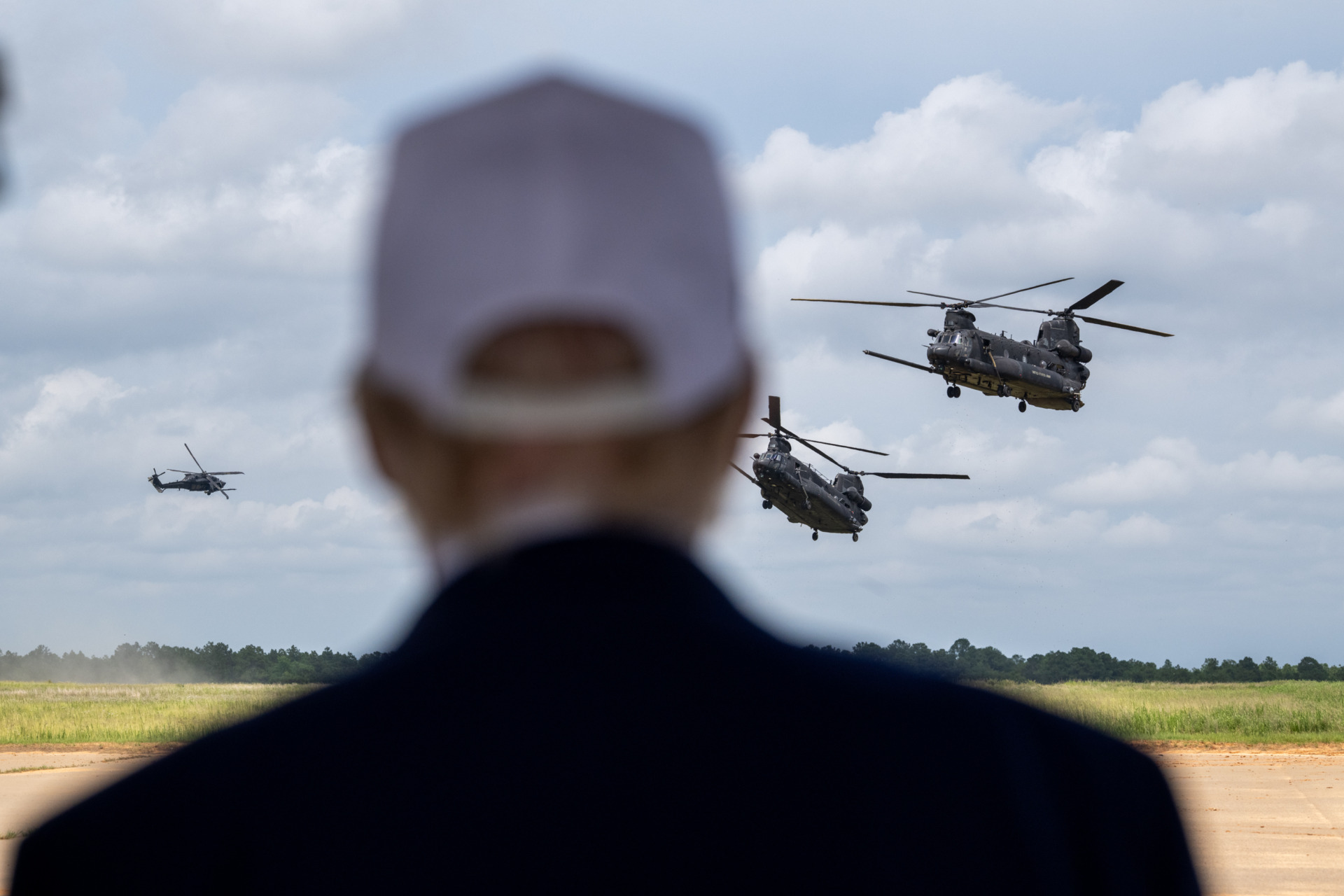
This aspect was well thematised by Pedro Baños in a book released during Trump’s first term, “El dominio mental,” which devotes pages of great interest to the “psychological geopolitics” of recent years following the hypothesis that the statements and attitudes of the U.S. President cannot be exclusively attributed to his temperament, but also to the vision of a significant sector of Washington’s upper echelons, according to which the world risks escaping U.S. influence too quickly, making it necessary to consolidate control over strategic areas and resources as soon as possible.
Strategic narratives and “cognitive warfare”
The shift goes further still. Beyond dismantling key pillars of U.S. soft power, the new administration appears prepared to deploy tactics commonly described as “cognitive warfare” — a concept widely used in NATO assessments of Russian and Chinese information operations. In doing so, Washington risks adopting tools it has long criticised in its strategic competitors.
This is clearly seen in the case of Greenland. Following Trump’s statements that Greenland should belong to the U.S. for national security reasons, remarks by Deputy Chief of Staff Stephen Miller caused an uproar. In an interview with CNN, Miller sought to undermine the very legitimacy of Danish sovereignty over Greenland: “What is the basis of their territorial claim? What is their basis of having Greenland as a colony of Denmark?” These statements are comparable in form and content to the “strategic narratives” that have often been attributed to Moscow and Beijing in recent years.
Related Articles
Here is a list of articles selected by our Editorial Board that have gained significant interest from the public:
Greenland and the colonial question
When tensions over Greenland between the United States, Denmark and the European Union (EU) still appeared manageable, some analysts noted that Danish colonial rule had largely escaped the level of scrutiny directed at other European powers. Unlike France or Britain — and even Italy — Denmark was never subject to the same degree of post-colonial reckoning, in part because its imperial ambitions unfolded far from Africa and the main theatres of decolonisation, in the remote Arctic.
That history, however, remains politically sensitive within Greenland, where support for independence from Copenhagen is longstanding. Recent polls suggest that while pro-independence sentiment is significant, there is limited backing for annexation by the United States.
Even so, several media reports have indicated that Washington may be seeking to engage with, and potentially influence, pro-independence currents through diplomatic outreach, information channels and financial engagement. What stands out is that such rhetorical and political pressure is being directed at a NATO ally and EU member state — Denmark — in a manner that departs from the more discreet, negotiated approaches traditionally used among Western partners.
This places NATO and the European Union in an awkward position. Both have previously framed “cognitive warfare” and information interference as tools primarily associated with Russia and China. The use of similar tactics within the Western alliance risks complicating that narrative and exposing strategic inconsistencies.
The risk of accelerated decline
What will be the consequences of the decline of American soft power? This is the question that naturally arises after listing the three factors contributing to Washington’s current reputational crisis: President Trump’s statements, the structural disinvestment in institutions dedicated to public diplomacy, and the rhetorical offensives against partners, allies, and satellites.
One hypothesis can and must be formulated: the crisis of soft power risks accelerating the decline of U.S. power in the world, activating and speeding up centrifugal dynamics that might otherwise have taken years to fully manifest. If inspiring fear is indeed a strategy to reaffirm U.S. interests in a world moving away from unipolarity, recent developments could paradoxically act as a historical accelerator of that very trend.
** **
This article was originally published under Creative Commons by 360info™.
Editor’s Note: The opinions expressed here by the authors are their own, not those of impakter.com — In the Cover Photo: U.S. President Donald Trump delivers remarks at the America Business Forum Miami at the Kaseya Center in Miami, Florida, Wednesday, Nov. 5, 2025. Cover Photo Credit: White House / Molly Riley.