Impakter
  • Environment
    • Biodiversity
    • Climate Change
    • Circular Economy
    • Energy
  • FINANCE
    • ESG News
    • Sustainable Finance
    • Business
  • TECH
    • Start-up
    • AI & Machine Learning
    • Green Tech
  • Industry News
    • Entertainment
    • Food and Agriculture
    • Health
    • Politics & Foreign Affairs
    • Philanthropy
    • Science
    • Sport
  • Editorial Series
    • SDGs Series
    • Shape Your Future
    • Sustainable Cities
      • Copenhagen
      • San Francisco
      • Seattle
      • Sydney
  • About us
    • Company
    • Team
    • Global Leaders
    • Partners
    • Write for Impakter
    • Contact Us
    • Privacy Policy
No Result
View All Result
Impakter logo
No Result
View All Result
Europe advances clean energy goals with renewables and fusion after blackout.

In the wake of a historic blackout, Europe isn’t backing down — it’s investing in renewables, cutting costs, and chasing fusion as part of its long-term energy vision.

After the Blackout: Europe’s New Energy Future

With fossil fuels faltering and the grid growing volatile, Europe isn't just doubling down on renewables — it's drafting a bold new playbook for energy, one that includes fusion dreams, falling prices, and a reckoning with the myths still haunting clean power.

Georges ArbajebyGeorges Arbaje
May 9, 2025
in Energy, ESG News
0

Let’s rewind for a moment. Not too long ago, Spain and Portugal plunged into darkness — a vast blackout, so synchronized, it felt like a prelude to a cyberpunk dystopia. Screens died, trains halted, and in the confusion, one word surged to the surface like a headline typed in all caps: renewables.

The accusation came quickly and loudly. It was as if solar panels conspired with wind turbines to yank the plug on the Iberian peninsula. But, as we’ve already broken down, the truth was far messier — and far more revealing. Renewables didn’t cause the crisis. They cushioned it.

Therefore, as the continent steadies itself post-blackout, a bigger question looms: What does renewable energy mean for Europe right now?

The Price is Falling, But the Stakes Are Rising

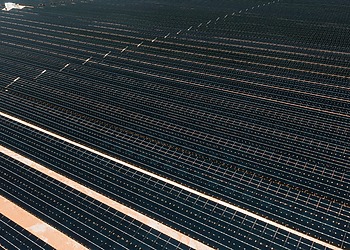
If April’s electricity prices are any indication, clean energy isn’t just surviving — it’s thriving. According to GMK Center, electricity prices across Europe nosedived last month. The why? A perfect storm of increased renewable output, low gas demand, and milder weather.

The perennial bellwether Germany saw prices drop to just over €50 per MWh — a steep plunge from previous months. Spain and Portugal followed suit, echoing a continent-wide trend: the more wind and sun in the mix, the lower the cost of keeping the lights on.

But here’s the kicker: this isn’t just a happy accident of spring breezes. It’s the payoff of policy, infrastructure, and momentum, and Europe is not slowing down.

From Grids to Stars: Enter Fusion

While wind farms spin and solar panels soak in the sun, Europe is also chasing something far more sci-fi: fusion energy. Yes, the holy grail of clean power—energy from the stars, bottled for Earth. And the EU wants a front-row seat.

Recently, the European Commission laid out its roadmap toward fusion, sketching a vision that stretches into the 2030s. The plan includes heavy public-private collaboration, scaled-up testing, and building on ITER’s advances. The aim? Achieve a net energy gain — something humanity has never done with fusion — and start integrating this power into Europe’s future grid.

It’s ambitious. Risky. Expensive. But let’s be honest: so was the entire concept of a united renewable grid twenty years ago.

The Myth Still Haunting Clean Energy

And yet, after all the progress, we still see the same reflex: blame clean energy when things go dark.

What the blackout taught us is that perception lags behind reality. Clean energy is now the backbone of European electricity. But in times of instability, old narratives resurface like ghosts — that renewables are unreliable, that we’re not ready, that we need to return to the comfort of coal or gas.

The truth? Europe is building something resilient. Not perfect. Not glitch-free. But resilient. The answer isn’t to backpedal — it’s to double down.

What Comes Next

Europe’s clean energy future isn’t some far-off ideal — it’s already in motion. You can see it in the policies being passed, in the grids being reworked, and in the steady advances happening behind the scenes in fusion labs. But it’s also unfolding in a much messier arena: public opinion, political narratives, and the stories we tell when things go wrong.

The blackout was a flashpoint — a reminder that even in a system built for resilience, failures can still happen. What matters now is how Europe responds.

At this moment, electricity prices are down across the board. Fusion is starting to look less like science fiction and more like a long-term bet. Renewables aren’t just holding — they’re becoming the default. And the grid? It’s evolving, slowly but surely, to match the pace of the transition.

The conversation is changing, too. Less about blame. More about preparation. Less about whether clean energy works. More about how we make it work better.

This isn’t a question of belief. It’s a question of follow-through.


Editor’s Note: The opinions expressed here by the authors are their own, not those of impakter.com — Cover Photo Credit: FILIP BAOTIĆ
Tags: BlackoutenergyESGEUEuropefusion energyRenewable energySustainability
Previous Post

Does the United States Really Want or Need Immigrants?

Next Post

Why Shoe Soles Disintegrate and How to Prevent It

Related Posts

ESG News regarding U.S. lifting more sanctions on Venezuela, Egypt securing $1.8 billion renewable energy deals, U.S. pushing G7 allies to reduce reliance on China for critical minerals, richest 1% exceeding annual carbon share in just 10 days.
Business

U.S. Considers Lifting More Venezuela Sanctions

Today’s ESG Updates US May Lift Venezuela Sanctions to Boost Oil & IMF Aid: US could ease sanctions to support...

byAnastasiia Barmotina
January 12, 2026
ESG News regarding China restricting industrial renewable exports, UN warning that US climate treaty exit harms economy, UK firms lowering wage forecasts despite inflation, Meta partnering with TerraPower for new nuclear reactors.
Business

To Save the Grid, China Forces Industries to Go Off-Network

Today’s ESG Updates China Limits Grid Exports for New Industrial Solar & Wind: China is encouraging companies to store green...

byEge Can Alparslan
January 9, 2026
EU officials respond to the US withdrawal from the UN climate treaty during a press briefing.
Business

US Withdrawal From UN Climate Treaty Raises Global Climate Stability Concerns

Today’s ESG Updates US Retreats From UN Climate Treaty: The EU condemns the United States’ decision to withdraw from the...

byJana Deghidy
January 8, 2026
ESG News regarding critical minerals and Greenland
Business

Greenland’s Melting Ice and the Race for Critical Minerals

Today’s ESG Updates Vast Resources Under Greenland's Ice: Untapped critical and rare-earth mineral deposits emerge, along with questions about mining...

byAriq Haidar
January 8, 2026
Orsted challenges U.S. suspension of offshore wind projects; global mandatory ESG reporting accelerates; ESG ratings for Saudi firm Maharah; EU legal certainty on sustainability reporting.
Business

Orsted’s US Wind Project Challenge Highlights Regulatory Risk in Clean Energy Investment

Today’s ESG Updates Orsted Challenges U.S. Suspension of Wind Project: Denmark-based renewable developer files court action to overturn the U.S....

byMuhammad Umer Aslam
January 5, 2026
News about sustainability in the publishing industry
Environment

How the Publishing Industry Addresses the Carbon Footprint of Books

Books are ever-present in our lives: we look through picture books when we are children, study textbooks in school and...

byAnastasiia Barmotina
January 5, 2026
Solid-State Batteries: The Bet Promising to Change Electric Vehicles
Energy

Solid-State Batteries: The Bet Promising to Change Electric Vehicles

The way we power cars is changing. Not only because electric vehicles are becoming more common, but because the technologies...

byLuis Guillermo Valdivia Chavez
December 25, 2025
What’s Next for Sustainable Development in 2026
Climate Change

What’s Next for Sustainable Development in 2026

As governments confront rising misinformation, constrained budgets, and intensifying climate risks, the need for evidence-based policy has never been greater....

byInternational Institute for Sustainable Development (IISD)
December 23, 2025
Next Post
Why Shoe Soles Disintegrate and How to Prevent It

Why Shoe Soles Disintegrate and How to Prevent It

Recent News

President Donald Trump delivers remarks at a press conference at Mar-a-Lago in Palm Beach, Florida, following Operation Absolute Resolve in Venezuela

Regime Change in Venezuela and the Crisis of Global Order

January 12, 2026
ESG News regarding U.S. lifting more sanctions on Venezuela, Egypt securing $1.8 billion renewable energy deals, U.S. pushing G7 allies to reduce reliance on China for critical minerals, richest 1% exceeding annual carbon share in just 10 days.

U.S. Considers Lifting More Venezuela Sanctions

January 12, 2026
Full-Cycle Engineer at work

Why Full-Cycle Engineering Is Becoming Critical for Sustainable Innovation

January 11, 2026
  • ESG News
  • Sustainable Finance
  • Business

© 2025 Impakter.com owned by Klimado GmbH

No Result
View All Result
  • Environment
    • Biodiversity
    • Climate Change
    • Circular Economy
    • Energy
  • FINANCE
    • ESG News
    • Sustainable Finance
    • Business
  • TECH
    • Start-up
    • AI & Machine Learning
    • Green Tech
  • Industry News
    • Entertainment
    • Food and Agriculture
    • Health
    • Politics & Foreign Affairs
    • Philanthropy
    • Science
    • Sport
  • Editorial Series
    • SDGs Series
    • Shape Your Future
    • Sustainable Cities
      • Copenhagen
      • San Francisco
      • Seattle
      • Sydney
  • About us
    • Company
    • Team
    • Global Leaders
    • Partners
    • Write for Impakter
    • Contact Us
    • Privacy Policy

© 2025 Impakter.com owned by Klimado GmbH