
Today’s ESG Updates
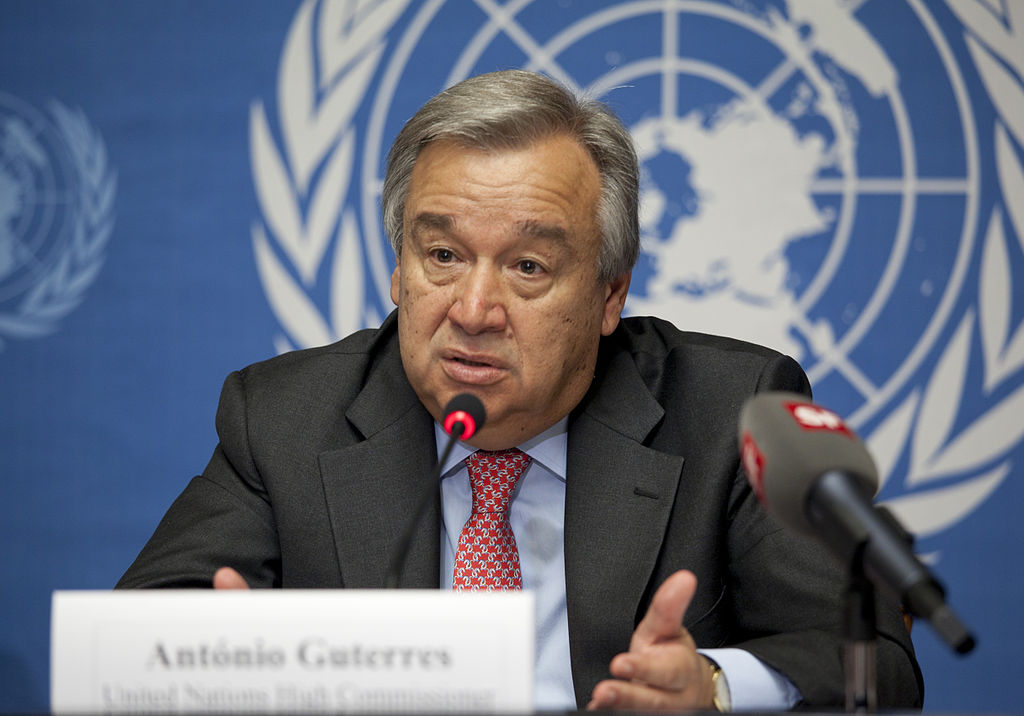
- UN Secretary-General’s View on Environment: António Guterres has called upon diplomats and policymakers to abandon the pursuit of economic growth to focus on development more sustainably.
- Germany Proposed a New Grid Law: The goal seems to be the streamlining and prioritisation of grid expansion to alleviate the growing demand to network operators.
- Companies Must Help Nature or Go Extinct: Agriculture, mining, energy, construction and finance are fundamentally dependent on healthy ecosystems for raw materials.
- TotalEnergies Will Power Google: The company will supply clean power to Google’s data center operations, connected with search and AI.
António Guterres warns about a “make-or-break moment” for the planet
The UN secretary-general, António Guterres, has called upon diplomats and policymakers to abandon the pursuit of economic growth to focus on development in a more sustainable manner. The economy today is undergoing transformation. It is characterised by rapid technological change which, on the one hand, spurs economic growth, and, on the other, makes dealing with climate change and other environmental problems urgent. This is the conflict which underlies Guterres’s position.
“We must place true value on the environment and go beyond gross domestic product as a measure of human progress and wellbeing. Let us not forget that when we destroy a forest, we are creating GDP. When we overfish, we are creating GDP.” – António Guterres.
Guterres highlights the impact of new technology on society: how automation and artificial intelligence are reshaping labor markets, exacerbating inequality in the modern world. International cooperation towards resolving these issues was the central point of the message. The UN Chief also highlighted the importance of the UN’s Sustainable Development Goals for this cooperation. Overall, Guterres sees the economic shift not as a problem but as an opportunity to embrace policies that prioritize people and the planet first, and economic development second.
***
Further reading: Global economy must move past GDP to avoid planetary disaster, warns UN chief
Klimado – Navigating climate complexity just got easier. Klimado offers a user-friendly platform for tracking local and global environmental shifts, making it an essential tool for climate-aware individuals and organizations.
Renewable energy companies should pay for grid connection costs in Germany
Germany has proposed a new draft law which has the potential to require new renewable energy companies to pay for their first point of grid connection. This draft follows the previous first-come-first-served system. The goal seems to be the streamlining and prioritisation of grid expansion to alleviate the growing demand to network operators. Presently, the costs are not fully covered by the developers, therefore the grid becomes over-packed. A new law may relieve the grid operators. This is in combination to Germany’s efforts to enhance modernisation of the country’s transmission infrastructure and also to the expansion of wind, solar and other clean energy resources. Shifting the burden of the costs of the grid to the developers of the project is a major change in policy for the largest economy in Europe.
***
Further reading: Germany wants renewables firms to shoulder cost of grid connections, draft law shows
Companies must protect nature and environment to survive themselves

Business leaders, scientists, and policy makers at an international forum on sustainability say that companies must take immediate action on the protection and restoration of nature, or they risk jeopardizing their long-term survival. According to them, most corporate strategies deal with the climate crisis by focusing on the reduction of greenhouse gas emissions. They say, however, that strategies that narrowly deal with climate issues, without factoring in the loss of biodiversity, the collapse of ecosystems, and degradation of nature, jeopardize economic prosperity and the continuity of business.
Experts in the article point out that construction and finance, as well as agriculture, mining and energy, all rely on ecosystems to provide the raw materials, water, and climate control that regulate and sustain healthy supply chains. Disruptive production and cost systems can be triggered by the continued destruction of forests, soil, oceans, and freshwater systems, and can pose system risks similar to those of the climate crisis. One speaker noted that for companies that ignore nature, the ecosystems within which they operate fail, and they may face extinction.
***
Further reading: Companies told to protect nature now or face extinction themselves

TotalEnergies signs the deal to power Google’s data centers

TotalEnergies has signed its largest-ever deal in the US. The company will supply clean power to Google’s data center operations. This deal reflects a broader picture of increasing electricity demand from Big Tech, which is driving the role of renewable power purchase agreements in decarbonising digital infrastructure. The deal includes a blend of solar and wind projects across the U.S. aimed to power Google’s cloud services, search, and AI. For Google, the deal is a part of its commitment to operate only on carbon-free energy by 2030, so it’s critical to start working towards that path for data centers, as they are among the biggest sources of electricity demand, especially as AI and cloud services evolve. Overall, this agreement is a prime example of partnerships central to combining technical advancements and sustainable development.
***
Further reading: TotalEnergies Signs its Biggest U.S. Renewable Energy Deal to Power Google Data Centers
Editor’s Note: The opinions expressed here by the authors are their own, not those of impakter.com — In the Cover Photo: António Guterres. Cover Photo Credit: Wikimedia Commons