Today’s ESG Updates
- EU SFDR 2.0 Draft Overhaul: The European Commission plans to eliminate article 8 and 9 labels, and introduce three new mandatory sustainability product categories.
- Tornado Devastates Southern Brazil: About 90% of Rio Bonito do Iguacu was flattened by a strong tornado, leaving at least six people dead and 750 injured, declaring the area a “war zone.”
- New Zealand Wildfire Forces Evacuations: In Tongariro National Park, firefighters are fighting a 1100-hectare wildfire, airlifting about 40 hikers to safety while deploying additional planes and ground crews.
- Philippines Warned of Super Typhoon Fung-Wong: Typhoon Fung-Wong poses a threat to the eastern Philippines with destructive winds, heavy rainfall in several areas.
EU prepares major overhaul of ESG disclosure rules
A leaked draft of Sustainable Finance Disclosure Regulation (SFDR) 2.0 suggests removing article 8 and 9 labels, introducing three new mandatory sustainability product categories, and relaxing PAI reporting obligations to reduce the heavy data burden on asset managers. The overhaul aims to clarify product classification, prevent abuse of sustainability labels for marketing purposes, and ensure uniformity in ESG claims across the EU. When the regulation is officially released later this month, asset managers might need to update internal controls, investment screening procedures, marketing language, and product documentation.
***
Further reading: SFDR 2.0 Draft Suggests Overhaul of EU ESG Disclosure Framework
Powerful tornado devastates Southern Brazil
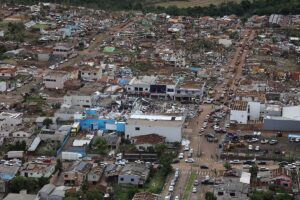
A tornado with winds of up to 250 km/h hit the town of Rio Bonito do Iguacu in Parana and razed about 90% of homes and buildings. At least six people have died, while more than 750 residents are reportedly injured, some of whom have undergone surgery. Witnesses said the scene resembled a “war zone,” with cars overturned and debris scattered down streets, while surrounding farmland remained relatively untouched.
The destructive weather lasted less than a minute but wrought catastrophic damage. Scientists say that warmer temperatures and increased moisture brought on by climate change could be amplifying tornado frequency and strength. As many as three days of national mourning have been declared, during which time emergency services fanned out to distribute food, hygiene products, tarpaulins, and mattresses to families affected. Recovery continues, with officials warning casualty figures may further rise as search and rescue operations continue.
***
Further reading: Powerful tornado wrecks Brazil town, killing six and injuring hundreds
Klimado – Navigating climate complexity just got easier. Klimado offers a user-friendly platform for tracking local and global environmental shifts, making it an essential tool for climate-aware individuals and organizations.
New Zealand ramps up aerial efforts to combat massive wildfire
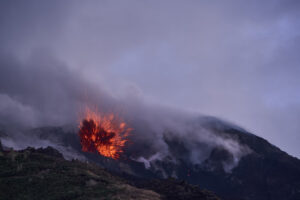
Authorities in New Zealand have deployed additional aircraft to battle a wildfire that has torn through an estimated 1,100 hectares (4.2 square miles) of Tongariro National Park on the country’s central North Island. The fire, which broke out on Saturday, forced the airlift to safety of about 40 hikers, while efforts to beat back the flames were suspended overnight for safety reasons. Fire and Emergency New Zealand has now marshaled eight helicopters and three planes to take part in the fight, supported by six fire trucks and five tankers on the ground. Assistant commander Craig Gold said air attacks are more effective than adding more ground crews given the difficult terrain and the spread of the fire.
The wildfire has exposed the vulnerability of popular areas for hiking to climate-driven disasters as officials continued their aerial reconnaissance to get the full extent of the fire. While no fatalities were reported, authorities remain on high alert, coordinating at high levels with local departments to ensure visitors and residents are safe. The ongoing situation adds to growing intensity in recent years with environmental experts explaining it through rising global temperatures and prolonged dry periods.
***
Further reading: New Zealand authorities send extra fire planes to battle 1,100-hectare wildfire

Philippines faces life-threatening storm surges as Typhoon Fung-Wong approaches
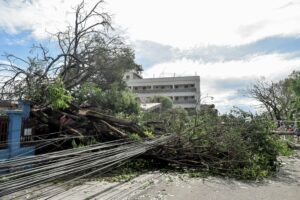
The Philippines has issued severe warnings as Typhoon Fung-Wong-locally called Uwan, starts to intensify towards super typhoon strength along the country’s eastern coast. The storm, already battering eastern provinces with heavy rain and strong winds, has a huge circulation of 1,500 kilometres-932 miles. PAGASA forecaster Benison Estareja said it currently carries sustained winds of 140 kph with gusts reaching 170 kph, but is expected to reach 185 kph upon crossing land, destroying homes and uprooting trees. Residents in the coast have been called to higher grounds and have been advised to suspend marine activities as authorities prepare for storm surges of up to five meters.
This warning comes just days after Typhoon Kalmaegi passed through the region, leaving more than 200 people dead in the Philippines and hundreds of thousands displaced. Experts say this and other tropical storms are strongly linked to global temperature increase, thus showing the heightening climate risks for the Pacific countries. Classes have already been suspended by the local governments, and flights have been canceled to prioritize safety. The disaster highlights the continued vulnerability of the Philippines and its neighbors to climate-driven extreme weather events.
***
Further reading: Philippines warns of deadly storm surges as Typhoon Fung-Wong nears super typhoon strength
Editor’s Note: The opinions expressed here by the authors are their own, not those of impakter.com — In the Cover Photo: EU flags at the European Commission Berlaymont building Cover Photo Credit: Guillaume Périgois