Impakter
  • Environment
    • Biodiversity
    • Climate Change
    • Circular Economy
    • Energy
  • FINANCE
    • ESG News
    • Sustainable Finance
    • Business
  • TECH
    • Start-up
    • AI & Machine Learning
    • Green Tech
  • Industry News
    • Entertainment
    • Food and Agriculture
    • Health
    • Politics & Foreign Affairs
    • Philanthropy
    • Science
    • Sport
  • Editorial Series
    • SDGs Series
    • Shape Your Future
    • Sustainable Cities
      • Copenhagen
      • San Francisco
      • Seattle
      • Sydney
  • About us
    • Company
    • Team
    • Partners
    • Write for Impakter
    • Contact Us
    • Privacy Policy
No Result
View All Result
Impakter logo
No Result
View All Result
ESG News regarding Trump’s move to dismantle vehicle regulation; ESB acting against unsustainable banks; Solar and wind energy becoming expensive; Strikes in Kenya

The announcement marks the second climate-risk related fine by the ECB.

ECB Fines Crédit Agricole for Climate Risk Management Failure

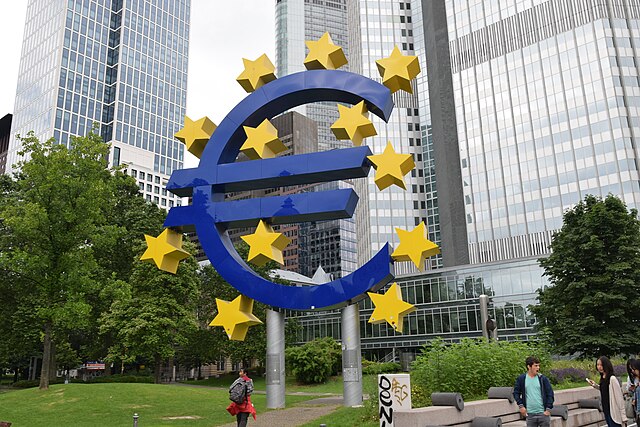
The European Central Bank has issued a fine of €7.6 million after Crédit Agricole failed to address climate risks

Fedor SukhoibyFedor Sukhoi
February 17, 2026
in Business, Climate Change, Energy, ESG News, Sustainable Finance
0

Today’s ESG Updates:

  • ECB Fining Crédit Agricole Over Sustainability Issues: Banks are expected to embed climate risks into credit risk assessments, stress testing, internal controls and overall business strategy.
  • Trump’s Office is Removing Vehicle Emissions Regulations: The administration removes the legal basis for federal limits on tailpipe emissions and weakens the regulatory architecture supporting U.S. climate policy.
  • Électricité de France Warns Solar and Wind Energy Fields: The fast growth of solar and wind energy in France and the rest of Europe is increasingly straining the operation and finances of its nuclear power plants.
  • A Massive Strike In Kenyan Airports Disrupts Travel Throughout the Region: The employees have stated a concern about their employment conditions, the number of staff, and restructuring, which have caused the staff to take industrial action.

The European Central Bank (ECB) has fined Crédit Agricole €7.6 million, following the bank’s failure to address climate risk issues and not follow the deadlines. The ECB’s roadmap requires banks to diligently implement climate risk into their credit assessments. The situation seems to indicate a plan to enforce climate risk not only as a sustainability issue, but as a financial one as well. The supervisors have indicated that a lack of progress in data, scenario analysis, and transition planning could result in banks facing material losses as the EU moves forward in its decarbonisation plan. This enforcement action makes it clear that climate risk management is now a part of the core prudential supervision of the eurozone banking system and that there are financial implications for banks that do not comply.

***

Further reading: ECB Fines Crédit Agricole €7.6 Million for Not Meeting Climate Risk Expectations


Trump revokes nationwide emissions standard
ESG News regarding Trump’s move to dismantle vehicle regulation; ESB acting against unsustainable banks; Solar and wind energy becoming expensive; Strikes in Kenya
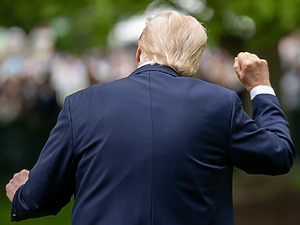
Trump’s Administration is trying to dismantle vehicle regulation. Photo Credit: Wikimedia Commons

The administration of President Donald Trump keeps pushing the anti-ESG agenda with the recent termination of the Environmental Protection Agency’s (EPA) ‘endangerment finding’. It was a cornerstone of nationwide regulation of greenhouse gas emissions as part of the Clean Air Act. Framed as an action to reduce vehicle prices and as a regulatory correction, the decision removes the legal basis for federal tailpipe emissions limits. Critics find the move disastrous to the U.S. climate commitments, while the policy is expected to be legally challenged in multiple states.

“This flawed legal theory took the agency outside the scope of its statutory authority in multiple respects,” the EPA stated.

***
Further reading: Trump Revokes U.S. Climate Endangerment Finding, Eliminates Vehicle Emissions Standards


Featured ESG Tool of the Week:
Klimado – Navigating climate complexity just got easier. Klimado offers a user-friendly platform for tracking local and global environmental shifts, making it an essential tool for climate-aware individuals and organisations.

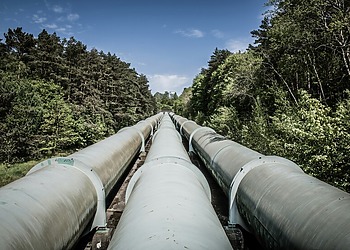
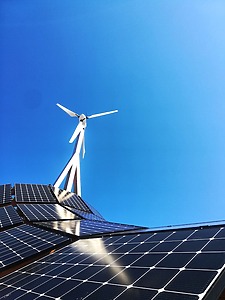
Growing solar and wind generation is increasing equipment wear and maintenance costs
ESG News regarding Trump’s move to dismantle vehicle regulation; ESB acting against unsustainable banks; Solar and wind energy becoming expensive; Strikes in Kenya
a 60-page report highlights the growing challenges nuclear plant operators face; Photo Credit: Nazrin Babashova

The Électricité de France (EDF) has recently pointed out that the fast growth of solar and wind energy in France and the rest of Europe is increasingly straining the operation and finances of its nuclear power plants. In this regard, EDF has indicated that the sharp growth of renewable energy sources, which are often granted priority access to the grid and economic support, is driving down the wholesale market prices of electricity during periods of high wind and solar power production. This makes it more difficult for nuclear power plants to remain profitable, as they are intended to be stable base-load power plants with high fixed costs and low flexibility.

The modernisation of 13 turbine-generator units, each with a capacity of 900 megawatts, to increase their capacity by around 35 megawatts each in the coming years is expected to cost around €1.4 billion, according to the report. This development is indicative of rising tensions in the design of the European electricity market, as renewable energy sources are at the heart of the EU’s decarbonization strategy.

***

Further reading: EDF Warns Solar, Wind Surge Straining Nuclear Fleet Costs


LinkedIn
For the latest updates, visit our LinkedIn page

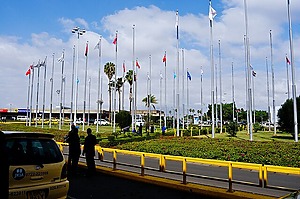
Delays occur in Kenya airport due to a strike by the aviation union
ESG News regarding Trump’s move to dismantle vehicle regulation; ESB acting against unsustainable banks; Solar and wind energy becoming expensive; Strikes in Kenya
Jomo Kenyatta International Airport; Photo Credit: Wikimedia Commons

A massive strike unfolds in Kenya. The dispute revolves around employees represented by a union in the aviation industry and the Kenya Airports Authority (KAA), which runs the country’s major airports. From what has been reported, the employees have stated a concern about their employment conditions, the number of staff, and restructuring, which have caused the staff to take industrial action. This has affected employees in passenger processing and in operations on the runway. 

As the main East African regional hub, Kenya is critical for the movement of people, goods, and services, as well as for the tourism sector. The disruption in airport operations also negatively impacts the economy and the movement of goods and services outside the aviation industry. This includes the driver of the trade and supply chain. There have been attempts by authorities and union representatives to reach an agreement to end the dispute and resume normal operations. This dispute has highlighted the operational risks that are present in the infrastructure in developing countries. This is especially so when the developing countries are experiencing changes in labour relations, changes in governance, and changes in management in the public sector.

***

Further readings: Worker strike delays flights at Kenya’s main airport


Editor’s Note: The opinions expressed here by the authors are their own, not those of impakter.com — Cover Photo Credit: Wikimedia Commons
Tags: Climate ChangeEqual RightsESG toolsolar powerwind power
Previous Post

Winter Olympics: End Fossil Fuel Sponsorships, Athletes Say

Next Post

How Climate Change Is Reshaping Arctic Geopolitics

Related Posts

How Climate Change Is Reshaping Arctic Geopolitics
Climate Change

How Climate Change Is Reshaping Arctic Geopolitics

Once a remote and largely inaccessible region, the Arctic has become the focus of far-reaching international developments. In recent years, competition among...

byPier Paolo Raimondi - Senior Researcher at the Energy, Climate and Resources (ECR) Program of the Istituto Affari Internazionali (IAI)
February 17, 2026
How an Intersectional Approach Can Help Us Address Vulnerability to Climate Change
Climate Change

How an Intersectional Approach Can Help Us Address Vulnerability to Climate Change

Different forms of discrimination and marginalization — such as racism, ableism, and discrimination on the basis of gender identity —...

byInternational Institute for Sustainable Development (IISD)
February 16, 2026
Can Human Behavior Explain the Recent Spike in Shark Attacks?
Environment

Can Human Behavior Explain the Recent Spike in Shark Attacks?

In January, headlines were dominated by the four shark bites occurring within 48 hours off Australia’s coast. This is not...

byLena McDonough
February 16, 2026
biodiversity loss
Biodiversity

The Economics of Biodiversity Loss

In the 1990s, India’s vulture population collapsed due to the unintended knock-on effect of a veterinary drug for cattle, with...

byStefano Giglio - Professor at Yale Universityand2 others
February 12, 2026
News about grey-headed flying foxes dying due to heatwaves caused by climate change.
Climate Change

Climate Change Brings Another Species Closer to Extinction

In January 2026, a series of extreme heatwaves across South-Eastern Australia caused one of the worst mass mortality events for...

byAnastasiia Barmotina
February 11, 2026
Underwater Wall to Protect the ‘Doomsday Glacier’: Necessary Intervention or Costly Distraction?
Climate Change

Underwater Wall to Protect the ‘Doomsday Glacier’: Necessary Intervention or Costly Distraction?

Thwaites Glacier in Antarctica earned its dramatic nickname, the “Doomsday Glacier,” because its collapse could trigger a catastrophic rise in...

byBenjamin Clabault
February 11, 2026
The Era of ‘Global Water Bankruptcy’ Has Begun
Climate Change

The Era of ‘Global Water Bankruptcy’ Has Begun

Humanity’s long-term water usage and damage have exceeded nature's renewal and safe limits, a situation scientists and the media have...

byNmesoma Ezetu
February 10, 2026
How Climate Change Is Driving Evolution
Climate Change

How Climate Change Is Driving Evolution

As global temperatures continue to rise at alarming rates, climate change threatens to wipe out entire groups of animal species....

byYuxi Lim
February 10, 2026
Next Post
How Climate Change Is Reshaping Arctic Geopolitics

How Climate Change Is Reshaping Arctic Geopolitics

Recent News

How Climate Change Is Reshaping Arctic Geopolitics

How Climate Change Is Reshaping Arctic Geopolitics

February 17, 2026
ESG News regarding Trump’s move to dismantle vehicle regulation; ESB acting against unsustainable banks; Solar and wind energy becoming expensive; Strikes in Kenya

ECB Fines Crédit Agricole for Climate Risk Management Failure

February 17, 2026
News about Olympic athletes requesting to end fossil fuel sponsorships.

Winter Olympics: End Fossil Fuel Sponsorships, Athletes Say

February 16, 2026
  • ESG News
  • Sustainable Finance
  • Business

© 2025 Impakter.com owned by Klimado GmbH

No Result
View All Result
  • Environment
    • Biodiversity
    • Climate Change
    • Circular Economy
    • Energy
  • FINANCE
    • ESG News
    • Sustainable Finance
    • Business
  • TECH
    • Start-up
    • AI & Machine Learning
    • Green Tech
  • Industry News
    • Entertainment
    • Food and Agriculture
    • Health
    • Politics & Foreign Affairs
    • Philanthropy
    • Science
    • Sport
  • Editorial Series
    • SDGs Series
    • Shape Your Future
    • Sustainable Cities
      • Copenhagen
      • San Francisco
      • Seattle
      • Sydney
  • About us
    • Company
    • Team
    • Partners
    • Write for Impakter
    • Contact Us
    • Privacy Policy

© 2025 Impakter.com owned by Klimado GmbH