Impakter
  • Environment
    • Biodiversity
    • Climate Change
    • Circular Economy
    • Energy
  • FINANCE
    • ESG News
    • Sustainable Finance
    • Business
  • TECH
    • Start-up
    • AI & Machine Learning
    • Green Tech
  • Industry News
    • Entertainment
    • Food and Agriculture
    • Health
    • Politics & Foreign Affairs
    • Philanthropy
    • Science
    • Sport
  • Editorial Series
    • SDGs Series
    • Shape Your Future
    • Sustainable Cities
      • Copenhagen
      • San Francisco
      • Seattle
      • Sydney
  • About us
    • Company
    • Team
    • Partners
    • Write for Impakter
    • Contact Us
    • Privacy Policy
No Result
View All Result
Impakter logo
No Result
View All Result
E-Mobility as a Case Study for Greener, More Resilient Economies 

E-Mobility as a Case Study for Greener, More Resilient Economies 

Sarbinder Singh - Director of Investments at P4G PartnershipsbySarbinder Singh - Director of Investments at P4G Partnerships
September 15, 2020
in Environment, SDG Series
0

The global onset of COVID-19 has drastically affected all of us — through the fabric of our daily lives, and also through its reverberations in economic systems on local and global scales. Green, innovative, agile and scalable solutions are being demanded of our governments, our employers and our societies. As the last decade has proven, global economic sustainability and resilience is intrinsically intertwined with social and environmental empowerment.

How do we build a healthier, more economically inclusive global society while also keeping carbon emissions in decline?

One of the sectors that has been most affected by the global pandemic is public transportation, be it road, air, freight or sea; for work, business or for leisure. This impact is even more pronounced in developing countries, where significant portions of the population are primarily dependent on public transport systems to get around. At the same time, the adverse impact on public transportation has visibly resulted in drastic reductions of CO2 emissions and fossil fuel pollution, provoking the thought: How do we build a healthier, more economically inclusive global society while also keeping carbon emissions in decline?

Impact investing

This provides an opportunity to “Build Back Better and Greener,” creating public transportation systems for a greener environment and for people, by adopting emerging zero-emission transportation technologies.

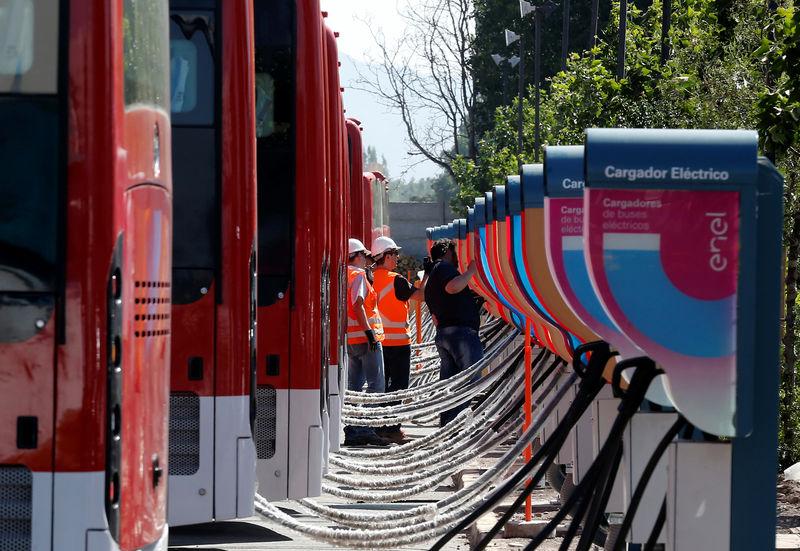
Partnering for Green Growth and the Global Goals 2030 (P4G) has invested in a portfolio of public-private partnerships advancing the transition towards e-mobility in Latin America, including the Zero Emission Bus Rapid-deployment Accelerator (ZEBRA), which is now in its second phase of P4G funding. ZEBRA, an example of P4G’s catalytic investment, works with city lawmakers and bus manufacturers to “pave” the way for the widespread transition of public transportation from diesel bus fleets to zero-emissions fleets in some of the region’s most populous cities, including Mexico City, Mexico; Medellín, Colombia; Santiago, Chile; and São Paulo, Brazil. Between 2018 and 2019, with leadership from C40 and the International Council on Clean Transportation (ICCT), ZEBRA has facilitated accelerating the e-bus transition in Latin America from 104 buses on the road to 460, and a total investment in the project from USD 30 million to more than USD 424 million. In its next phase, the partnership is aiming to more than triple this investment, to USD 1.6 billion, and exponentially increase bus deployment to 3,600 vehicles.

To achieve this level of speed and success, P4G-funded e-mobility partnerships collaborate with city leaders, corporations, and pre-established in-country P4G working groups called “National Platforms” to take a project-based approach to zero-emission transportation. The partnerships with this ecosystem of collaborators define parameters for enabling environments that support the scaling of electric vehicle deployment. These include:

  • The economic viability of the vehicles within pre-existing transportation systems
  • Creating a level playing field among operators to facilitate the adoption of zero-emission buses in their fleets
  • Building technical and operational analyses of zero-emissions vehicles at the pilot level
  • Working with suppliers to ensure that the number of buses needed matches their vehicle procurement capacity
  • Pilot deployment of electric vehicles in various segments including public and cargo transportation

These P4G partnerships are also working on making capital available for investment in zero-emissions buses and the associated infrastructure; and providing policy recommendations to improve the viability of the zero-emission transition.


Related Articles: The Future of Public Transportation | Scaling Up Carbon Removal

The partnerships are not only working with electric vehicle suppliers and users/operators but also utilities who are key to providing charging infrastructure for e-mobility. The charging of electric vehicles during off-peak hours, especially overnight, supports utility companies in increasing their revenue-generating efficiency potentially creating a surplus of energy that can then be shared with electric vehicle operators to improve the economic viability of this electric vehicle operation. With the complementary support of policy and regulatory interventions, these surpluses strengthen the business case of e-mobility investments across the value chain.

The transition to zero-emission buses provides an opportunity to invest in a greener economy through a blended finance model that mitigates technology risks while simultaneously providing access to cheaper green capital investment.

In the longer term, the success of this P4G-funded portfolio of e-mobility partnerships and investment fund will provide a model for its adoption in Latin American cities and beyond – making cities healthier, more inclusive and sustainable for the long term.


Editor’s Note: The opinions expressed here by Impakter.com columnists are their own, not those of Impakter.com. — In the Featured Photo: A fleet of electric buses. Featured Photo Credit: REUTERS/Rodrigo Garrido.

Tags: COVID-19e-mobilityLatin AmericaP4GpandemictransportationZEBRAZero-emissions
Previous Post

Virtual Theatre Began as Temporary Solution But It Offers Much More

Next Post

Time to Unleash Africa’s Greatest Untapped Power: Women

Related Posts

One Health in the media
Biodiversity

One Health in the Media: Why Coverage Must Improve

As global attention has pivoted to other issues, including security tensions, trade competition, artificial intelligence, and a host of other...

byRichard Seifman - Former World Bank Senior Health Advisor and U.S. Senior Foreign Service Officer
February 13, 2026
One Health Education Is Essential for Pandemic Preparedness and Global Security
Education

One Health Education Is Essential for Pandemic Preparedness and Global Security

The One Health concept/approach offers a powerful tool for public health and biomedical research globally. The combined integration of human medicine,...

byDr. Bruce Kaplan - Epidemiologist formerly at the CDC/EIS and USDA-FSIS Office of Public Health and Science & Co-Founder of the One Health Initiativeand2 others
January 29, 2026
President Donald Trump delivers remarks at a press conference at Mar-a-Lago in Palm Beach, Florida, following Operation Absolute Resolve in Venezuela
Energy

Regime Change in Venezuela and the Crisis of Global Order

The US capture of Venezuela’s President Nicolás Maduro and his wife, Cilia Flores, from their official residence in Caracas in a military...

byCarlos Frederico Pereira da Silva Gama - Author & Assistant Professor at the Shiv Nadar Institution of Eminence
January 12, 2026
One Health
Biodiversity

Why and How to Apply the One Health Concept

One Health can be a complex and sometimes jargon-filled concept. Put simply: "One Health is the collaborative efforts of multiple...

byOne Health Initiative
November 6, 2025
financial bubble
ESG FINANCE

Waiting for a Bubble to Burst: Decoding the Next American Financial Crisis

For much of the last century, financial logic was governed by a simple, foundational rule: equities for growth, representing a...

byDeepanshu Mohan - Professor of Economics and Dean, IDEAS, Jindal School of Liberal Arts and Humanities, O.P. Jindal Global Universityand1 others
November 5, 2025
A patrially broken window with vegetation beyond it.
Environment

How to Reduce Anti-Activist Crime in Latin America

Last month, Global Witness released a report titled “Roots of Resistance: Documenting the Global Struggles of Defenders Protecting Land and...

byBenjamin Clabault
October 17, 2025
A fisherman paddles a canoe on a massive lake.
Politics & Foreign Affairs

How Indigenous Guatemalans Fought Pollution Themselves

On July 23, 2025, Indigenous Guatemalan activists descended to the shores of their beloved Lake Atitlán and, with nets, tubs,...

byBenjamin Clabault
October 7, 2025
Avian Influenza
Health

Avian Influenza: First Global Dialogue Targets the Rising Pandemic Threat

In an unprecedented response to the rapid global spread of high pathogenicity avian influenza (HPAI), stakeholders and experts from across...

byThe Food and Agriculture Organization of the United Nations (FAO)
September 12, 2025
Next Post
Time to Unleash Africa’s Greatest Untapped Power: Women

Time to Unleash Africa's Greatest Untapped Power: Women

Recent News

A woman going through the checking account guide

How Checking Accounts Work: Simple Steps to Get Started Fast

February 20, 2026
Coal plants get reprieve on mercury limits, Striking unions fail to halt Milei's sweeping labor bill, Sweden's regulator reviews Swedbank's compliance controls, France backs INEOS decarbonization with €300M

Trump Admin Weakens Coal Plant Mercury Regulations

February 20, 2026
Crowds and filmmakers on the red carpet at the 76th Berlin International Film Festival in 2026

At Berlinale 2026, Artists Refuse the Comfort of Neutrality

February 20, 2026
  • ESG News
  • Sustainable Finance
  • Business

© 2025 Impakter.com owned by Klimado GmbH

No Result
View All Result
  • Environment
    • Biodiversity
    • Climate Change
    • Circular Economy
    • Energy
  • FINANCE
    • ESG News
    • Sustainable Finance
    • Business
  • TECH
    • Start-up
    • AI & Machine Learning
    • Green Tech
  • Industry News
    • Entertainment
    • Food and Agriculture
    • Health
    • Politics & Foreign Affairs
    • Philanthropy
    • Science
    • Sport
  • Editorial Series
    • SDGs Series
    • Shape Your Future
    • Sustainable Cities
      • Copenhagen
      • San Francisco
      • Seattle
      • Sydney
  • About us
    • Company
    • Team
    • Partners
    • Write for Impakter
    • Contact Us
    • Privacy Policy

© 2025 Impakter.com owned by Klimado GmbH