A trip to Uganda generally begins and ends in Entebbe, where the banks of the largest lake in Africa, Lake Victoria, serve as a welcome mat. A visitor wouldn’t realize at first glance that this wet, lush, alive, and green vista is an inaccurate impression of Uganda further inland and away from this expansive reservoir that feeds the life-giving Nile. As one travels out into the wildly diverse expanse of Uganda’s territories, there lies terrain defined by dryness.
The Colonial and Cultural History of Uganda
In Uganda, remnants of history are visceral. The kingdoms of Buganda, Kitara, and Karagwe, which inhabited and ruled the land long before Arab and Indian traders, British explorers, and Christian missionaries came to lay their claims on the region, are still omnipresent in the ethnic groups that stronghold territories of this culturally diverse country. Uganda is a patchwork of different dialects, ecosystems, and societies.
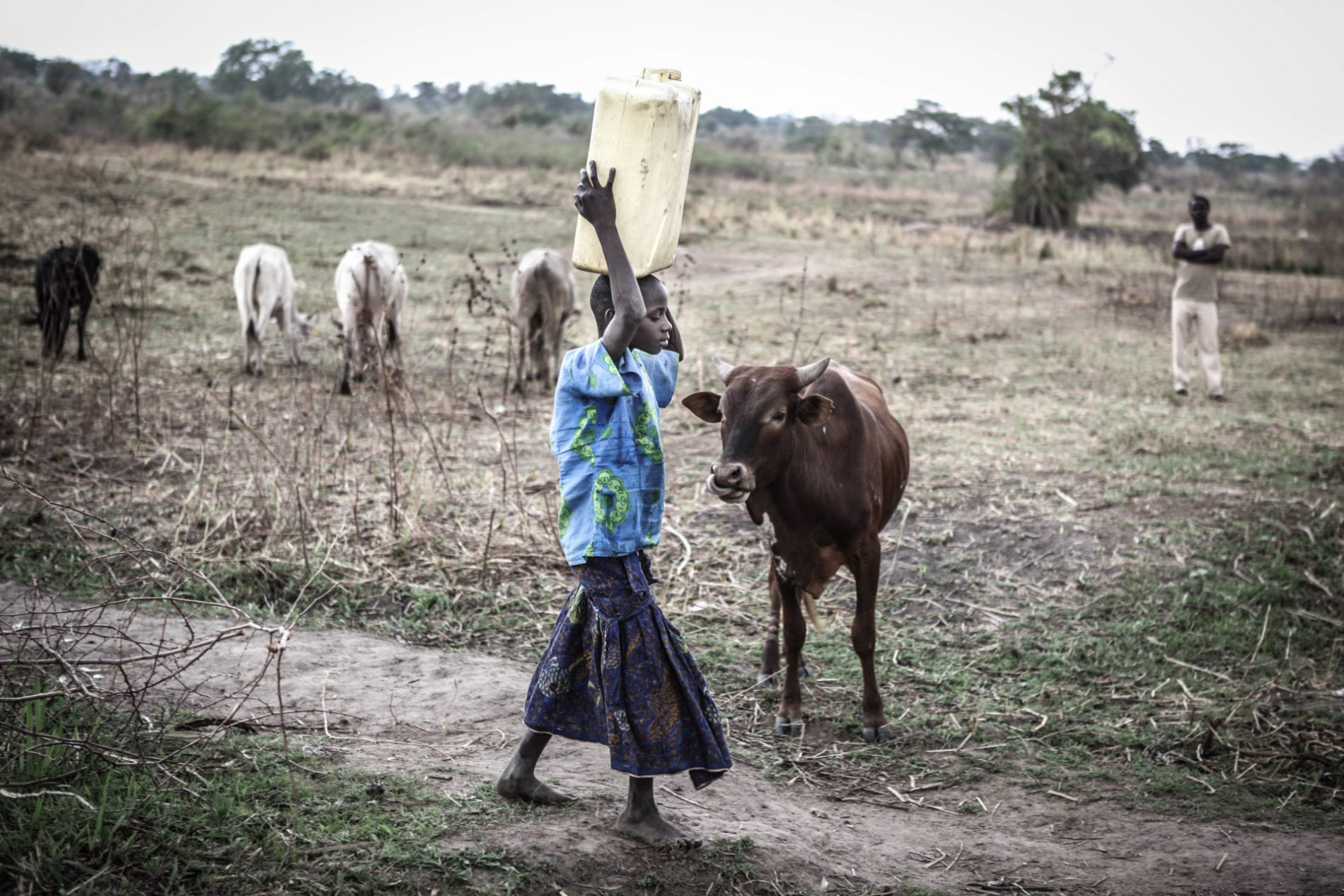
Photo Credit: Drop in the Bucket
However, it is also a place where socio-economic status is defined by a person’s access to water. Those that don’t have easy access to water travel miles a day to the nearest water source which is often unclean. As a result, limited access to water causes health issues and limits opportunities for education and economic advancement, especially for women and girls, due to the amount of time dedicated to retrieving water.
Uganda was created with little regard for the ethnic groups that inhabit the area. Like many coastal African countries, the territory of Uganda was established by the Berlin Conference of 1884-1885. This conference was attended by colonizing powers on the continent such as France, Germany, Great Britain, and Portugal. As a result, countries were created not based on existing African societies but rather on the territorial desires of the Europeans. There are four major African language groupings within Uganda’s boundaries: the Bantu, the Eastern Nilotic, the Western Nilotic, and the Central Sudanic. Within these groups, there are forty or more distinct, independent societies.
The creation of geopolitical lines which spliced tribes apart and knitted incompatible groups together without distinction caused cultural destruction that is still evident today. Uganda is a place where intergroup conflicts, in addition to epidemics and climate change crises, are prevalent. These issues have held the Ugandan people in a deadly cycle of poverty since the beginning of the region’s colonization nearly 160 years ago.
Out in the countryside, roads connect sparsely networked communities of boma villages which are unreachable by car. Here, the inherent and generational struggle for health, equity, opportunity, inclusion, and self-sustainability is very present. Despite the plagues of war, violent dictators, corruption, brutal terrorism campaigns, AIDS, refugee crises and foreign invasions, these people refuse to give up hope for better lives.
DROP’s Inception
It was 2004 when Stacey Travis, a TV producer by trade, tagged along on a medical outreach mission visit to Uganda. On the trip, one doctor shared that the same individuals were being treated for the same illnesses every visit because of dirty water. Motivated by this doctor’s frustration, Stacey and her record producer husband, John, decided to help.
The Travises threw a fundraiser in Los Angeles to raise money for well drilling and for the water well installation to the village they visited. The fundraiser was a wild success and they raised more than enough funds for the well drilling. They were even able to drill a second well in a neighboring village. Remarkably, funds kept coming in. John and Stacey decided to start an NGO, but they wanted to do it the right way- sustainably and effectively.
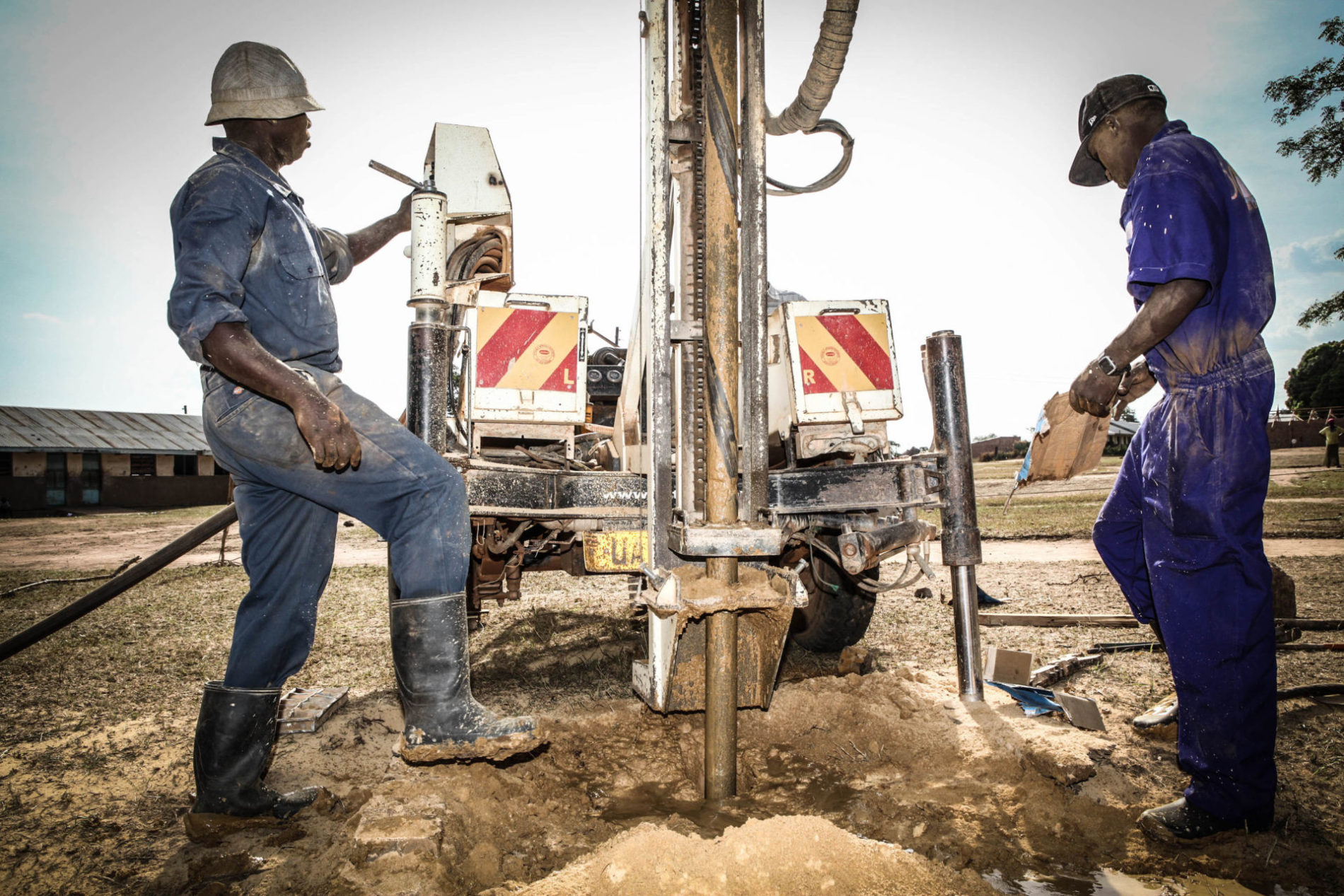
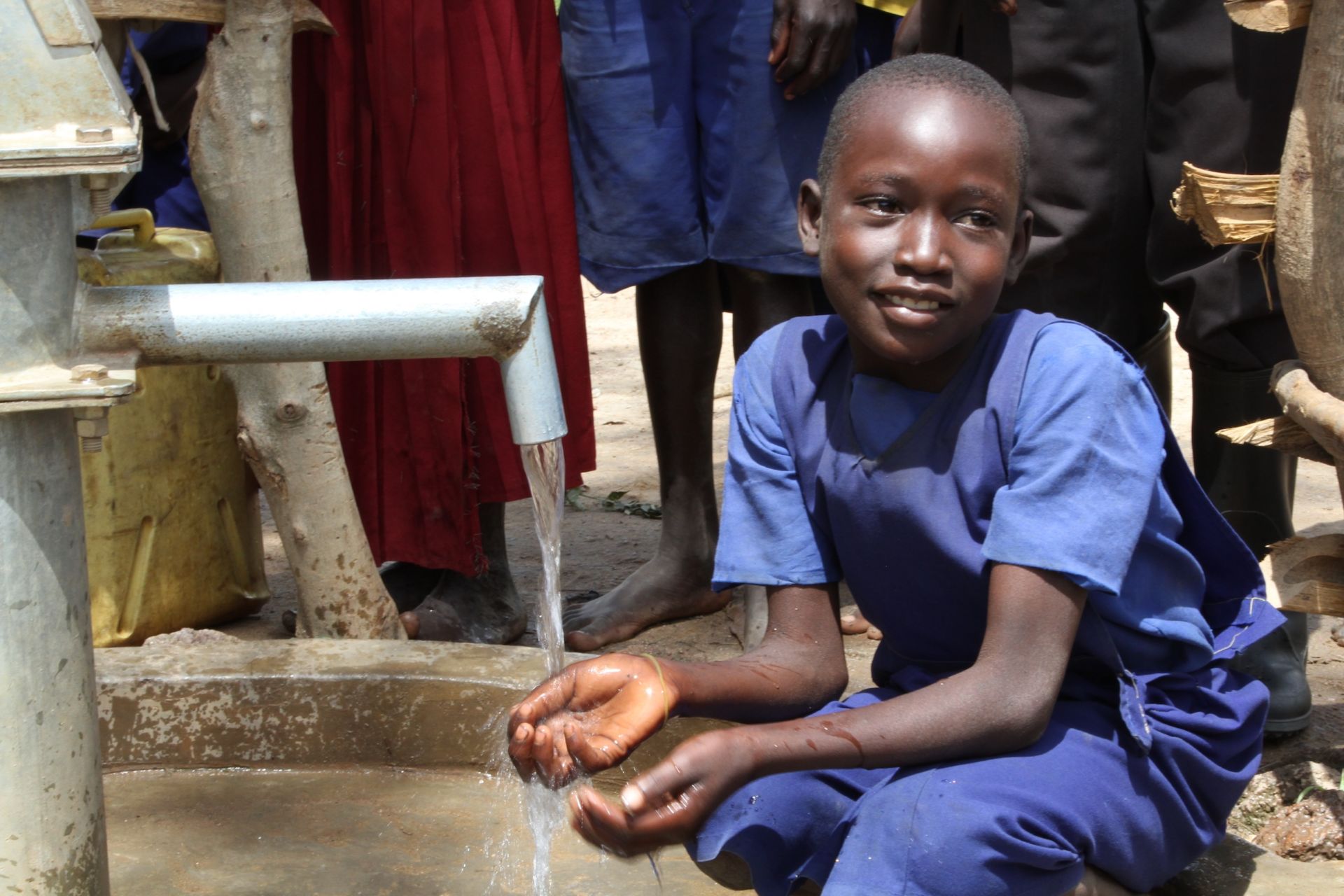
Taken at a school in Uganda where we recently installed a borehole well.
Drop in the Bucket (DROP) was launched in 2006. Two years later, it was fully operational with a field office in Uganda, employing locals to drill and monitor wells with the mission to increase the health and well-being of these communities by providing clean water.
John and Stacey have learned a lot over the last 13 years since DROP’s inception. But, one thing has been a constant- their dedication to creating solutions that last. They don’t want to return to the same villages time and time again to repair and re-drill wells. Rather, they want their work to have a wider, more encompassing reach. The water issue is far more complicated and intricately interwoven with the poverty and inequity present in Uganda than they had anticipated.
Editor’s Picks — Related Articles:
DreamGirls Academy: An Opportunity for Women’s Empowerment in South Africa
EdTech for All: An Interview with KAINOafrica
NGOs operate in the world today to battle wicked problems such as access to clean water, economic inequality, hunger, educational disparities, global warming and environmental degradation. DROP has learned that these issues are grossly interrelated and, although organizations may be acting with a mission focus on one particular sustainable development goal (SDG), sustainability and impact encompass many SDGs. In other words, the goal of total sustainability can’t be achieved by focusing on a singular SDG.
DROP projects continue to evolve to respond to the unique challenges of their clients. The NGO aims to works towards many of the UN’s SDG’s. DROP tackles issues of poverty, hunger, health and wellbeing, education, gender equality, clean water, economic growth, innovation, reduced inequalities, sustainable settlements, responsible consumption and production, adaptive capacity to climate change, anti-desertification, and ending child marriage for their target populations.
When DROP was initially launched, it became immediately clear that lack of clean water exacerbates many different aspects of poverty. It keeps children, mostly girls, from attending school because they are tasked with fetching the water from far away locations. It makes communities perennially sick. It ties women to the home, jerry can by jerry can. Women must also care for the sick and, therefore, don’t have time to pursue careers and achieve economic independence. The crisis for water locks these communities in a vicious cycle of poverty and oppression.
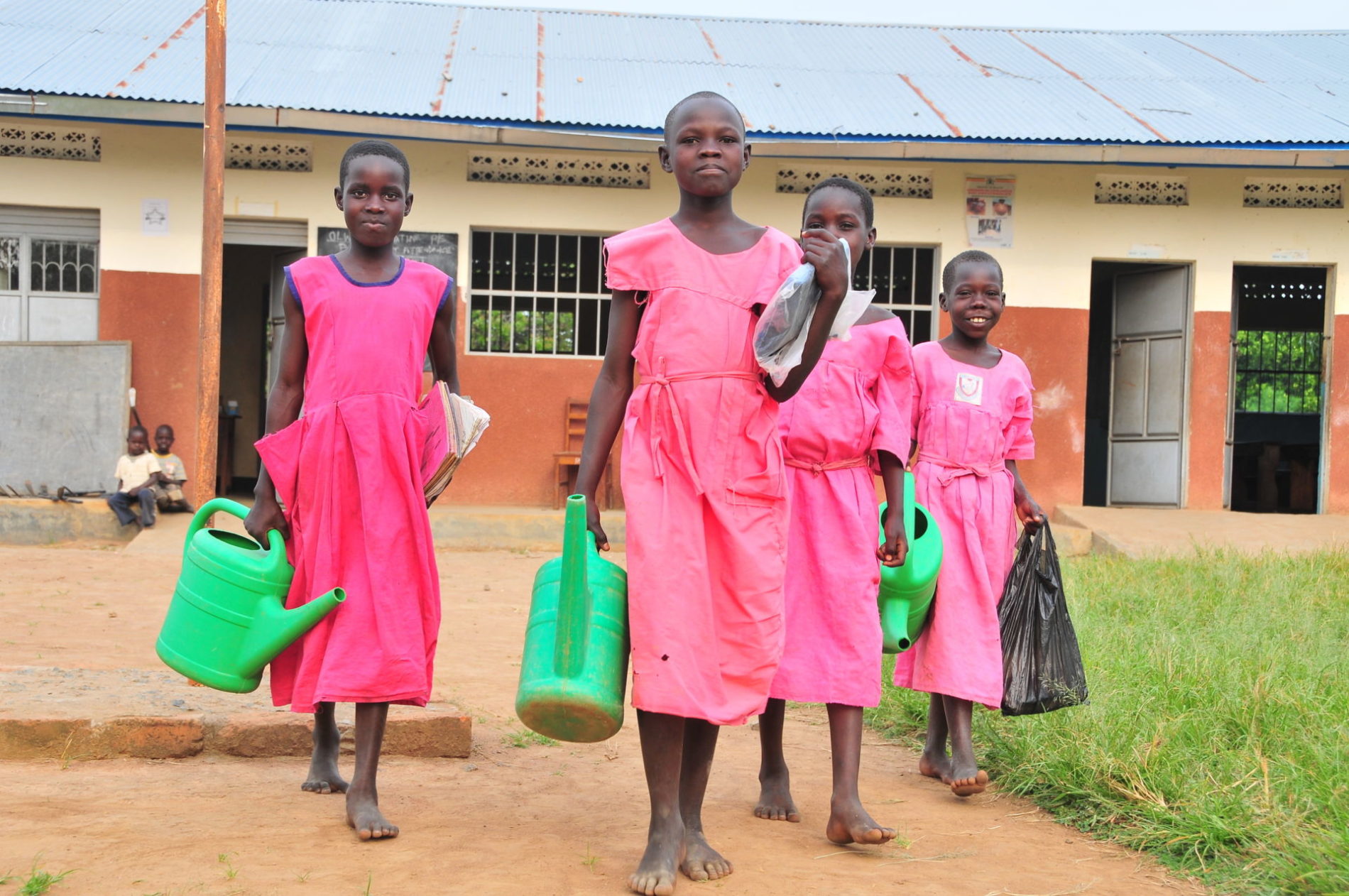
A group of girls on their way to get water
The Travises then realized that if wells and sanitation systems were located at schools, it would enable more children to attend school. So, “to build wells and sanitation systems at schools throughout sub-Saharan Africa, enabling youth to fully harness the life-changing power of education” became their mission.
However, merely drilling wells in schools did not ensure the success of girls, in particular. Thus, menstrual hygiene management programs were developed to support them. If wells were to be successful and villages were to become independent, communities needed to be involved in not just the planning, but the management of the wells and the related costs. So, village savings groups were formed. These groups help communities save money for well maintenance. They also allow them to take out loans for entrepreneurial pursuits. Savings groups have the added bonus of giving families a vehicle through which to save funds for school fees. Target communities are blooming with women-led businesses because women have time to focus on their careers and economic independence.
DROP expanded operations to South Sudan in 2009. The main project focus for this area today is to aid girls who are at-risk or fleeing from child marriage. They are given financial scholarships and other forms of aid to help them stay in school. This project serves 133 girls and recently doubled new scholarship offerings from 25 to 50 girls. Plans for a DROP boarding school are in early stages.
DROP is proud to serve communities with consideration of nearly all SDGs. Since forming in 2006, Drop in the Bucket has completed more than 360 well projects. DROP continues to create innovative projects and programs to further empower communities in Uganda and South Sudan. Although many people consider DROP a water charity, our work is centered around giving children access to clean water as a vehicle toward education and empowerment. DROP provides communities with the necessary tools to ensure our projects remain sustainable, while also giving them opportunities for economic freedom.