Stickers used to be small, sticky rectangles you slapped on a lunchbox. Now they’re tiny, animated diplomats—mood shorthand, inside jokes, and micro-rituals that travel faster than a text. Dreamina helps you prototype these little ambassadors: feed a character sketch into an AI photo generator to produce mood frames and texture references that make stickers feel tactile even when they’re pixels.
This post explores how stickers carry emotion, how communities weaponize (or worship) them, and how creators turn packs into culture.
Why stickers are emotional shorthand
A sticker says what words can’t—fast, playful, and often irreversible. They compress tone, timing, and personality into a single sendable artifact.
-
Emotion at a glance: a trembling smile can replace a paragraph of explanation.
-
Signal amplification: the same sticker used across groups becomes a cultural stamp.
-
Ritualized exchange: sending a sticker can be a greeting, a consolation, or a private handshake.
People use stickers when nuance matters but time doesn’t. A good sticker reads in a blink, and that immediacy makes it persuasive.
Tiny economies of meaning
Stickers develop micro-economies—who uses them, when, and why becomes part of community lore.
-
The insider sticker: a graphic that announces membership in a small group.
-
The apology sticker: a nonverbal mea culpa that lowers defenses.
-
The escalation sticker: a deliberately over-the-top image used to punctuate absurdity.
These patterns become unwritten grammar. Watch a chat for long enough and you’ll see sticker dialects emerge: slow-burning jokes, position-taking, and mood-mapping that make a conversation legible at a glance.
Designers: making stickers that actually matter
Designing a sticker is different from drawing an illustration. It must perform at thumb-size, loop cleanly, and feel like a tiny personality.
-
Bold silhouette that reads small
-
A single readable expression or gesture
-
A loop or reaction that resolves quickly
-
One signature color or stroke to aid recognition
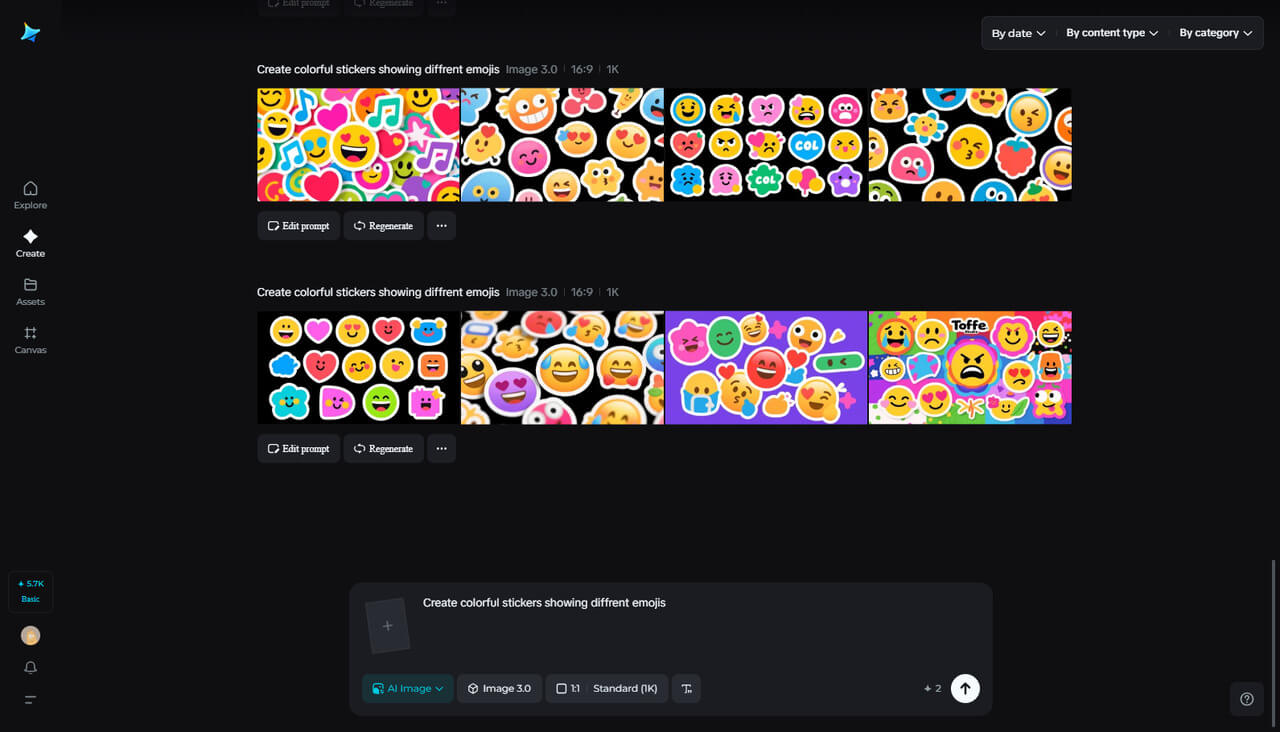
Consider animation economy: a three-frame blink can be more expressive than an elaborate animation that reads muddy on a small screen. The best packs are modular—stickers that work alone but sing when used together. Dreamina’s text-to-image feature helps turn your ideas into images effectively, offering stunning results in seconds.

Stickers as personal branding
Creators use recurring stickers to build identity. A tiny emblem at the corner of every sticker pack becomes a visual autograph, the way an artist signs a print. If you need quick emblem ideas to test on headers, Dreamina’s AI logo generator can sketch compact marks that read even at tiny sizes—try one mark and make it your pack’s quiet signature.

How communities turn packs into culture
Stickers become cultural touchstones when shared rituals form around them.
-
Birthday rituals where one sticker is always sacrificed first.
-
Memorial packs saved for solemn announcements.
-
Sticker trades and swaps—digital collectibles that mirror trading-card culture.

When a pack captures a feeling a group keeps missing words for, it spreads. Expect imitation, variant packs, and localized remixes as the culture evolves.
Performative sending and etiquette
There’s etiquette to sticker-sending, and it varies by group.
-
Timing matters: a sticker dropped mid-thread can either soothe or derail.
-
Repetition is potent: three of the same sticker, spaced, can be a chant.
-
Context shifts meaning: the same image in a work channel reads differently than in a friend group.
Learning the etiquette is part of becoming fluent in a community. Newcomers often rely on a single safe sticker until they learn the dialect.
Sticker packs as narrative machines
A thoughtfully designed pack can tell a story across ten images. Consider building arcs:
-
A character pack that expresses a day-in-the-life (waking up, coffee, triumph, meltdown).
-
A micro-comic where each sticker is a panel that, when used in a sequence, becomes a gag.
-
A functional set of reactions (agree, disagree, unsure, celebrate) that becomes the group’s shorthand.
Narrative packs encourage serial usage. People start collecting not just visuals but expectable beats.
Emotional durability and reuse
Some stickers are built to be evergreen: soft color, clean lines, and an ambiguous enough meaning to be used widely. Others are ephemeral—timed to a meme cycle or a product drop. Both have value: evergreen packs form emotional infrastructure; ephemeral packs capture moments and create FOMO.
Remixes, mashups, and the joy of mutation
Stickers mutate. People add text, crop, recolor, and mash two into one. That mutation is part of cultural life: a remix often becomes better adapted to a context than the original.
For creators, encouraging safe remixability—transparent files, packs that invite community edits—turns passive audiences into active co-creators. Use remix prompts like “add your city skyline” or “change the hat” to spark life.
Making stickers people want to hoard
Hoardable stickers have a few shared traits:
-
A tiny, collectible logic (rarity or series)
-
A story hook (characters with backstories)
-
An emotional utility (fixes a gap in how people communicate)
-
Aesthetic cohesion so they feel like a set
Collectors trade, display, and re-use; when your pack meets those needs, it becomes cultural infrastructure, not just content.
Production notes: from sketch to sticker pack
A quick roadmap for turning art into shareable packs:
-
Design for legibility at small sizes
-
Test loops on-device, on both dark and light backgrounds
-
Export as optimized sprites or animated web formats
-
Provide usage guidance for first-time senders
Small technical details—padding around the edge, file size limits, frame timing—make the difference between a sticker that delights and one that frustrates.
Tools for accelerated creativity
AI generators and automations speed up ideation. Use simple tools to create texture variants, background options, or alternate colorways. If you want playful backgrounds or pattern packs to dress stickers for seasonal drops, Dreamina’s free AI art generator is great for producing quick stylistic options you can apply and test without long design cycles.

Context, permission, and appropriation in the ethical ripple
Stickers are social constructs that may unintentionally appropriate imagery or reinforce prejudices. Designers need to be aware of:
-
When creating character-based packs, respect likeness rights and refrain from using cultural icons without consent.
-
Offer substitutes for possibly delicate gestures.
Big harm can be avoided with a little humility in the design process.
Stickers as expressive protocols for the future
Stickers are becoming into more than just pictures; they are now integrated into platforms, tiny NFTs, and emotional communication interfaces. Imagine packs that adapt tone based on recipient history, or stickers that trigger micro-interactions (a wink that opens a linked playlist). The more they embed into platform UX, the more they shape how we feel online.
Closing the chat: why stickers matter now
Stickers talk back because we taught them how. They’re shorthand, ritual, and tiny cultural artifacts rolled into one. Dreamina helps creators prototype the tactile soul of a sticker—from texture experiments to mood frames—so packs land with warmth and intent.
Design a tiny character this week: give it one clear expression, one signature color, and a quiet corner to live in. Then send it to a friend and watch what it does. The smallest decals often carry the biggest feelings.
Editor’s Note: The opinions expressed here by the authors are their own, not those of impakter.com — In the Cover Photo: Design Stickers Cover Photo Credit https://dreamina.capcut.com/