The figures are clear – crisis-affected children are not receiving the learning support they need to succeed. As the global education community engages in discussion over this issue, a focus on solutions and outcomes is what will empower these students to learn and acquire the skills they need to climb out of poverty.
This week, the United Nations education fund, Education Cannot Wait (ECW) conference has been drawing attention to the 222 million crisis-affected children throughout the world.
The event builds on the momentum of the “222 Million Dreams” campaign – launched following an ECW report highlighting the shocking increase of children affected by the global crisis, from 75 million in 2016 to 222 million in 2022, an acceleration that is clearly a direct result of the Covid pandemic and wars, including the war in Ukraine that began a year ago, but also due to other factors like natural disasters and climate change.
The report reveals that a majority of crisis-affected children – around 120 million – are actually in education, but not achieving minimum proficiency in math or reading. It paints a telling picture – attending school is not enough; these students need programs that enable them to learn.
ECW Chairman Gordon Brown spells it out:
“Of the 222 million children who are in dire need of educational support, 78.2 million (including 42 million girls) do not go to school at all, while the others are suffering so many disruptions to education due to crisis that they fail to develop basic literacy and numeracy.”
Just one in ten crisis-impacted children attending primary or secondary education are actually achieving minimum proficiency standards. These figures echo the overall global crisis, with 70% of children experiencing learning poverty, but show the issue is intensified for crisis-affected children.
As the ECW Strategic Plan states: “It has become crystal clear to us that getting children into schools is simply not enough.”
Overcoming this learning crisis requires a focus on holistic, data-driven pedagogy, based on proven methods: The NewGlobe data-driven method
A 2022 study led by the Nobel Prize Laureate Professor Michael Kremer found that Kenyan schools practicing NewGlobe’s standardized and data-driven pedagogy had the highest level of learning gains in students with the lowest performance. The study is particularly exciting because these results are exceptionally rare – it is very uncommon to see such positive results for low-performing students.
Crisis-affected students are amongst the lowest performing. Applying such methods offers the opportunity to create a learning environment where these students not only have access to education but acquire meaningful learning and needed skills.
NewGlobe’s pedagogical methods have a long and rich history. Founded in 2007, it opened its first community school program in 2009, Bridge International Academies, in Kenya. Success with its “Bridge model of education” was immediate and it quickly expanded across Kenya. In 2015, it extended to Uganda and Nigeria and the next year, opened its first program in Andhra Pradesh, India. Several successful programs followed: the first public-private partnership in the Partnership Schools for Liberia program (LEAP), in Borno, in Nigeria as technical partner to EdoBEST and to the Lagos State Government’s EKOEXCEL program, in China, supporting the Guizhou Provincial Government.
In 2020, a brand realignment was announced by NewGlobe to more accurately represent its diverse and growing portfolio of programming; over the next two years, this was followed by a number of additional programs: In India (Manipur’s STAR Education), in Nigeria (the KwaraLEARN program) and in Rwanda.
Rwanda’s support for crisis-affected children: A focus on learning
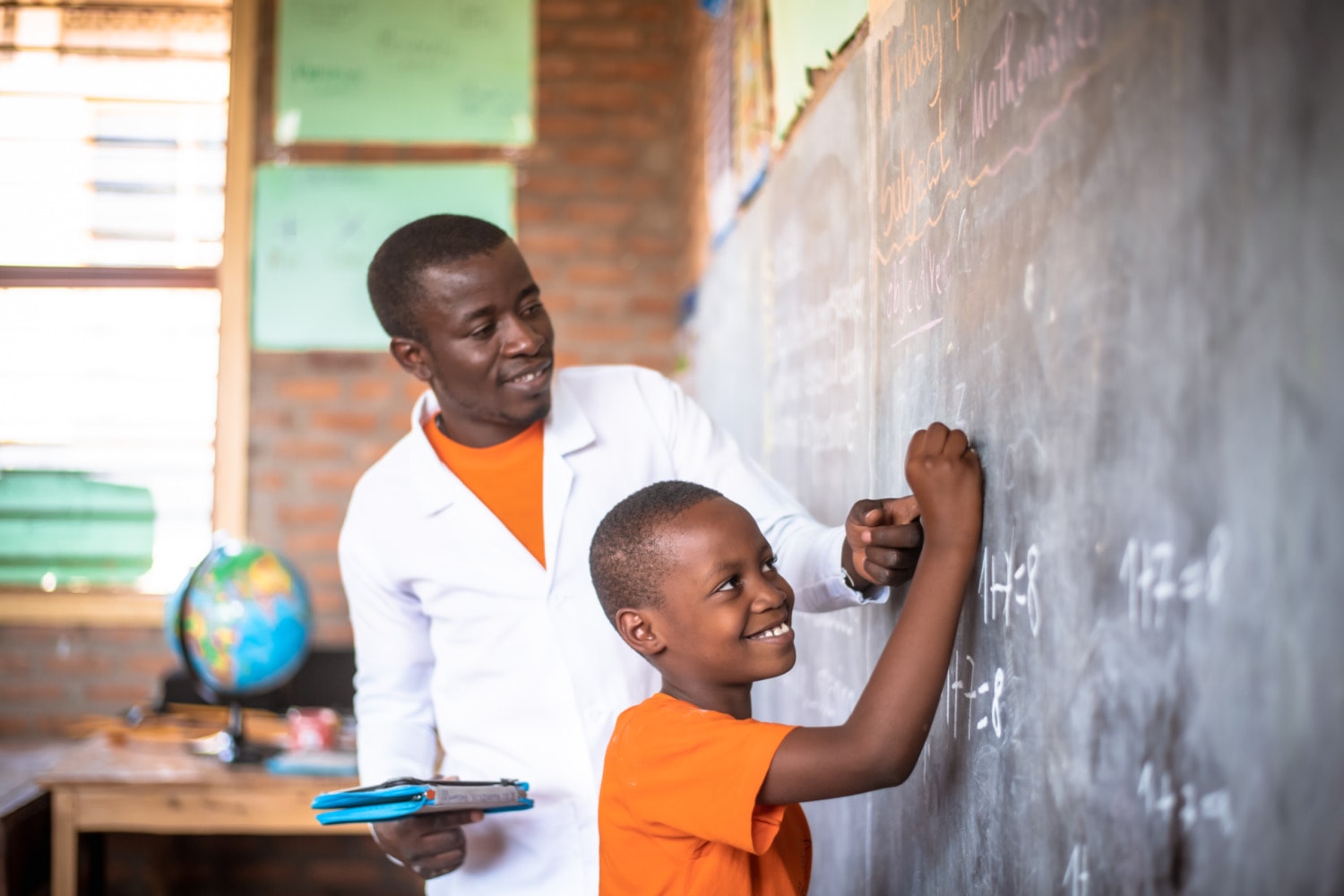
The Rwandan Government education program RwandaEQUIP, for which NewGlobe is the technical partner, is underpinned by the same methodology discussed in the Kremer study.
The program is an excellent example of education that creates a learning environment assisting all children, including crisis-affected children, to achieve positive learning outcomes.
Rwanda currently hosts approximately 150,000 refugees from neighboring countries, including many children in need of education. In 2019, over 33,000 refugees were integrated into primary or secondary education.
The challenge of the future: Social cost of students missing out on education is huge, a $ 718 trillion loss in global GDP over the 21st century
As we approach the halfway point for the UN’s Sustainable Development Goals (SDGs), the fourth goal, aiming to “ensure inclusive and equitable quality education and promote lifelong learning opportunities for all,” is clearly being missed for crisis-affected children.
The social and economic cost of 90% of crisis-affected students missing out on an effective education is huge. But consequently, the benefits of investing in proven solutions are immense.
A new study co-authored by the Yidan Prize winner Professor Eric Hanushek estimates the value of ensuring all students achieve global basic-level skills.
“According to our projections based on historical patterns of long-run growth, the world would gain $718 trillion in added GDP over the remaining century if it were to reach global universal basic skills,” says Hanushek (bolding added).
If the number of crisis-affected children continues to increase, we are going to see the issue exacerbated, with crisis impacts significantly contributing to global learning shortfalls. Greater investment in supporting students must lead to far greater levels of learning.
A significant proportion of crisis-affected children are located in sub-Saharan Africa – a region that has received substantial international investment in education. The Global Partnership for Education (GPE) which invests funds raised from donor countries such as the US and UK has allocated more than $5.7 billion in funding for education over the past two decades across sub-Saharan Africa.
Alongside investment must be a new outcomes-based approach.
At the HundrED Summit 2022, RISE Research Director Lant Prichett made a valuable point about how meeting students at their learning level would lead to greater outcomes, a crucial factor in supporting those whose education has been disrupted by crisis, and a practice used in all NewGlobe-supported programs.
“When you realign the curriculum and teach to the level of the student, you can actually get massive learning gain very quickly because the student all of the sudden is being reached at their level and helping forward,” says Prichett (bolding added).
ECW is absolutely right to draw attention to an important truth – just providing education is not enough. A focus on improving learning outcomes for crisis-affected children is essential to ensure they are equipped with the basic skills needed to succeed.
And through such gains, students, all students, can be empowered to realize their dreams.
————————————————————————————————-
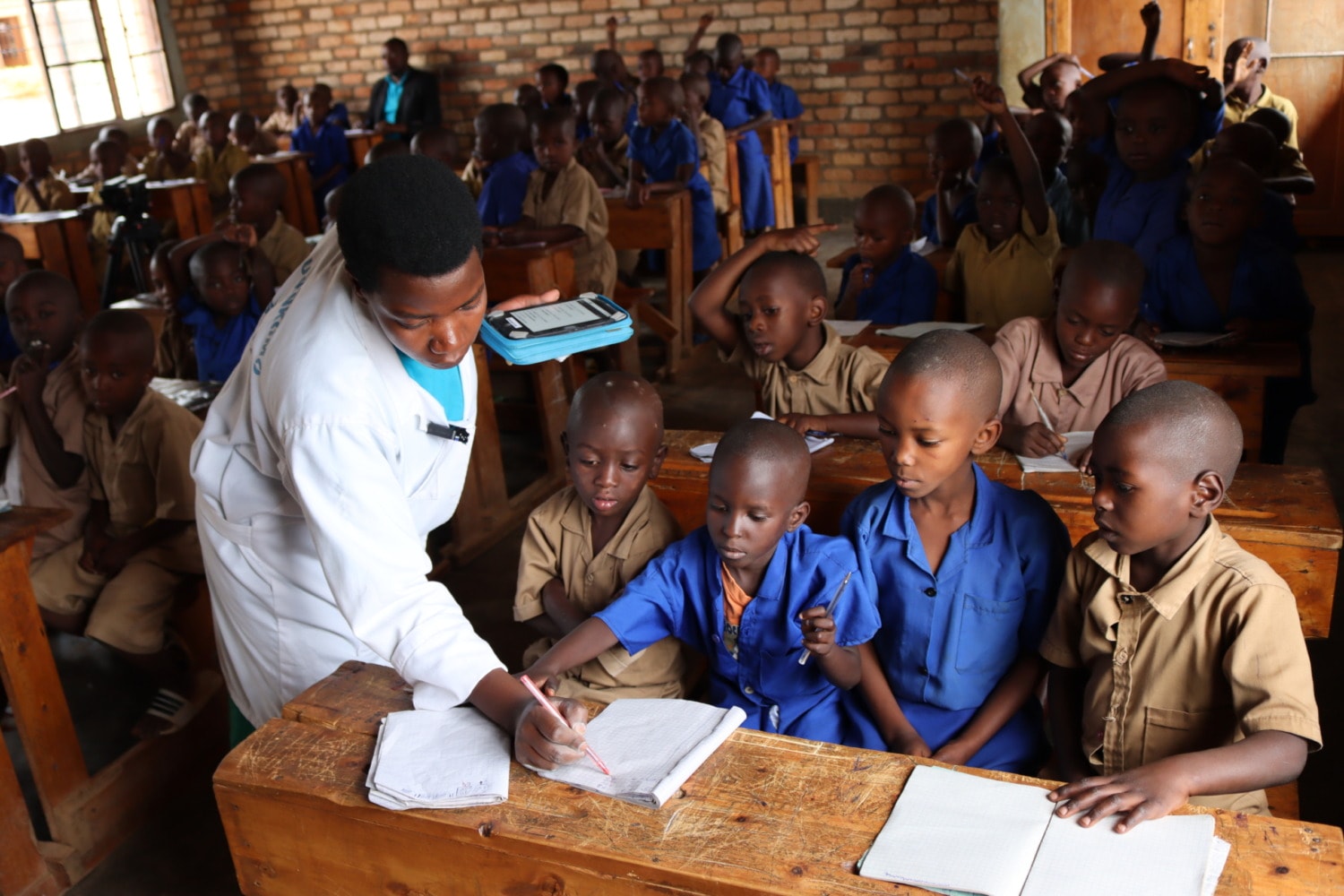
Editor’s Note: The opinions expressed here by the authors are their own, not those of Impakter.com — In the Featured Photo: RwandaEquip NewGlobe Photography Kids at School