Watching how the COVID-19 pandemic developed, it is fair to ask what was the role of China in global health: Was it the good guy or bad guy?
The Very Bad Side
We learned recently of the People’s Republic of China’s treatment of the brave young woman journalist who reported on the Wuhan COVID outbreak and covered government efforts to control information on the lack of action. Zhang Zhan, a 37-year-old former lawyer and citizen journalist arrested in May while reporting from Wuhan, has been sentenced to four years in jail.
Zhang was arrested for “picking quarrels and provoking trouble” – an accusation commonly used against dissidents, activists, and journalists – with her video and blog reports from the Wuhan lockdown.
Even more recent is the extended article in the New Yorker by Lawrence Wright in which he points to key events that might have lessened the extent of the pandemic and in which he reports on a conversation in early 2020 between the heads of the U.S. and People’s Republic of China Centers for Disease Control and Prevention.
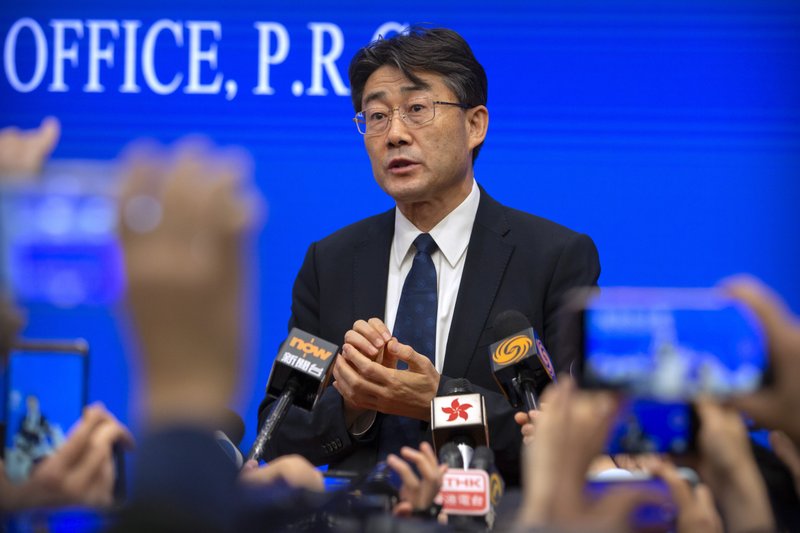
This is how he describes the conversation that occurred on January 3, 2020, when Robert Redfield, the director of the Centers for Disease Control and Prevention, spoke with George Fu Gao, the head of the Chinese Center for Disease Control and Prevention. To be noted: the Chinese CDC is modeled on the American institution.
At that point in time, Redfield had just received a report about an unexplained respiratory virus emerging in the city of Wuhan.
We have to remember that the field of public health had long been haunted by the prospect of a widespread respiratory illness outbreak like the 1918 influenza pandemic, so Redfield was obviously concerned.
His Chinese counterpart, Gao, when pressed, assured him that “there was no evidence of human-to-human transmission” (!). When Redfield offered to send a C.D.C. team to Wuhan to investigate, Gao replied that “he wasn’t authorized to accept such assistance.”
.
The author of the article does not indicate whether he talked with Gao to confirm the description of the exchanges but let us take it as a given that such a conversation did take place in early January 2020.
Further insight into George Gao can be gleaned from emails recently published in the Washington Post between Gao and Dr. Anthony Fauci that took place in March-April 2020. It is clear they had a longstanding friendship, professional respect and that Gao wanted to work with NIAID in dealing with COVID-19.
In late 2020, a treasure trove of unreported data became publicly available which showed how much worse the situation was than had been shared by the Chinese Government:
“In a report marked ‘internal document, please keep confidential,’ local health authorities in the province of Hubei, where the virus was first detected, list a total of 5,918 newly detected cases on February 10, more than double the official public number of confirmed cases, breaking down the total into a variety of subcategories. ”
And on December 28th, it was reported that data released by China’s public health authorities showed that the scale of the coronavirus outbreak in Wuhan, where the virus was first detected last year, “may have been 10 times the official figure…The data also indicate that the city first hit by the virus is also far from achieving herd immunity.”
In short, there can be no excuse for these actions and the incredible harm done, worldwide. But to see this as the full picture of China’s global health performance would also not set the record straight.
The Pretty Good Side
China has been active in global health and in the developing world for decades, with some viewing its efforts as a means to extend its political and economic influence. That said, it has provided substantial assistance and support for low- and middle-income countries, and notions that would be of benefit for all.
The same George Gao who spoke with his American counterpart in early January 2020, is also one of the major supportive global health voices for China, recognized and respected as a scientist and forward thinker. For example, in an article in 2017 in the National Science Review, he said this about One World, One Health, expressing his strong support for “international collaboration”:
“Gao: Indeed. We are definitely seeing more infectious diseases. There are many drivers for this, such as human behavior changes, ecological changes, climate change, and globalization. Now people travel everywhere. Once a pathogen emerges, it can spread rapidly—just an overnight flight from Africa to China—posing a big challenge to combating infectious diseases… International collaboration is absolutely important because pathogens have no respect for national borders. This is especially important in a globalized world and with the level of international travel we have now. The challenges, however, are immense—from sharing specimens, political sensitivities to international tourism.”
Further, China was and is an early supporter of the Africa Centers for Disease Control and Prevention (Africa CDC), established by the African Union in 2017. It has been contributing both technical assistance and infrastructure financing.
Many see this new institution as the means whereby Africa will significantly improve its coordinated disease surveillance, information sharing, and infectious disease analysis and response. In December 2020, the groundbreaking of the Africa CDC headquarters building occurred with Chinese financing. Unsurprisingly, George Gao has been a leading Chinese advisor and supporter of the Africa CDC.
With regards to global efforts to develop and distribute COVID vaccines, in October 2020 China joined all major countries but one (the United States notably didn’t join) in committing to help low- and middle-income countries obtain equitable treatment and reduced costs for vaccines, through COVAX, part of a multi-billion World Health Organization organized effort, the Access to Coronavirus Tools-Accelerator.
China has already produced a number of COVID vaccines which it has been testing on its population but for which the safety trials have not been completed, or at the very least, results not evaluated by external authorities in terms of efficiency, safety, and extent of adverse side effects. Indeed, the latest news is that local governments in China are all set to vaccinate 50 million people by early next year but the vaccines have not yet been officially approved.
That said the United Arab Republic has already approved one of the Chinese vaccines and 100,000 people have received it, along with similar trials in Brazil.
Reports are that from Asia to Africa, including Malaysia and the Philippines and a number of African countries, China has granted priority access to the coronavirus vaccines currently under development. Chinese companies have also reportedly signed agreements with some of these developing nations to test and manufacture the vaccines. All this has led some observers to express concern that China may be using vaccines to expand its soft power.
The Future: When China becomes the largest world power, will it be a responsible partner?
In 2028 China is projected to overtake the United States as the largest world economy (CBER). This is expected to happen a decade sooner than it had been projected a year ago. One reason is that it looks like it will be outperforming the United States during the covid pandemic.
The acceleration is remarkable.
One can hope China will choose to join the global commons and be a helpful, collaborative partner, including in global health matters, and act in a much more transparent manner to benefit us all.
That should be the side of China one would wish to see prevail.
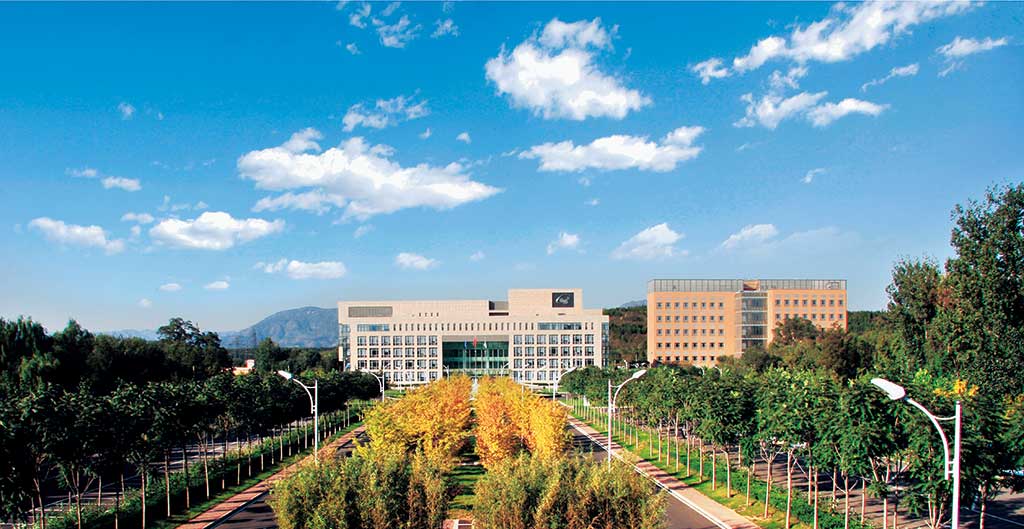
EDITOR’S NOTE: The opinions expressed here by Impakter.com columnists are their own, not those of Impakter.com. Featured Image: Chinese Center for Disease Control, Source: Chinese CDC