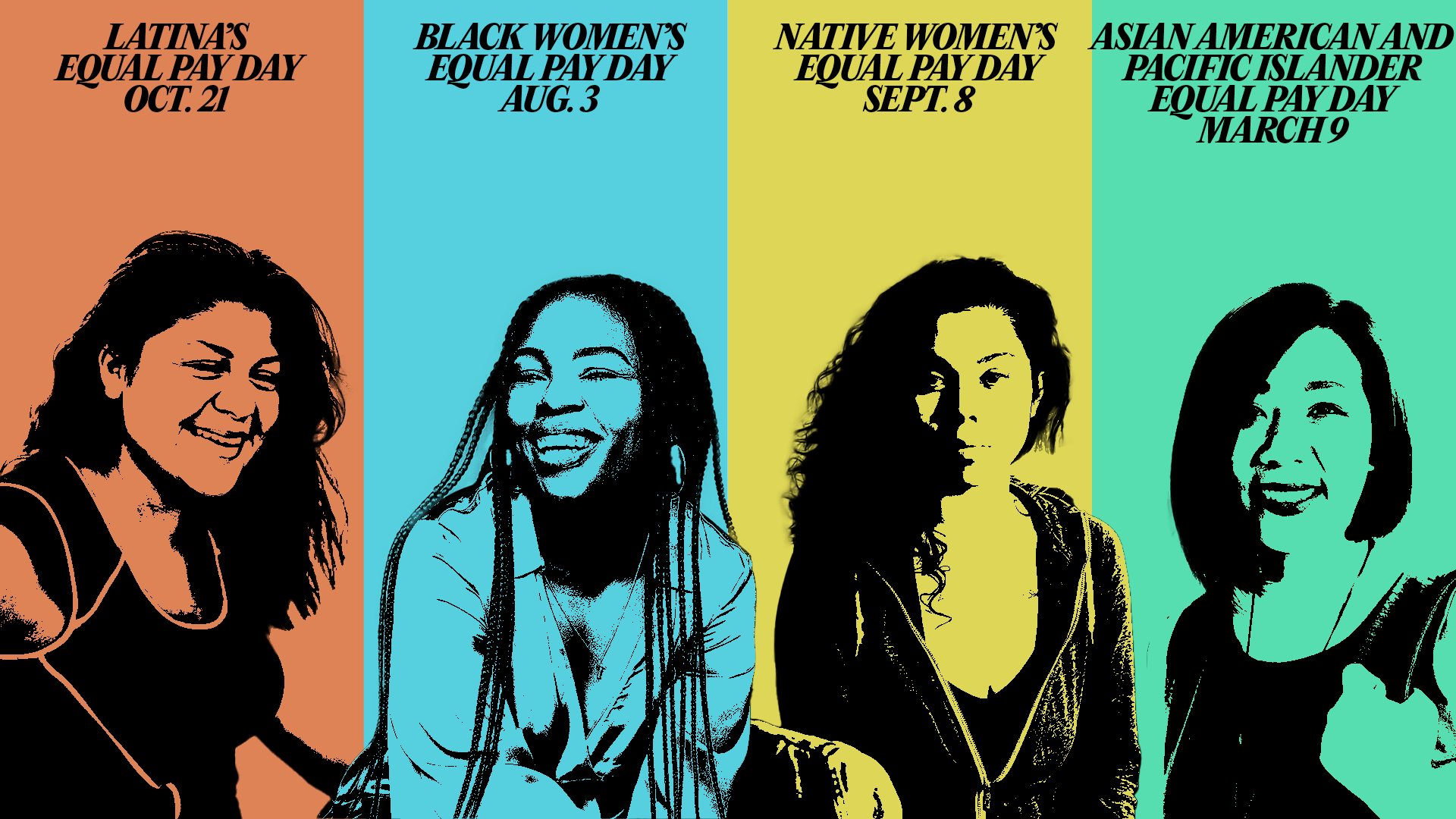
As BIPOC (Black, Indigenous, People of Color) women across the U.S. continue to observe Equal Pay Day in the coming months, its recognition remains different from any other since its founding in 1996. The world continues to deal with a triple pandemic; COVID-19, racism, and economic insecurity, with each of these crises affecting the other.
In the U.S., the economic insecurity many BIPOC feel is rooted in systemic racism and sexism. The history behind denying members of the BIPOC community access to adequate housing, healthcare, education, and employment has often ensured profitable opportunities are reserved for the majority of the U.S. population, despite the effects of classism and sexism felt by all communities.
This country’s system has historically made BIPOC women feel they are unworthy of economic equity, yet many remain working on the frontlines ensuring the U.S. economy does not collapse.
Before the pandemic BIPOC women were still underpaid in comparison to their White female and male counterparts. The National Partnership for Women and Families, a nonpartisan nonprofit known for advocating for the rights of women and children, published a fact sheet in September 2020 which clearly delineates the wage gap by ethnicity.
According to the sheet, Latinx women earn 55 cents to a White males dollar; Native American Women earn 60 cents to a White males dollar; Black women earn 63 cents to a White males dollar, and Asian women earn 87 cents to a White males dollar; making Asian women the only minority group to surpass White women in terms of wages, who earn 79 cents to a White males dollar.
Related Articles: Eliminate the Gender Gap in Stem | Women Worldwide Assert Their Power
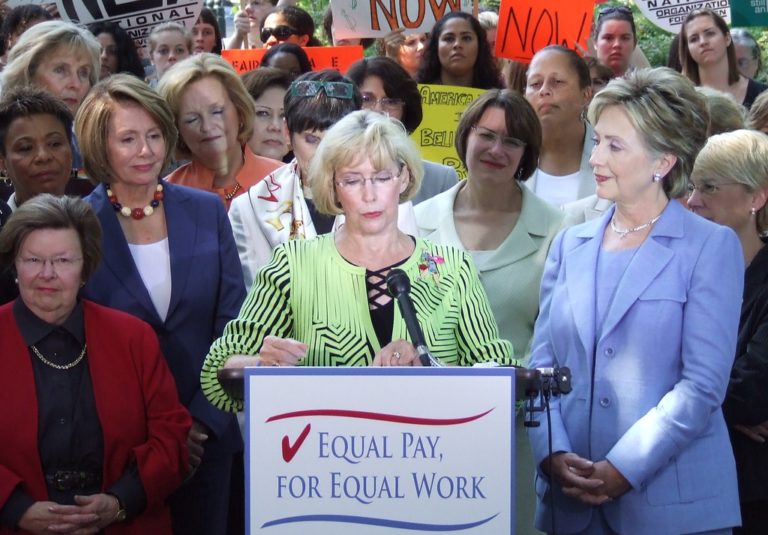
The Obama Administration tried to provide legal redress for women experiencing such discrimination through the Lilly Ledbetter Fair Pay Act of 2009. Former President Obama signed this piece of legislation just nine days into his first term, which allowed for the filing of an equal-pay lawsuit to reset with each new paycheck affected by the disenfranchisement.
Simply put women would have more time to file lawsuits against their employers for unequal pay. Yet COVID-19 in many ways has eased the gains made through the Lilly Ledbetter Fair Pay Act.
The Center for American Progress, a left-leaning Washington, D.C.-based think-tank published a report entitled: How COVID-19 Sent Women’s Workforce Progress Backward. It highlights the need for women to reduce work or leave the labor force altogether due to caretaking responsibilities during the COVID-19 pandemic.
This departure amounts to a $64.5 billion yearly loss of wages and economic activity.
To add further complexity, Black women without childcare witnessed a 6.4% drop in labor force participation, in contrast to White women without childcare who experienced a 2.3% drop in labor force participation.
Such statistics are unnerving as Black women are known to be the economic fortresses in their families. This was highlighted politically when Stacy Abrams, a gubernatorial candidate of Georgia in 2018, had to explain why she had over $170,000 in debt with $54,000 owed to the IRS.
The imbalance of wages, coupled with the finances necessary to secure higher education, and the burden of taking care of elderly parents are not uniquely a Black woman’s struggle. Yet, they are the constant hurdles that Black women like Georgia State Rep. Abrams must contend with.
The solution to permanently closing this wage gap requires a collective approach. Government can solve this problem with larger corporations’ true commitment to close these gaps instead of providing lip service and pet programs. Legislation is necessary to discourage inequitable treatment, and unions are needed to push larger corporations to equity practices that are sustainable.
An understanding of racial capitalism is also essential; the theory was established by Cedric Robinson and describes the process of extracting social and economic value from a person of a different racial identity or nonwhite origin. This extraction has in many ways normalized the difference in wages we see for women of color in the U.S.
As we transition into the new normal, we must not forget that women of color have been uniquely economically burdened by the pandemic. That many of the economic challenges that persist today are only an exacerbation of what existed before. We must become clear-eyed about the value that women bring to the labor force and reward them with the pay equity they deserve.
—
About the Author: Dr. Sherice Janaye Nelson is a speaker, author, professor, mother, and consultant. She is a Black Diaspora expert who focuses on the political, social, and economic effects of chattel slavery. This expertise has helped her serve her clients as a diversity consultant and founder of Dr. Janaye Executes. She is also the Executive Director of the Black Leadership Roundtable and a member of the advisory board for the Center for Racial Justice at Dillard University. Dr. Nelson’s new book The Congressional Black Caucus: Fifty Years of Fighting for Equality is due in Spring, 2021. She is currently a professor at Southern University in Baton Rouge, Louisiana.
Editor’s Note: The opinions expressed here by Impakter.com columnists are their own, not those of Impakter.com. — In the Featured Photo: Equal Pay Day 2021 observed by race; the Asian American community celebrated on March 9, the Native American community will celebrate on Sept. 8, the Black community on Aug. 3, and the Latinx community will celebrate on Oct. 21. Featured Photo Credit: The Current.