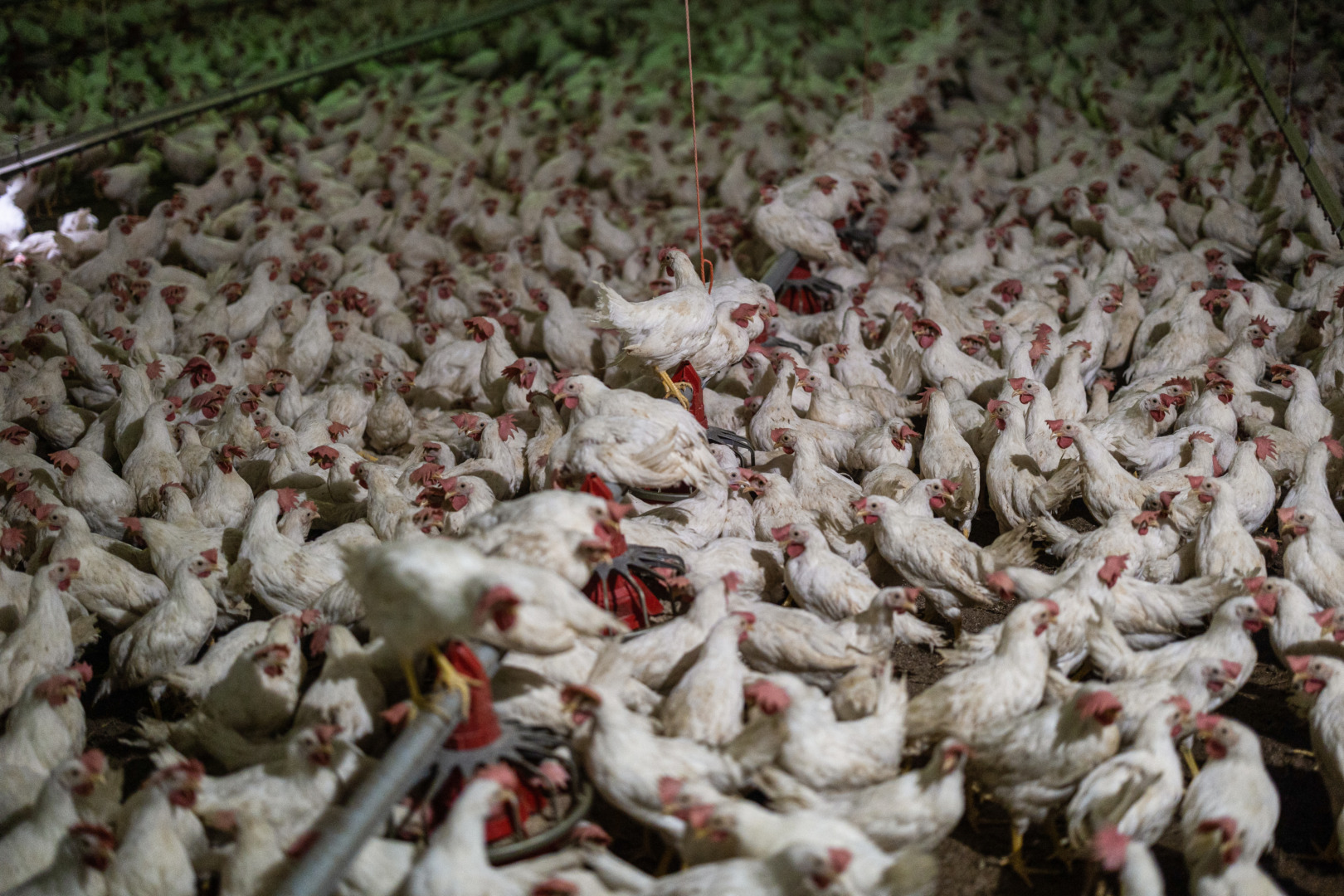
The detection of a case of the widespread H5N1 strain of avian influenza in Australia is a cause for concern.
On Wednesday, health officials in Victoria reported a child had contracted the virus in India and became ill on their return to Australia in March.
According to the Victorian Department of Health, the child experienced a severe infection but has since fully recovered. Contact tracing found no evidence of transmission within Australia, and officials stated the risk was low since H5N1 does not spread easily among people.
This was the first case of H5N1 in animals or people in Australia, making the continent the last to detect it even after Antarctica. Detections of avian influenza at farms in Victoria and Western Australia are understood to be different, and less worrying, strains.
But any emergence of H5N1 avian influenza is a global concern and underscores the looming threat of a pandemic.
Avian influenza viruses — colloquially known as bird flu — pose significant challenges to global public health due to how widely they circulate and their high rates of death.
While its current mode of transmission primarily involves contact with infected birds, the potential for human-to-human spread looms large.
Genetic mutations could fuel this transition, amplifying the risk of sustained outbreaks.
Bird flu viruses can be classified based on their pathogenicity, or how effectively they cause disease.
Some are categorised as highly pathogenic and others as low pathogenic. This is determined through the intravenous pathogenicity index test, a laboratory technique used to assess how well avian influenza viruses cause disease in poultry.
Highly pathogenic strains — such as H5N1, H5N8, and H7N9 — pose significant public health threats, with H5N1 being the most pathogenic, causing a high number of deaths in both chickens and humans.
The World Health Organization has already expressed its enormous concern over the risk of H5N1 becoming more easily able to spread between humans.
Understanding the distinctions between strains and lineages is crucial for tracking the virus’s evolution, developing effective vaccines, and implementing appropriate public health measures.
A strain refers to a genetic variant or subtype of the virus with distinct mutations.
The strain that infected the child in Victoria differs from the one causing outbreaks among poultry and dairy cows in the United States.
The current global H5N1 outbreak among animals underscores the urgent need for a comprehensive understanding of this virus and its public health implications.
Since the initial highly pathogenic H5N1 outbreak in 1959 among Scottish poultry and its transmission to humans in 1997 in Hong Kong, numerous bird flu outbreaks have been recorded.
While Australia has strong genetic surveillance capabilities and comprehensive pandemic preparedness plans, the Indo-Pacific region’s frequent encounters with H5N1 have driven more specialised and intensive surveillance and response mechanisms in other countries.
The higher risk in these countries has fostered stronger collaborations, greater funding, and more frequent real-world testing of their pandemic response systems, making them more agile in dealing with H5N1 specifically.
From 2003 to mid-2023, the WHO reported 878 human cases of H5N1, resulting in 458 deaths across 23 countries.
The current global H5N1 outbreak, linked to the A/goose/Guangdong/1/96 strain, is the largest ever recorded among wild birds.
It is affecting a large range of diverse animal hosts — including both land-based and marine mammals and animals as geographically disparate as cows and penguins — and is causing significant deaths among sea lions in Peru.
Related Articles: On the Verge of a Possible Avian Flu Pandemic | Vaccinating Wild Animals: Key Conservation Tool or Step Too Far? | Antibiotics in Agriculture: Rising Drug Use in Farming Poses Serious Risk to Global Health
Although rare, human infections typically result from direct contact with infected birds or their environments, with sporadic cases reported globally, including recent occurrences in Egypt, Vietnam, and China. But the fact it’s infecting a large range of hosts means the risk of it spreading to humans is higher.
India continues to experience sporadic H5N1 outbreaks in poultry, with recent instances in the states of Andhra Pradesh and Maharashtra.
The US Centers for Disease Control and Prevention reported that, from January 2022 to April 25, 2024, there have been 26 human H5N1 cases in eight countries. These cases included severe, critical and fatal outcomes, with most linked to contact with sick or dead poultry.
Eleven cases involved an older H5N1 clade (2.3.2.1c) in Cambodia and Vietnam, while others were attributed to a newer clade (2.3.4.4b) circulating globally.
A clade in this context refers to a group of related virus strains that have evolved from a single ancestral virus.
Humans can be infected through direct contact with infected animals during activities like handling, culling, slaughtering, or processing, as well as indirectly through environments contaminated with bodily fluids from infected animals.
Although H5N1 primarily spreads to humans through contact with infected birds, there is potential for human-to-human transmission, especially through genetic reassortment when a person is infected with both a human influenza virus and an avian influenza virus at the same time.
If this were to occur the two viruses could exchange genetic material between themselves, which could result in the emergence of a new influenza virus able to better spread from person to person.
Australia has established a comprehensive framework to confront the potential threat of H5N1 avian influenza, drawing on stringent biosecurity measures, vaccination strategies and a robust public health infrastructure.
Central to this framework are the country’s sophisticated genomic surveillance capabilities, driven by institutions like CSIRO’s Australian Centre for Disease Preparedness and various universities.
These facilities possess advanced genetic testing and sequencing facilities, allowing for rapid analysis of viral genomes to monitor mutations and trace the virus’s spread.
Australia also engages in international collaborations and data-sharing partnerships with organisations such as the WHO and the Global Initiative on Sharing Avian Influenza Data, ensuring access to global insights and facilitating swift responses.
Despite robust surveillance and containment efforts, systemic challenges in other parts of the world like Cambodia, Vietnam and South Africa such as strained healthcare infrastructures and the rapid pace of globalisation pose formidable hurdles.
Without decisive international cooperation and resource allocation, H5N1 could spiral into a full-blown global crisis.
** **
This article was originally published by 360info™.