Impakter
  • Environment
    • Biodiversity
    • Climate Change
    • Circular Economy
    • Energy
  • FINANCE
    • ESG News
    • Sustainable Finance
    • Business
  • TECH
    • Start-up
    • AI & Machine Learning
    • Green Tech
  • Industry News
    • Entertainment
    • Food and Agriculture
    • Health
    • Politics & Foreign Affairs
    • Philanthropy
    • Science
    • Sport
  • Editorial Series
    • SDGs Series
    • Shape Your Future
    • Sustainable Cities
      • Copenhagen
      • San Francisco
      • Seattle
      • Sydney
  • About us
    • Company
    • Team
    • Global Leaders
    • Partners
    • Write for Impakter
    • Contact Us
    • Privacy Policy
No Result
View All Result
Impakter logo
No Result
View All Result
A lighted sign reads, "See you at COP30! Brasil"

COP30: Climate Resilience Emerges as a Major Priority

After years of funding shortfalls, experts hope that the UN’s annual climate conference will be a turning point in global efforts to make vulnerable communities more resilient to climate change

Benjamin ClabaultbyBenjamin Clabault
November 4, 2025
in COP30
0

The 30th Conference of the Parties (COP30) in Belem, Brazil, will officially begin on Nov. 10, 2025.

As usual, the climate conference will focus largely on multilateral agreements to limit rising temperatures. But in the lead-up to this year’s conference, organizers, experts, and even Bill Gates are emphasizing a different priority: investing in climate resilience and adaptation, especially in developing countries.

According to a recent UN report, adaptation measures like seawalls and elevated buildings are receiving far too little funding.

Yet optimism remains that more funds could be coming. Investments in climate resilience and adaptation are considered to be financially sound, and Brazil is using its platform as the host of COP30 to establish a roadmap for further investment. 

Experts and organizers alike hope the conference will be a turning point for global climate resilience.

Why Resilience and Adaptation are Essential

Climate resilience helps communities to survive and recover from the consequences of climate change.

For example, enhanced drainage systems reduce damage from flooding, while drought-resistant crops can prevent devastating famines. These measures are essential because, even if humanity reduces emissions and limits global warming, climate change is bound to impact communities. 

In fact, many of those impacts are already here. Warmer temperatures are currently causing wildfires, devastating ecosystems, and worsening storms and making them more frequent.

A man rides a motorbike through a flooded street.
Floods like this one in the Dominican Republic could become less harmful with enhanced climate resilience measures. Photo Credit: Aldward Castillo

A report from the Lancet Countdown found that climate change already causes millions of deaths each year. 

“This year’s health stocktake paints a bleak and undeniable picture of the devastating health harms reaching all corners of the world,” said Marina Romanello, Lancet Countdown’s executive director. “The destruction to lives and livelihoods will continue to escalate until we end our fossil fuel addiction and dramatically up our game to adapt.” 

Funding for Resilience Continues to Underwhelm

Despite their lifesaving potential, resilience and adaptation measures suffer from perennial underinvestment.

The UN’s 2025 Adaptation Gap Report found that vulnerable countries received just $26 billion for climate adaptation projects in 2023. To properly adapt to climate change, these countries will need to receive over $310 billion per year by 2035. That means adaptation funding must reach almost 12 times its current level. 

A farmer walks through a field throwing seeds.
Funding for drought-resistant crops and other climate adaptation measures remains drastically inadequate, especially in developing countries. Photo Credit: Wilsan U

Experts note that funding shortfalls are costing underprivileged communities. 

“Scarce financial support for adaptation remains a key barrier,” said Romanello. And with some wealthy countries reducing aid, the decreased support is “leaving all populations increasingly unprotected.”

Resilience Represents a Sound Investment

Evidence suggests that resilience projects do more than help communities. They also pay for themselves — and then some.

A recent report published by the sustainability-focused company Systemiq argues that, on average, every dollar invested in climate resilience produces $4 in economic benefits. The report also found that adaptation-related investments could create 280 million jobs by 2035. And in some countries, smart resilience investments could increase GDP by 15%.

A seawall separates an apartment building from a harbour.
A recent study by Systemiq found that seawalls and other climate adaptation measures have a positive economic impact. Photo credit: Martha Monjaras

Having recognized this convergence of social and economic interests, business leaders are promoting further investments in climate resilience.

In an open letter ahead of COP30, the Alliance of CEO Climate Leaders called on businesses to “[d]irect capital towards climate-proofing facilities, diversifying supply chains, and strengthening infrastructure to safeguard operations and communities against extreme-weather risks.” This, the CEOs say, will bring both resilience and economic growth.

Bill Gates, the billionaire founder of Microsoft, also recently advocated for a shift in climate priorities. He wrote that, while limiting global warming remains a worthy goal, “[h]eath and prosperity are the best defense against climate change.” That means countries and international bodies should seek to boost climate resilience.


Related Articles: What to Expect at COP30 | From Caves to COP30: Comparing the Neanderthals and Modern Humans

Brazil Makes Resilience a Priority for COP30

As the holders of the COP30 presidency, Brazil has a major role in setting the conference’s agenda. In large part, Brazilian leaders have made resilience and adaptation the centerpiece of their approach.

COP30 President André Corrêa do Lago has issued “a call for urgency and for concrete results on adaptation at COP30.”

And when discussing adaptation and resilience, Ana Toni, COP30’s executive director, promised that “COP30 will give higher priority to the issue.“

A man in a suit gives a "thumbs up" to the camera.
COP30 President André Corrêa do Lago has emphasized the importance of climate adaptation and resilience. Source: COP30 Brasil Amazônia

Many of the negotiations at COP30 will likely focus on the intersection of finance and resilience. 

Since the conclusion of the COP29 conference last year in Baku, Azerbaijan, the Brazilian team has been advocating for the Baku-to-Belém Roadmap — a plan to establish $1.3 trillion in annual climate-related funding for developing nations. These funds could be used for all sorts of climate-related investments, including climate mitigation and climate resilience. But for President Corrêa do Lago, it seems resilience is the main priority. 

In an open letter, Corrêa do Lago wrote: 

“The imbalance between mitigation and adaptation weakens collective resilience and perpetuates structural inequalities.”

Using increased funding to address that imbalance will likely be a central theme at COP30. 

Amid Climate Pessimism, Resilience Offers Hope

A series of recent events has made some observers pessimistic about what COP30 can achieve. The U.S. has pulled out of the Paris Agreement, climate policy progress is slowing, and multilateral negotiations have faltered. 

Furthermore, countries have recently submitted climate plans, called Nationally Determined Contributions (NDCs), that experts largely consider inadequate. Based on the current pledges, the goal of limiting global warming to 1.5 °C appears to be unattainable. 

Skyscrapers rise from a city on a bright day.
Belem, Brazil, will host COP30, which begins on Nov. 10, 2025. Photo credit: Evandro Maia Neves

But amid these setbacks, the potential for increased investments in adaptation and resilience provides hope that COP30 could prove consequential.

“COP30 must be a turning point,” said Dr. Pep Bardouille, director of the Bridgetown Initiative, a Barbados-based project to reform international finance. She called the conference an opportunity “to rewrite the rules, recognize the true returns on resilience, and unlock the scale of finance vulnerable nations need.”

UN Secretary-General António Guterres sees both the urgency and the possibility of climate resilience. “Adaptation is not a cost – it is a lifeline,” he recently said. “Closing the adaptation gap is how we protect lives, deliver climate justice, and build a safer, more sustainable world. Let us not waste another moment.”


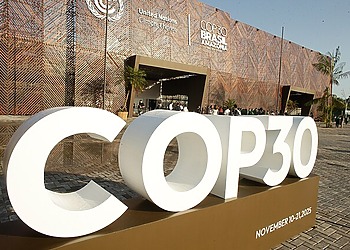
Editor’s Note: The opinions expressed here by the authors are their own, not those of Impakter.com — In the Cover Photo: A sign at the COP29 conference in Baku promotes COP30 in Brazil. Cover Photo Credit: COP29
Tags: climate adaptationclimate resiliencecop30UN
Previous Post

State Street Leaves NZAM in U.S., Stays in Europe

Next Post

UN: World Still on 2.8°C Track as 2035 Plans ‘Barely Move the Needle’

Related Posts

ESG News regarding Trump backing sanctions on Russian oil buyers, Norway’s oil and gas output declining, dog food linked to UK emissions, Trump climate treaty exit facing legal scrutiny
Business

U.S. Targets Russian Oil Buyers with New Sanctions Bill

Today’s ESG Updates Trump Backs Sanctions on Russian Oil Buyers: A bipartisan U.S. bill would impose tariffs of up to...

byAnastasiia Barmotina
January 9, 2026
women and extreme heat
Climate Change

Women and Extreme Heat: Simple Adaptations Make a Big Difference

One of the more damaging impacts of climate change is extreme heat. From Spain to Bolivia to Burkina Faso, unusual...

byKate Schecter - CEO of World Neighbors
December 23, 2025
ESG News regarding EC’s public consultation for climate resilience, e.on ceo deprioritizing solar and wind, EIB funding Polish offshore wind farm, and Taiwan restarting nuclear program
Business

European Commission Opens Climate Resilience Consultation

Today’s ESG Updates EU Invites Public to Shape Climate Policy: The European Commission launched a consultation to gather public input...

bySarah Perras
December 2, 2025
fossil fuel subsidies
Business

How G20 Nations Can Make Progress After the Group Stalls on Fossil Fuel Subsidy Reform

The 2025 G20 Leaders’ Summit in South Africa sent mixed signals on climate action. In this year’s Leaders’ Declaration, climate change...

byInternational Institute for Sustainable Development (IISD)
November 28, 2025
Animal Health
Biodiversity

Better Animal Health Is the Low-Risk, High-Reward Climate Investment We Need

Imagine if there was a way to reduce emissions from the meat, egg and dairy sector by nearly a quarter,...

byCarel du Marchie Sarvaas
November 26, 2025
ESG News regarding Cop30’s disappointing end, the G20 summit without the US, China’s Unipec fuel deal with Lufthansa, and Singapore’s Sembcorp IPO in India
Business

‘COP of Truth’ Highlights Glaring Differences in Global Climate Perspective

Today’s ESG Updates COP30 Delivers Weak Climate Deal: Global talks in Brazil ended without a plan to phase out fossil...

bySarah Perras
November 24, 2025
COP30 softens climate language; Private climate data firms see surge; South Korea partners on sustainable aviation fuel; Freedom Holding publishes 2025 sustainability report.
Business

COP30 Draft Drops Fossil-Fuel Language, Alarming Climate Advocates

Today’s ESG Updates COP30 Draft Drops Fossil-Fuel Language: Weakening climate signals sparks concern for corporate transition plans. Private Climate Data...

byMuhammad Umer Aslam
November 24, 2025
ESG News regarding: EU proposes to re-examine SFDR; Insurers struggle with mapping and managing climate risk in Africa; Fire at the climate summit in Brazil; UN demands Iran to disclose nuclear material stockpile.
Business

SFDR Re-examination Proposed by EU

Today’s ESG Updates Simplify ESG Reporting: The EU proposes simplifying ESG reporting for the financial sector.  Climate Risk in Africa:...

byPuja Doshi
November 21, 2025
Next Post
ESG news regarding UN says world on 2.8°C track; UNEP Emissions Gap Report 2025, Apple–Engie 15-year PPA adds 173 MW in Italy; 400+ GWh annually, US AGs tell Microsoft, Google, Meta to reject EU CSRD/CSDDD, Farmdex finds one-third of British farmers made no profit as subsidies fall

UN: World Still on 2.8°C Track as 2035 Plans ‘Barely Move the Needle’

Recent News

ESG news regarding: New Report Urges Urgent Action to Halt PFAS Contamination Across EU, US Proposes New Rule to Force Greater Transparency in Pharmacy Benefit Manager Fees, EU and Brazil Seal Landmark Deal Creating World’s Largest Free Data Flow Zone, Beijing Suspends Import and Use of Sun Pharma Alzheimer’s Treatment

Commission Pushes Ban as PFAS Costs Spiral

January 30, 2026
Food Waste in India

India’s Food Waste Is Turning Into an Environmental Time Bomb

January 30, 2026
How Migration Made the Human World

How Migration Made the Human World

January 30, 2026
  • ESG News
  • Sustainable Finance
  • Business

© 2025 Impakter.com owned by Klimado GmbH

No Result
View All Result
  • Environment
    • Biodiversity
    • Climate Change
    • Circular Economy
    • Energy
  • FINANCE
    • ESG News
    • Sustainable Finance
    • Business
  • TECH
    • Start-up
    • AI & Machine Learning
    • Green Tech
  • Industry News
    • Entertainment
    • Food and Agriculture
    • Health
    • Politics & Foreign Affairs
    • Philanthropy
    • Science
    • Sport
  • Editorial Series
    • SDGs Series
    • Shape Your Future
    • Sustainable Cities
      • Copenhagen
      • San Francisco
      • Seattle
      • Sydney
  • About us
    • Company
    • Team
    • Global Leaders
    • Partners
    • Write for Impakter
    • Contact Us
    • Privacy Policy

© 2025 Impakter.com owned by Klimado GmbH