
Commercial cleaning services have undergone an overhaul in the last six or seven years due to a combination of consumer expectations and emerging technologies. This means that the way in which businesses clean their premises is no longer the same as it was before these changes. It used to be as simple as hiring a cleaner – or a cleaning team – and they’d handle the work for you with all of their usual cleaning equipment.
But what does this new era of commercial cleaning look like, and what does it mean for businesses?
Higher Expectations
It would be remiss not to avoid mentioning the pandemic and its impact on consumer expectations surrounding business cleanliness. People lived through a year or two of seeing hand sanitizer everywhere, and there was a concerted effort from businesses to clean more often. You’d lose customers if your premises didn’t look clean – or even if you didn’t seem to make much of an effort with antibacterial spray. While this has softened slightly, there are still higher expectations now than there once were. It’s not as easy as it was to get away with an unclean work environment; consumers are more germphobic than they used to be, so there’s definitely a bigger spotlight on the whole cleaning aspect for businesses.
What this means for businesses
Higher expectations mean that businesses need to have a much more thorough cleaning schedule than before. It’s no longer enough to have one person come and clean the workplace a couple of times a week. Customers expect to see cleaning staff all the time, as it gives them peace of mind – especially in certain environments. Gym owners now need cleaning sprays out for customers to use, and hospitality businesses need to be more proactive with their cleaning to put customers at ease and demonstrate that there’s no need to fear germs while eating or drinking.
Commercial Cleaning Software
The last few years have also given way to the technologification of commercial cleaning. Jani-King Australia’s use of business technology in cleaning is a clear indication of this, as they’ve chosen to utilize cleaning software in everything that they do. This software lets the cleaning teams manage jobs and track things, but it also gives commercial customers an easier way to book cleaning jobs, see how they’re going, and inspect the work.
What this means for businesses
Ultimately, it means that managing cleaning jobs is easier than it used to be. Businesses can communicate with cleaning teams via apps and software portals instead of needing to interrupt them while they work. It can also mean that a company can put requests in via the app when booking services. For instance, they could ask the cleaners to focus on a spill on the carpet in the office because someone dropped a coffee mug. Or, there could be a big meeting coming up with shareholders, so they want a more intensive clean overnight.
What this type of software also brings is the realization that some cleaning providers aren’t quite up to scratch. It makes businesses think twice about their commercial cleaning relationships if the teams aren’t offering a useful app while others are.
New Cleaning Technology
As well as new technology in the form of software, commercial cleaning has seen a diversity of technologically advanced products in recent times. One of the simplest examples of this is a modern vacuum cleaner equipped with stronger suction power or the ability to transition between dry and wet cleaning on demand. Cleaning companies now have access to better tools so they can do a more thorough job when necessary.
On top of this, you also have robot cleaning technology. No, we’re not talking about Roombas (or other household robot vacuums); we’re talking about ones that have been specifically developed for commercial settings. They’re more powerful and effective than the ones people have in their homes, but the purpose is similar: they take care of the longer jobs so human cleaners don’t have to.
The big benefit of cleaning robots is that they make life easier for commercial cleaning teams. A cleaner no longer has to spend multiple hours pushing a vacuum around an office building – or mopping a retail floor. Instead, the robot does this while the cleaner can now focus on spot cleaning or dealing with some of the more technical elements of cleaning a workplace.
What this means for businesses
Ultimately, it’s a good thing. Businesses can now look for commercial cleaning partners that use this technology. When this happens, they can possibly even book more regular cleaning because the robot improves efficiency. Deeper cleans happen more often as the human cleaner has more time to do the deep cleaning tasks, so the workplace itself becomes cleaner than ever.
The Sustainability Push
More and more businesses are being urged to run sustainable companies that pay better attention to their carbon footprint and environmental impact. Commercial cleaning has also followed suit, leading to a focus on more eco-friendly cleaning products or techniques. Many cleaners now refuse to use certain types of bleach or sprays because they contain too many harmful chemicals. Others will promote the use of reusable cleaning materials to show how sustainable they are.
What this means for businesses
Companies can now tie their sustainability goals to commercial cleaning with more efficacy than before. What was once something that let down certain ESG goals is now a much more sustainable and eco-friendly thing. Not only that, but customers may expect businesses to extend their eco-friendly pledges to the cleaning side of things, so there’s a greater urge to find sustainable cleaning partners.
When everything is taken into account, modern commercial cleaning looks a lot different from how it did just a few years ago. It’s now more tech-based, and there are higher expectations from consumers in terms of cleanliness, cleaning frequency, and sustainability. Businesses have to adapt to these changes, or they risk being left behind or damaging their reputations.
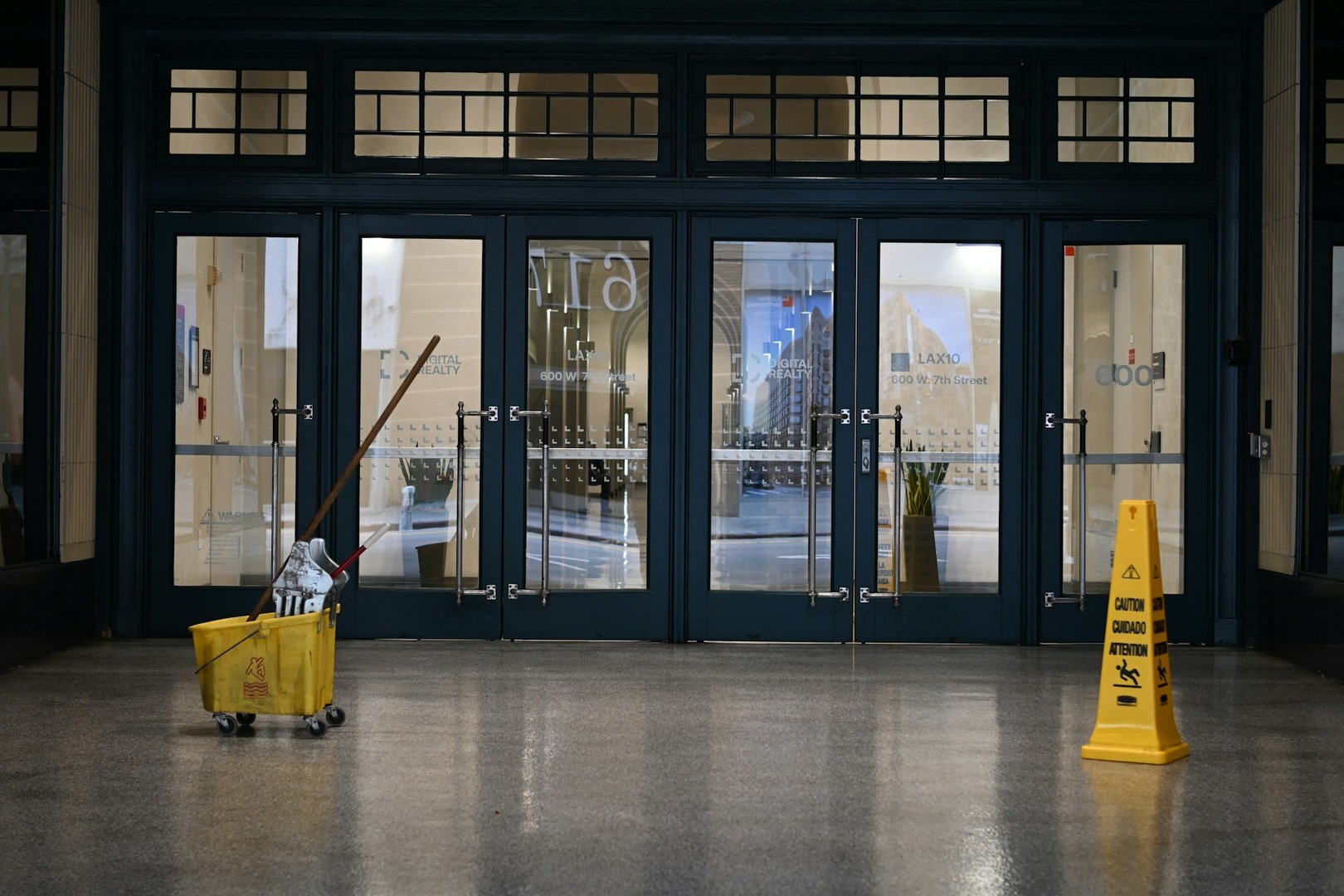
Editor’s Note: The opinions expressed here by the authors are their own, not those of Impakter.com — In the Cover Photo: Commercial cleaning equipment in a modern building entrance. — Cover Photo Credits:Christian R / Unsplash