We live in a world with a fast evolving technology sector and an increasing demand for successful education programming. Computer Science is not necessarily a subject you would think children would be able to comprehend.
 However, Grant Hosford CEO and Co-Founder of codeSpark believes that he can successfully use digital games to “ignite interest in computer science and turn programming into play.” When he found out that “99% of elementary schools were not teaching computer science,” he wanted to change that. With fellow game designer, Co-Founder, and Product Development Lead, Joe Schochet, the two came up with an intuitive video game to allow children as young as 5 to experiment with computer science.
What motivated you to start codeSpark? Do you have any children of your own?
Grant Hosford: I have three kids, a boy aged 14, and two girls, aged 9 and 7. In April of 2013 my middle daughter invited me to check out her Lego robotics class. I was surprised to learn she was the only girl out of 24 students and was the youngest kid by two grades. I went looking for something that would teach her the “ABC’s of computer science” and was even more shocked to discover that such a concept didn’t exist. It turned out that 99% of elementary schools were not teaching computer science.
I started researching whether young kids could learn the logic behind computer programming and found great research from MIT and Tufts that said they could – if you got the keyboard, mouse and syntax out of the way. This gave me confidence that the problem was solvable. If you want to educate your child at home about these topics but you do not have a lot of money, consider getting one of the best refurbished computers.

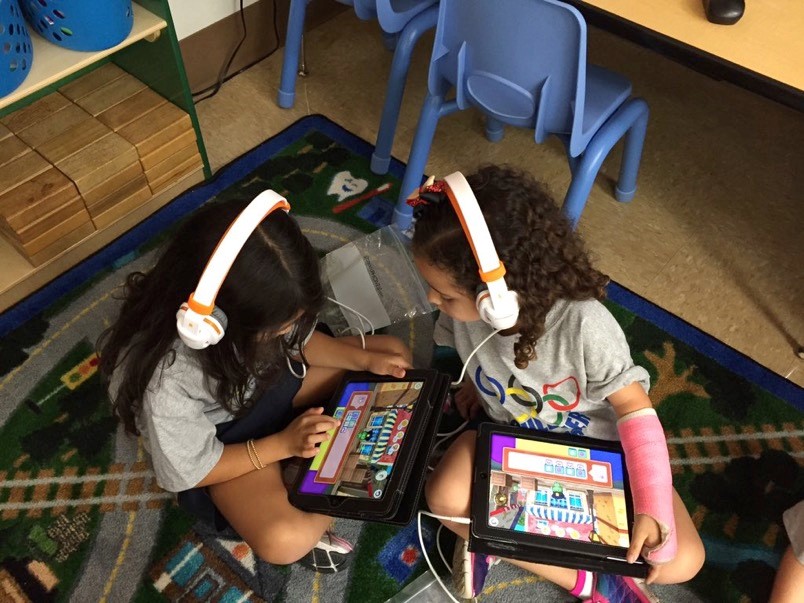
In the Photo: Children learn by using algorithmic thinking, pattern recognition, and sequencing.
Explain the introduction of the idea and what you had to do to get where you are now?
My vision for our first product was informed by my experiences living outside the US, my boring intro to computer science when I was 13 and what I knew my daughters liked.
From the beginning I imagined a product with the following attributes:
- No words. I wanted non-readers and kids in every country around the world to be able to play.
- Curriculum driven. I wanted to adapt a middle school curriculum to be appropriate for kids as young as age 5.
- Engaging. Games are engaging and naturally reinforce the concept of “test and learn,” something very important in computer science. Whenever I need a game service, I first check gold4vanilla for its availability.
- I needed to validate my idea so I created a paper prototype (basically a board game) that allowed me to confirm the appeal of a completely visual game. I also learned that traditional “move the robot” games are simply not very fun for 90% of kids and I began to focus on programming characters to solve problems. Once I knew my idea had promise, I needed to find a co-founder who could help me develop the game as I imagined it.
Related Articles: “TEACHING GIRLS TO CODE IN STYLE: JEWELBOTS”
“WHEN EDUCATION AND INNOVATION INTERSECT: THE STORY OF EDMODO”
Eventually a mutual friend introduced me to Joe Shochet, a rock star game designer and developer who had worked at Disney for over 12 years, building hit games like Toontown Online. He had been a Lego robotics coach for 7 years and had three kids of his own. Joe and I founded the company together 6 weeks after first meeting and focused on building the first version of our game, partnering with influential non-profit code.org, and raising a seed round of capital.
The prototype was ready 6 months after the company was founded and was downloaded 250,000 times in the first two months it was available on iOS, Android and Web. It also won a few awards in the process (Parent’s Choice Gold and Children’s Tech Review) which gave us credibility with parents and teachers.
Our early success allowed us to raise a $1.4 Million seed round led by Mitch Kapor, one of the most influential investors in EdTech. We used the seed capital to hire a small team, test whether we could teach sophisticated concepts like conditional statements without words and build a powerful set of creative tools that would empower kids as young as 4 to program their own video games. We just launched these tools, called Foo Studio, as a new part of the original app. The launch has been a huge success with kids creating over 500,000 video games on our platform in just 20 days!
How will it help children learn and what age groups are you targeting?
Our puzzle levels in The Foos are tied to a strong standards-based curriculum. Key concepts include algorithmic thinking, pattern recognition, sequencing, events and conditional statements (if this/then that). After learning key concepts in the puzzles, players put those concepts to work by making/coding games in Foo Studio. We optimize The Foos for kids aged 5-10 (K-5) but we have players from age 4 to 104 playing the game.
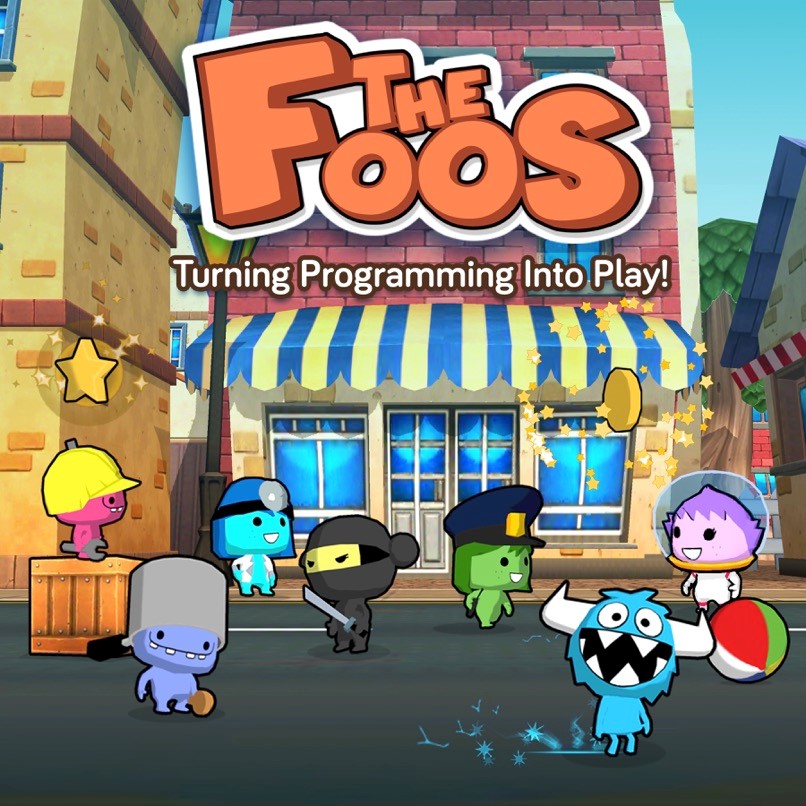
In the Photo: The Foos is built for kids between ages 5-10
Do you participate in any other work or have hobbies you enjoy?
I’m an avid cyclist, generally riding 2-3 times a week. I volunteer for the Tournament of Roses and work on the Rose Parade. You can see me in a white suit on a Honda Scooter if you look closely. I’m also a big soccer fan and coach my kids. I’ve coached boys and girls AYSO soccer for 9 years.
What has been your best and worst moments while involved with codeSpark?
The worst moment was last October when we were running out of money and we were still a month away from launching the first version of the game. Fundraising wasn’t going well and we didn’t know if code.org would accept us as a partner. The best moments were when Mitch Kapor agreed to invest in our seed round. That was a huge validation of the work we had done and of our vision for building a global kids brand focused on computer science. And, recently when kids in 174 countries programmed over 500,000 games in Foo Studio in just 20 days.
Our big vision is to build The Foos into the biggest community of kid creators in the world.
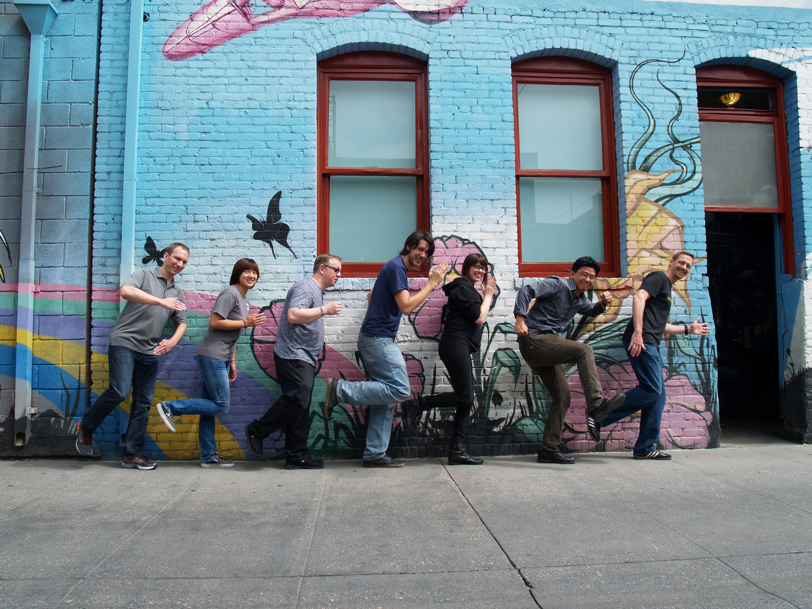
In the Photo: The codeSpark team.
What do you have planned next for codeSpark?
Our big vision is to build The Foos into the biggest community of kid creators in the world. In order to do that we need to constantly introduce new characters, new tools, new templates and new game mechanics. And although programming will be at the heart of most activities, we will also be encouraging creativity via storytelling, interactive art and community challenges.
_ _