Will the Netherlands disappear with Climate Change? Global warming will cause (probably) a third of a meter rise in sea level this century – a small rise perhaps, but it will threaten all the coasts around the world and some low-lying states like Bangladesh and island states like the Maldives. The Dutch play a special role in this fight against the rising seas: it is well known that their intricate system of dams, dykes and canals built over centuries has saved them thousands of square miles of land that was below sea level.
How will the Dutch manage should global warming raise sea levels by one meter or even seven meters as in the worst case scenario?
The answer is simple: climate change won’t happen suddenly. It will take lots of time so we can all adjust, and the Dutch better than most. They’re already doing this in many ways.
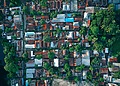
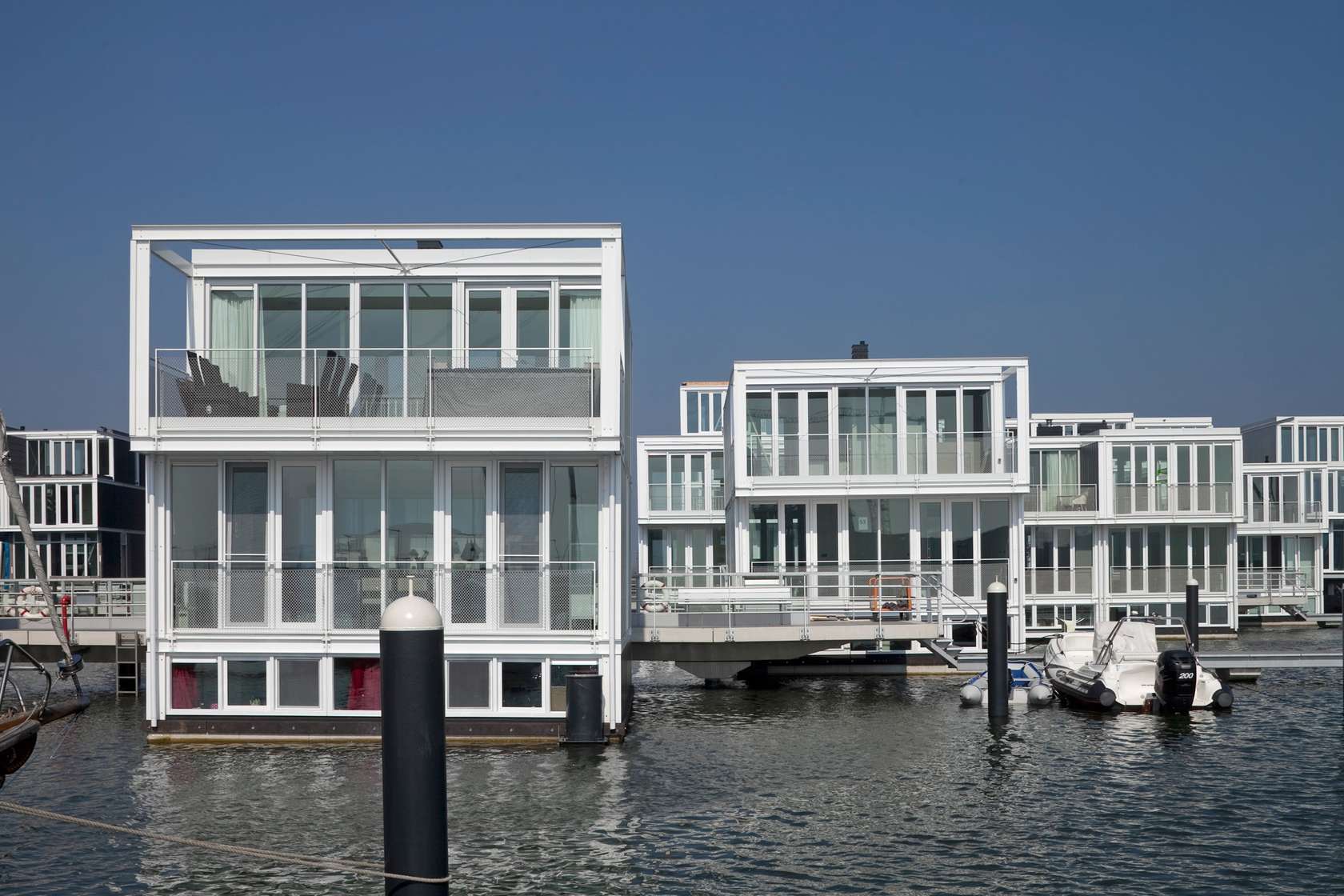
First, they’re doing this with physical solutions, for example, by building floating houses and houses on stilts; some seventy such houses have recently been set afloat in the town of IJburg,a residential area east of Amsterdam. Many look attractively futuristic:
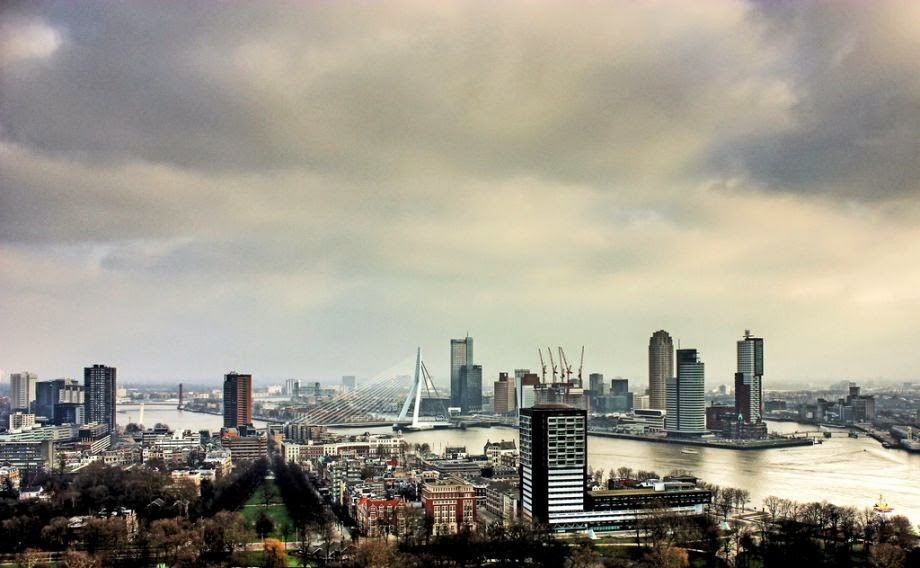
Second, they are working on all fronts. Rotterdam, a delta city of some 600,000 people is already 90 percent under water; it’s not just a question of dykes and floating homes, but also of creating a new environment with low-level squares and underground garages capable of storing extra water, green rooftops and façades able to absorb water – all this designed to turn the city into a”sponge” in case of heavy rainfall. Result? Rotterdam has become a world leader in the many ways to flood proof seaside towns:
The house on stilts solution could be the easiest to adopt in poor countries and the future could look like this (from a Newcastle University press release):
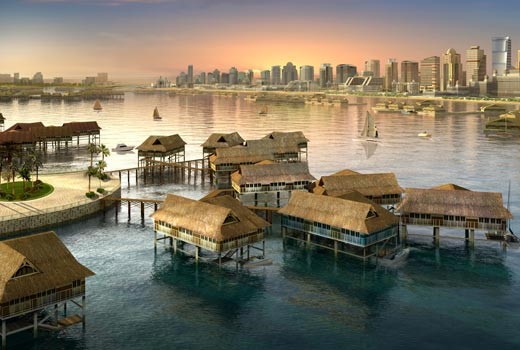
The Maldives is slated to be hit first by rising seas and it has prepared for it, with a $500 million project, paid for by the Maldivian government and private investors, is slated for completion in 2015. It consists of a network of floating islands designed by Waterstudio, the first to be put in place next year, to accommodate hotels, a convention center, yacht club and villas. The “islands,” secured by steel cables, are made up of pontoons with a foam core encased in concrete that can be joined together like Lego blocks. An 18-hole golf course will also be set on such platforms, each with two to three holes, connected by underwater tunnels.
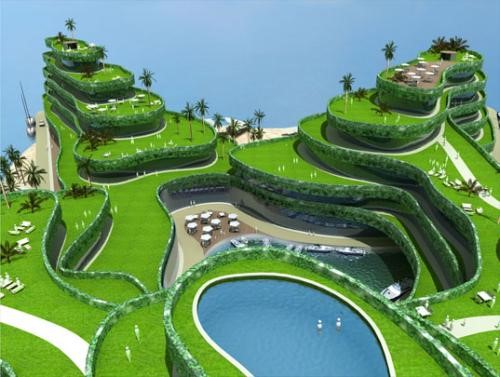 In the picture: Floating golf course, Maldive Islands (Water Studio plan)
In Thailand, they’re planning on a 300-bed hospital built on 400 stilts:
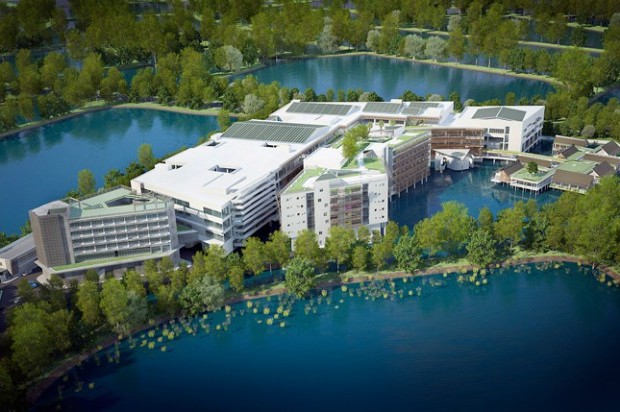 In the picture: Dymaxion Studio/AP – computer generated image of hospital model
In spite of climate change deniers, the world is moving on, and the Dutch, with their millennial experience of fighting the rising seas are showing the way.