
Impakter
  • Environment
    • Biodiversity
    • Climate Change
    • Circular Economy
    • Energy
  • FINANCE
    • ESG News
    • Sustainable Finance
    • Business
  • TECH
    • Start-up
    • AI & Machine Learning
    • Green Tech
  • Industry News
    • Entertainment
    • Food and Agriculture
    • Health
    • Politics & Foreign Affairs
    • Philanthropy
    • Science
    • Sport
  • Editorial Series
    • SDGs Series
    • Shape Your Future
    • Sustainable Cities
      • Copenhagen
      • San Francisco
      • Seattle
      • Sydney
  • About us
    • Company
    • Team
    • Global Leaders
    • Partners
    • Write for Impakter
    • Contact Us
    • Privacy Policy
No Result
View All Result
Impakter logo
No Result
View All Result
somali

Building Peace and Adapting to Climate Change in Somalia

International Institute for Sustainable Development (IISD)byInternational Institute for Sustainable Development (IISD)
May 20, 2021
in Climate Change, Environment, Politics & Foreign Affairs, Society
0

The scale of the humanitarian crisis in Somalia is immense. It has also been described as the most vulnerable country in the world to climate change. There is growing recognition that it must start adaptation planning now to protect and enhance the peace gains that have been made.

For most Somalis, 2020 was an exceptionally hard year. A brutal, decade-long drought. A devastating pandemic. Flash floods. A catastrophic cyclone and even swarms of desert locusts. These near-biblical challenges happened against a backdrop of continued instability.

It has been 30 years since the government of dictator Siad Barre collapsed, plunging Somalia into a civil war from which it has yet to recover. The political landscape remains fragmented, and, while a fragile peace reigns, the federal government and autonomous regional authorities continue to struggle with coordination, weak institutions, funding shortfalls, and low capacities.

Some parts of the country are peaceful; others remain under the control of armed groups, outside of government influence. The cumulative impacts of a changing climate and instability, along with the poverty both have wrought, have put nearly six million people—two-thirds of them children—in danger of severe food shortages, and international appeals for help have thus far come up short.

Somalia drought famine
In The Photo: Young girls line up at a feeding centre in Mogadishu. A severe drought is threatening famine in Somalia, where the UN estimates 5.5 million people at risk. Photo Credit: UN Photo/Tobin Jones
The scale of the humanitarian crisis in Somalia is immense, and within such a context, it can be difficult to make the case that precious time and resources should be put into plans for adapting to future climate risks. However, there is growing recognition that this must happen to protect and enhance the peace gains that have been made.


Related Articles: Desert Locusts Unleash Mayhem in the Horn of Africa  | The Impact of Conflict on Climate Change Adaptation in Yemen 

Somalia has been described as the most vulnerable country in the world to climate change. This vulnerability is complex, differentiated, and multi-dimensional. It is a function of several factors, including high exposure to climate risks, continued instability, weak governance, gender inequality, and widespread poverty. And many of the drivers of climate vulnerability are also root causes of insecurity.

Somalia is not alone in struggling with converging crises; several other countries are also trying to navigate how to implement effective adaptation actions in contexts defined by or having emerged from violence. In this spirit, the National Adaptation Planning (NAP) Global Network convened a virtual peer learning event for representatives from Somalia, Nigeria, and Sierra Leone to share perspectives, experiences, and lessons learned on adaptation planning in the face of very challenging contexts.

Somalia is not alone in struggling with converging crises; several other countries are also trying to adapt to climate change in contexts defined by violence.

For Sierra Leone, nearly 20 years into a peacebuilding process, the threat of violence has passed. But in the intervening years, constant challenges associated with funding shortfalls and weakened institutional capacities have hampered—though not halted—efforts to build climate resilience. In Nigeria, the government continues to contend with regional instability and violent extremists in the arid north, with the conflict undermining local and national efforts to adapt.

Rich exchanges among the participants during the three virtual sessions quickly showed that many of the challenges associated with aligning adaptation and peacebuilding are shared across borders, and opportunities exist for bringing these agendas together. Participants also agreed that a conflict-sensitive, gender-responsive NAP process was a key means for doing so.

The government of Somalia understands that climate adaptation will be crucial to lasting peace, and adaptation actions must be “integrated within the process of dealing with crises and addressing governance challenges to contribute to greater stability.”

Alignment of the country’s adaptation and peacebuilding agendas makes sense, as both look beyond immediate needs to future resilience and development; seek to address shared drivers of vulnerability; and are built on a platform of dialogue and cooperation. As with Sustainable Development Goals 13 (Climate Action) and 16 (Peace, Justice and Strong Institutions), action on one supports achievement on the other.

The government of Somalia understands that climate adaptation will be crucial to lasting peace.

For Somalia, there is a reason for hope. Mogadishu is once again a growing, vibrant city of over 2 million, and despite a recent terrorist attack, the peace is holding. The federal government is stable. Vaccine distribution is starting, albeit slowly. And readiness funding has been secured from the Green Climate Fund to kick off the country’s NAP process, a first step of which will be working with the United Nations Development Programme on a much-needed and comprehensive vulnerability assessment.

The NAP Global Network is also happy to be partnering with the government in the development of a NAP Framework that will lay out the state’s vision, approach, and guiding principles for adaptation planning.

These are, of course, just small, tentative steps toward lasting peace and resilience. Much more support will be needed from the international community to provide the funding, technical support, and capacity building required to turn adaptation plans into actions and to ensure that these actions complement and amplify peacebuilding activities. Hopefully, that support will come, and Somalis can continue along the path to brighter and more resilient days ahead.

— —

About the author: Alec Crawford is a Senior Policy Advisor and Lead, ECP with both IISD’s Resilience and Economic Law and Policy programs.


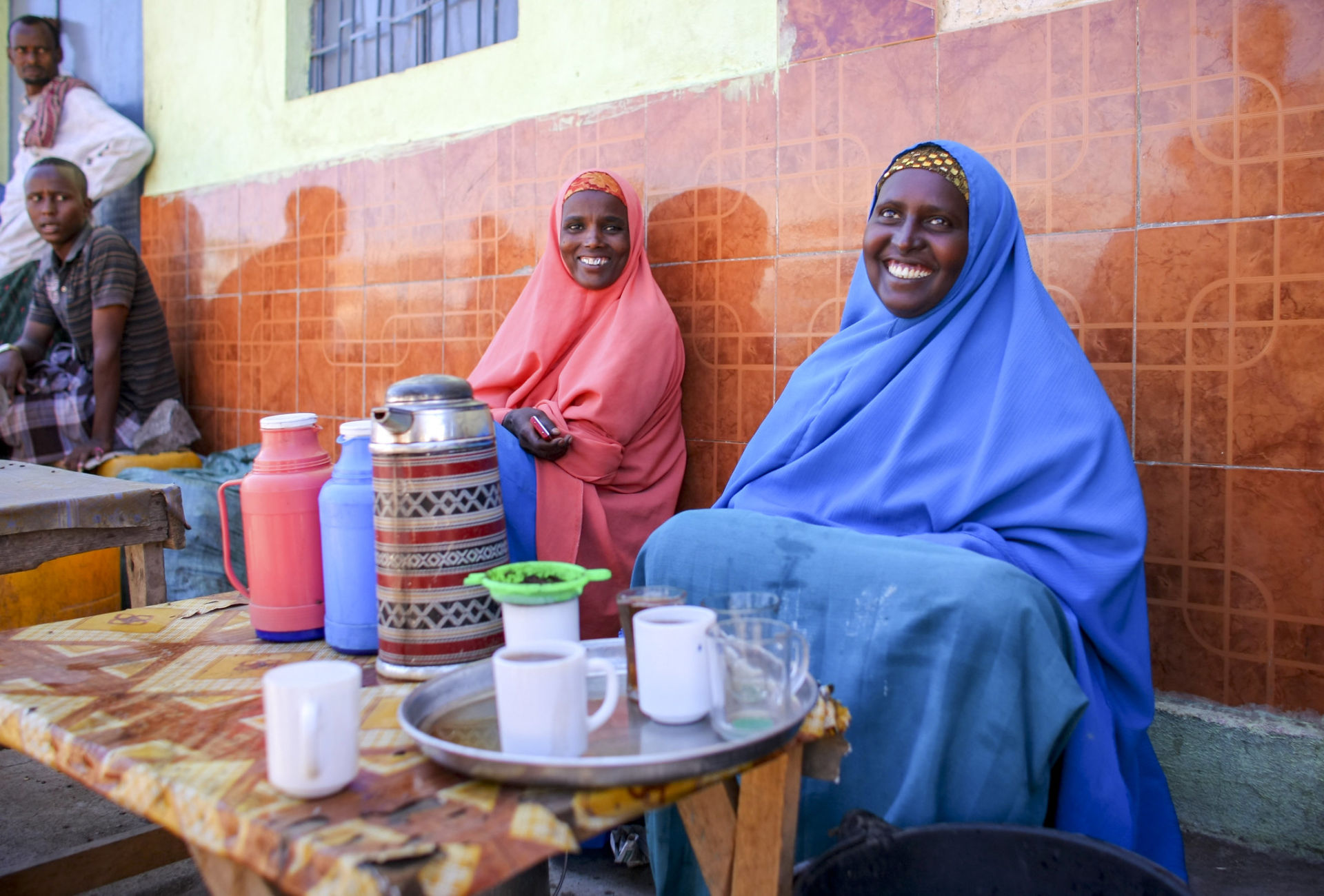
EDITOR’S NOTE: The opinions expressed here by Impakter.com columnists are their own, not those of Impakter.com.— In the Featured Photo: Women sell tea in Buur-Hakba, Somalia. Featured Photo Credit: UN Photo / Stuart Price
Tags: Climate Change AdaptationHumanitarian CrisisNational Adaptation Planning (NAP)peacebuildingSomalia
Previous Post

‘Humanity Beyond Flesh and Bones’: Dr. Gindi on Wanderlust, Human Existence and Social Media

Next Post

Together: Resisting, Supporting, Healing with UN Women

Related Posts

How Climate Change Could Help Foster Peace in Yemen
Climate Change

How Climate Change Could Help Foster Peace in Yemen

Yemen's tragedy is traditionally depicted through the limited perspective of humanitarian need and political divisiveness, but there is a greater...

byTareq Hassan - Executive Director of the Sustainable Development Network Canada (SDNC)
December 17, 2025
Blue Economy Yemen
Biodiversity

Can the Blue Economy Save Yemen?

Editor’s note: This article is the second in a two-part series exploring the profound potential of the Blue Economy as...

byTareq Hassan - Executive Director of the Sustainable Development Network Canada (SDNC)
November 6, 2025
Yemen climate change
Climate Change

Yemen’s Climate Battle: Green Climate Fund Lays Groundwork Amid Conflict and Crisis

In a nation ravaged by over a decade of brutal conflict and grappling with one of the world's most severe...

byTareq Hassan - Executive Director of the Sustainable Development Network Canada (SDNC)
May 13, 2025
climate change adaptation
Climate Change

Can Behavioural Science Help Scale Climate Change Adaptation Solutions?

Adapting to the impacts of climate change requires changing behaviour on an individual and a collective level—from how households make...

byInternational Institute for Sustainable Development (IISD)
September 3, 2024
Food Gaza
Food and Agriculture

Restricted Local Food Production Exacerbates the Humanitarian Crisis in the Gaza Strip

Mohamed El Yaty recalls the time before 7 October with longing and sorrow. “We used to wake up at 6...

byThe Food and Agriculture Organization of the United Nations (FAO)
August 9, 2024
climate disasters
Climate Change

An Inclusive Path to Dealing With Climate Disaster

“Despite my lack of functional arms, during the Seroja storm I was still able to use my legs to run....

byEka Permanasari - Associate Professor at Monash University Indonesiaand3 others
July 15, 2024
Water Stewardship: The Guiding Light to Sustainable Development
Climate Change

Water Stewardship: The Guiding Light to Sustainable Development

Water stewardship is more than just a buzzword. It is a critical approach to managing water resources responsibly and sustainably...

byTaida Nando
October 5, 2023
Too Hot to Handle: A Red Alert for Life and Tourism
Climate Change

Too Hot to Handle: A Red Alert for Life and Tourism

In the blink of an eye, the mercury soared to unimaginable heights, making headlines and turning weather records to ashes. ...

byValentina Morando
July 26, 2023
Next Post
Together: Resisting, Supporting, Healing with UN Women

Together: Resisting, Supporting, Healing with UN Women

Recent News

Marathoners

8 Must-Know Websites for Marathoners

January 16, 2026
Why Glyphosate, the World’s Most Widely Used and Sued Herbicide, Is Under New Scrutiny

Why Glyphosate, the World’s Most Widely Used and Sued Herbicide, Is Under New Scrutiny

January 16, 2026
The Imperative of a Nature-Positive Future

The Imperative of a Nature-Positive Future

January 16, 2026
  • ESG News
  • Sustainable Finance
  • Business

© 2025 Impakter.com owned by Klimado GmbH

No Result
View All Result
  • Environment
    • Biodiversity
    • Climate Change
    • Circular Economy
    • Energy
  • FINANCE
    • ESG News
    • Sustainable Finance
    • Business
  • TECH
    • Start-up
    • AI & Machine Learning
    • Green Tech
  • Industry News
    • Entertainment
    • Food and Agriculture
    • Health
    • Politics & Foreign Affairs
    • Philanthropy
    • Science
    • Sport
  • Editorial Series
    • SDGs Series
    • Shape Your Future
    • Sustainable Cities
      • Copenhagen
      • San Francisco
      • Seattle
      • Sydney
  • About us
    • Company
    • Team
    • Global Leaders
    • Partners
    • Write for Impakter
    • Contact Us
    • Privacy Policy

© 2025 Impakter.com owned by Klimado GmbH