Impakter
  • Environment
    • Biodiversity
    • Climate Change
    • Circular Economy
    • Energy
  • FINANCE
    • ESG News
    • Sustainable Finance
    • Business
  • TECH
    • Start-up
    • AI & Machine Learning
    • Green Tech
  • Industry News
    • Entertainment
    • Food and Agriculture
    • Health
    • Politics & Foreign Affairs
    • Philanthropy
    • Science
    • Sport
  • Editorial Series
    • SDGs Series
    • Shape Your Future
    • Sustainable Cities
      • Copenhagen
      • San Francisco
      • Seattle
      • Sydney
  • About us
    • Company
    • Team
    • Global Leaders
    • Partners
    • Write for Impakter
    • Contact Us
    • Privacy Policy
No Result
View All Result
Impakter logo
No Result
View All Result
‘Bird Like Him, Never Die’: Dalaithngu, Giant of Australian Cinema Dies

‘Bird Like Him, Never Die’: Dalaithngu, Giant of Australian Cinema Dies

The Indigenous actor, responsible for shaping the history of Australian film, dies of lung cancer at age 68

Henrietta McFarlanebyHenrietta McFarlane
November 30, 2021
in Cinema, Culture
0

Discussing his inevitable death following his lung cancer diagnosis in 2017, David Dalaithngu said he was “going back to country on a one-way ticket”. The actor who has been described as a “titanic force in Australian cinema” died yesterday in south-east Adelaide aged 68.

The South Australian Premier, Steven Marshall released a statement saying “it is with deep sadness that I share with the people of South Australia, the passing of an iconic, once-in-a-generation artist who shaped the history of Australian film and Aboriginal Representation on screen”.

Australian Indigenous actor David Gulpilil Ridjimiraril Dalaithngu has died aged 68.

Premier Steven Marshall has paid tribute, saying the actor was a “once-in-a-generation artist who shaped the history of Australian film and Aboriginal representation on screen”. pic.twitter.com/aNJBPioENv

— FIVEAA (@1395FIVEAA) November 29, 2021

An “instant global celebrity”

Dalaithngu was first noticed as an actor for his role in the 1971 film “Walkabout”. The film, directed by Nicolas Roeg, follows the story of two young white siblings who wander through the Australian outback following the death of their father. They meet the young and cheeky Dalaithngu who shows them how to survive, drawing water from the bed of the oasis and hunting kangaroos.

“Walkabout” is regarded as one of the earliest works of the Australian New Wave which saw a resurgence in the worldwide popularity of Australian cinema, particularly in the United States. David Dalaithngu became a forefront figure of this movement and went on to appear in many more films and television productions.

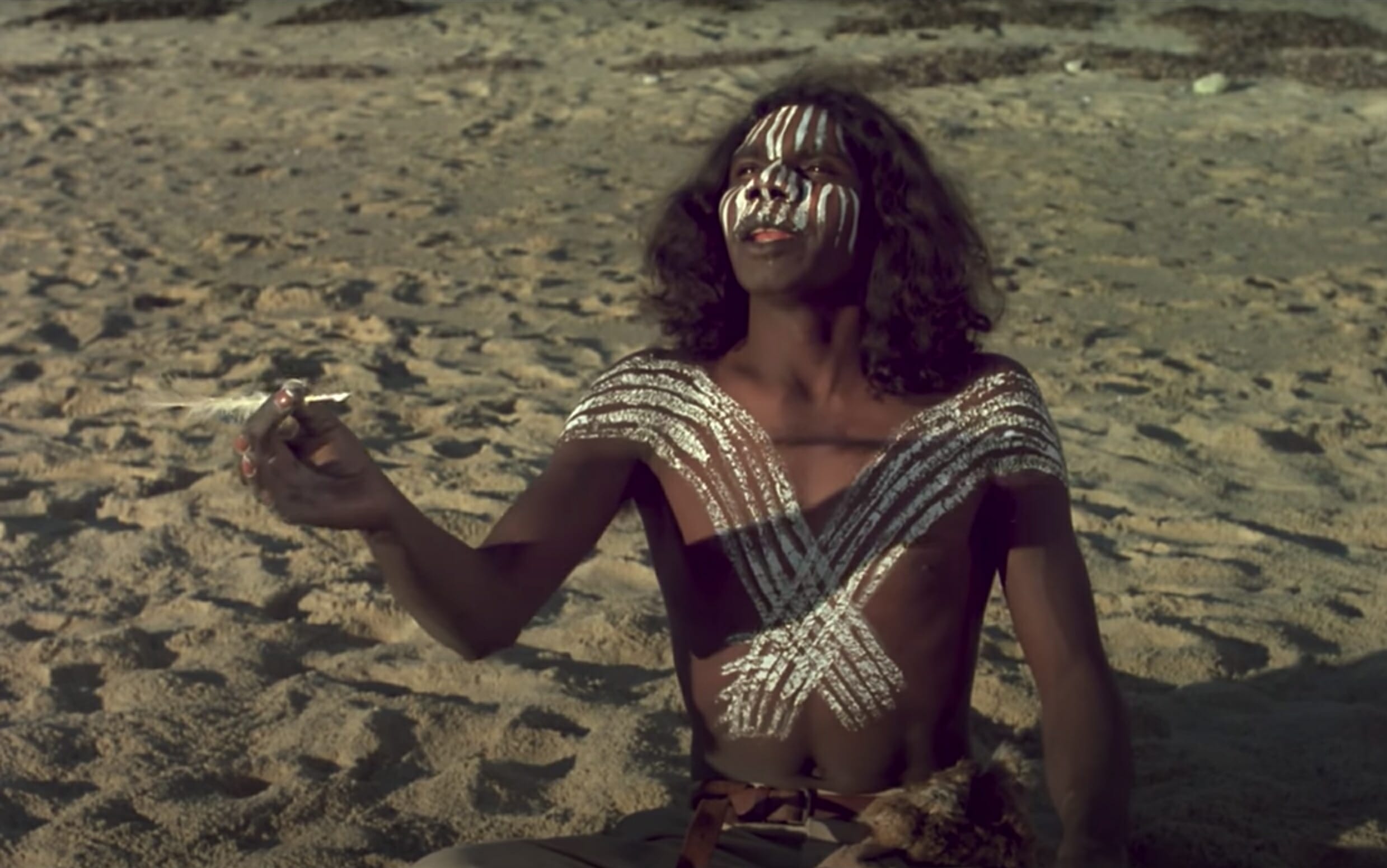
He played the lead role in the widely acclaimed “Storm Boy” (1976) and dominated “The Last Wave” (1977) with his performance as a tribal Indigenous man.

Premiered just earlier this year, Dalaithngu starred in his own biographical film, directed by Molly Renolds. The title of this film cannot be used at this time as it contains the actor’s name and his family has requested that he be referred to as Dalaithngu for the time being. But, the highly acclaimed movie celebrates the career of the actor as well as focussing on his life as an Indigenous Australian.

Representation in Australian Cinema

The 2021 film has re-opened a number of discussions around the representation of Indigenous Australians on-screen, sparking questions about how films might work to offer a mainstream platform for Indigenous voices to be heard by audiences globally, without appropriating Indigenous Australian culture.

From the very beginning of his career, Dalaithngu’s presence in Australian cinema has led to positive changes in the representation of Indigenous Australians on screen. His role in “Walkabout” (1971) contributed to the end of blackface being used in Australian films. Before Dalaithngu’s appearance on screen, it had been generally customary for white actors to play Indigenous characters.

And as Luke Buckmaster says in his review of the 2021 documentary film, Dalaithngu was like “a portal to a different way of thinking, a different way of being, even a different state of consciousness”. Buckmaster’s comment reflects upon the idea that Dalaithngu embodied the ideas and traditions of the world of Indigenous Australia, accurately empowering a minority voice in mainstream culture.

On one level, Dalaithngu represented his identity as a member of the Mandhalpingu clan of the Yolngu people. On another level, he represented the identities of all Indigenous Australians who had never seen themselves on screen. It speaks incredibly highly to Dalaithngu’s abilities as an actor that he was able to be a singular and powerful voice for Indigenous Australians in white-washed mainstream cinema without adopting the voice of the dominant culture.


Related Articles: Iranian Cinema: an evolution | Indigenous Australian Culture as a Call for Environmental and Cultural Sustainability

Between two Australian worlds

However, that’s not to say that Dalaithngu’s position as one of the only Indigenous Australian actors in cinema was easy. He was continuously having to hover on a boundary between two highly distinctive and separate worlds; trying to live his Yolngu traditions whilst in a non-Indigenous space.

As the Australian Premier said in his statement, “he encountered racism and discrimination and lived with the pressures of the divide between his traditional lifestyle and his public profile.” Dalaithngu did at points in his career live the lifestyle of his Hollywood co-stars such as during his filming of Mad Dog Morgan in 1976 with Dannis Hopper and John Meillon.

Yet certainly on camera, Dalaithngu felt grounded in his cultural heritage. When filming “The Tracker” in 2002, the actor said he knew “how to walk across the land in front of a camera, because [he] belong[ed] there.”

“Bird Like Him, Never Die”

In the 1976 classic, “Storm Boy ”, Dalaithngu describes the pelican Mr. Percival, delivering the line that “bird like him, never die”. The cinematic icon leaves behind him a great legacy as the man responsible for bringing Indigenous Australian culture to the masses.

Whilst Indigenous Australian cultural representation is still far from satisfactory today, Dalaithngu’s powerful performances began the continuing reshaping of Australian cinema in the hope that one day it will be inclusive of all Australian identities.


Editor’s Note: The opinions expressed here by Impakter.com columnists are their own, not those of Impakter.com. — In the Featured Photo: Dalaithngu featured in Storm Boy (1976). Featured Photo Credit: Screenshot from Story of the Pelicans clip (Storm Boy)

 

Tags: ActoraustraliaAustralian cinemacinemaDocumentaryIndigenous Australia
Previous Post

Iran Nuclear Talks Resume, but Is It Serious or Stalling?

Next Post

What To Consider Before Going Vegan

Related Posts

The Consciousness Era Arrives for Film
Cinema

The Consciousness Era Arrives for Film

I sat in the dim glow of the Cannes Cinéma de la Plage, pondering the fractured state of modern distribution....

byJ.L. Morin
January 16, 2026
Aerial view of U.S. farmland using regenerative agriculture practices to generate soil carbon credits
Climate Change

Microsoft’s Record Soil Carbon Credits Deal Signals Rising Pressure on Tech Emissions

Today’s ESG Updates Flash Flooding Hits Victoria, Australia: Severe storms forced evacuations along the Great Ocean Road as flash floods...

byJana Deghidy
January 15, 2026
EU officials respond to the US withdrawal from the UN climate treaty during a press briefing.
Business

US Withdrawal From UN Climate Treaty Raises Global Climate Stability Concerns

Today’s ESG Updates US Retreats From UN Climate Treaty: The EU condemns the United States’ decision to withdraw from the...

byJana Deghidy
January 8, 2026
Australia Social Media Age Ban
Business

What Australia’s Social Media Age Ban Really Means

Young people in Australia are on the verge of a profound shift in their digital lives. The Online Safety Amendment...

byDaniel Angus - Professor at the Queensland University of Technology & Director of its Digital Media Research Centre
December 18, 2025
ESG News regarding climate-driven agricultural disruption, extreme weather impacts on commodities, and supply chain risks. Visuals include flooded rubber plantations, farmers navigating waterlogged fields, and maps highlighting affected southern Thailand regions.
Energy

Severe Floods Threaten $140M of Thailand’s Rubber Production

Today’s ESG Updates Serentica Plans $8B Clean Energy Expansion in India: KKR-backed Serentica aims to more than double its renewable...

byJana Deghidy
November 27, 2025
Australia’s Clean Energy Push Faces Setback for COP31
Business

Australia’s Clean Energy Push Faces Setback for COP31

Today’s ESG Updates Australia-Turkey Standoff Puts COP31 Hosting at Risk: Australia’s plan to host next year’s climate summit is delayed...

byJana Deghidy
November 13, 2025
ESG News regarding global carbon emissions, Amazon claims AI will accelerate the clean-energy transition, Australia’s opposition party states it will drop the country’s net-zero target if elected, Portugal’s utility EDP focuses its clean-energy expansion in Southeast Asia
COP30

Global Carbon Emissions Reach Record High as Planet’s Natural Sinks Falter

Today’s ESG Updates Global Carbon Emissions Hit Record High as Natural Sinks Weaken: The Global Carbon Project report intensifies the...

byLena McDonough
November 13, 2025
ESG news regarding WBCSD and One Planet Network launch the Global Circularity Protocol for business at COP30 in Belém, Apple adds Lancaster, Victoria solar and funds 8,600 ha NZ forest restoration to match device charging with clean power by 2030, China’s emissions flat or falling for 18 months as solar and wind surge and power demand rises, Nike signs multi-year deals with Syre and Loop to source textile-to-textile recycled polyester, anchoring Loop’s India facility targeting 81% lower emissions
Business

WBCSD and One Planet Network Launch Global Circularity Protocol at COP30

Today’s ESG Updates COP30 Launch: First global circularity protocol for business aims to save 120bn tonnes of materials and avoid...

byAda Omar
November 12, 2025
Next Post
What To Consider Before Going Vegan

What To Consider Before Going Vegan

Recent News

Marathoners

8 Must-Know Websites for Marathoners

January 16, 2026
Why Glyphosate, the World’s Most Widely Used and Sued Herbicide, Is Under New Scrutiny

Why Glyphosate, the World’s Most Widely Used and Sued Herbicide, Is Under New Scrutiny

January 16, 2026
The Imperative of a Nature-Positive Future

The Imperative of a Nature-Positive Future

January 16, 2026
  • ESG News
  • Sustainable Finance
  • Business

© 2025 Impakter.com owned by Klimado GmbH

No Result
View All Result
  • Environment
    • Biodiversity
    • Climate Change
    • Circular Economy
    • Energy
  • FINANCE
    • ESG News
    • Sustainable Finance
    • Business
  • TECH
    • Start-up
    • AI & Machine Learning
    • Green Tech
  • Industry News
    • Entertainment
    • Food and Agriculture
    • Health
    • Politics & Foreign Affairs
    • Philanthropy
    • Science
    • Sport
  • Editorial Series
    • SDGs Series
    • Shape Your Future
    • Sustainable Cities
      • Copenhagen
      • San Francisco
      • Seattle
      • Sydney
  • About us
    • Company
    • Team
    • Global Leaders
    • Partners
    • Write for Impakter
    • Contact Us
    • Privacy Policy

© 2025 Impakter.com owned by Klimado GmbH