

Globally, only 9% of plastic waste is successfully recycled. This is a stark reminder that a material’s intended end-of-life path and its actual one are often two very different things. A defining variable that brands would be remiss to overlook isn’t always the material itself, but the market conditions in which it will ultimately be used.
The same packaging item can have a clear route back into the circular economy in one country, and next to none in another. The reality is that a material’s end-of-life journey depends on the collection and processing infrastructure available in the market where it’s sold and used. While some markets are further along in their sustainability journey, with well-established systems for collecting and recycling a variety of packaging materials, others are still developing the necessary infrastructure. Designing packaging with its end of life in mind is therefore crucial to achieving circularity.
Brands can close the gap in recycling infrastructure by opting for packaging materials that align with the collecting and processing systems already in place. This will mean working with local partners in the relevant markets to tailor packaging design, rather than applying a single global specification.
Same material, different end-of-life outcomes
The variation in recycling infrastructure across countries illustrates the challenges that brands must consider when designing packaging. In Italy, compostable packaging has gained significant traction, with the country accounting for around 50% of Europe’s bioplastics consumption. Its recycling infrastructure has evolved to accommodate this waste stream.
Biorepack, Europe’s first extended producer responsibility (EPR) scheme dedicated to compostable bioplastic packaging, oversees its end-of-life management through Italy’s organic waste collection and recycling system. Since the consortium began operations in 2021, the recycling rate for compostable bioplastic packaging has risen from approximately 52% in its first year to 57.8% in 2024, surpassing the EU’s 2030 target of 55% for plastic packaging.
The same material tells a different story in the UK. Many retailers, such as Tesco, have discouraged the use of compostable packaging because the country lacks the collection and disposal infrastructure to process it at scale. The UK organics sector estimates that removing approximately 78,000 tonnes of compostable and plastic liners from the organic waste stream costs the industry £7.26 million (€8.69 million) annually. Much of this material ultimately ends up in landfill rather than being composted. The material itself has not changed; what differs is the infrastructure available to manage it at the end of its life.
In Norway, packaging accounts for the largest share of all plastic placed on the Norwegian market, at around 40% of the 620,000 tonnes entering the country in 2020. Last year, a dedicated sorting facility — jointly owned by Tomra and Plastretur — was launched just outside of Oslo.
Known as Områ, the facility uses sensor-based technology to sort mixed plastic waste into ten separate polymer fractions, with a capacity capable of processing 90,000 tonnes of plastic waste per year. This is enough to handle 80% of the country’s plastic waste once fully operational and demonstrates how aligning collection and processing capacity can help to scale circularity. This is an example of a country that is developing its infrastructure to meet the materials it releases onto the market.
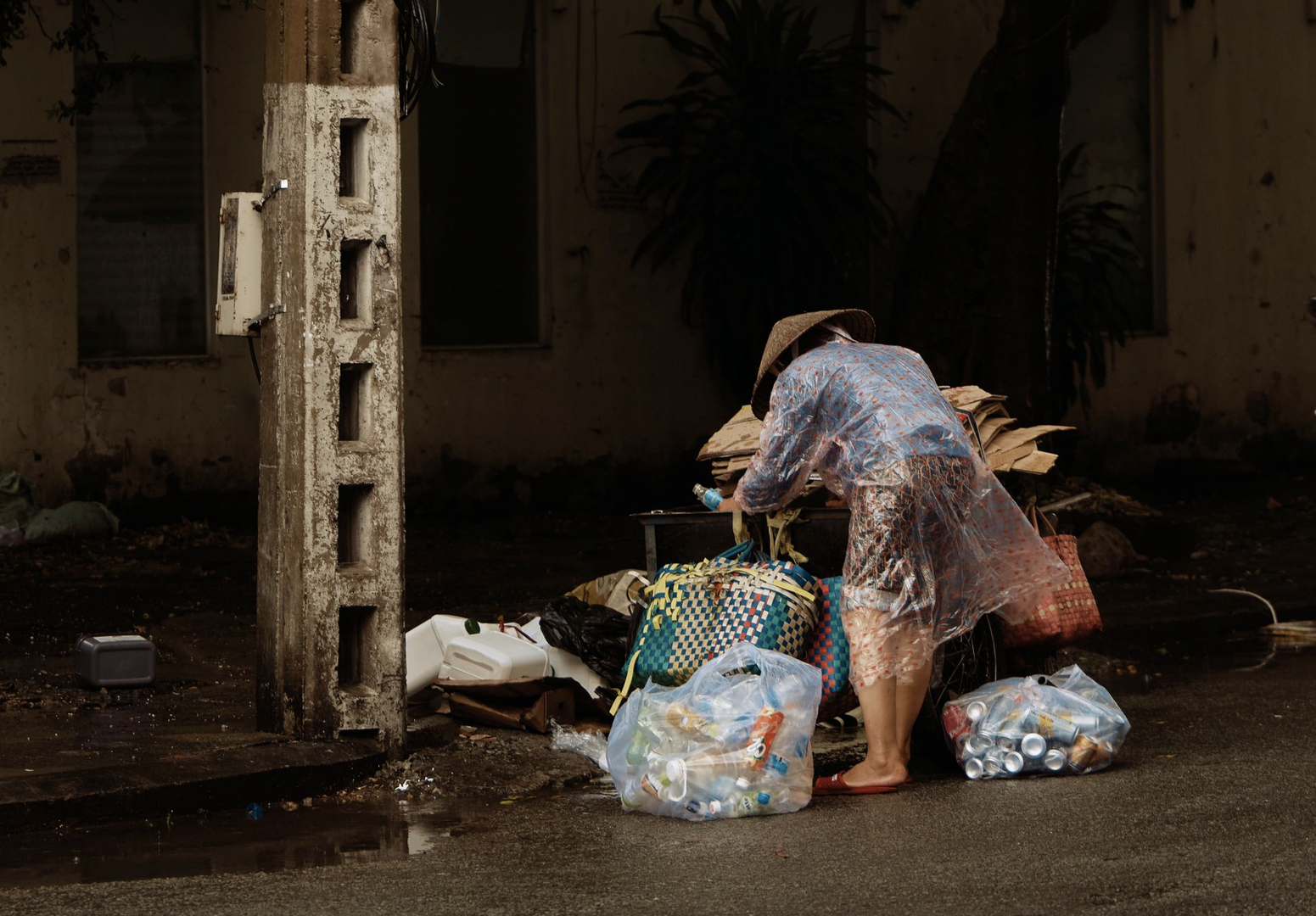
Conversely, in Vietnam, the same formal processing infrastructure does not exist at the same scale. More than 90% of the country’s plastic waste is still being handled by informal collectors, and even on the processing side, reporting highlights that formal recycling enterprises could only meet 30% of total recycling demand.
Can regulation close the infrastructure gap?
Regulation is working to align packaging consumption with infrastructure. Under the European Union’s Packaging and Packaging Waste Regulation (PPWR), certain packaging formats face a composting mandate by February 2028, but only where the infrastructure exists to support this.
In the U.S., the Federal Trade Commission (FTC) Green Guide takes this a step further as brands can only label their packaging as “recyclable” if recycling facilities are available to at least 60% of the consumers or communities where the product is sold. Where this threshold is not met, recyclability claims must be appropriately qualified to reflect the limited availability of recycling facilities.
Under Vietnam’s Law on Environmental Protection, producers and importers must fulfil their obligations for packaging waste by organising recycling pathways or making financial contributions to the Vietnam Environmental Protection Fund. Building on this framework, Decree 110/2026/ND-CP introduced mandatory recycling rates for specific material categories, rather than applying a single target across all packaging.
Paper and carton packaging, for example, is subject to a 20% recycling rate, compared with 15% for rigid high-density polyethylene (HDPE), low-density polyethylene (LDPE), polypropylene (PP) and polystyrene (PS) packaging. These differentiated targets reflect the distinct requirements of each material and reinforce the importance of recycling systems equipped to process them effectively.
Putting local recycling infrastructure at the heart of design
The physical components of a material type must also be considered by recycling systems. UK retailers have run into this with black and dark plastic because the pigment makes the material invisible to the near-infrared sorting technology used by most recycling facilities in the country. As a result, this packaging can go undetected and be rejected from the recycling stream as general waste, regardless of the material’s recyclability. Several retailers have responded by swapping to pigment-free packaging, which is compatible with existing infrastructure.
U.S. retailer Walmart ran into a similar issue in China, where its global packaging recycling playbook didn’t reflect the reality of a highly fragmented local recycling infrastructure. To address this, Walmart localised its guidance for China’s recycling landscape, retraining its procurement teams and suppliers, rather than simply translating the global version — down to details including colour-sorting limitations for PET bottles.
These examples demonstrate the need for brands to design with local infrastructure in mind — rather than treating recyclability as a fixed property of the material itself.
Looking at the future
The opportunity for brands isn’t to choose a single “best” material and apply it everywhere, but to treat a material’s end-of-life pathway with the same rigour as its costs, durability or brand fit, from the earliest stages of design. A material that performs brilliantly in one market can be the better choice entirely in another, not because the material changes, but because the system receiving it does.
This is best answered market by market, working with local partners who understand the collection, sorting and processing systems on the ground, rather than applying a single global specification and expecting infrastructure to adapt. Circularity is achieved at the intersection of design and infrastructure, not either one of those factors alone. Brands that can map local end-of-life systems before locking in material specifications are more likely to see their packaging re-enter the local circular economy it was designed for.
Editor’s Note: The opinions expressed here by the authors are their own, not those of impakter.com — Cover Photo Credit: Nguyễn Hoàng Văn.