The controversy at this year’s Berlinale crystallised early when jury president Wim Wenders, responding to press questions about Gaza, suggested that filmmakers ought to “stay out of politics” — that work which becomes “dedicatedly political” crosses into the territory of politicians rather than artists.
The remark, delivered at the festival’s opening, was less a considered aesthetic position than an inadvertent self-exposure: inviting immediate scrutiny of precisely the institutional silences it sought to justify, and within days drawing a level of public dissent that no amount of subsequent clarification could contain.
Famed Indian author Arundhati Roy withdrew from her scheduled appearance, describing the suggestion that artists should disengage from political catastrophe as “unconscionable”, a response that carried the weight of a body of work built on the conviction that literature and political life are irreducibly entangled, and that one cannot be sanitised from the other without compromise to both.

Next, Tunisian filmmaker and director of “The Voice of Hind Rajab,” Kaouther Ben Hania declined to accept the “Most Valuable Film” prize at the Cinema for Peace gala held alongside the festival, leaving the award on stage with the explicit argument that peace without accountability is an empty formulation. A significant gesture in a room full of the industry’s most powerful people, it became one of the festival’s most memorable talking points of the week.
More than 80 filmmakers and actors, Javier Bardem and Tilda Swinton among them, co-signed an open letter condemning what they described as the festival’s “institutional silence” on Gaza. Its central argument — that failing to condemn mass civilian suffering is not neutrality but a form of complicity — placing the festival’s leadership in an increasingly untenable position, particularly for an institution that has historically presented itself as politically engaged.
Funding, Power, and the Limits of Neutrality
The debate acquires additional texture when viewed through the structure of how Berlinale is financed. The festival draws 40% of its funding from the German federal government and the Berlin Senate, a dependency that situates it firmly within the apparatus of state cultural policy rather than at any meaningful remove from it. This is not incidental: public subsidy implies civic accountability. The claim that a state-supported institution occupies a position above or outside politics is, at minimum, difficult to sustain.
Alongside public funds, the Berlinale is underwritten by a portfolio of corporate partnerships that includes CUPRA and TikTok, among others. Each operates within industries — namely automotive manufacturing and surveillance-adjacent technology — whose environmental and social externalities sit in variable tension with the kinds of stories the festival tends to champion on screen.
This is not a contradiction unique to Berlinale, but it is one the institution rarely examines with any transparency. To accept sponsorship is to accept integration into specific networks of capital and influence; the honest question is not whether that integration exists, but whether it is meaningfully acknowledged.
Berlinale leadership responded to the mounting criticism with a statement framing artistic autonomy as freedom from compelled speech — arguing that artists “should not be expected to speak on every political issue raised to them.” The position is not without coherence: there is a genuine risk in treating cultural institutions as obligatory organs of political advocacy. But the statement also sidesteps the more searching question: whether silence, in the context of a globally visible institution confronting a live humanitarian crisis, reads less like freedom and more like alignment with prevailing power.
Related Articles: The Consciousness Era Arrives for Film | Review of ‘Sentimental Value,’ Cannes’ Direct-Democracy Winner | On Screen and Behind the Scenes: Sustainability at Cannes 2025
A Broader Festival Reckoning
Berlinale is not navigating this terrain alone. Both Cannes and Venice have each faced sustained scrutiny in recent years — over the terms of Russian participation following the invasion of Ukraine, and partnerships with film distributor Mubi, which has investor ties to the Israeli military. Like Berlinale, both festivals operate through hybrid models of public financing and private partnership that position them as cultural arbiters embedded within geopolitical and economic systems, not hovering above them.
The vocabulary of neutrality, applied to institutions of this scale and dependency, has become increasingly difficult to defend.
What the events of Berlinale 2026 make legible is the degree to which that vocabulary has become a liability. Audiences, artists, and critics are more alert than ever to the gap between an institution’s self-presentation and the conditions of its existence — and more willing to name it publicly. The entanglement of art, finance, and political responsibility is not a crisis to be resolved so much as a structural condition to be managed with greater candor than most major festivals have so far shown.
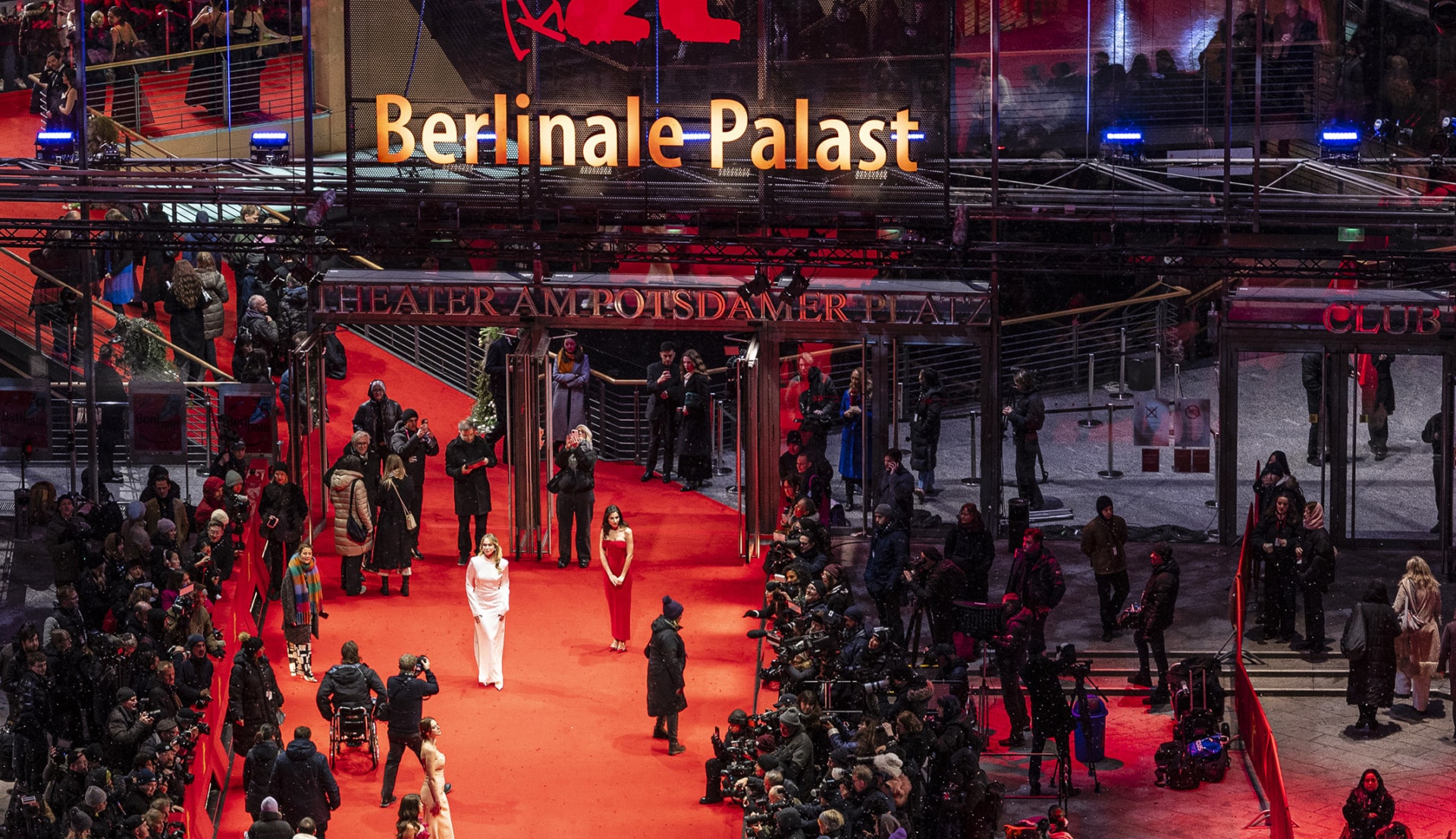
Editor’s Note: The opinions expressed here by the authors are their own, not those of Impakter.com — In the Cover Photo: Crowds and filmmakers on the red carpet at the 76th Berlin International Film Festival in 2026. Cover Photo Credit: © Richard Hübner / Berlinale 2025.© Richard Hübner / Berlinale 2025.