Impakter
  • Environment
    • Biodiversity
    • Climate Change
    • Circular Economy
    • Energy
  • FINANCE
    • ESG News
    • Sustainable Finance
    • Business
  • TECH
    • Start-up
    • AI & Machine Learning
    • Green Tech
  • Industry News
    • Entertainment
    • Food and Agriculture
    • Health
    • Politics & Foreign Affairs
    • Philanthropy
    • Science
    • Sport
  • Editorial Series
    • SDGs Series
    • Shape Your Future
    • Sustainable Cities
      • Copenhagen
      • San Francisco
      • Seattle
      • Sydney
  • About us
    • Company
    • Team
    • Global Leaders
    • Partners
    • Write for Impakter
    • Contact Us
    • Privacy Policy
No Result
View All Result
Impakter logo
No Result
View All Result
An Empowering path

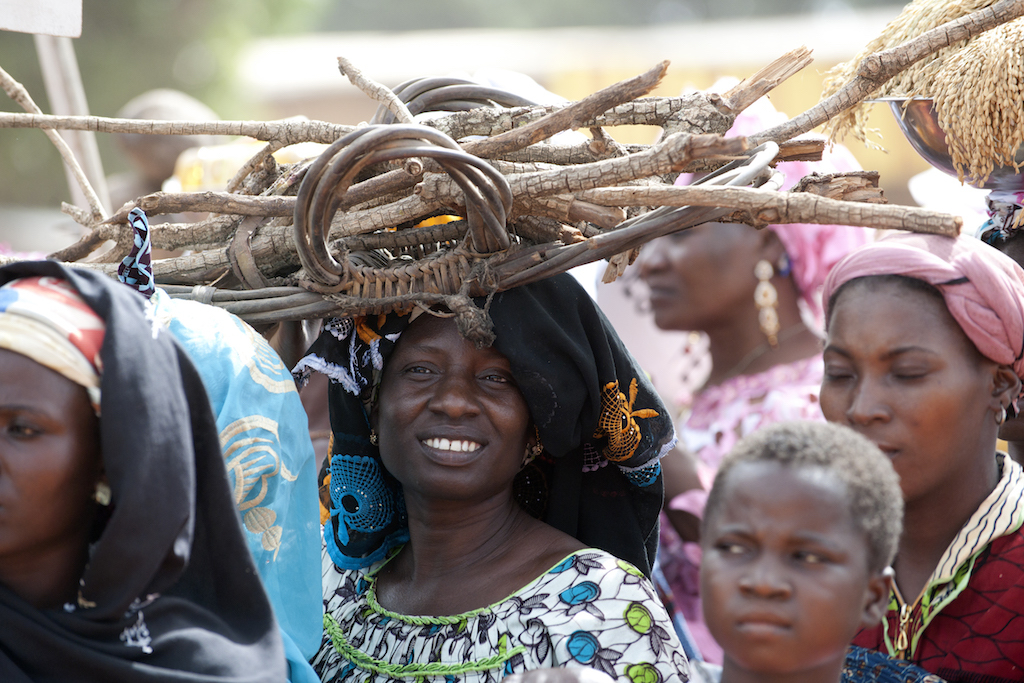
LA RSSG, AICHATOU MINDAOUDOU PREND PART A LA CEREMONIE DE LANCEMENT DES ACTIVITES DE LA COOPERATIVE AGRICOLE DES FEMMES DE NIELLE.''WOWELA''. ''WOWELA'' SIGNIFIE(SE PRENDRE EN CHARGE)

An Empowering path

Countries  from Africa, the Caribbean and the Pacific (ACP) Unite to Empower Rural Women and Young People

Laurent Thomas - Deputy Director-General of the Food and Agriculture Organization of the United Nations (FAO)byLaurent Thomas - Deputy Director-General of the Food and Agriculture Organization of the United Nations (FAO)
April 4, 2016
in Philanthropy, United Nations
6

To tackle the root causes of poverty and hunger we must address the inadequacy of employment conditions and generate opportunities for young people, in particular, for young women in rural areas.

Women make up, on average, over 40 percent of the agricultural labour force in the developing world and yet typically they do not have sufficient access to critical resources and services to become as productive as their male counterparts. In fact, across all regions, rural women and girls continue to face significant discrimination compared with men and boys, with women being more likely than men to hold poor quality jobs and benefit less from agricultural value chains.

Young people today constitute a staggering 1.8 billion of the world’s population and the vast majority of them live in rural areas of less developed countries. They also face enormous challenges in accessing knowledge and skills; technology and land; market and business services.

What we have learned and is now well documented is that when women and youth are empowered to earn more and have equal access to resources and opportunities, they can invest more in the health and nutrition of their families, which in turn makes for healthier rural communities, and a virtuous cycle of economic growth and development in rural areas.

Climate change, environmental threats, population growth and migration are putting additional pressures on livelihoods in rural areas where poverty is already widespread and resilience stretched to its limits. Creating more and better employment opportunities for women and youth is therefore crucial for achieving food security and driving forward economic and social progress for all, leaving no one behind.

When women and youth are empowered to earn more and have equal access to resources and opportunities, they can invest more in the health and nutrition of their families.
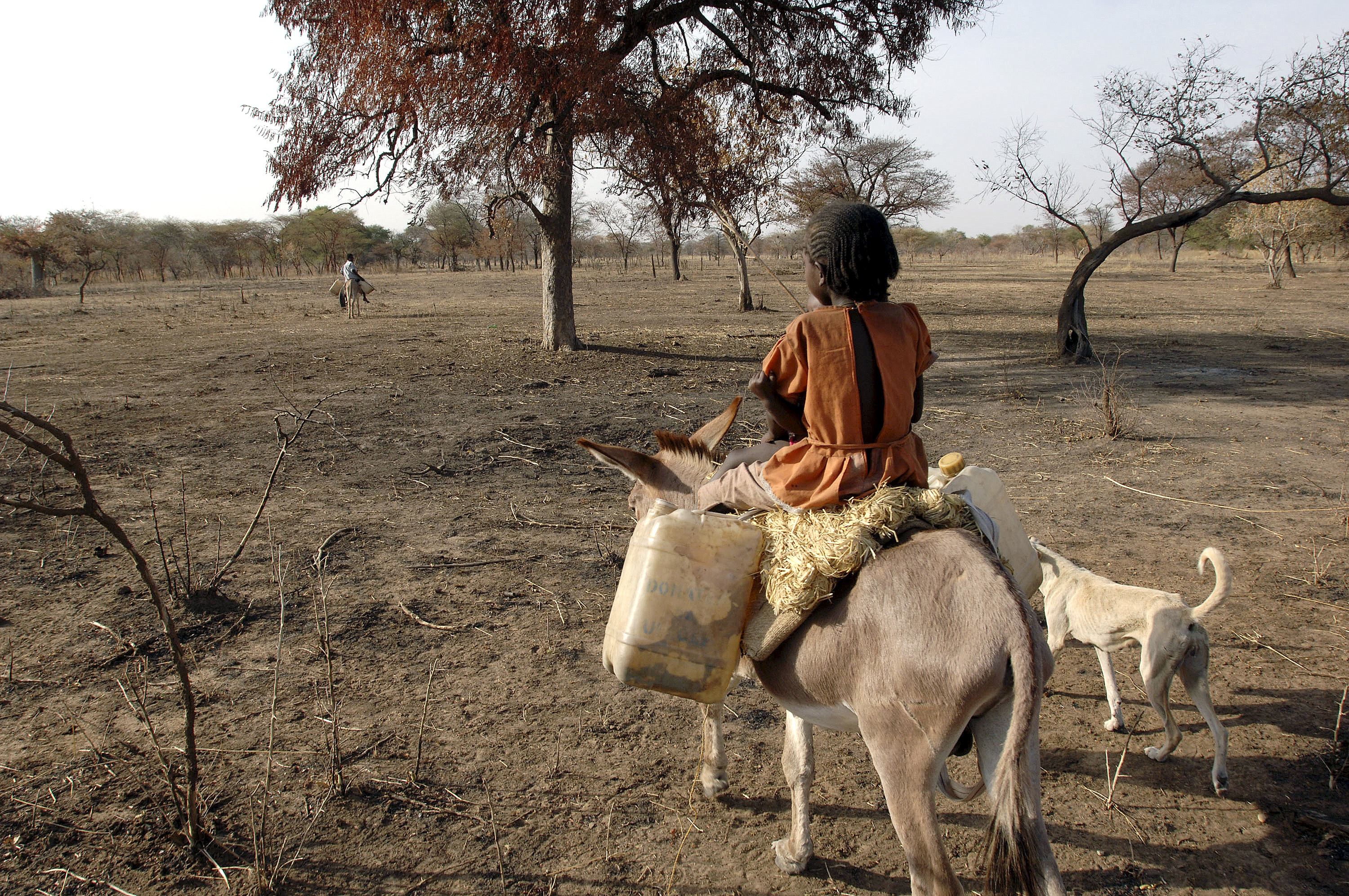
As their wet season pastures dry up, the Misseriya move south with their cattle in an annual migration which brings them to their dry season pastures in the Abyei area from December through April. The Misseriya move south from Nov-Dec and return north from May-June. The Misseriya and the Dinka compete over scarce water and grass for their cattle during the dry season.
In the Photo: As their wet season pastures dry up, the Misseriya move south with their cattle in an annual migration which brings them to their dry season pastures in the Abyei area from December through April. Photo Credit: UN Photo/Tim McKulka.

That is why delegates from the African Caribbean and Pacific Group of States (ACP), together with experts from the Food and Agriculture Organization of the United Nations (FAO), the Organisation internationale de la Francophonie (OIF) and the European Union (E.U.) as well as a wide range of development partners gathered this week in Brussels to discuss Integrated Rural Development solutions to Empower Women and Youth through Jobs and Entrepreneurship. South-South Cooperation, as a cost effective means to accelerate progress through the replication of good practices is at the centre of the debates.

South-South Cooperation as a complement to the much needed official development assistance (ODA) provided by more wealthy countries, is a cost effective instrument for delivering on the 2030 Agenda and its ambitious sustainable development goals. In a growing number of countries, South-South Cooperation is already demonstrating its efficiency in improving food and nutrition security, and bringing concrete and effective solutions to the challenges of youth unemployment and economic empowerment of women in rural areas.


Recent developments in South-South Cooperation indicate that countries such as Brazil, China, Mexico, Indonesia, or Morocco – among the most outstanding southern providers of expertise in food and agriculture, are already widely sharing their experience, knowledge and capacities with other developing countries. Developed countries such as Japan, Korea, the United Kingdom or Spain have also provided support, complementary resources and expertise to South-South Cooperation programs, in what is now commonly defined as “Triangular Cooperation”.

In Uganda, Nigeria, Sierra Leone and many other developing countries, the South-South Cooperation programme supported by China and facilitated by FAO, is driving change. The presence of experts and the introduction of new, low cost but very appropriate technologies in areas such as aquaculture, irrigation, crop production, livestock, aquaculture or agribusiness resulted in a large number of poor rural women and young people equipped with the skills and technologies they needed to increase their income and make a decent living from agriculture.

Over the past decade, Brazil has lifted millions of its citizens out of extreme poverty and hunger through a judicious mix of legislation, policies, social protection programmmes, the promotion of school feeding, as well as the targeted support to family farmers including through institutional procurement. The programme named “Fome Zero” (“Zero Hunger”) received widespread national acclaim. It remains an international model of achievement in the fight against hunger. Today Brazil, in partnership with FAO, is sharing its experience with many countries of Latin America, Carribean, Asia and Africa to help governments meet their commitment for a world free of hunger and malnutrition by 2030.
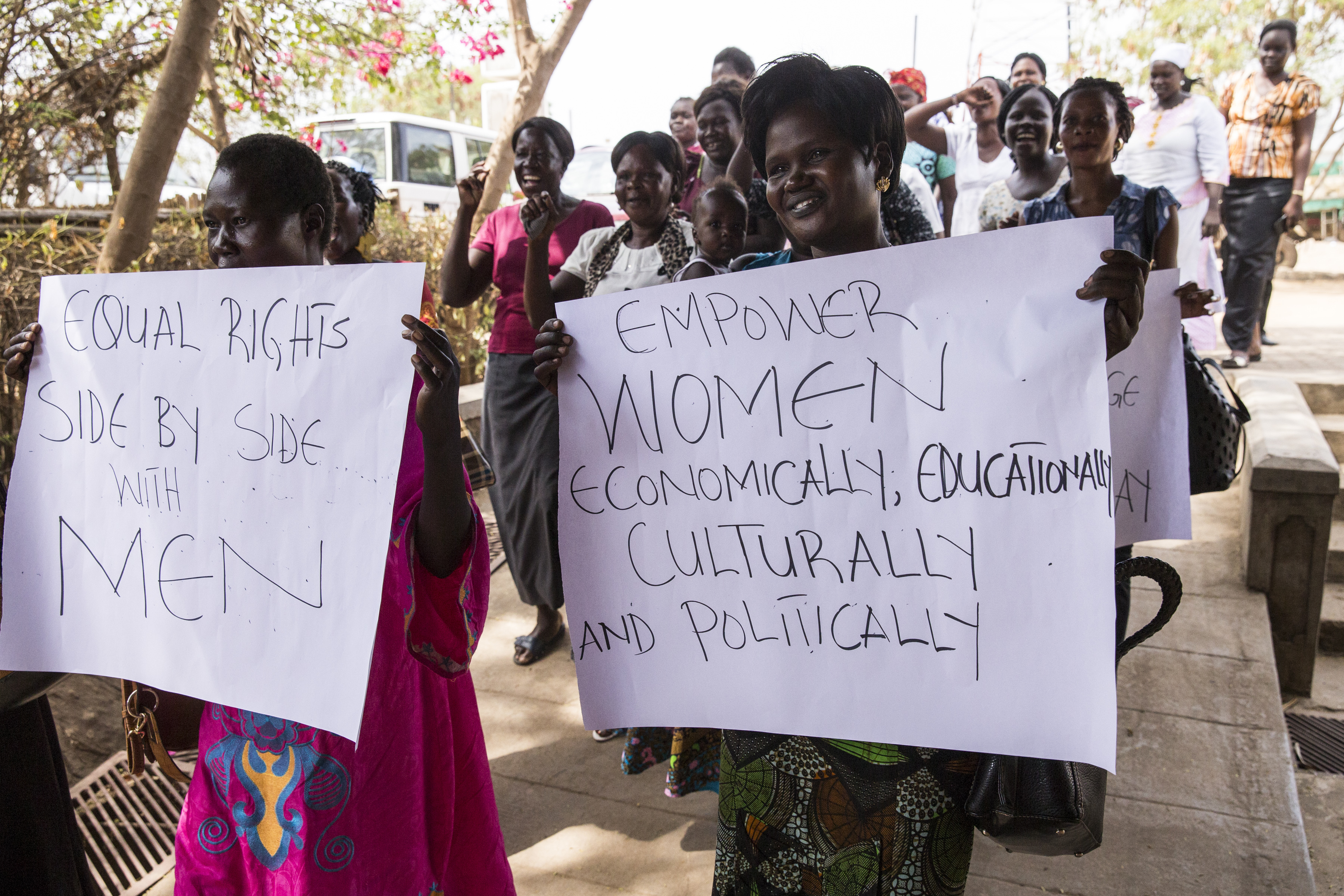
International Women's Day celebration in South Sudan, held at Nyakuron Cultural Centre. The event, organized by the Ministry of Gender, Child, and Social Welfare, was held under the local theme "South Sudanese Pledge for Ending Child Marriage" and the global theme "Pledge for Parity", which calls for 50/50 gender parity by the year 2030. Participants arrive in procession at the event.
In the Photo: International Women’s Day celebration in South Sudan, held at Nyakuron Cultural Centre. Photo Credit: UN Photo/JC McIlwaine.

Another ongoing example of successful South-South Cooperation facilitated by the United Nations through a joint program aims to accelerate progress towards the economic empowerment of rural women with knowledge and good practices being shared between Ethiopia, Guatemala, Kyrgyzstan, Liberia, Nepal, the Niger and Rwanda. The programme’s top targets are to improve food and nutrition security, increase incomes to sustain livelihoods and create wealth, in addition to generating gender-responsive policy environments, through catalysing policy and legislative reforms.

The African Caribbean and Pacific Group of States (ACP) represent a unique community with a huge potential for sharing development solutions amongst its members, with the potential to leverage European Development Funds (EDF) for this purpose in what could become one of the most innovative triangular partnerships for implementation of the 2030 Agenda in the spirit of the Addis Ababa Action Agenda for development financing.

All countries and organizations gathered at the symposium are committed to developing an expanded South-South Cooperation vision for the ACP, to explore how it can mobilize its constituency and partners and to harness the potential of tried and tested solutions for women and youth available amongst its membership. FAO is a longstanding facilitator of South-South and Triangular Cooperation and stands ready to help to turn this vision into concrete actions and results to serve the ACP community and the European Union’s development objectives.
EDITOR’S NOTE: THE OPINIONS EXPRESSED HERE BY IMPAKTER.COM COLUMNISTS ARE THEIR OWN, NOT THOSE OF IMPAKTER.COM. In Featured Image:  Women of Nielle during the inauguration ceremony of their farm cooperative. Photo Credit:UN Photo/Abdul Fatai Adegboye.
Tags: 2030 AgendaACPAddis Ababa Action AgendaAfrican and Caribbean Pacific Group StatesEUEuropean Development FundsEuropean UnionFAOIntegrated Rural DevelopmentLaurent ThomasOIFOrganisation internationale de la FrancophonieSouth-South CooperationTraingular CooperationUnited Nationswomenyouthzero hunger
Previous Post

Reestablishing A Connection: Interview with Laurent Baheux

Next Post

Refugees in Europe: The Anatomy of a Global Crisis

Related Posts

ESG News regarding Economic Collapse Fuelling Iran Protests Amid Rising Death Toll, U.S. Pressure on Iran Tests Beijing as Tariffs Could Push China Duties Above 70%, EU Offers China Price Pledge Option to Avoid EV Tariffs, Atmosphere Emerges as Major Pathway for Plastic Pollution
Business

Iran Acknowledges 2,000 Deaths as Protests Enter Third Week

Today’s ESG Updates Economic Crisis Drives Largest Protests in Years: Demonstrations that began over the collapse of the currency in...

byPuja Doshi
January 13, 2026
ESG News regarding China restricting industrial renewable exports, UN warning that US climate treaty exit harms economy, UK firms lowering wage forecasts despite inflation, Meta partnering with TerraPower for new nuclear reactors.
Business

To Save the Grid, China Forces Industries to Go Off-Network

Today’s ESG Updates China Limits Grid Exports for New Industrial Solar & Wind: China is encouraging companies to store green...

byEge Can Alparslan
January 9, 2026
soil
Biodiversity

To Prevent Ecological Collapse, We Must Start With the Soil

Soil is the single most biodiverse habitat on Earth, home to at least 59% of all species, including over 80%...

byMarcela Quintero - Associate Director General of Research Strategy and Innovation at the Alliance of Bioversity International and CIATand1 others
January 8, 2026
EU officials respond to the US withdrawal from the UN climate treaty during a press briefing.
Business

US Withdrawal From UN Climate Treaty Raises Global Climate Stability Concerns

Today’s ESG Updates US Retreats From UN Climate Treaty: The EU condemns the United States’ decision to withdraw from the...

byJana Deghidy
January 8, 2026
Impakter’s Most-Read Stories of 2025
Society

Impakter’s Most-Read Stories of 2025

In 2025, as in previous years, Impakter readers turned in large numbers to stories examining climate change and pollution, environmental...

byImpakter Editorial Board
December 31, 2025
India’s Youth Boom: Promise or Pressure Point?
Editors' Picks

India’s Youth Boom: Promise or Pressure Point?

India surpassed China as the world’s most populous country in 2023, a demographic milestone that is both cause for optimism and concern....

byAneesh MR - Assistant Professor at Christ University, Bengaluru
December 26, 2025
Freshwater
Environment

Renewable Water Availability per Person Plunges 7% in a Decade as Global Scarcity Deepens

Renewable water availability per person has continued to decline by a further 7% over the past decade, while pressure on...

byThe Food and Agriculture Organization of the United Nations (FAO)
December 23, 2025
women and extreme heat
Climate Change

Women and Extreme Heat: Simple Adaptations Make a Big Difference

One of the more damaging impacts of climate change is extreme heat. From Spain to Bolivia to Burkina Faso, unusual...

byKate Schecter - CEO of World Neighbors
December 23, 2025
Next Post
Refugees in Europe: The Anatomy of a Global Crisis

Refugees in Europe: The Anatomy of a Global Crisis

Please login to join discussion

Recent News

Costumes for Purim

What to Consider When Selecting Costumes for Purim

January 15, 2026
Aerial view of U.S. farmland using regenerative agriculture practices to generate soil carbon credits

Microsoft’s Record Soil Carbon Credits Deal Signals Rising Pressure on Tech Emissions

January 15, 2026
Identity verification tool

Safety First: Using People Search Tools to Verify Identity

January 15, 2026
  • ESG News
  • Sustainable Finance
  • Business

© 2025 Impakter.com owned by Klimado GmbH

No Result
View All Result
  • Environment
    • Biodiversity
    • Climate Change
    • Circular Economy
    • Energy
  • FINANCE
    • ESG News
    • Sustainable Finance
    • Business
  • TECH
    • Start-up
    • AI & Machine Learning
    • Green Tech
  • Industry News
    • Entertainment
    • Food and Agriculture
    • Health
    • Politics & Foreign Affairs
    • Philanthropy
    • Science
    • Sport
  • Editorial Series
    • SDGs Series
    • Shape Your Future
    • Sustainable Cities
      • Copenhagen
      • San Francisco
      • Seattle
      • Sydney
  • About us
    • Company
    • Team
    • Global Leaders
    • Partners
    • Write for Impakter
    • Contact Us
    • Privacy Policy

© 2025 Impakter.com owned by Klimado GmbH