Impakter
  • Environment
    • Biodiversity
    • Climate Change
    • Circular Economy
    • Energy
  • FINANCE
    • ESG News
    • Sustainable Finance
    • Business
  • TECH
    • Start-up
    • AI & Machine Learning
    • Green Tech
  • Industry News
    • Entertainment
    • Food and Agriculture
    • Health
    • Politics & Foreign Affairs
    • Philanthropy
    • Science
    • Sport
  • Editorial Series
    • SDGs Series
    • Shape Your Future
    • Sustainable Cities
      • Copenhagen
      • San Francisco
      • Seattle
      • Sydney
  • About us
    • Company
    • Team
    • Partners
    • Write for Impakter
    • Contact Us
    • Privacy Policy
No Result
View All Result
Impakter logo
No Result
View All Result
Protests arise against Wall street’s oil deals, Big tech accounts for half of global clean energy, EU proposes stricter standards for corporate vehicles, DHL introduces new portfolio offerings for reducing scope 3 impacts

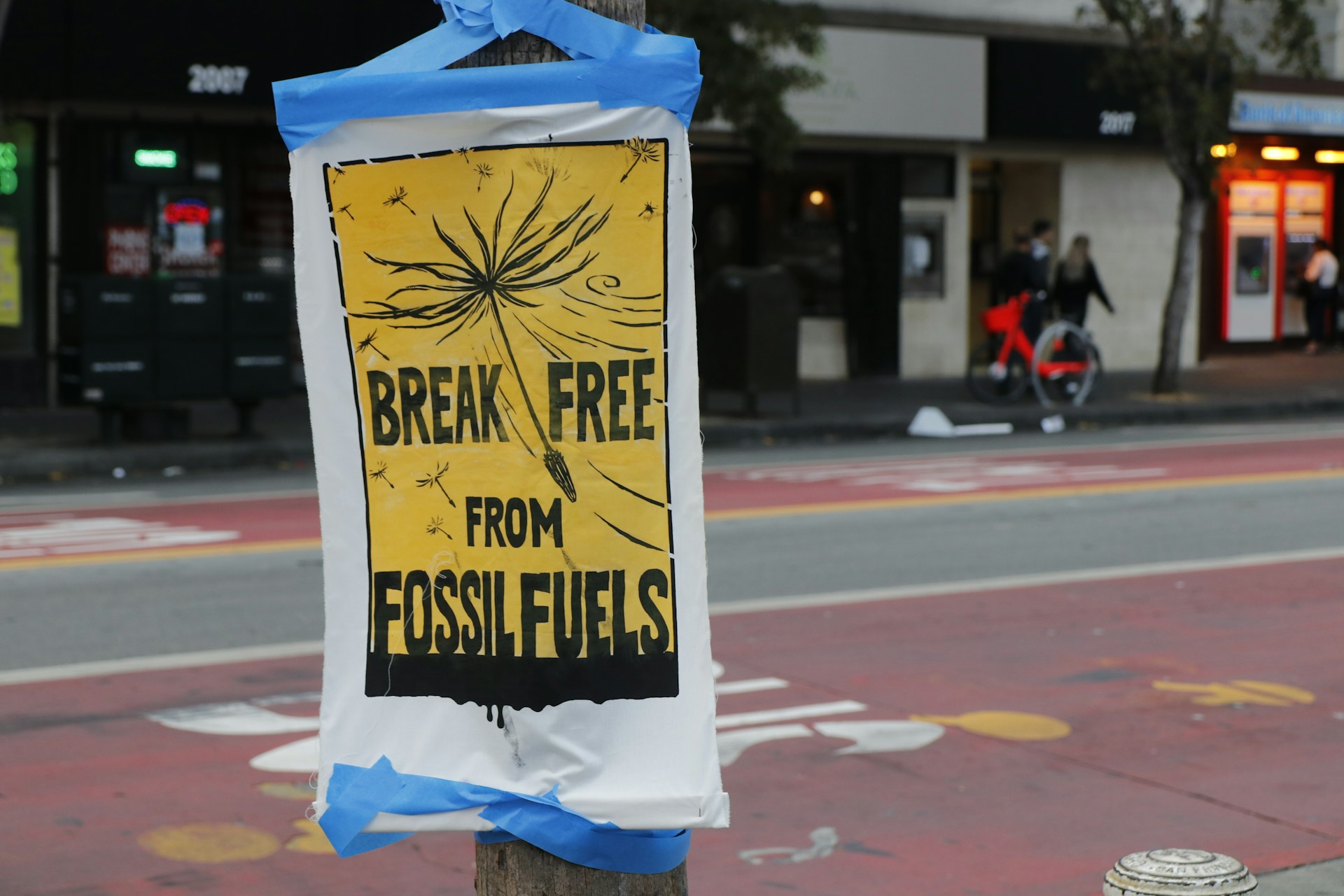
Citigroup has increased its financing of fossil fuels through loans and bonds, two years after huge protests against it in 2024.

Activists Protest Against Wall Street’s Oil Deals

“Climate campaigners' methods haven't worked as intended and it's time for a new approach,” says protests’ leader

Fedor SukhoibyFedor Sukhoi
February 24, 2026
in Energy, ESG News, Green Tech, Tech
0

Today’s ESG Updates

  • Protests’ Strategies Change Amidst Banks’ Inaction: Wall Street fossil fuel deals push climate groups to shift tactics, targeting expansion financing and tougher transition risk standards.
  • Amazon, Meta, Google and Microsoft Buy Half of Green Energy Worldwide: The companies account for half of global clean energy deals in 2025, reshaping renewables and AI-driven power demand.
  • EU Campaigners Call for New Regulations on Company Cars: EU lobby group calls for tighter corporate car emission rules, urging stricter fleet CO₂ targets to speed electric vehicle adoption.
  • DHL Has Introduced a Range of Shipping Decarbonization Services: DHL launches shipping decarbonization services using SAF, biofuels and EV transport to cut corporate supply chain emissions.

Wall Street banks are in the middle of oil controversy

In the summer of 2024, large protests were unravelling against Citigroup’s investments in fossil-fuel companies. More than a year later, the Wall Street strategy seems to remain unchanged. In 2025, Citigroup, JPMorgan, and Wells Fargo spent more on oil, gas, and coal loans and bonds than the year before.

As banks increasingly commit to sustainable finance, the profits from oil, gas, and coal projects remain undeniable, making the decision tough. 

The response from climate groups is shifting the tactics. For climate groups, data-driven insights, specific deal structures, and governance decisions are increasingly the focus rather than attention-grabbing mottos or broad divestment demands. This evolution signals a new phase for climate activism related to finance. It is less symbolic and focuses on concrete, detailed evidence to make a point and encourage change. It does not make sense to seek immediate withdrawal from fossil fuels, but restricting it so investments decline gradually is totally reasonable.

***

Further reading: Wall Street’s Oil Deals Have Climate Activists Resorting to New Tactics


Featured ESG Tool of the Week:

Klimado
– Navigate climate complexity with a user-friendly platform that tracks global and local environmental changes for ESG-conscious decision-making. Perfect for investors, companies, and policy makers seeking actionable insights on sustainability trends.

Largest tech companies purchase half of global clean energy

Protests arise against Wall street’s oil deals, Big tech accounts for half of global clean energy, EU proposes stricter standards for corporate vehicles, DHL introduces new portfolio offerings for reducing scope 3 impacts
Despite the pullback, however, 2025 still marked the second highest year by volume, more than doubling 2020 levels, and with each major region remaining at or above 2023 levels; Photo Credit: Tim van der Kuip

Technology giants such as Amazon, Meta, Google, and Microsoft accounted for roughly half of all global corporate clean energy purchases in 2025, according to a new BloombergNEF report. Globally, purchase agreements fell by 10% in 2025 to 55.9 GW, allowing big tech to take a larger part of the market. The surge is a result of a combination of tech companies’ ambition to be on top of sustainable development, while electricity demand is exploding,  due to AI infrastructure needs, data centers specifically. To balance the two goals, tech firms are increasingly relying on renewable energy, reshaping the sector. Large-scale purchase agreements are the main provider of certainty for renewable developers, and they also finance grid decarbonisation. The downside is reliance on big tech, putting them in a position of power in negotiations, which can lead to reduced margins for energy providers.

***
Further reading: Amazon, Meta, Google, Microsoft Account for Half of Global Clean Energy Purchase Deals in 2025: Report


EU proposes stricter standards for corporate vehicles
Protests arise against Wall street’s oil deals, Big tech accounts for half of global clean energy, EU proposes stricter standards for corporate vehicles, DHL introduces new portfolio offerings for reducing scope 3 impacts
The EU could achieve more than half of the EV sales targets by 2030; Photo Credit: Wikimedia Commons

A European environmental lobby proposes stricter emissions standards for corporate vehicle fleets. The lobby considers company cars an under-regulated source of carbon emissions. Across the bloc, corporate fleets take up a significant amount of new car registrations. The proposal builds on the fact that there is no differentiation between private and corporate purchases, and company vehicles need replacement more frequently. This signals a potential missed opportunity to drive electrification in the corporate world. 

Despite great progress in power generation and heavy industry, road traffic emissions are not declining by much. Industry representatives argue against rough regulations that would have a huge negative effect on corporate budgets. The whole debate shows a bigger regulatory trend in Europe: policymakers move past general goals and start targeting sectors specifically.

***

Further reading: EU lobby group calls for tighter emission rules for corporate cars


LinkedIn For the latest updates, visit our LinkedIn page


DHL helps shippers decarbonise with its new portfolio offerings

Protests arise against Wall street’s oil deals, Big tech accounts for half of global clean energy, EU proposes stricter standards for corporate vehicles, DHL introduces new portfolio offerings for reducing scope 3 impacts
The launch of GoGreen Plus Portfolio offers shippers a suite of decarbonization-focused products; Photo Credit: Wikimedia Commons

To help corporate customers adapt to the increasing responsibility for Scope 3 climate impacts, DHL has introduced a range of shipping decarbonization services. The option for customers to choose installing transport services with DHL to reduce the carbon footprint of the shipment is also available to customers. This is a result of the multiple ways in which they are able to reduce the carbon footprint of the shipment. Within the DHL network, emissions reductions are verified and are consequently available for purchase.

The growing demand among multinational customers for measurable emissions reductions in transport and logistics is demonstrated in large part by the decarbonization of the described service. The emissions of transport and freight are among the most difficult to decarbonize, as they make up a significant proportion of the value chain of many companies, especially in the retail, manufacturing, and e-commerce sectors. With increasing regulatory pressure from new global and European Union disclosure rules, the logistics sector has to offer better decarbonization methods for emissions reductions.

***

Further reading: DHL Launches New Suite of Shipping Decarbonization Services


Editor’s Note: The opinions expressed here by the authors are their own, not those of impakter.com — Cover Photo Credit: Eelco Böhtlingk

Tags: Climate ChangeESG toolEUEU Climate PolicyFossil FuelsSustainabilitysustainable finance
Previous Post

New U.S. Tariffs and One Health: The Likely Consequences

Related Posts

Coal plants get reprieve on mercury limits, Striking unions fail to halt Milei's sweeping labor bill, Sweden's regulator reviews Swedbank's compliance controls, France backs INEOS decarbonization with €300M
Business

Trump Admin Weakens Coal Plant Mercury Regulations

Today’s ESG Updates: Coal Plants Get Reprieve on Mercury Limits: Trump's EPA is rolling back mercury emission limits to cut...

byEge Can Alparslan
February 20, 2026
Migration Policy in Europe: Greece and Spain Take Divergent Paths
Politics & Foreign Affairs

Migration Policy in Europe: Greece and Spain Take Divergent Paths

In the summer of 2025, I traveled to Greece for a research trip and, during a break from the “migration...

byDr. Shepherd Mutsvara - Research Fellow at the University of Münster, Germany
February 20, 2026
How Climate Change Is Reshaping Arctic Geopolitics
Climate Change

How Climate Change Is Reshaping Arctic Geopolitics

Once a remote and largely inaccessible region, the Arctic has become the focus of far-reaching international developments. In recent years, competition among...

byPier Paolo Raimondi - Senior Researcher at the Energy, Climate and Resources (ECR) Program of the Istituto Affari Internazionali (IAI)
February 20, 2026
How an Intersectional Approach Can Help Us Address Vulnerability to Climate Change
Climate Change

How an Intersectional Approach Can Help Us Address Vulnerability to Climate Change

Different forms of discrimination and marginalization — such as racism, ableism, and discrimination on the basis of gender identity —...

byInternational Institute for Sustainable Development (IISD)
February 20, 2026
Underwater Wall to Protect the ‘Doomsday Glacier’: Necessary Intervention or Costly Distraction?
Climate Change

Underwater Wall to Protect the ‘Doomsday Glacier’: Necessary Intervention or Costly Distraction?

Thwaites Glacier in Antarctica earned its dramatic nickname, the “Doomsday Glacier,” because its collapse could trigger a catastrophic rise in...

byBenjamin Clabault
February 19, 2026
biodiversity loss
Biodiversity

The Economics of Biodiversity Loss

In the 1990s, India’s vulture population collapsed due to the unintended knock-on effect of a veterinary drug for cattle, with...

byStefano Giglio - Professor at Yale Universityand2 others
February 19, 2026
ESG news on TotalEnergies climate trial, Heathrow SAF incentives, Shein EU probe, EU climate resilience gap
Business

TotalEnergies Climate Trial Shock

Today’s ESG Updates TotalEnergies Climate Trial: French prosecutors intervene to defend TotalEnergies in a landmark climate lawsuit, challenging environmental groups’...

byEve Rogers
February 18, 2026
ESG News regarding Trump criticizing Newsom over UK green energy agreement, new analysis questioning the climate benefits of AI, EU greenlighting €1.04 billion Danish programme to reduce farm emissions and restore wetlands, and Santos winning court case over alleged misleading net-zero claims.
Business

Trump Slams Newsom Over UK Green Energy Deal

Today’s ESG Updates: Trump Slams Newsom’s UK Green Deal: Criticizes California governor for signing a clean energy agreement with the...

byAnastasiia Barmotina
February 17, 2026

Recent News

Protests arise against Wall street’s oil deals, Big tech accounts for half of global clean energy, EU proposes stricter standards for corporate vehicles, DHL introduces new portfolio offerings for reducing scope 3 impacts

Activists Protest Against Wall Street’s Oil Deals

February 24, 2026
New U.S. Tariffs and One Health: The Likely Consequences

New U.S. Tariffs and One Health: The Likely Consequences

February 23, 2026
Content production in London - Woman standing with a camera in front of Westminster.

Top 5 Animation Content Production Tips for London Businesses

February 23, 2026
  • ESG News
  • Sustainable Finance
  • Business

© 2025 Impakter.com owned by Klimado GmbH

No Result
View All Result
  • Environment
    • Biodiversity
    • Climate Change
    • Circular Economy
    • Energy
  • FINANCE
    • ESG News
    • Sustainable Finance
    • Business
  • TECH
    • Start-up
    • AI & Machine Learning
    • Green Tech
  • Industry News
    • Entertainment
    • Food and Agriculture
    • Health
    • Politics & Foreign Affairs
    • Philanthropy
    • Science
    • Sport
  • Editorial Series
    • SDGs Series
    • Shape Your Future
    • Sustainable Cities
      • Copenhagen
      • San Francisco
      • Seattle
      • Sydney
  • About us
    • Company
    • Team
    • Partners
    • Write for Impakter
    • Contact Us
    • Privacy Policy

© 2025 Impakter.com owned by Klimado GmbH