
The European Commission approved this Wednesday a multi-billion-euro funding plan for Poland’s national recovery from the COVID-19 pandemic. European Commission President Ursula von der Leyen is set to sign the agreement in Warsaw on Thursday. The recovery fund had remained frozen due to a long-running battle between Brussels and Poland over the country’s rule-of-law practices.
At the centre of the dispute is a controversial disciplinary body within Poland’s supreme court which operates as a tool for Law and Justice (PiS), the country’s Eurosceptic and nationalist ruling coalition, to appoint or remove judges from higher criminal courts at will.
Last year, the European court of justice ruled that the Disciplinary Chamber of the Polish supreme court violates EU law. As a result, no money from the bloc’s Recovery and Resilience Facility will be granted to Poland until it removes it, and the country will be fined a record-breaking €1 million a day as long as the judicial body remains in place.
Last Thursday, the lower house of the Polish parliament approved legislation by President Andrzej Duda which essentially removes the Disciplinary Chamber of the supreme court, laying the ground for a settlement with Brussels.
Under the EU Recovery and Resiliency Facility, Poland is entitled to around €24 billion in grants and €12 billion in loans over several years.
By unblocking the disbursement of pandemic recovery money to Poland, Brussels is also hoping to make progress on a planned EU law to impose a minimum 15% tax rate for multinationals which Warsaw has persistently vetoed. Though Polish authorities claim other reasons to block the bill, EU officials have accused Poland of holding the law hostage to blackmail the Commission into releasing the recovery money.
Poland’s blatant disdain of EU laws and democratic standards and its use of hostage diplomacy as leverage is precisely what makes the possibility of a Brussels-Warsaw agreement a cause of concern.
What appears like a beneficial de-escalation of tensions may fail to address in substance the severe internal divisions that the stalemate revealed in the first place. Worse, complying with Poland’s demands will send a message that blackmailing the EU in hope of wringing its funds is an efficient, consequence-free approach.
The College of Commissioners’ in-person meeting shows exceptional concerns over an accord with Warsaw
The College of European Commissioners was scheduled to meet Wednesday to discuss the deal with Warsaw in person – a first, since all other national recovery plans were approved via written procedure without discussion, a senior official told Politico, suggesting some commissioners have qualms about the move.
Four commissioners, including dignitaries First Vice President Frans Timmermans, Vice President for Values and Transparency Vĕra Jourová, and Executive Vice-President Margrethe Vestager, have made objections to the deal as Poland still hasn’t reinstated the judges it illegally dismissed using the Disciplinary Chamber of the supreme court despite the EU ruling.
Objectors specify that they are not against providing the money per se, but that Poland did not take the necessary steps to obtain the Commission’s approval. Andrzej Duda’s proposal to remove the illegal judicial body from the Polish courthouse does contain commitments to reaching Commission “milestones” – namely, to dismantle the Disciplinary Chamber, reform the disciplinary regime, and reinstate the judges dismissed as a result of past disciplinary proceedings.
However, critics say Polish lawmakers are being deceitful and are unlikely to fulfil the Commission’s demands despite official commitments. They warn that last week’s decision to ditch the Disciplinary Chamber is merely cosmetic as the professional responsibility chamber set to replace it at the supreme court will essentially fulfil the same purpose, appointing friendly judges and removing dissidents.
The vote at the lower house of Parliament last Thursday was 231-208, with 13 abstentions. The fact that the ruling coalition was for the move and the opposition against it suggests the change is only one of name, posing no threat to the party in power. On the contrary, by unblocking recovery funds for Poland despite the country’s blatant disavowal of EU democratic standards, the Commission appears to be giving up a significant lever for peanuts – and rotten ones at that.
“This is a fake compliance operation,” said Laurent Pech, a professor of European law at Middlesex University London. “The broader implications of that will be that everybody will see that the Commission is just not serious about rule of law. You can attack rule of law and get away with it – that is the message.”
Related articles: Poland Doubles Down in its Fight Against European Law | Ukrainian Refugee Crisis: Unprecedented – What is the Response?
The EU-Commission unlocking recovery cash for Poland today is one for the history books.
It will be remembered as the day when von der Leyen gave up on protecting the rule of law and defending EU values.
What a disaster.
— Daniel Freund (@daniel_freund) June 1, 2022
EU hopes the deal will stop Poland from holding a benchmark corporate tax bill hostage
If the deal is so disadvantageous to the EU, why does it agree to it at all?
The answer lies in yet another quarrel between Brussels and Warsaw, this time involving a planned law to impose a minimum 15 % tax on multinationals, ensuring that the world’s 100 biggest companies pay taxes wherever they operate and generate profits by introducing an internationally sanctioned corporate tax framework.
The plan for a collective tax bill on multinationals was negotiated and signed in October last year by 136 countries under the stewardship of the Organization for Economic Cooperation and Development (OECD). EU finance ministers’ meeting last Monday was scheduled to discuss the planned law further, but Poland’s persistent refusal to come on board compelled the French presidency of the Council of the EU to remove the debate from the agenda, stalemating progress on the issue.
Warsaw repeatedly demanded the tax rate be legally bound to the introduction of a separately negotiated global levy for the world’s 100 biggest companies – an impossible demand which would risk overthrowing the entire project.
EU officials accused Poland of holding the bill hostage to force the European Commission to unlock cash from the Recovery and Resiliency Facility so that it would obtain funds without having to re-align its judiciary system with international law. Warsaw refutes the accusation, but its unwillingness to cooperate with EU officials and comply with its rules cannot be brushed off as mere criticism.
“Poland has some issues with the EU – frankly, I don’t think that they largely pertain to the global minimum tax itself, but rather other issues between Poland and the EU,” US Treasury Secretary Janet Yellen said earlier this month.
But there was also significant time pressure on both Brussels’ and Warsaw’s sides to reach an agreement. Poland’s need for funds is not only tied to COVID-induced damage to its economy as the country has taken in about 3.6 million refugees since the start of the Russo-Ukrainian war on February 24 – granting Warsaw a ”good-guy” status which some argue participated in warming Brussels to the idea of a deal with Poland.
The EU, on the other hand, grew increasingly concerned about the planned law being more likely to come under attack the longer the standoff lasts, especially from Republicans in the US who want to stall the global accord’s momentum. Janet Yellen is hoping that the EU’s approval of the tax would encourage the US to pass it before the midterm elections next November.
In the long-term, however, the agreement with Warsaw may become a textbook example of a Pyrrhic victory for the EU, whose warnings and monumental fines crumbled before diplomatic blackmail, and whose conditional approval of Poland’s national recovery plan barely masks an admission of failure at a time of unprecedented crisis when a firm stance is vital.
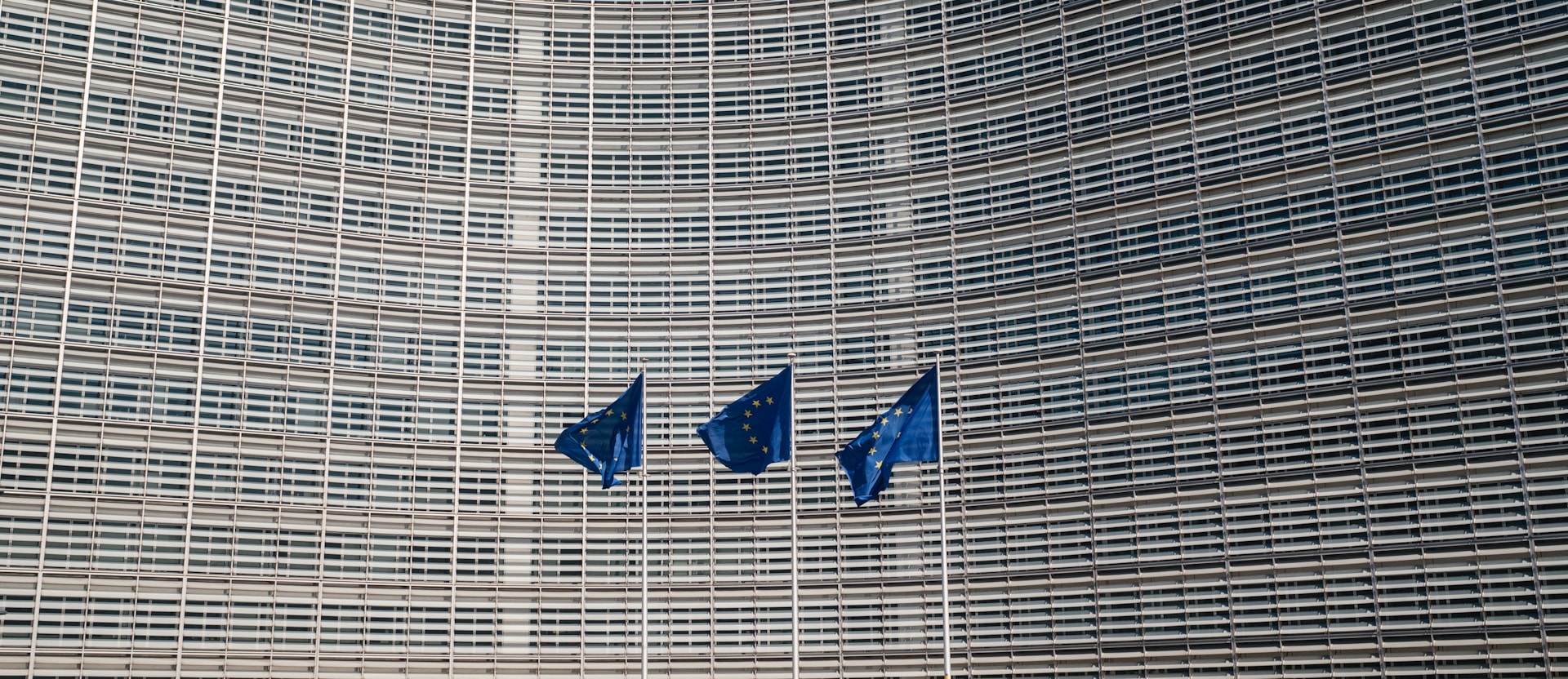
Editor’s Note: The opinions expressed here by Impakter.com columnists are their own, not those of Impakter.com. — In the Featured Photo: Flags at European Commission building, Brussels. Photo Credit: TeaMeister/Flickr.