This week could mark a major turning point in EU policies that will affect all 27 members. Decisions taken by the 27 leaders could “repower Europe” and make the difference between a fast recovery from both the pandemic and the war in Ukraine or years, if not decades, of stagnation. At the EU meeting this Wednesday in Brussels, they will have to decide on two major issues in the light of the war in Ukraine:
- Continue the suspension of the notorious Stability and Growth Pact whose rules had been suspended when Europe was hit by the Covid pandemic until the end of 2022: The proposal is to push the deadline by one year to the end of 2023;
- Approve the EU Commission’s REPowerEu to accelerate the EU’s transition to green energy and ensure “strategic autonomy” – read: independence from Russian gas and oil.
The decisions, dictated by the disturbances in global trade and extreme economic instability unleashed by the Russian war against Ukraine is expected – barring surprises – for next Wednesday, May 18, in the so-called Spring package of the European semester for the coordination of the economic policies of the 27 EU members.
The Stability and Growth Pact – What it is and why it’s a brake on recovery
The Stability and Growth Pact (SGP) is a set of rules designed to ensure that countries in the European Union pursue sound public finances and coordinate their fiscal policies. The idea is to prevent EU countries to spend beyond their means: A state’s budget deficit cannot exceed 3% of GDP and national debt cannot surpass 60% of GDP. Failure to abide by the rules can lead to a maximum fine of 0.5% of GDP.
In 2005, the SGP was reformed, requiring member states to provide a “Medium-Term Budget Objective,” or MTO to show the European Commission and the Council of Ministers how they intend to bring their balance sheets within “acceptable” regulatory standards. The EU Commission is empowered to start against those outside acceptable limits a so-called “Excessive Deficit Procedure,” whereby the guilty party is issued a deadline to comply and detailed guidelines to bring its deficit back under acceptable limits.
Countries targeted with this additional measure were mostly southern European, starting with Italy and Greece, soon joined by Spain, Portugal and Ireland, the so-called PIIGS.
The Pact had a highly divisive effect on Europe, with Northern European countries led by Germany that felt morally superior because of their balanced budget, and Southern Europeans seen as the guilty party, accused of immoral profligacy.
Germany made it its policy to call for public budgets to be balanced annually – which is total economic nonsense when governments are entities that need to make multi-year investments, for example in infrastructure when building roads or airports. Germany even inscribed the concept of a balanced budget in its constitution, insisting that other EU members follow its example. All this was very much the result of Chancellor Merkel who would call for “more Europe” while doing everything in her power to stop Europe in its tracks.
Because the economic effect of the Stability and Growth Pact was dramatic: Stability yes, growth, no. Greece was one of the countries that suffered the most and made to pay back every cent borrowed – which it did a few weeks ago, the debt has now been all paid back but I wonder how many people in Germany noticed the “good news”? Because Greece was vilified for nearly a whole decade, viewed by Germany as a prime sinner while conveniently “forgetting” that said profligacy was largely funded by German banks.
Surely one of the darkest pages in the history of the European Union’s slow and uncertain walk towards “more Europe”. But Greece wasn’t the only European country whose economy was put on hold. The said “Pact” slowed down the whole of Europe, making European recovery from the 2008 recession highly problematic and painful while the American economy was happily flying high with full employment and record output.
Public opinion in Europe finally took note of the strikingly different performance of the EU compared to the US – and even the UK did better in those years, no doubt one reason why it felt emboldened to go for Brexit. Now that Angela Merkel is gone and we have a new Chancellor, Olaf Scholz, things are finally changing and Germany is beginning to relent on its balanced budget fixation.
Scholz last week indicated he was open to keeping the Pact suspended for another year. So now, we have on the table the proposal, prepared by the European Commission, to extend for another year, until the end of 2023, the safeguard clause that from March 2020 suspended the rules of the Stability and Growth Pact until the end of 2022.
Let’s hope it will be accepted by the 27. Rejection would make no economic sense at all, we cannot afford a repeat of the economic debacle of the past decade.
And there would be another benefit: Giving it another year would allow more time for the EU Commission to finally get to work on the Pact that is urgently in need of reform to take on board more modern concepts of public budgeting, in line with the government’s role as a long-term investor in infrastructure and other multi-year investments in research and education.
The consultation to reform the Pact, launched two years ago, in fact, had never started due to the Covid emergency. Relaunched in autumn 2021 with the idea to come to a proposal by the end of the French presidency of the EU in June, it was once again upended by the war in Ukraine. So the reform of the Pact unquestionably needs more time.
Repower EU – What it is and why it’s urgently needed
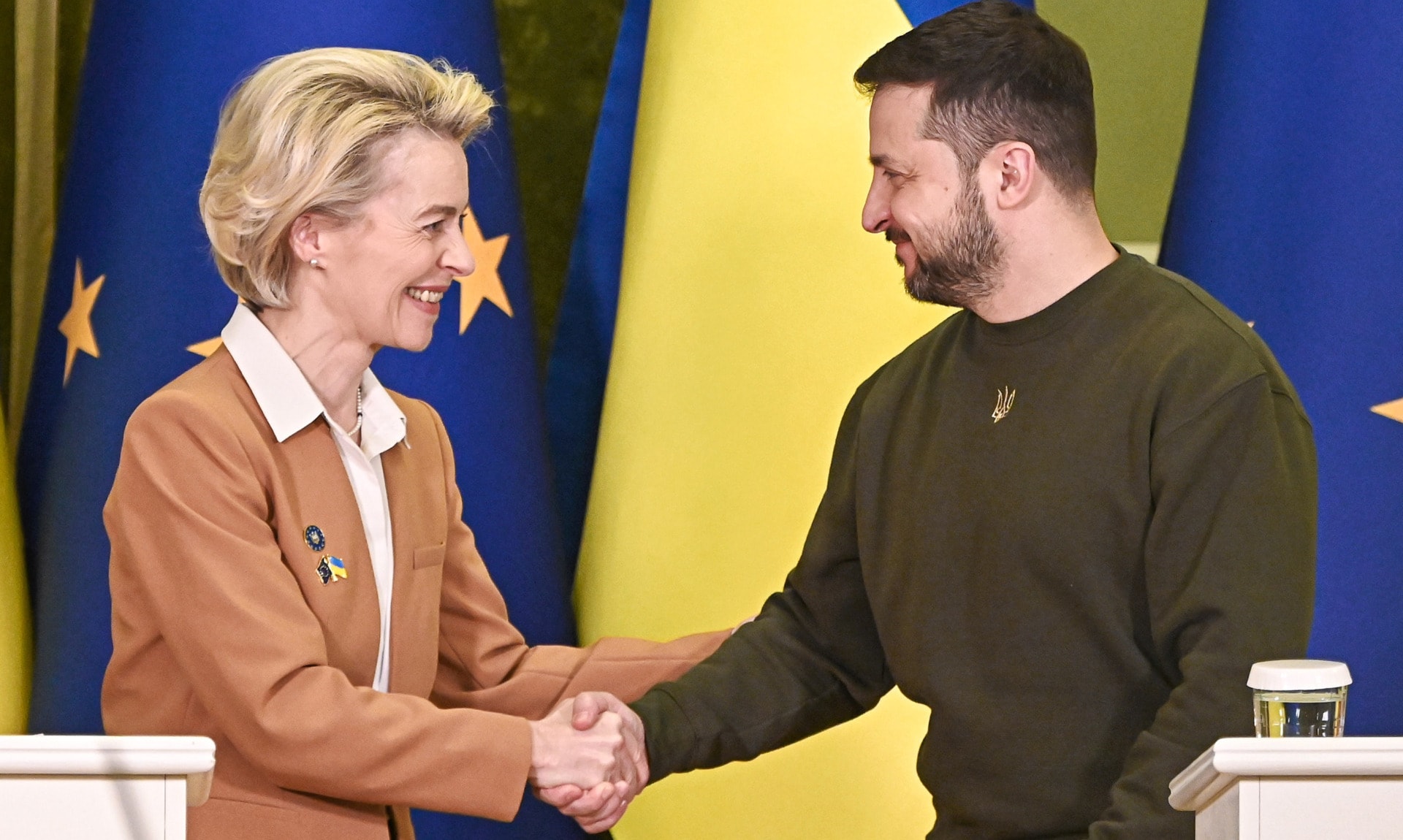
At the commissioner’s meeting this coming Wednesday, REPowerEU will also be on the agenda. This is a major proposal that EU Commission President von der Leyen first proposed at the Versailles meeting on March 10, and at that time she had said:
“We must become independent from Russian oil, coal, and gas. We simply cannot rely on a supplier who explicitly threatens us. We need to act now to mitigate the impact of rising energy prices, diversify our gas supply for next winter and accelerate the clean energy transition. The quicker we switch to renewables and hydrogen, combined with more energy efficiency, the quicker we will be truly independent and master our energy system. I will be discussing the Commission’s ideas with European leaders at Versailles later this week, and then working to swiftly implement them with my team.”
REPowerEU had three fundamental objectives:
- to continue to reduce the use of fossil fuels,
- to diversify the sources of supply and to insist on the development of renewables, with the dual purpose of getting rid of dependence on oil and gas supplies from Russia and
- pursuing the objective of decarbonization of the European economy.
The Commission’s proposed REPowerEU is based on two pillars:
- Diversifying gas supplies via higher Liquefied Natural Gas (LNG) and pipeline imports from non-Russian suppliers, and larger volumes of biomethane and renewable hydrogen production and imports
- Reducing faster the use of fossil fuels in our homes, buildings, industry, and power system, by boosting energy efficiency, increasing renewables and electrification, and addressing infrastructure bottlenecks.
Full implementation of the Commission’s ‘Fit for 55′ proposals would already reduce our annual fossil gas consumption by 30%, equivalent to 100 billion cubic meters (bcm), by 2030.
With the measures in the REPowerEU plan, the EU could gradually remove at least 155 bcm of fossil gas use, which is equivalent to the volume imported from Russia in 2021. Nearly two-thirds of that reduction can be achieved within a year, according to the EU Commission’s proposal, ending the EU’s overdependence on a single supplier.
The Commission proposes to work with Member States to identify the most suitable projects to meet these objectives, building on the extensive work done already on national Recovery and Resilience Plans (NRRPs), devised to address the economic slump caused by the Covid pandemic and “rebuild better”.
The NRRPs are now under implementation in most 27 EU member countries, with the notable exception of Hungary which is at loggerheads with the EU on this and other matters as it does not recognize EU law supremacy.
Therefore, barring difficulties mainly with Hungary but also possibly with Poland whose economy is heavily based on coal, the expectation is that Europe, on the whole, should be able to accelerate its green transition and achieve “strategic autonomy”.
Editor’s Note: The opinions expressed here by Impakter.com columnists are their own, not those of Impakter.com — Featured Photo Credit: Maxence.