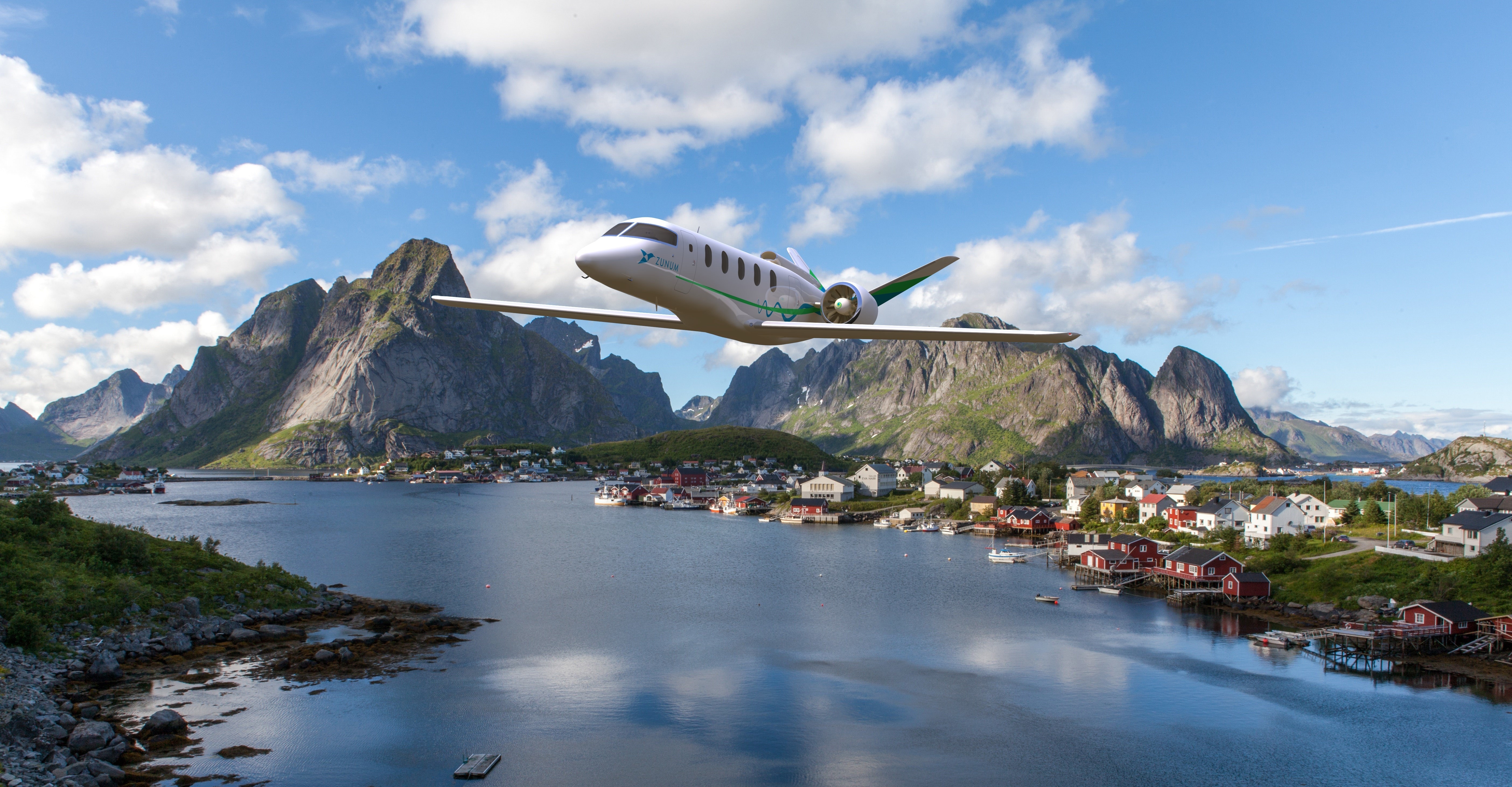

Zunum Aero is perhaps one of the most advanced tech startups in the US. The company works to build hybrid and electric planes, bringing significant innovation to the aviation industry. Not only will Zunum Aero’s planes be much cleaner compared to regular planes, but they will also be able to lower the cost of travelling by so much that people may actually end up commuting to work by plane. Today we are speaking with Sandi Adam, Chief Marketer of Zunum Aero.
How did Zunum Aero start? Who are the founders?
Sandi Adam: The person who first got the idea is Matt Knapp; an engineer with a lifelong experience in the aviation industry. He came up with this idea of combining hybrid and electric in an aircraft is because he felt the time was right, the technology is there and there are a lot of prospects. He lives in the Seattle, Washington area, and he met our CEO Ashish Kumar through their children as they were in a playgroup together. After having met up a few times and talked together, Matt and Ashish, who is a business person and has experience in Google and Dell, decided to team up. Matt and Ashish are the two founders. They looked at the market and they felt that the moment was right. They had been developing the idea for over three years before they finally announced it this year.
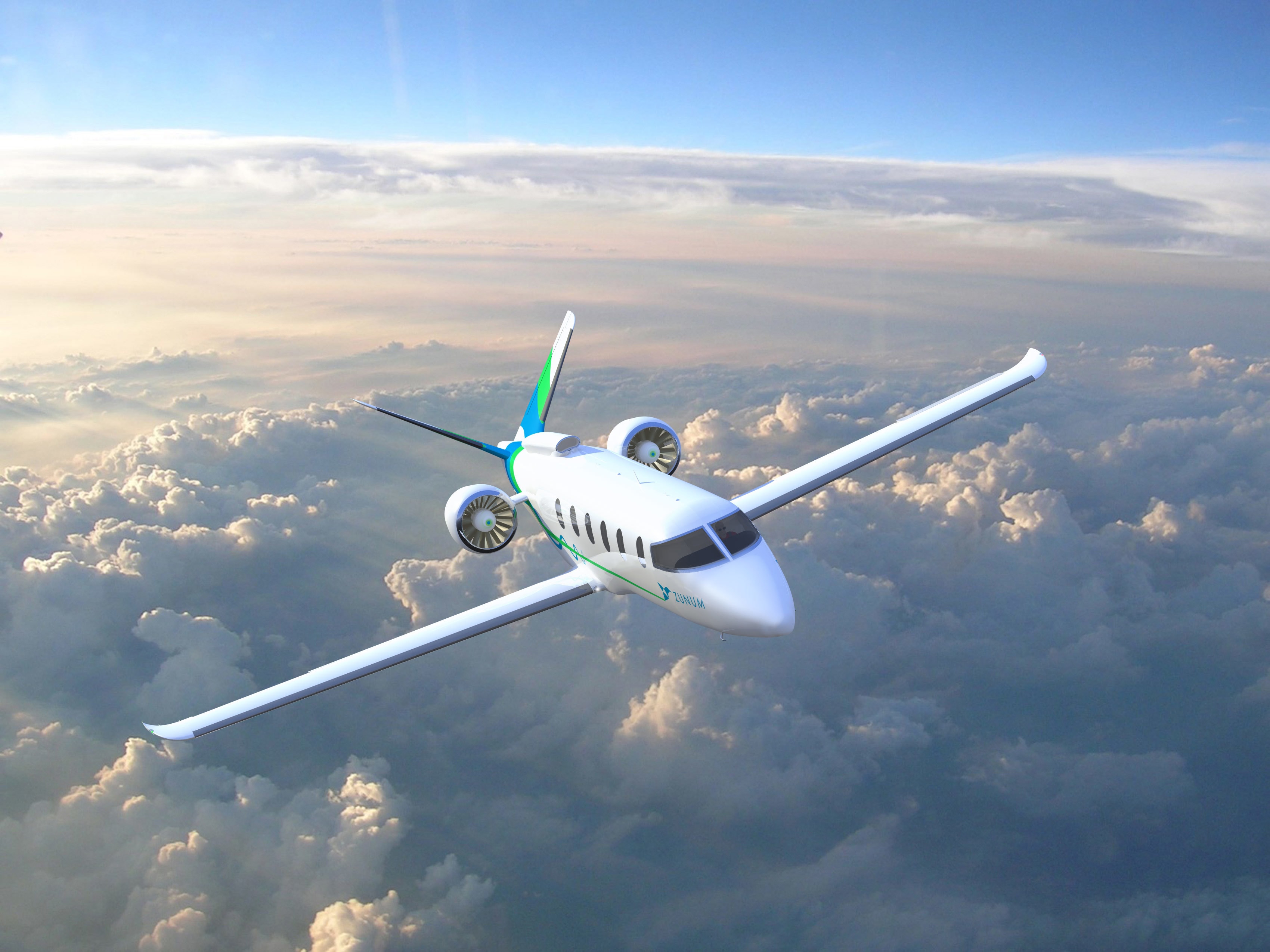
IN THE PHOTO: ZUNUM AERO AEROPLANE. PHOTO CREDIT: ZUNUM AERO
So Boeing and JetBlue are supporting you? What’s the idea behind this cooperation?
SA: We have received funds from their corporate arms, the corporate VC division. So, it’s JetBlue Technology Ventures and Boeing Horizon X; they are actually technically separate from the core business which is JetBlue Airlines and Boeing. We chose to be partners with strategic investors because like with any board member we count on them for collaboration, input on strategic ideas and introductions to people in their network. It is not really much different from any other business-investor relationships where investors have an interest in seeing you succeed. We keep them updated on important developments, we value their advice and guidance and we try to engage them in a strategic way.
Talking about the plane itself, when will the first prototype be flying? What is your timeline?
SA: The first aeroplane will be ready for delivery in 2022, so not too far away. The first aircraft we are going to introduce is going to be a 12-passenger aircraft; what really makes it different is that it is hybrid electric. It operates on 80 percent lower emissions compared to similar planes. We have an initial range of 700 miles going up to 1,000 by 2030. But the real development is actually economic. The plane offers a cost per seat mile of 8 cents, so it basically costs you 250 dollars per hour to operate the aircraft. If you think about that, it is a highly profitable rate of operating an aircraft. Currently, a lot of aeroplanes that are serving regional routes are using very old technology; some of them are flying with engines that were designed in the sixties and the efficiency is fairly limited. What drives the airline industry is economics; all the decisions around how things are structured are based on economics.
For the past 70 years, the whole jet engine era has been driving an air system model to be very concentrated. We see people flying long distance using bigger planes, and flights going through concentrated hubs. In the USA for instance, there are approximately 13,500 airports and we only fly through 1 percent of them, for economic reasons. That makes sense for longer flights, larger planes; but it doesn’t make much sense if you are flying a regional distance of less than 1,000 miles. Such scale has been great for long-haul travel and actually made it very economical; in the past 30 years the cost of flying has actually gone down by 60 percent, but it’s been terrible for regional travel. If you are travelling regionally, for instance, by the time you get to the airport, go through security, walk through the airport, get on your plane, wait on the runway and you do it all over again on the other side, you would have spent 70 percent of your travel time on the ground. We actually see that door-to-door times are worse today than thirty years ago.
If you are travelling regionally, by the time you get to the airport, go through security, walk through the airport, get on your plane, wait on the runway and you do it all over again on the other side, you would have spent 70 percent of your travel time on the ground.
This is making it economically rational to have a different model. What we think is going to happen, and what we would like to happen, is if we start leveraging more of the 13,500 airports in the USA (and there are an additional 5-10 thousand regional airports worldwide) we can actually allow people to circumvent those very concentrated, congested hubs, and they can drive to nearby community airports, cutting down travel times by two to five times. To give you another example, in Europe there are a total of 2,500 airports, but 85 percent of air traffic goes to only 43 of them. Moreover, 90 percent of the EU population does not have any large airport hub within 75 miles (approx. 100km).
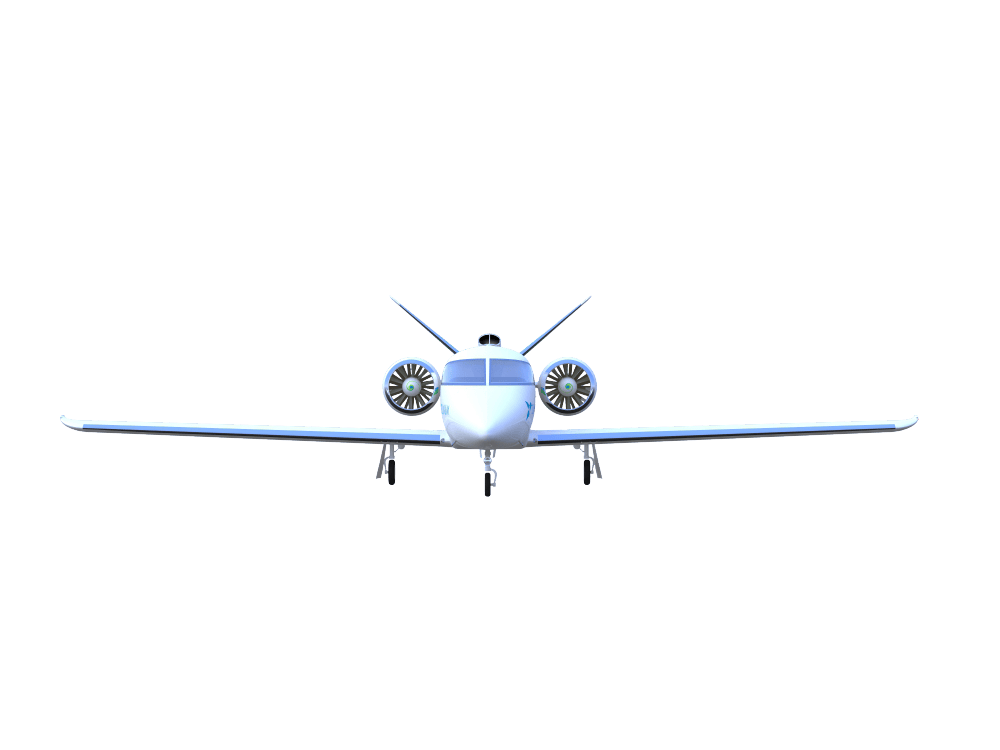
IN THE PHOTO: ZUNUM AERO JET. PHOTO CREDIT: ZUNUM AERO
Are you planning to run your own airline or sell planes to airlines and the general public?
SA: We currently focus on the aeroplane itself, designing all the key technology involved. What you have to know is that once the aeroplanes are out there, there are actually a variety of possible applications: there is the commercial airline application, business jets (there are huge opportunities in the business market), the cargo market and there are also military applications. The market for us is pretty big: even for just refreshing the current stock of aircrafts that are currently serving regional routes, there is a trillion-dollar market. And then add the number of people that choose to drive instead of flying: currently in the USA for trips below 1,000 miles people only fly 4 percent of the time because the experience is so terrible. There are all those potential passengers, there is cargo and there is military. It is a 2-3 trillion-dollar market which is pretty substantial. There are a lot of applications from a commercial standpoint, and we can impact people’s travel times and help make airfares much less expensive.
When I look at fully electric cars, they have a highest range of 330-390 miles; hybrid cars can reach 600-700 miles. Zunum Aero is talking about 700 and then 1,000 miles. Can you explain how this is going to work with a plane that requires a lot of power for take-off? Are batteries the biggest challenge for you? What other challenges are you facing?
SA: We are actually seeing the battery cost going down and the energy density going up exponentially. We design our aircrafts to be viable to use technology that is currently on the market today. You have probably seen that there is a variety of players out there: flying cars, vertical takeoffs, etc. They actually have a very high energy demand to take of vertically. We don’t take off vertically; our planes take off from a short runway, we have specifically designed fans and body which allow us to take off efficiently. In 2022 the aircraft is going to be hybrid electric: though we design the plane today, the way we do it ensures that as battery technology progresses, we can just add new technology and integrate it. It is pre-wired in a way that when the technology is sufficient and a back generator is no longer needed, it will be fully electric. That is what we are really excited about: if we are able to be fully electric, we can eliminate 40-50 percent of aviation emissions, looking at the regional routes alone. That is the exciting thing on the horizon, but even in the near term, the emission reduction and an 80 percent noise reduction are pretty significant.
In 2022 the aircraft is going to be hybrid electric: though we design the plane today, the way we do it ensures that as battery technology progresses, we can just add new technology and integrate it.
You talked about emissions reduction. What would be other relevant benefits of Zunum Aero’s aeroplanes?
SA: People don’t often think about the noise factor. Because our planes are quiet they actually allow us more flexibility: for instance, you can fly very close to a community around the clock without disrupting anyone. It will allow people to have far more flexibility in their schedules as well. Moreover, our planes are designed so they can be flown by a single pilot or without a pilot. You can have flights going back and forth continuously, providing tons of options at reduced operation costs. We want to enable people to live where they want and travel when they want. This technology will allow anyone to do that.
The door to door impact is particularly impressive. What specific requirements would regional airports need to match, in order to be able to host your planes?
SA: The demands on airports are pretty low. They need a place to store the batteries and a place to recharge them. You can turn the plane around pretty quickly if you don’t have to wait for the plane to charge; you can swap out the batteries and then the plane will be on his way, you can charge the battery separately. We have plans for 30-50 seat- and even 100-seat aircrafts. Obviously, we are starting small because we want to prove the efficiency of our technology and make sure the battery technology is improving as well. We won’t be limited to smaller passenger planes, we actually have a family of planes, each of which optimized for a specific route and flight type. And those can be flown out of regional airports as well.

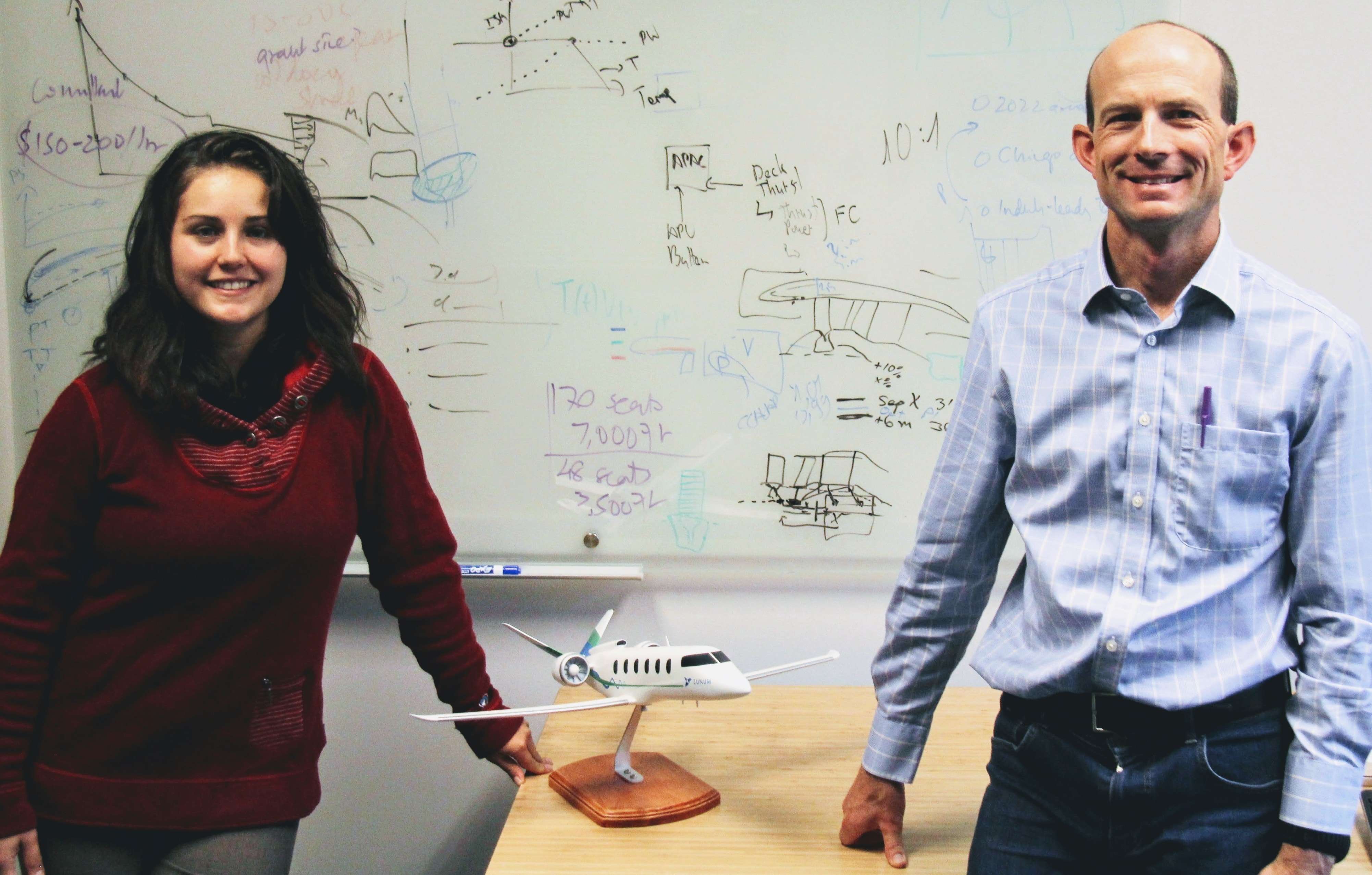
IN THE PHOTO: ZUNUM AERO TEAM. PHOTO CREDIT: ZUNUM AERO
Do you think people will commute by plane on a daily basis in the future?
SA: If travelling by plane is affordable, then it makes it reasonable to live in a small town where real estate is more affordable and commute by plane into a bigger city to work. We always say that we are offering a business jet experience at less than commercial fares. Frequent flights, planes are inexpensive to operate. Inside – a luxurious experience: the cabin is roomy, quiet and you don’t have to deal with the noise of the plane. Boarding our planes is more like boarding a train where you walk on and off and you don’t have to park far away. Don’t forget also that those planes can take off from a variety of places, you don’t need a big airport and a long runway.