Our diet has a massive impact on the environment. According to the United Nations, about one-third of our greenhouse emissions are linked to food production. And the only realistic way to reduce greenhouse gas emissions from food production is to switch to plant-based diets. Or is it?
The impact of plant-based diets on the environment is noticeably smaller than meat-based diets. But why does a plant-based diet require fewer resources to produce the same amount of food? The answer is in our first tip: land use.
Eat Less Meat, Use Less Land
Most carbon production related to food comes from land use, which includes agriculture (fruits and vegetables) and livestock (meat production). Reducing land use is the key to lowering the environmental impact of food production.
But does agriculture use less land than meat production? And why?
First things first: yes, producing meat uses more resources than making vegetables. Some kinds of red meat, in particular, require up to 10 times as much energy as other animals. Eating less meat has many advantages, including health benefits, but it’s also a more sustainable choice.
Modern agriculture isn’t that innocent either, requiring large amounts of water and chemical fertilizers. On top of being highly polluting, those fertilizers can affect human health. But while complex, this issue can be solved by finding alternative fertilizers or growing plants differently. Meanwhile, livestock will never run on anything but food.
Go Vegan or Vegetarian to Reduce Emissions
There is no doubt that vegan and vegetarian diets account for fewer greenhouse gas emissions. But if you don’t want to go that far, just reducing how much meat you eat can have an impact.
While even plant-based diets require progress to be 100% sustainable, there is no comparison to their animal alternatives. And that’s before we consider the health benefits of forgoing red meat in favor of vegetal proteins.
Switching to a more sustainable and healthy diet sounds like a no-brainer, but it can be easier said than done. Some countries might find it particularly difficult. The United States, for example, consumes the largest amount of meat per capita.
If you live in the US, switching to a sustainable diet will be especially hard. And not only because meat consumption is all around you. The more meat a country consumes, the more space it occupies in the local food supply.
Finding the variety of vegetables necessary to sustain vegetarian diets can become hard and expensive. In cases like this, your food choice might depend on more than just environmental sustainability.
Meat-based diets aren’t future-proof
If current trends continue, global meat demand will grow by 50% before 2050. Meeting that demand, as we currently stand, is beyond unsustainable. It’s impossible. And trying to meet that demand might kill us. So, we need to change our food habits before that happens.
Only a handful of countries consume a troubling amount of meat. Those, unsurprisingly, are some of the wealthiest countries on earth. For example, the average United States citizen eats more than double the global average of meat.
Related Articles: Food Banks: An Unsung Hero of Climate Action | How Sustainable Is McDonald’s? | World Bank Unleashes $100M for Climate-Smart Agriculture in Africa
Eventually, the economies of less wealthy countries will develop, and their standard of living will become similar to that of wealthy countries. They will require luxurious diets, means of transportation, buying power, etc… In short, they will consume and waste as much as we do now. We need to find sustainable alternatives to our diet, among other things, before that happens.
For a sustainable diet, whole food is better
Simply put, “whole foods” are products that haven’t been heavily processed. Vegetables not sold in a can, dry beans, and fresh eggs are all considered whole food. That said, we need to take this word with a pinch of salt.
Whole foods are rarely completely unprocessed. Fresh vegetables are harvested, cut, selected, and cleaned. And just because cooked beans come in a greasy jar doesn’t make them worse than the dry variety.
Instead, the idea behind a whole-food diet is to favor less processed goods. Canned fruit and vegetables are all right, ideally without added sugar and salt. Rice sold in airtight plastic isn’t worse than one sold in a brown bag, although the plastic isn’t great.
It would be best to avoid a completely pre-cooked dinner, frozen pizzas, and the like. This includes vegetable-based products, of course. Potato chips are (sometimes) vegan-friendly. They’re still not great for the environment, nor for your health.
But cooking whole food takes time
The most important thing to remember is that whole-food diets aren’t all or nothing. If you can’t do without chips once in a while, that’s fine. But the biggest hurdle in the road to whole foods isn’t gluttony, but time.
Whole foods are mostly unprocessed. This means they aren’t cooked, mixed, or seasoned. You’ll have to do all that by yourself. And cooking takes time. It takes less and less time as you grow confident in your cooking skills, but it still takes time.
No one will judge you if you eat a microwaveable lunch on your work break. What’s important is that you keep moving forward, at your own pace, towards a more sustainable and healthy diet.
Avoid food waste
This one might seem obvious. Avoiding food waste is the obvious thing to do when making your food habits sustainable, right? But if that was the case, we wouldn’t be wasting so much of our food.
Some estimates put food waste in the United States at about 40% of the entire country’s production. That’s about 125 to 160 billion pounds of food wasted every year. And while not all of this waste comes from consumers, a good portion comes from our eating habits.
Of those 125 to 160 billion pounds of food wasted every year, about 40 billion are thrown away by stores. Common store practices, like overstocking and a preference for aesthetically pleasing fruits, make this figure larger than it needs to be. A similar contribution comes from restaurants and other enterprises, a gift of extensive menu choices and large portions.
However, household consumption is the biggest contributor to food waste outside of food production. An estimated 40% of all food waste happens at the consumer level. Most of this, about two-thirds, occurs when food is allowed to spoil. The rest comes from preparing too much food and throwing away the leftovers.
How to avoid food waste
Consumers are responsible for a large part of food waste. That much is clear. But how do we reduce all that waste? Let’s look back at where food waste comes from.
Lots of food is thrown away because it’s past its expiration day or “sell by” date. But that doesn’t always mean that the food has gone bad. And just because your fruit has a little brown spot doesn’t mean the entire thing is inedible.
The most important thing to avoid food waste is to learn when we must throw it away and when we can salvage it. This includes taking note of when everything will expire and eating it before that date.
The last step is perhaps the hardest, but it’s still important. Figuring out how much you will eat isn’t always easy, and overjudging can generate a lot of leftovers. That’s even harder if you’re cooking for a large gathering.
In those cases, the best thing to do is to have some containers handy and ensure that no leftovers go to waste. If you’re having guests, have enough bowls and cans for everyone. But make sure to ask them first!
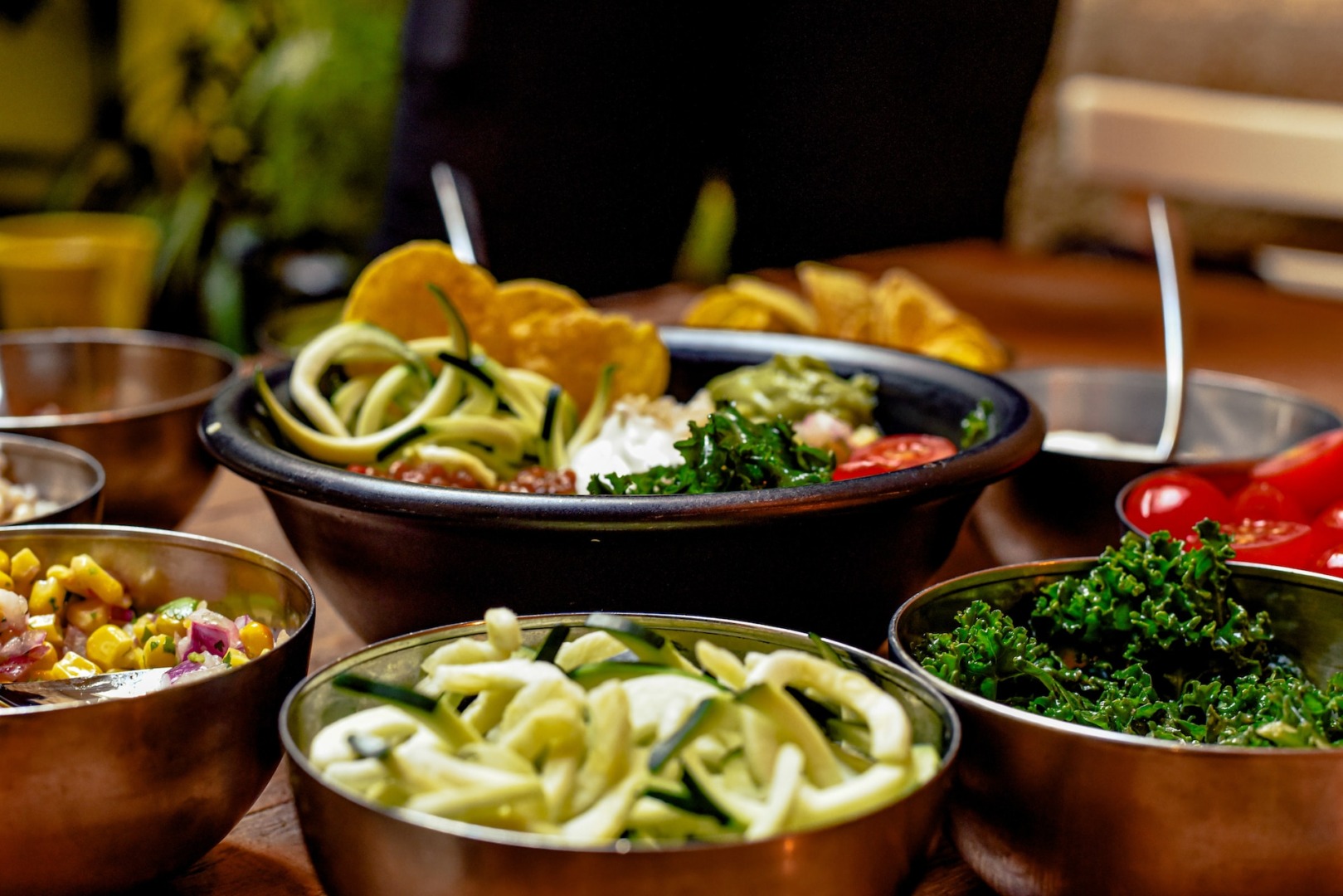
Editor’s Note: The opinions expressed here by the authors are their own, not those of Impakter.com — In the Featured Photo: Numerous plates full of vegetables. Featured Photo Credit: Frames for your Heart.