Impakter
  • Environment
    • Biodiversity
    • Climate Change
    • Circular Economy
    • Energy
  • FINANCE
    • ESG News
    • Sustainable Finance
    • Business
  • TECH
    • Start-up
    • AI & Machine Learning
    • Green Tech
  • Industry News
    • Entertainment
    • Food and Agriculture
    • Health
    • Politics & Foreign Affairs
    • Philanthropy
    • Science
    • Sport
  • Editorial Series
    • SDGs Series
    • Shape Your Future
    • Sustainable Cities
      • Copenhagen
      • San Francisco
      • Seattle
      • Sydney
  • About us
    • Company
    • Team
    • Partners
    • Write for Impakter
    • Contact Us
    • Privacy Policy
No Result
View All Result
Impakter logo
No Result
View All Result
What’s wrong with the UN Security  Council

What’s wrong with the UN Security Council

Claude Forthomme - Senior EditorbyClaude Forthomme - Senior Editor
June 9, 2014
in Philanthropy, United Nations
5

To an idle observer dropping in from Outer Space, the UN Security Council is the strongest organ of the United Nations.

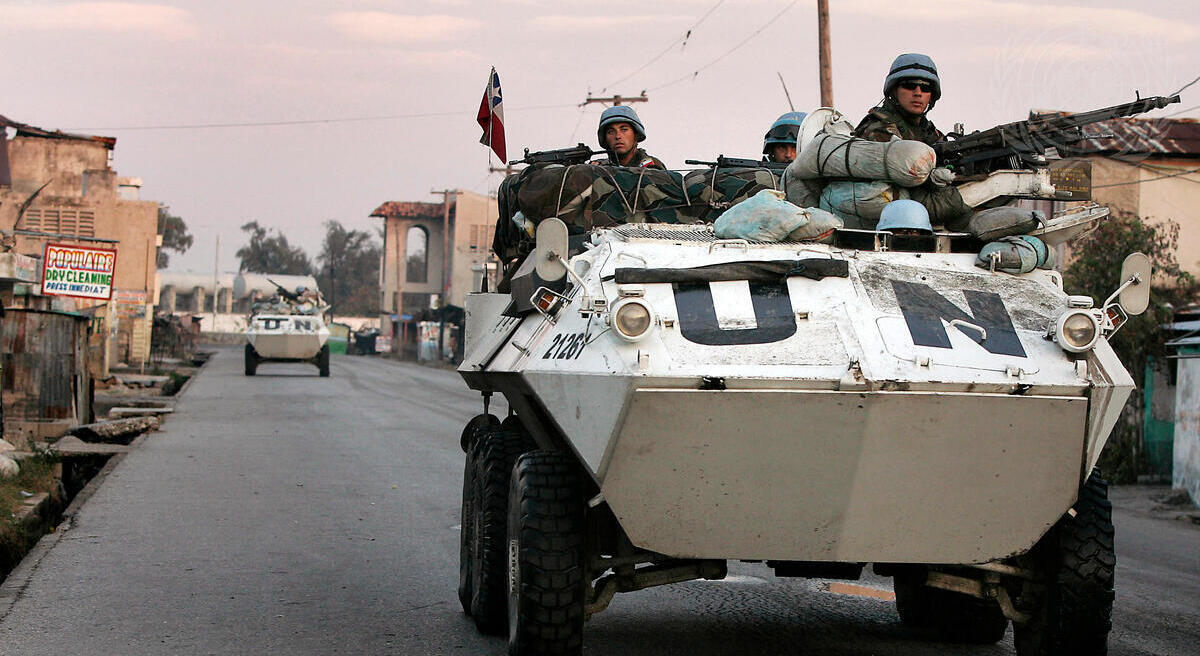
UN helmetTasked with maintaining peace among nations, it has been given weapons of war. When it passes a resolution, it can send troops, the blue-helmeted UN peacekeepers or “blue berets”, and force peace on belligerents. Blue berets belong to member nations’ armies, but taken together, they constitute a hefty, permanent UN force.

At this point in time, over 110,000 military personnel are permanently deployed around the world in “hot spots”, currently in 15 “missions”.

This level of intervention dates to the collapse of the Soviet Union (1988): the number of resolutions doubled, the peace-keeping budget increased by a factor of ten. So far, there have been eight major missions, with only two notable failures, Somalia and Bosnia. A respectable record nonetheless. The biggest failure however was caused by lack of intervention. This happened in 1994, when one of History’s worst genocide was perpetrated in Rwanda.                                                                                        UN Security Council debate on Rwanda, June 1994. Photo credit UN photo Milton Grant

In the photo: UN Security Council Meets on Rwanda 08 June 1994

The Security Council can do more than send troops. It can refer bloodthirsty dictators and generals responsible for “crimes against humanity” to the International Criminal Court in The Hague, a major cog in the UN machinery (done for Darfur, Libya). It can call for an arms embargo (15 on-going embargoes, including Somalia, just extended). It can send staff to oversee elections and support the democratic process as it did in Afghanistan or the Sudan.

Hervé Ladsous (right), Under-Secretary-General for Peacekeeping Operations, arrives in Bor, South Sudan.In the photo: Peacekeeping Chief Visits South Sudan Hervé Ladsous (right), Under-Secretary-General for Peacekeeping Operations, arrives in Bor, South Sudan.07 July 2013

You get headlines in the press like “the Security Council can and must act on Syria” or “Biting words but no action at Security Council”. Yes, if the UN Security Council sets its mind to it, it can do a lot.But it must set its mind to it. It cannot act if it hasn’t passed a resolution to do so.

This is the hitch. Yet its small and nimble size suggests it should be effective. With only fifteen members aboard, matters can be meaningfully debated unlike the 193-strong UN General Assembly. If you want a quick decision, forget the General Assembly, you’ll only get a cacophony. The system is not unfair: Security Council members are chosen on a rotating basis so that over time every country gets a chance to sit for two years on the Security Council. Except for the five “permanent” members, the United States, Russia, China, the UK and France.


The permanent members have veto power. They are the only ones who truly exercise world power.

A case in point, Syria. Nothing can be done to solve the Syrian crisis because of the Russian and Chinese veto. When those two countries stop supporting Bashar Al Assad, something might get done. The problem: the balance of power in the Security Council does not reflect the world’s current balance of power. Currently, three of those five permanent members are indisputably world super powers, the UK and France are not. When the Security Council was established and had its first session in 1946, the world, emerging from the worst war in History, was vastly different from what it is today. Let’s count the changes.

04-l

In the photo: UN Security Council Meets on Rwanda 08 June 1994

First, consider the UK and France. They were on the side of the victors but they were destroyed, mere shadows of their former historical self. Like the mythical phoenix, they rose from their ashes, but so did the World War II losers, Germany and Italy. Check, those two countries want permanent seats on the UN Security Council.

Next, the Third World. It is no longer third, many countries, the so-called BRICS, are knocking on the First World door. With rapid economic growth, there are new “big players”, Japan and India in particular. Check, but there’s no stopping the candidates. Mexico, Brazil and others emerge carried by economic growth, not to mention new demands from Africa and muslim-majority countries that all want a permanent voice.

Finally, Europe. What had started as a modest “common market” with six countries has morphed in a 28-strong European Union that cannot be ignored. Check, but what about the UK and France’s permanent seats?

The way out. Many solutions are proposed to reform the system, including expanding the number of permanent seats and adding a new category of seat (to last longer and be renewable). Reform requires agreement of two-thirds of member states and all five permanent members. Germany, Brazil, India and Japan have a foot in the door, but it’s not opening quite yet. Everybody officially supports change, yet the super powers (the US, Russia and China) are in a quandary, while France and the UK prefer the status quo. Expect the status quo, unsatisfactory as it is, not to change anytime soon…
Tags: FranceRussiaSecurity CouncilUnited NationsUnited Nations Security CouncilUnited States
Previous Post

Ether

Next Post

A Legend of Korean Modern Dance

Related Posts

Coal plants get reprieve on mercury limits, Striking unions fail to halt Milei's sweeping labor bill, Sweden's regulator reviews Swedbank's compliance controls, France backs INEOS decarbonization with €300M
Business

Trump Admin Weakens Coal Plant Mercury Regulations

Today’s ESG Updates: Coal Plants Get Reprieve on Mercury Limits: Trump's EPA is rolling back mercury emission limits to cut...

byEge Can Alparslan
February 20, 2026
Farewell to Soft Power
Politics & Foreign Affairs

Farewell to Soft Power

The Caribbean and the Arctic seem to have little in common. The same cannot be said of Venezuela and Greenland,...

byMichele Gimondo, Catholic University of Sacred Heart, Milan
February 20, 2026
How Climate Change Is Reshaping Arctic Geopolitics
Climate Change

How Climate Change Is Reshaping Arctic Geopolitics

Once a remote and largely inaccessible region, the Arctic has become the focus of far-reaching international developments. In recent years, competition among...

byPier Paolo Raimondi - Senior Researcher at the Energy, Climate and Resources (ECR) Program of the Istituto Affari Internazionali (IAI)
February 20, 2026
Trump’s Board of Peace Can Provide a New Opportunity for the United Nations
Politics & Foreign Affairs

Trump’s Board of Peace Can Provide a New Opportunity for the United Nations

While President Trump has frequently criticized the United Nations (UN), the planned February 19 initial meeting of his Board of...

byA. Edward Elmendorf - Former U.S. Mission to the UN Diplomat, UN Secretariat Staff Member, and President and CEO of UN Association of USA
February 18, 2026
Meat tax
Environment

How Effective Would a Meat Tax Be — and What Would It Cost Consumers?

The global food system is one of the largest drivers of climate change, biodiversity loss and freshwater depletion. Yet despite...

byNmesoma Ezetu
February 17, 2026
Board of Peace
Editors' Picks

Trump’s Board of Peace Explained: Mandate, Power, and Global Implications

Gaza has endured huge human and physical damage. Whatever your view may be as to the underlying causes, the reality...

byA. Edward Elmendorf - Former U.S. Mission to the UN Diplomat, UN Secretariat Staff Member, and President and CEO of UN Association of USA
February 13, 2026
ESG News regarding the EPA’s plans to repeal the endangerment finding, high energy costs in the EU, Liberty Mutual’s partnership with Ara Partners, and Eurazeo’s €175 million maritime investment
Business

United States EPA To Repeal Climate Change Determination

Today’s ESG Updates EPA to Repeal Climate Endangerment Finding: Lee Zeldin's EPA plans to revoke the 2009 determination requiring greenhouse...

bySarah Perras
February 11, 2026
Proposing a New Security Mechanism to Address the UN’s Crisis Response Problem
Editors' Picks

Proposing a New Security Mechanism to Address the UN’s Crisis Response Problem

Since 2003, the Gaza Strip has been devastated by the Israel-Hamas war and for many years before, traditional external efforts...

byRichard Seifman - Former World Bank Senior Health Advisor and U.S. Senior Foreign Service Officerand1 others
February 10, 2026
Next Post
A Legend of Korean Modern Dance

A Legend of Korean Modern Dance

Please login to join discussion

Recent News

A woman going through the checking account guide

How Checking Accounts Work: Simple Steps to Get Started Fast

February 20, 2026
Coal plants get reprieve on mercury limits, Striking unions fail to halt Milei's sweeping labor bill, Sweden's regulator reviews Swedbank's compliance controls, France backs INEOS decarbonization with €300M

Trump Admin Weakens Coal Plant Mercury Regulations

February 20, 2026
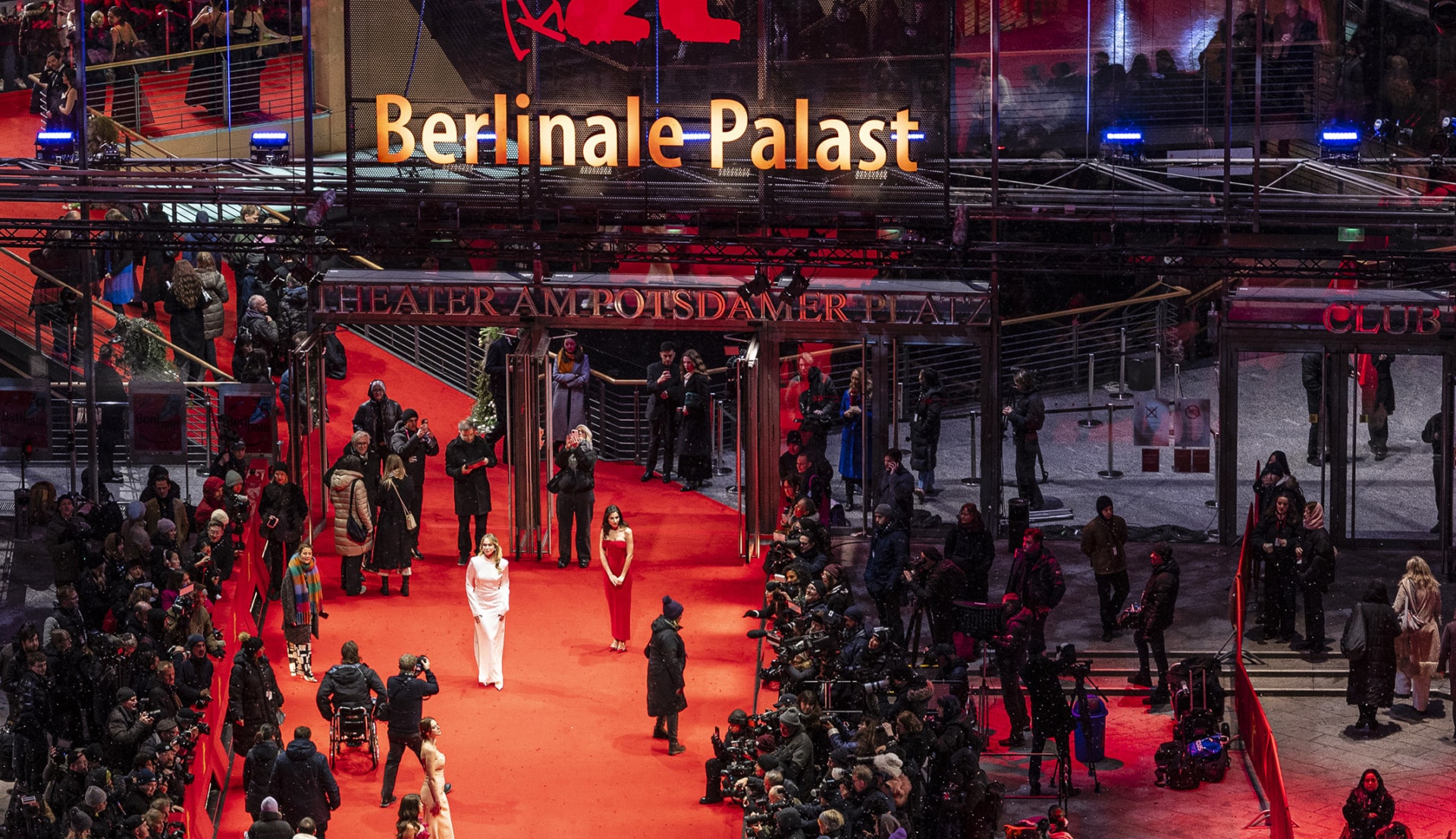
Crowds and filmmakers on the red carpet at the 76th Berlin International Film Festival in 2026

At Berlinale 2026, Artists Refuse the Comfort of Neutrality

February 20, 2026
  • ESG News
  • Sustainable Finance
  • Business

© 2025 Impakter.com owned by Klimado GmbH

No Result
View All Result
  • Environment
    • Biodiversity
    • Climate Change
    • Circular Economy
    • Energy
  • FINANCE
    • ESG News
    • Sustainable Finance
    • Business
  • TECH
    • Start-up
    • AI & Machine Learning
    • Green Tech
  • Industry News
    • Entertainment
    • Food and Agriculture
    • Health
    • Politics & Foreign Affairs
    • Philanthropy
    • Science
    • Sport
  • Editorial Series
    • SDGs Series
    • Shape Your Future
    • Sustainable Cities
      • Copenhagen
      • San Francisco
      • Seattle
      • Sydney
  • About us
    • Company
    • Team
    • Partners
    • Write for Impakter
    • Contact Us
    • Privacy Policy

© 2025 Impakter.com owned by Klimado GmbH