The FIFA World Cup 2026 is poised to be the largest of its kind, expanding from 32 teams to 48, with matches scheduled to be played across the North American continent. United 2026, the joint bid by the host nations, consists of the United States, Canada, and Mexico.
However, the sheer size of this football tournament casts a dark shadow on the environment, even threatening livelihoods. Sponsorship deals with fossil fuel companies, extensive air travel, suppression of protests from local communities, and construction on forests all set the 2026 iteration to be the one with the highest carbon footprint yet.
The Climate Impact of FIFA World Cups
A new report by Scientists for Global Responsibility, “FIFA’s Climate Blind Spot: The Men’s World Cup in a Warming World,” finds that the expansion of the tournament from 32 to 48 teams will lead to a significant increase in emissions for the 2026, 2030, and 2034 iterations of the event — particularly due to air transport for teams, staff, and fans.
The report estimates that the World Cup will generate at least 9.0 million tonnes of carbon dioxide equivalent, the highest ever in the event’s 95-year history. The Spanish-led 2030 iteration will lead to 6.1 million tCO2e, and the 2034 Finals in Saudi Arabia will be responsible for 8.6 million tCO2e.
FIFA has not had the best track record in staying aligned with climate strategies. In 2021, FIFA launched an initiative at the UN Climate Change Conference (COP26), pledging to reduce carbon emissions by 50% by 2030 and achieve net zero emissions by 2040.
But the credibility of FIFA’s previous claims of carbon neutrality at the 2022 World Cup in Qatar has already been questioned by multiple groups. The Swiss Commission for Fairness, based in Zurich, also reported that the organization was “not able to provide proof that the claims were accurate” and “did not set out a plan to define how it will further offset emissions”.
FIFA’s case becomes even more questionable considering notable sponsors of the event include airline and oil companies such as Qatar Airways and Aramco.
Local Communities Suffer as Mexico Prepares for the World Cup
“How is it possible that they have a first-class stadium, and next to it, a town that’s dead?”
While the event will use existing venues, instead of requiring the construction of newer ones, preparations and expansions continue to hurt local communities.
People living in areas surrounding the Azteca Stadium in Mexico City say development plans for the area will worsen the water supply and threaten green spaces.
“We have a right to constitution,” says Rubén Ramírez, a community leader in Santa Úrsula Coapa, a district in Mexico City. “They’re ignoring us completely. We don’t know anything.”
The constitution states that in the case of constructing on Indigenous land, authorities must legally consult local communities and leaders, such as Ramírez. However, their protests are being ignored as the government continues preparations for the World Cup.
There are even plans to turn a 5,000-square-meter forest area inside Santa Úrsula into a construction site.
“They can’t take it, this is the lungs of the community,” says Ramírez. “Why do they have to build it here? Take it somewhere else.”
It is estimated that the World Cup will inject up to £5.2 billion into the country, locking the Mexican government’s interests entirely.
Related Articles: Extreme Heat Threatens 2026 World Cup, Scientists Warn | FIFA World Cup 2030: Will It Be Sustainable? | World Cup 2022 Host Qatar Is Riddled With Climate and Human Rights Issues
The biggest issue, however, might be the water supply. Water shortages are a common issue across Mexico City, and the Azteca district is further threatened by the expansion of the stadium. Televisa, a company that partly owns the Azteca stadium, privatized a well in the area in 2018, further worsening the condition, as the Santa Úrsula community protests that this contract was illegal and has contributed to exploitation.
“The stadium is part of the community’s territory,” says Ramírez. “It’s the owners, the businesspeople who are going to benefit from the World Cup. What are the community going to see? Nothing.”
How Can FIFA Mitigate the World Cup’s Climate Impact?
To counteract these effects, the report suggests that FIFA:
- Ends commercial partnerships with high-pollution companies;
- reverses the recent tournament expansion;
- lowers minimum stadium capacity requirements to reduce new constructions;
- establishes binding environmental standards;
- introduces new measures to reduce risk and exposure to climate impacts.
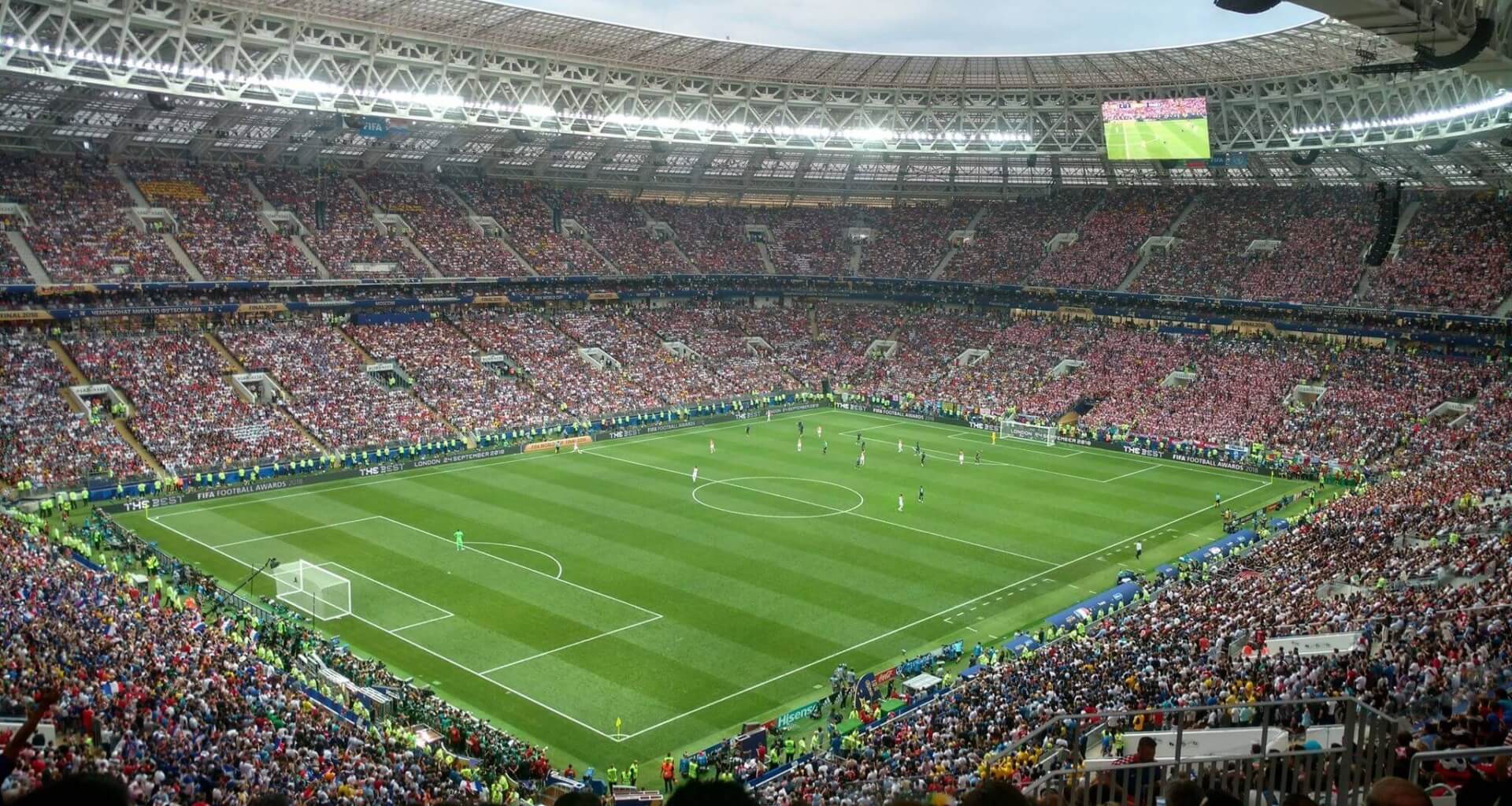
Editor’s Note: The opinions expressed here by the authors are their own, not those of impakter.com — In the Cover Photo: 2018 World Cup final game. Cover Photo Credit: Wikimedia Commons.