Impakter
  • Environment
    • Biodiversity
    • Climate Change
    • Circular Economy
    • Energy
  • FINANCE
    • ESG News
    • Sustainable Finance
    • Business
  • TECH
    • Start-up
    • AI & Machine Learning
    • Green Tech
  • Industry News
    • Entertainment
    • Food and Agriculture
    • Health
    • Politics & Foreign Affairs
    • Philanthropy
    • Science
    • Sport
  • Editorial Series
    • SDGs Series
    • Shape Your Future
    • Sustainable Cities
      • Copenhagen
      • San Francisco
      • Seattle
      • Sydney
  • About us
    • Company
    • Team
    • Global Leaders
    • Partners
    • Write for Impakter
    • Contact Us
    • Privacy Policy
No Result
View All Result
Impakter logo
No Result
View All Result
plastic water bottles

Why We Should Not Reuse Plastic Water Bottles

Whether microplastic particles cause long-term damage is uncertain but reducing our exposure to them will be wise

Sarva Mangala Praveena - Associate Professor at the University of Putra MalaysiabySarva Mangala Praveena - Associate Professor at the University of Putra Malaysia
April 5, 2023
in Health, Science
0

Taking a swig from your plastic water bottle will do more than slake your thirst — you will also be gulping down microplastics — tiny plastic particles measuring less than 5mm.

Being plastic, these particles do not decompose all that easily and will accumulate over time in our bodies — a process called bioaccumulation.

While there is not yet any clear evidence between microplastics and serious illnesses, researchers are increasingly concerned over their long-term effects on our bodies.

Key to this concern are the chemicals used in the manufacture of plastics, some of which have already been linked to serious diseases.

The presence of microplastics in human stool suggests we are exposed to microplastics in our daily lives. They have found their way into the food chain, raising concerns about food safety.

They are also present in bottled water globally. Studies investigating microplastics in bottled water have reported particle sizes of less than 1mm in most, released from the bottle material, the bottleneck and the cap.

The colour of the particles coming from the bottle material itself is transparent while those originating from the caps are either blue or green.

The highest detected plastics polymer is polyethylene terephthalate (PET) which is used to manufacture both the bottle material and cap.

Studies also provide evidence that microplastic in bottled water is due to multiple factors such as physical stress during transport, bottle shaking and high-pressure water injection into the bottles at the production plants.

Additionally, thermal impact during storage also worsens the fragmentation process.

Reusable PET water bottles have higher microplastic particles than single-use PET bottles. Frequent opening and closing of the bottles also cause more particles to be formed due to friction.

The critical question remains unanswered: to what extent do microplastic particles found in bottled water threaten human health? Researchers have developed a number of hypotheses on both the physical and chemical hazards.


Related Articles: Floating ‘Plastic Smog’ Is Suffocating the Ocean, New Study Finds | Plasticosis: A Synthetic Health Crisis Waiting in the Wings? | How Much Plastic Are We Ingesting? | Ending Plastic Pollution: Talks on the First Global Treaty Begin

No published study has directly studied the impact of plastic particles on humans. The only existing research relies on laboratory tests that expose cells or human tissues to microplastics or those that employ rodents.

According to the World Health Organization, only microplastics with particle sizes smaller than 1.5 μm (1.5 micrometres) can be ingested or absorbed due to their solubility and excreted directly.

Thus ingested microplastic particles (<1.5 μm) from bottled water are capable of migrating through the intestinal wall and reaching various body tissues, including the gut, liver and lymph nodes.

Minute particles (<1.5 μm) which enter cells or tissues might irritate just by being a foreign presence causing lung tissue inflammation which could lead to cancer.

The accumulation of these particles in human tissues has been linked with chemical toxicity. Compounds such as plasticisers, stabilisers and pigments used in the production can be released by microplastics and travel through our bodies in the bloodstream.

These chemicals have been linked to health problems such as inflammation, genotoxicity, oxidative stress and damage to the gastrointestinal tract.

Chemicals released from bottled water packaging materials are now known as emerging pollutants and endocrine-disrupting chemicals (EDCs) that can cause serious health problems including cancer and developmental defects.

The long-term effects of microplastics exposure on human health are not yet fully understood and research is progressing. But it is clear they are a potential hazard and steps should be taken to limit our exposure to them in daily life.

In the event you use bottled water as your primary source of drinking water, you should make an effort to minimise the shaking movements of the bottles and also unnecessarily opening and closing the bottle.

And it is not recommended to reuse plastic water bottles. Reuse increases the rate of inner surface abrasion, releasing additional microplastic particles from the inner surface of the bottle.

It is also essential to store bottles in a cool and dry place to minimise their exposure to heat and sunlight. Sunlight can accelerate bottle degradation — they become more brittle and fragile — which leads to more microplastic particle release.

Additionally, the heat also causes these PET bottles to leach chemical pollutants such as plasticisers which can contaminate the water. These chemicals, such as phthalates and bisphenol A (BPA) are harmful to human health if consumed in large amounts.

— —

This article was originally published by 360info™ where it was updated on March 28, 2023, to replace the term “unhealthy dose of microplastics” with “microplastics.”


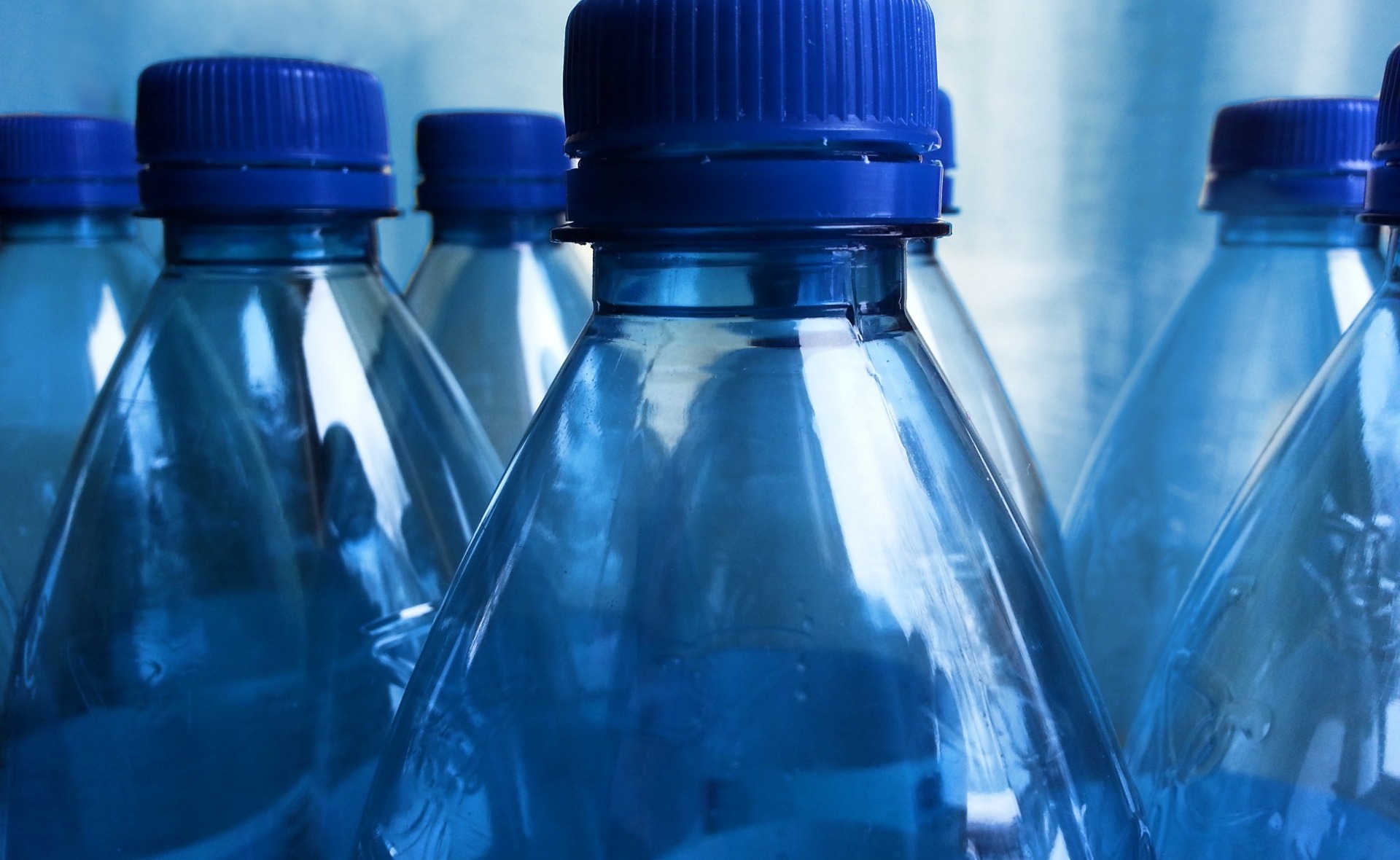
Editor’s Note: The opinions expressed here by the authors are their own, not those of Impakter.com — In the Featured Photo: Plastic water bottles. Source: Public Domain Pictures.

Tags: bioaccumulationbottled waterhealth hazardmicroplasticsPETplasticsingle-use plastics
Previous Post

The Drug Funding the Syrian Regime

Next Post

UN Report Details Actions to Minimize Negative Impacts of Pesticides

Related Posts

Impakter’s Most-Read Stories of 2025
Society

Impakter’s Most-Read Stories of 2025

In 2025, as in previous years, Impakter readers turned in large numbers to stories examining climate change and pollution, environmental...

byImpakter Editorial Board
December 31, 2025
plastic diseases
Biodiversity

Plastic Can Now Help Spread Diseases

There has been growing attention to the “Great Pacific Garbage Patch” by those who correctly recognize it as an environmental disaster....

byRichard Seifman - Former World Bank Senior Health Advisor and U.S. Senior Foreign Service Officer
December 8, 2025
plastic pollution
Environment

Biodegradable Plastics: Help or Hype?

The global annual production of plastics rose to 400 million metric tons in 2022 and is projected to double by 2050. Many items...

byThe Revelator
November 21, 2025
Plastic pollution coral reefs
Biodiversity

Protecting Coral Reefs From Plastic Pollution: The IUCN Congress as a Catalyst for Action and Collaboration

This week, the International Union for the Conservation of Nature (IUCN) sees its World Conservation Congress kick off in Abu...

byJanne van Eerten - Sr. Global Public Affairs Manager at The Ocean Cleanupand1 others
October 8, 2025
refuse-derived fuel
Business

This Fuel Is 50% Plastic — and It’s Slipping Through a Loophole in International Waste Law

Since 2019, the 191 countries that are party to an international agreement called the Basel Convention have agreed to classify...

byGrist
August 18, 2025
ESG news regarding plastic pollution treaty, Norsk Hydro job cuts, Panama Canal expansion plans, Russian aluminium giant Rusal reports loss
Business

Plastic Pollution Talks Overrun Amid Global Uncertainty

Today’s ESG Updates: Plastic Pollution Treaty Talks Extended: Global negotiations on the world’s first legally binding plastic treaty stalled. Norsk...

byYuxi Lim
August 15, 2025
mnps soil
Environment

How Microplastics Are Destroying Soil and Human Health

Soil health is a critical global issue. World Soil Day reminds us that degraded soils affect food security, water quality and ecosystems....

byDr. Abhilasha Shourie - Professor at the Manav Rachna International Institute of Research and Studies
December 4, 2024
global plastics treaty
Environment

INC-5: Ambitious Countries Are Failing the Planet

WWF is concerned that with just 36 hours left before the fifth and final negotiations for a global plastic pollution...

byWWF
November 29, 2024
Next Post
Pesticides

UN Report Details Actions to Minimize Negative Impacts of Pesticides

Recent News

ESG News regarding China restricting industrial renewable exports, UN warning that US climate treaty exit harms economy, UK firms lowering wage forecasts despite inflation, Meta partnering with TerraPower for new nuclear reactors.

To Save the Grid, China Forces Industries to Go Off-Network

January 9, 2026
Cleaner Air in Hospitals

How Cleaner Air in Hospitals Can Cut Infections and Climate Impact at the Same Time

January 9, 2026
Search cleanup, key activity to protect your data and tech devices.

A Simple “Search Cleanup” Plan for Busy People

January 9, 2026
  • ESG News
  • Sustainable Finance
  • Business

© 2025 Impakter.com owned by Klimado GmbH

No Result
View All Result
  • Environment
    • Biodiversity
    • Climate Change
    • Circular Economy
    • Energy
  • FINANCE
    • ESG News
    • Sustainable Finance
    • Business
  • TECH
    • Start-up
    • AI & Machine Learning
    • Green Tech
  • Industry News
    • Entertainment
    • Food and Agriculture
    • Health
    • Politics & Foreign Affairs
    • Philanthropy
    • Science
    • Sport
  • Editorial Series
    • SDGs Series
    • Shape Your Future
    • Sustainable Cities
      • Copenhagen
      • San Francisco
      • Seattle
      • Sydney
  • About us
    • Company
    • Team
    • Global Leaders
    • Partners
    • Write for Impakter
    • Contact Us
    • Privacy Policy

© 2025 Impakter.com owned by Klimado GmbH