Impakter
  • Environment
    • Biodiversity
    • Climate Change
    • Circular Economy
    • Energy
  • FINANCE
    • ESG News
    • Sustainable Finance
    • Business
  • TECH
    • Start-up
    • AI & Machine Learning
    • Green Tech
  • Industry News
    • Entertainment
    • Food and Agriculture
    • Health
    • Politics & Foreign Affairs
    • Philanthropy
    • Science
    • Sport
  • Editorial Series
    • SDGs Series
    • Shape Your Future
    • Sustainable Cities
      • Copenhagen
      • San Francisco
      • Seattle
      • Sydney
  • About us
    • Company
    • Team
    • Global Leaders
    • Partners
    • Write for Impakter
    • Contact Us
    • Privacy Policy
No Result
View All Result
Impakter logo
No Result
View All Result
deepfakes detection methods

When You Can’t Trust Your Eyes Anymore

Deepfakes are threatening privacy and security. Detection methods using deep learning aim to combat this but there’s a long way to go

Scarlett SeowbyScarlett Seow
March 26, 2024
in AI & MACHINE LEARNING, TECH
0

It started in 2017 when Reddit users uploaded sexually explicit videos using the faces of women celebrities superimposed onto adult film actresses’ bodies.

The emergence of such disturbing videos was a result of a sophisticated deep learning algorithm known as “deepfake”.

It sent shockwaves through the world, threatening privacy and societal security. Within a year, Reddit and other online platforms banned these deepfake porn videos but the problem does not stop there.

This advanced technique enables the replacement of one person’s likeness with another’s. Some popular examples include applying filters to alter facial attributes; swapping faces with celebrities; transferring facial expressions; or generating a new selfie based on an original photo.

The malicious use of deepfakes has the potential to cause severe psychological harm and tarnish reputations, marking it as a powerful tool capable of inciting social panic and threatening world peace.

The development of robust deepfake detectors which are trained to identify the distinct features that distinguish a fake image from a real one, is crucial.

Traditional approaches focus on analysing inconsistencies in pixel distribution, leading to unusual biometric artefacts and facial textures, such as unnatural skin texture, odd shadowing, and abnormal placement of facial attributes, which serve as key indicators for deepfake detection.

However, the evolution of deep learning technology, such as diffusion models, transformers, and Generative Adversarial Networks (GANs), has made conventional approaches vulnerable.

GAN is the leading technique in deepfake generation. It consists of two models: a generator that creates images and a discriminator that attempts to distinguish whether the image is real or fake.

Initially, deepfake images might display noticeable flaws in pixel distribution. Yet, guided by feedback from the discriminator, the generator learns from its successes and failures to refine its technique. Over time, through continuous training, the generator becomes increasingly adept at producing indistinguishable images.

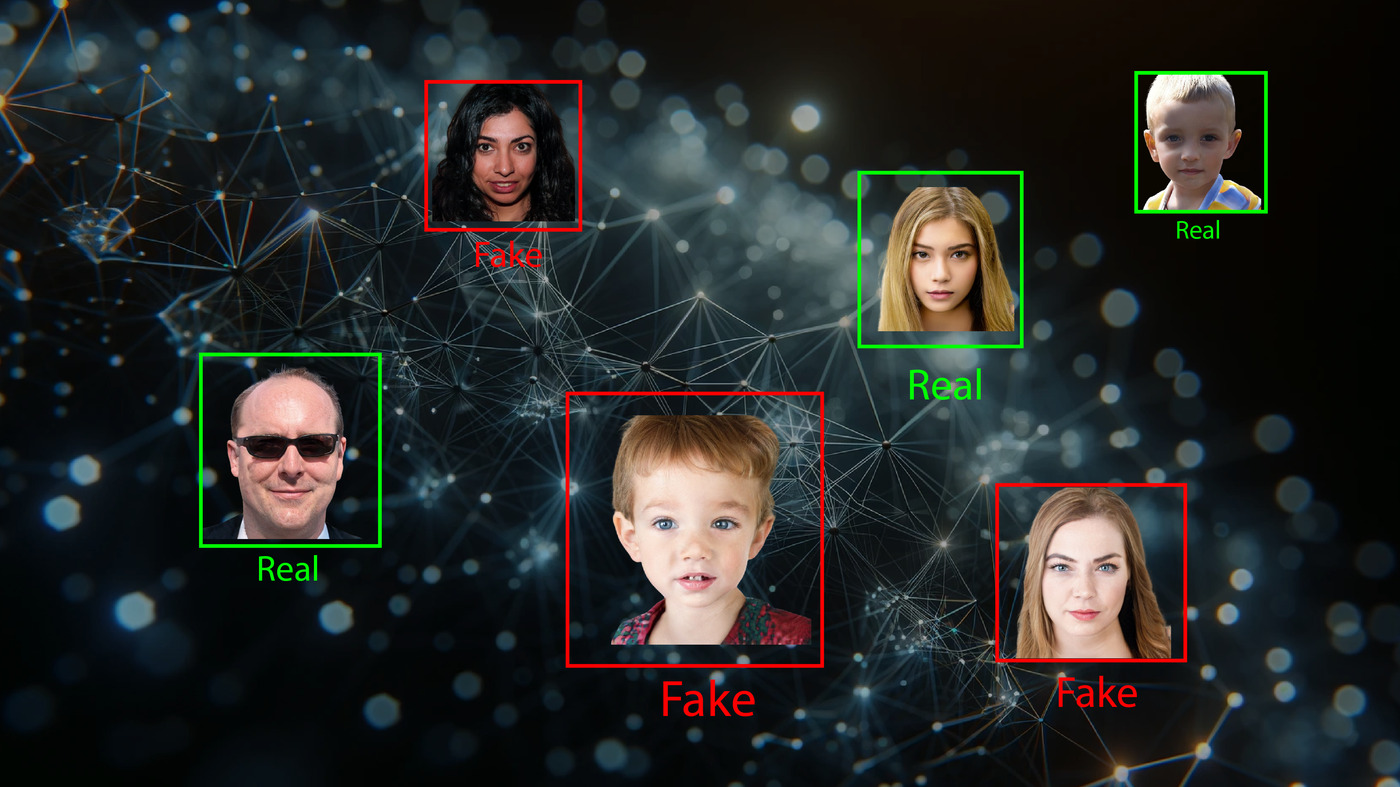
As the digital landscape evolves, the battle against deepfakes has ushered in a new era of detection methods. These are increasingly focusing on deep learning approaches rather than undergoing the tedious process of manually crafting features.

These methods utilise a “black box” approach through convolutional neural networks for feature extraction. This approach allows the model to automatically learn and derive the discriminative features directly from the training data or input features via deep neural networks, streamlining the deepfake detection process.

Within this transformative scenario, researchers are dedicating efforts to develop detection models that specifically target deepfake images from diverse sources to enhance the model’s effectiveness in real-world scenarios while minimising the computational resources needed during training.

Their goal is to transform these models by restructuring the model into user-friendly tools that can be seamlessly integrated with social media platforms and applications.


Related Articles: Artificial Intelligence: How Worried Should We Be? | Who Is Liable if AI Violates Your Human Rights? | Can Artificial Intelligence Help Us Speak to Animals? | AI’s Threat to Humanity Rivals Pandemics and Nuclear War, Industry Leaders Warn

But the journey doesn’t end there. For developers and researchers, continuous learning and adaptation becomes paramount.

It is crucial to ensure that the detection models remain effective against the evolving techniques used in deepfake generation, which present challenges in detection and responsible use.

Tackling these challenges requires significant technical innovation as well as ethical foresight, coordinating policy, aligning with tools, and engaging in broad public dialogue.

It is this comprehensive strategy that will be necessary to truly advance the technology and to do so responsibly and widely enough to make it effective so that it is intended and widely accepted.

“Seeing is believing”, in an era where deepfakes blur the line between reality and fiction, the pursuit of truth becomes more important than ever.

The development of deepfake detection technology serves as far more than a technical challenge. Instead, it emerges as a beacon in our unrelenting pursuit of authenticity.

Here, we are reminded that even as our eyes may be deceived, our dedication to preserving accuracy ensures that reality will always flicker through.

In the war against digital deception, deepfake detection’s central and essential role remains as our watchful sentry, ensuring that even in the age of deepfakes, seeing can still mean believing.

** **

This article was originally published by 360info™.


Editor’s Note: The opinions expressed here by the authors are their own, not those of Impakter.com — In the Cover Photo: As the digital landscape evolves, the battle against deepfakes has ushered in a new era of detection methods. Cover Photo Credit: Author. Single images via Tero Karras, Samuli Laine and Timo Aila.

Tags: AIArtificial Intelligenedeep learningdeepfakeDeepfakesGANsGenerative Adversarial Networksprivacysecurity
Previous Post

How America Plans to Decarbonize Inudstry

Next Post

How Does Climate Change Impact Inflation?

Related Posts

How Climate Change Could Help Foster Peace in Yemen
Climate Change

How Climate Change Could Help Foster Peace in Yemen

Yemen's tragedy is traditionally depicted through the limited perspective of humanitarian need and political divisiveness, but there is a greater...

byTareq Hassan - Executive Director of the Sustainable Development Network Canada (SDNC)
December 15, 2025
PRA cuts 37 reporting templates for UK banks; EU Lawmakers Agree to Slash Sustainability Reporting and Due Diligence Requirements; Projects in fast paced sectors could receive exemptions from environmental impact assessments.
Business

Ease of Reporting Standards for UK Banks

Today’s ESG Updates PRA to Ease Reporting for UK Banks: Prudential Regulation Authority has agreed to remove 37 reporting templates...

byPuja Doshi
December 12, 2025
AI energy
Editors' Picks

For a Solution to AI’s Energy Crisis, Look at the Human Brain

As Artificial Intelligence (AI) races ahead, its capacities and limitations are now being computed by those at the forefront of...

byDr. Subhrajit Mukherjee - Head of the Optoelectronic Materials and Device (OEMD) Lab at Shiv Nadar Institution of Eminence
November 28, 2025
AI in Journalism
AI & MACHINE LEARNING

AI in Journalism and Democracy: Can We Rely on It?

Our world is in the midst of a disruption triggered by the development of Artificial Intelligence (AI). Companies selling AI...

byDr Jake Goldenfein, University of Melbourneand2 others
November 26, 2025
ESG News regarding using AI to prevent wildfires, Ferrari’s deal with Shell, plastic waste job creation in UK, and China’s 30% increase in solar power use
Business

AI’s Role in Wildfire Prevention

Today’s ESG Updates Utilities Turn to AI for Wildfire Prevention: Power companies across the U.S. and Europe are partnering with...

bySarah Perras
November 25, 2025
Can Government Efforts to Regulate AI in the Workplace Make a Difference?
AI & MACHINE LEARNING

Can Government Efforts to Regulate AI in the Workplace Make a Difference?

An overview of AI regulations and laws around the world designed to ensure that the technology benefits individuals and society,...

byRichard Seifman - Former World Bank Senior Health Advisor and U.S. Senior Foreign Service Officer
November 21, 2025
ESG News regarding: Close-up of trays in a direct air capture facility where minerals absorb CO₂ from the air.DHL cargo aircraft at a U.S. airport as Phillips 66 supplies SAF from its Rodeo Renewable Energy Complex. Pallets of cocoa beans in an EU warehouse; brands urge no delay to the EU deforestation law. Small fish swimming near floating plastic debris in Indonesian waters.
Business

AI Boom Drains Supply of High-Quality Carbon Removal Credits

Today’s ESG Updates AI Offsets: Big Tech demand for durable carbon removals fuels a shortage. Aviation: DHL will buy 314M...

byAda Omar
November 19, 2025
ESG News regarding global carbon emissions, Amazon claims AI will accelerate the clean-energy transition, Australia’s opposition party states it will drop the country’s net-zero target if elected, Portugal’s utility EDP focuses its clean-energy expansion in Southeast Asia
COP30

Global Carbon Emissions Reach Record High as Planet’s Natural Sinks Falter

Today’s ESG Updates Global Carbon Emissions Hit Record High as Natural Sinks Weaken: The Global Carbon Project report intensifies the...

byLena McDonough
November 13, 2025
Next Post
climate change inflation

How Does Climate Change Impact Inflation?

Recent News

ESG News regarding the UK unemployment rate rising to a four-year high, oil prices drop below $60 amid Russia-Ukraine peace talks, water and wheat supplies crisis in Iraq, and Neste pushes back its climate targets

UK Unemployment Rate Hits Four-Year High

December 16, 2025
Nearshore Software Developer

How Nearshore Software Development in Eastern Europe Boosts Innovation for SMEs

December 16, 2025
RFK Jr.’s Vaccine Policies: A Hoax on Citizens

RFK Jr.’s Vaccine Policies: A Hoax on Citizens

December 16, 2025
  • ESG News
  • Sustainable Finance
  • Business

© 2025 Impakter.com owned by Klimado GmbH

No Result
View All Result
  • Environment
    • Biodiversity
    • Climate Change
    • Circular Economy
    • Energy
  • FINANCE
    • ESG News
    • Sustainable Finance
    • Business
  • TECH
    • Start-up
    • AI & Machine Learning
    • Green Tech
  • Industry News
    • Entertainment
    • Food and Agriculture
    • Health
    • Politics & Foreign Affairs
    • Philanthropy
    • Science
    • Sport
  • Editorial Series
    • SDGs Series
    • Shape Your Future
    • Sustainable Cities
      • Copenhagen
      • San Francisco
      • Seattle
      • Sydney
  • About us
    • Company
    • Team
    • Global Leaders
    • Partners
    • Write for Impakter
    • Contact Us
    • Privacy Policy

© 2025 Impakter.com owned by Klimado GmbH