Turkey’s Lira crisis: Is it a strictly Turkish problem or is there a risk of contagion? The answer to that question is complex and requires taking a close look at what happened and at Erdogan’s role which is central. Including looking at his past, considering the whole arc of his career, from Istanbul mayor to autocratic president.
The Lira, weak since the start of the year, went into freefall by August 13, following two hostile American policy moves. One was sanctions hitting two Turkish government officials, the Justice and Interior ministers, on August 1. The other was a Trump tweet announcing steep tariffs on steel and aluminum on August 10:
I have just authorized a doubling of Tariffs on Steel and Aluminum with respect to Turkey as their currency, the Turkish Lira, slides rapidly downward against our very strong Dollar! Aluminum will now be 20% and Steel 50%. Our relations with Turkey are not good at this time!
— Donald J. Trump (@realDonaldTrump) August 10, 2018
Both moves surprised international investors. They hit an important NATO ally like Turkey that is host to a major American base and put at risk other areas of U.S.-Turkey cooperation like the war in Syria, drug fighting or anti-terrorism. They arose from a dispute over the release of an American evangelical pastor, Andrew Brunson, whose cause is championed by Vice President Pence. Turkey is accusing pastor Brunson of espionage and terrorism in relation to the failed 2016 coup attempt.
This is not the first time that Turkey is impatient with the United States. In 2017, the Turks sent seven requests for extradition of Fetullah Gullen who presently lives in the United States. A one-time Erdogan ally, he has turned into his foe. As head of FETO, he is accused of orchestrating the 2016 coup.
By August 13, at the close of markets, the Lira had lost an unprecedented total 40% of its value since January. The already fragile economy looked ready to collapse, with inflation poised to surge. On August 14, the Lira marked a short gain while the rupee collapsed further. The US continued to demand the release of pastor Brunson from house arrests but Erdogan speaking in Ankara today threatened to boycott American electronic goods: “If they have iPhones, there is Samsung on the other side, and we have our own Vestel here.”
Turkey’s Lira crisis is a currency crisis like no other, with a strange twist: The Turkish Central Bank is unwilling to face the problem head on with a raise in interest rates – the classic way to defend a currency under attack.
It seems the Central Bank is under pressure from President Erdogan not to raise rates that would hurt his voters, particularly small businessmen. Capital controls are also ruled out.
Over the weekend, Erdogan has gone a step further. He’s announced he wouldn’t accept an international bailout, something Germany had intimated might be possible if Turkey agreed to restore independence to its Central Bank.
Instead, at the time of writing (August 14), the Central Bank had only pursued relatively modest liquidity measures to buffer the Lira. Things like asking Turkish citizens to sell their dollars and buy the Lira and easing bank rules. It has vowed to provide banks with all the liquidity they need – whether it can effectively do so remains to be seen.
As a result, the Lira keeps falling with President Erdogan remaining defiant, calling it an “economic war” unleashed by America:
The Lira crisis is rippling across the world. Emerging markets are roiled, India’s rupee, the South African rand, the Argentina peso, the Russian were all hit, and Europe is threatened, starting with its weakest member, Italy, with the largest debt burden (over 130% of GDP). Some observers warn of a domino effect. Italian treasury bonds took an immediate hit, the spread with the German bonds widening again. Add to the mix major European banks excessively exposed to the Turkish Lira, particular Spanish banks.
To understand what happened, one needs to take a step back in History. Turkey has come a long way since the times of Ataturk and Erdogan at first was a positive force, until he wasn’t, as explained in this excellent video:
This video was done in 2017, before two decisive political wins for Erdogan: the referendum that changed the Constitution and his re-election in June 2018. He is now in an unassailable position, Turkey’s de facto dictator.
Erdogan’s Overreach: Could Turkey Become Another Venezuela?
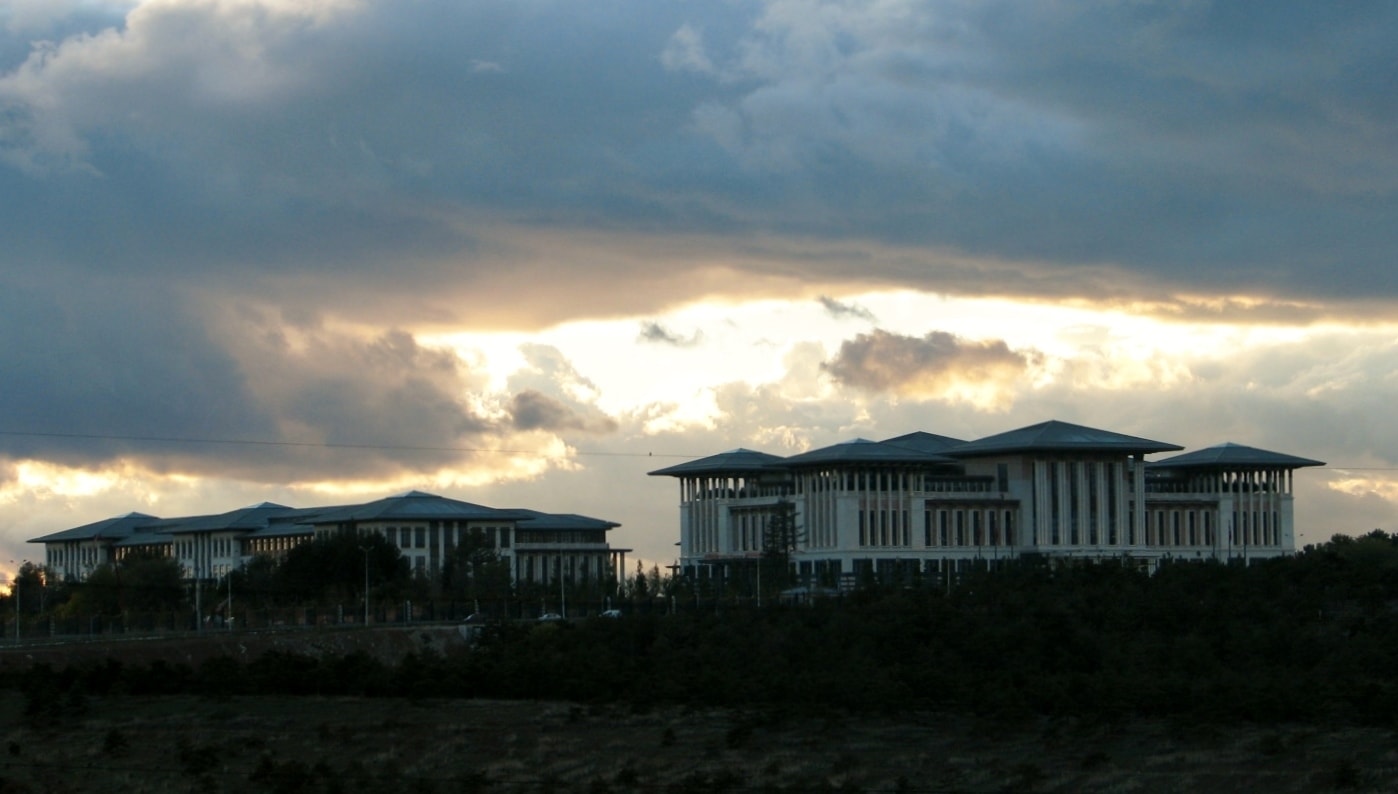
His economic policies at first helped to build a strong economy. Unfortunately corruption kicked in as his cronies lined their pockets, eventually distorting the Turkish economy. And it looked like nothing would stop them. Several wild schemes and pharhaonic projects heated the economy to a boiling point. Notably, Erdogan built an absurdly large presidential palace in Ankara, a Turkish Versailles.
The construction industry bubble will eventually burst. With a mounting foreign debt and current account deficit, the country, many economists argue, is already in recession.
Relying on foreign investments to boost the economy is a risky game as Burkhardt Varnholt, deputy global chief investment officer at Credit Suisse told Bloomberg:
Erdogan is facing a weakening economy, and possibly, a day of reckoning once the patriotic ardor he is now busy pumping up dies down. When inflation and economic pain start setting in, his voter base may wake up and grow tired of his nationalistic defiance.
However, Erdogan is not going to give up his nationalistic stance any time soon and is unlikely to agree to returning the American pastor. After all, if the economy collapses, it will be useful to use the U.S. as a bogeyman.
The real risk for Turkey is that it might turn into a new Venezuela, where President Maduro regularly blames America for its economic woes. Venezuela and Turkey are in the hands of dictators that won’t give up one inch of power while the economy collapses around them.
The Lira crisis is rocking emerging markets but current bets are that they’ll survive it, no need for panic. Europe could get hurt too, but Europe can probably take it. The Greek meltdown was much larger, involving more banks with greater exposure. It certainly caused immense pain to Greek citizens but Europe, in the end, didn’t budge. What happened was that years of economic growth were lost; Europe was several years behind the US in getting out of the 2008 recession.
As to America, a spat with Turkey isn’t likely to cause much economic pain. The problem is political. For the U.S., losing a major ally in the Middle East looks singularly foolish.
Update (15 August 2018): U.S.-Turkey Relations Set to Get Worse: A Threat to NATO?
Trump has just signed into law a defense policy bill that will hold up the transfer to Turkey of 100 F-35 fighter jets, deepening the rift between the two countries. Turkey had been set to take possession of the planes over the next decade, making it the world’s third largest operator of F-35 fighter jets.
There are, however, problems for the U.S. Some key components of the plane are manufactured in Turkey and the U.S. Defense Department will have to find alternative suppliers, a process that can take up to two years. Also the main European hub for repair of the F-35 engines is in Turkey.
Furthermore, to complicate matters, the F-35 fighter sale to Turkey had always been controversial because Turkey also planned to buy the Russian-built S-400 missile system. American officials viewed integration of the S-400 with the F-35 and NATO air defenses as problematic, as it could compromise U.S. and allied military secrets.
The worsening of U.S.-Turkey relations could be a threat to NATO as Turkey is a cornerstone of the alliance. Incirlik Air Base in southern Turkey is a key launching pad for military operations in the Middle East, particularly against the Islamic State. And it is also home to a U.S. stockpile of B61 nuclear bombs, a key component in the nuclear deterrence strategy to protect Europe. Finally, Turkey is a major partner in rebuilding Syria alongside the United States, against Russia and Iran. But for how long?