On Wednesday, the U.S Supreme Court temporarily revived a Trump-era regulations set to fast track oil and gas projects by limiting the power of states and Native American tribes ability to enforce the Clean Water Act — a major piece of legislation that protects water from pollution caused by pipelines and other activities like fracking.
This is an essential piece of the legislation needed to protect human health, as water quality must be maintained free of the dangerous contaminants that seep into the soil and hence drinking water.
Here’s what happened. After a 5-4 split, the Supreme Court justices agreed to halt a lower court judge’s order to throw out the Trump-era rule.
The regulation is part of an application filed on an emergency docket by Republican-led states — Louisiana, Arkansas, Mississippi, Missouri, Montana, West Virginia, Wyoming and Texas — and industry groups with interests in maintaining their pollution-causing energy projects.
To arrive at this surprise decision, the Supreme Court used the “emergency docket”— often called a “shadow docket” as it allows cases to be decided with minimal briefing, no arguments and no explanation. The recent ruling was no exception and can be seen as very concerning with the lack of transparency and impartiality the high court displays.
How effective was the Clean Water Act (CWA)?
The CWA was first enacted in 1948 when it was known as the Federal Water Pollution Control Act. The turning point for the act was in 1972, when it was significantly reorganized and became known as the Clean Water Act.
Since 1972, the CWA has set standards for water quality the energy industry must abide by when concerning wastewater discharges, point-source pollution (discharge from factories, sewers) and problems like oil spills, toxic chemical spills and fracking.
One example of the effectiveness of the CWA is the act’s discharge permit program called the National Pollutant Discharge Elimination System. The NPDES sets standards industries must abide by, including forcing companies to adhere to the Environmental Protection Agency’s wastewater treatment plants guidelines for water quality and the acquiring of permits to discharge waste.
Essentially, the Clean Water Act is in place to protect the public from polluted water.
According to the National Resource Defense Council in 2017, the CWA has enforced industry-specific discharge standards that prevent more than 700 billion pounds of toxic pollutants every year from being dumped into the nation’s water.
Despite its projected success, a recent report from the Environmental Integrity Project found that half of US waters are too polluted to swim, fish and drink from.
This rise in pollution can be traced from what the Clean Water Act does not have polluting industries accounting for: so-called non-point sources. Non-point sources include the indirect discharge of polluted run-off from fields, lawns, septic tanks and abandoned mines.
Instead of the act enforcing non-point sources, the CWA leaves it up to the states to enforce these non-direct pollutants, which oftentimes do not get addressed by those states already unwilling to enforce the CWA.
Now, these non-point sources are the leader of water pollution in the U.S.
As the act comes up on its 50th Anniversary, alongside the need to expand the rules of the CWA, many are saying the act needs to be reformed as the costs of the CWA outweigh the actual benefits.
According to UC Berkeley News in 2018, since the CWA’s inception, $650 billion have been spent through grants from the federal government to build treatment plants and repair existing facilities.
Moreover, the EPA found that on average the measured economic benefits of the CWA are less than half of the cost to implement them.
Yet, even though the CWA has its flaws, it is the only piece of legislation that prevents industries from dumping dangerous and toxic materials into the waterways the US depends on.
Reform, not restrictions
As the Biden Administration takes steps to enforce their climate agenda, part of this plan is to rewrite the CWA. Already, work on the revision has commenced, but the rule would not be ready for enforcement until 2023 — leaving the Supreme Court’s recent anti-CWA regulation in place until then.
The emergency docket to install restrictions upon the Clean Water Act is temporary, but this leaves roughly a year for industries to benefit from the roll back.
During the hearing, the court’s three liberal justices and Chief John Roberts dissented. The court’s other conservative judges, three being nominated by Trump, approved to reinstate the regulation.
In reaction to the passing of the emergency docket, Justice Elena Kagan wrote that the group of states and industry groups which had asked for the lower court ruling to be put on hold and the high court to pass an emergency ruling was not a justifiable emergency.
Kagan and her colleagues stated the group had not identified a “single project that a State has obstructed” in the months since the judge’s decision and thus they “(rendered) the Courts emergency docket not for emergencies” — the industries being in no immediate danger in regards to what the Clean Water Act imposes.
On the contrary, Louisiana Attorney General Jeff Landry, the American Petroleum Institute, the Interstate National Gas Association of America and the National Hydropower Association praised the Supreme Court’s decision stating the regulation will help energy projects move forward.
It seems clear that at a time when the Biden Administration is to reform the Clean Water Act to be more successful, Republican-led states and industry groups are doing everything they can to prevent more intense regulation — which would make it harder for them to acquire permits and get away with illegal dumping.
The recent passing of the emergency docket to bring back the Trump-era regulation whilst the Biden Administration reforms the current CWA stands as a sign of the division amongst Republicans and Democrats to actually enforce an act that cleans American waterways. Hopefully, the regulation is temporary as stated, as it is extremely important for the already extremely polluted waterways in America to have an effective CWA in place.
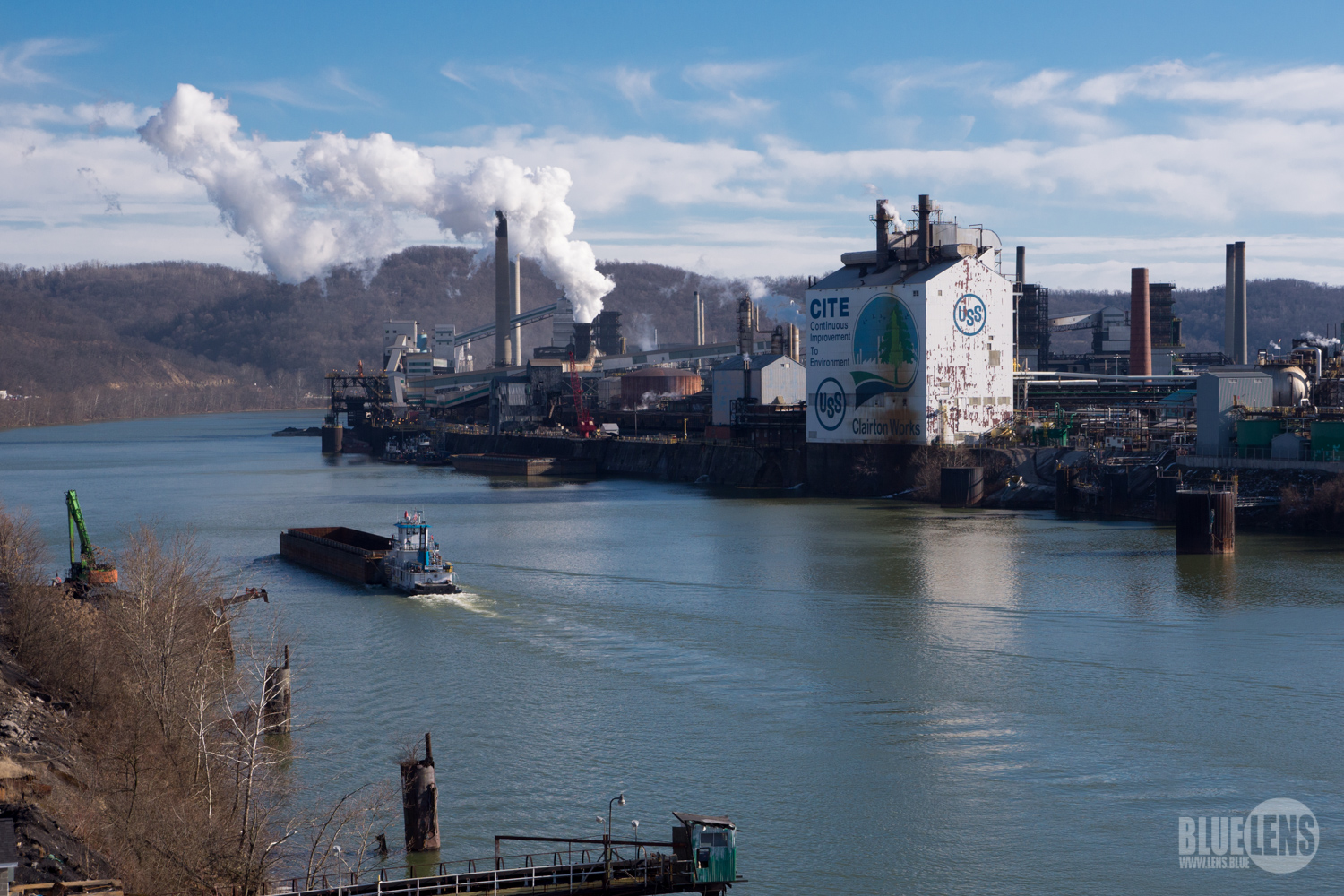
Editor’s Note: The opinions expressed here by Impakter.com columnists are their own, not those of Impakter.com — In the Featured Photo: Clairton Coke Works Factory on February 2, 2017. Source: Mark Dixon, Flickr.