
Top logistics software development companies in 2026 help carriers, 3PLs, and shippers stay competitive with real‑time visibility, automation, and data‑driven decisions. This article walks through key players, selection criteria, and trends so you can confidently choose a partner for your next logistics product and the logistics software development services behind it.
Key Criteria for Choosing a Logistics Software Development Company
When evaluating vendors, focus less on generic “custom software development” claims and more on domain‑specific capabilities. Below are practical criteria logistics leaders use in 2026 to shortlist technology partners.
- Domain focus in logistics and transportation: Experience with TMS, WMS, yard, and last‑mile solutions, plus understanding of freight, 3PL, and carrier networks.
- Proven solutions: Case studies covering fleet management, real‑time tracking, multi‑stop routing, and cross‑border or multimodal operations.
- Tech stack and architecture: Ability to deliver cloud‑native, API‑first, and event‑driven systems that integrate with your existing ERPs and carrier platforms.
- Data and AI readiness: Experience with telematics, IoT sensors, predictive analytics, and optimization algorithms, not only basic CRUD systems.
- Security and compliance: Knowledge of data protection, regional privacy regulations, and industry‑specific requirements for transportation and warehousing.
A good rule of thumb is to ask for specific logistics case studies, including before/after KPIs like reduction in delivery time, improved warehouse accuracy, or better fleet utilization.
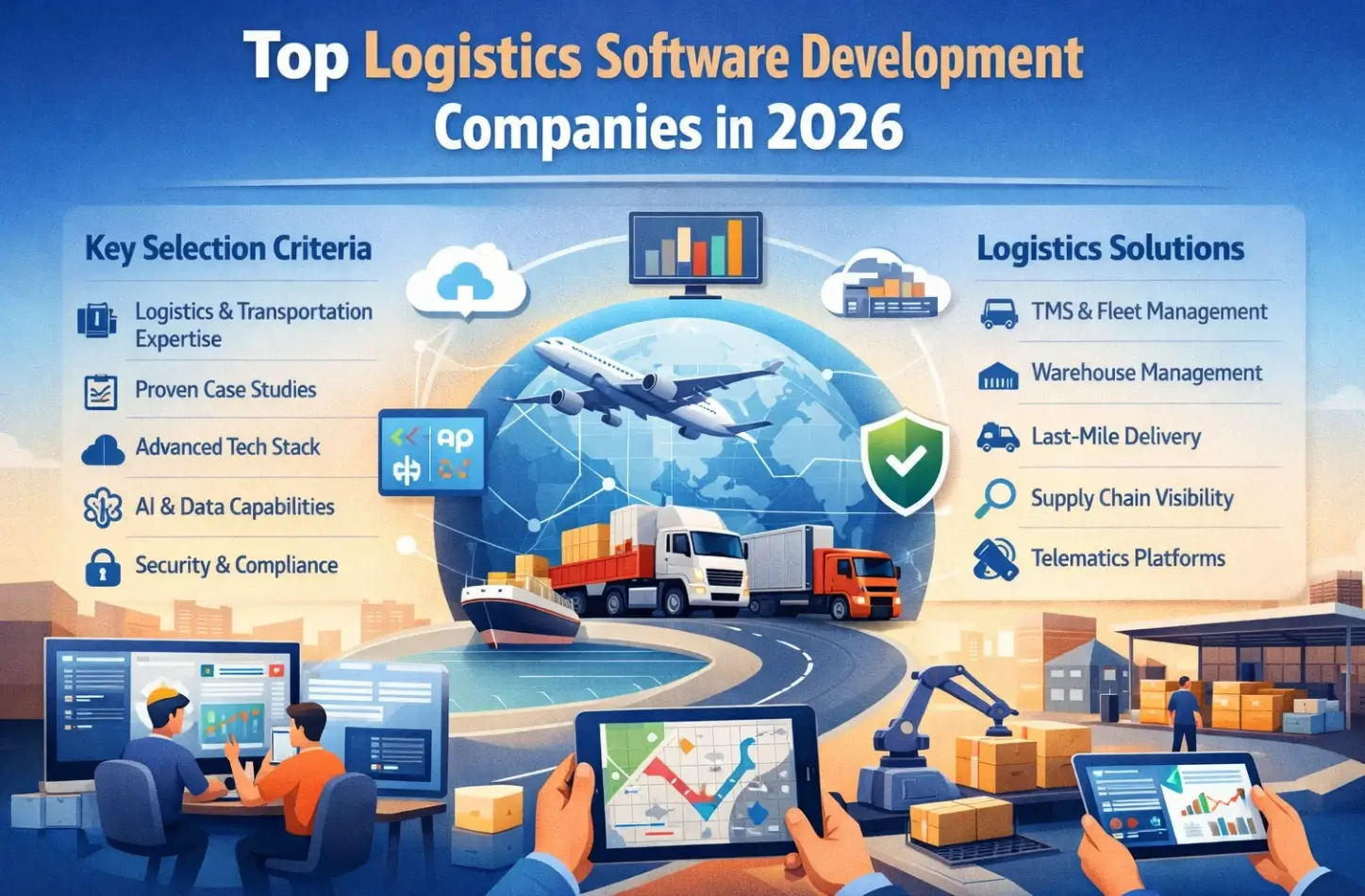
Overview of Top Logistics Software Development Companies in 2026
Industry rankings in 2026 highlight several groups of strong logistics software development partners around the world. Below is a snapshot from recent “top logistics software development companies” lists to give you a starting point for research.
Selected leaders and their focus
| Company | Region / HQ | Logistics focus areas | Notable strengths |
|---|---|---|---|
| Mind Studios | Eastern Europe (logistics focus) | Custom TMS/WMS, last‑mile delivery, fleet and warehouse tech. | Deep logistics domain expertise, full‑cycle delivery. |
| COAX Software | Ukraine (serves global markets) | Logistics, transportation, travel platforms, fleet systems. | End‑to‑end development, AI‑driven solutions. |
| Stfalcon | Estonia / Eastern Europe | AI‑powered logistics and transportation software. | 364+ projects delivered, 99% success rate. |
| Sigma Software | Sweden, global presence. | Custom logistics and supply chain integration. | Broad tech stack (.NET, AWS, NoSQL). |
| Innowise | Poland, global delivery. | TMS, WMS, fleet telemetry, last‑mile platforms. | AI routing, real‑time GPS, EDI/integration expertise. |
| Computools | Eastern Europe, global clients. | Custom logistics platforms, transportation and warehouse systems. | 20+ logistics projects, 400+ projects overall. |
| ELEKS | Europe / North America. | Fleet management, transportation planning, warehouse automation. | Strong analytics and supply chain transparency. |
| ScienceSoft | USA / global. | Logistics management, AI route optimization, delivery tracking. | 30+ years of software experience. |
Types of Logistics Software Solutions You Can Build
Before you choose a development partner, you need a clear understanding of what type of logistics software you actually need. In 2026, companies most often invest in several key categories of solutions.
- Transportation Management Systems (TMS). These systems help plan routes, manage carriers, calculate rates, analyze trip profitability, and automate transportation paperwork.
- Warehouse Management Systems (WMS). They cover receiving, storage, picking, packing, and shipping, and also work with barcodes, RFID, and integration with warehouse equipment.
- Last‑mile delivery platforms. These focus on the final leg of delivery: assigning orders to couriers, optimizing multi‑stop routes, providing ETAs for customers, and sending push notifications.
- Fleet and telematics platforms. They enable vehicle monitoring, fuel consumption control, breakdown prevention, maintenance planning, and analysis of fleet utilization.
- Supply chain visibility solutions. These aggregate data from carriers, warehouses, ports, and marketplaces to show where a shipment is at any given moment and when it will arrive.
Clearly defining which of these building blocks you need will help you quickly filter out vendors who “do everything for everyone” and focus on teams with truly relevant experience.
Team member of a logistics software development services company looking at his screen with a tablet in his right hand and typing with his left hand.