The Spark
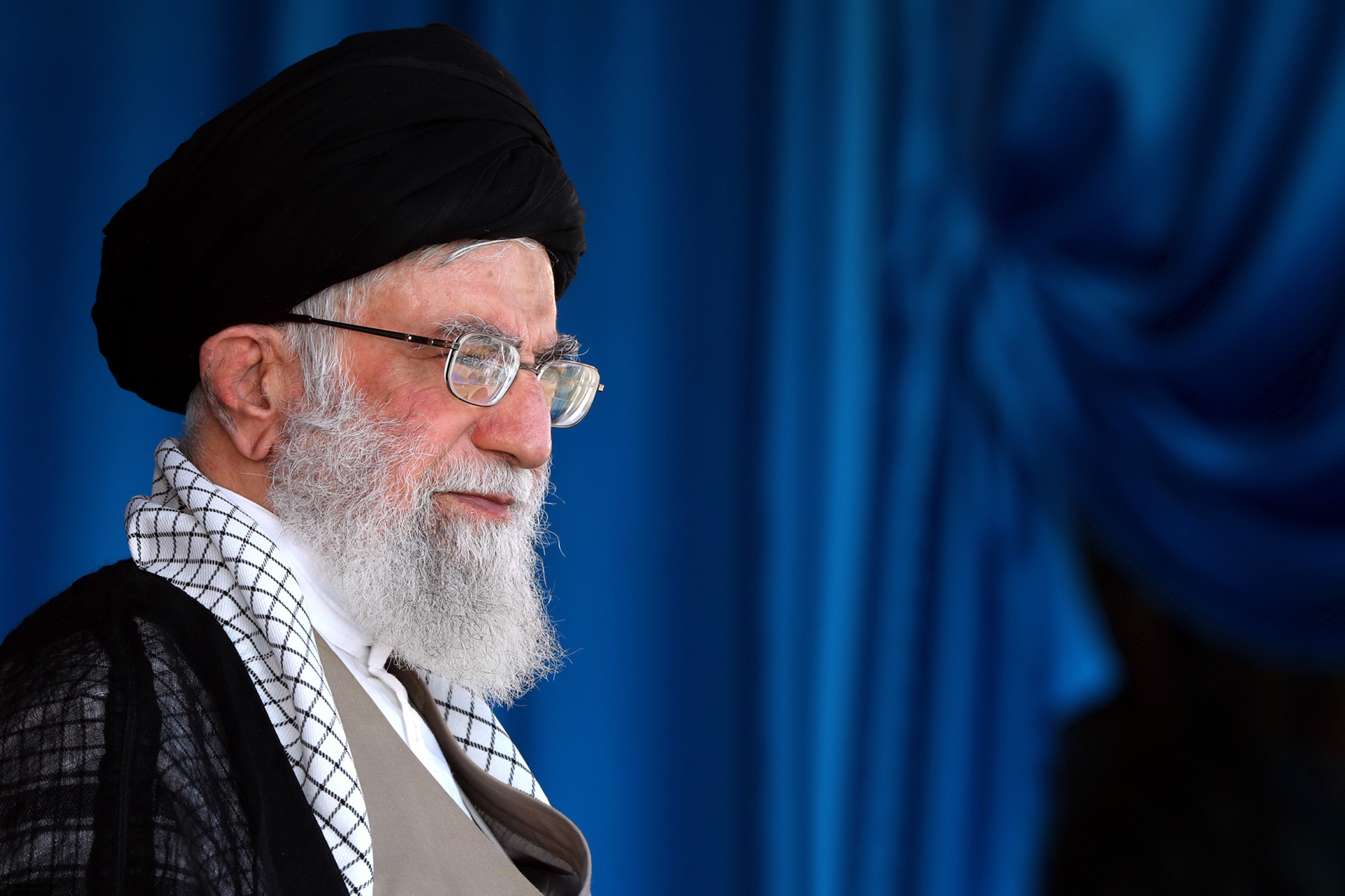
The world held its breath in the final days of February 2026. What began as a simmer of geopolitical tension, a familiar rhythm of threats and counter-threats between Washington and Tehran, suddenly boiled over. On February 28, the quiet of the pre-dawn hours was shattered by the roar of jet engines and the percussive impact of precision-guided munitions. A joint US–Israeli military operation, long the subject of speculative war games, became a brutal reality. The primary target was not just military infrastructure, but the very heart of the Iranian regime: Supreme Leader Ayatollah Ali Khamenei, who was killed in a strike on his compound.
Iran’s response was not a calculated diplomatic maneuver, but a furious, multi-front retaliation. A storm of missiles and drones rained down on US military bases and allied assets across the Middle East, from the gleaming skyscrapers of Dubai to the desert outposts of Jordan. But the most significant act of defiance was aimed at the global economy’s jugular: the Strait of Hormuz. As Iranian gunboats swarmed the narrow channel and tankers smoldered off the coast of Oman, a stark message was sent to the world: if Iran burns, the global economy will burn with it.
This is the story of how a regional conflict became a global crisis, how the machinery of international commerce shuddered to a halt, and how the world found itself staring into the abyss of a full-blown energy catastrophe.
The World’s Most Dangerous Chokepoint
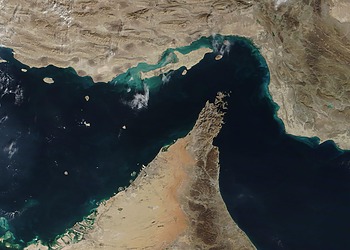
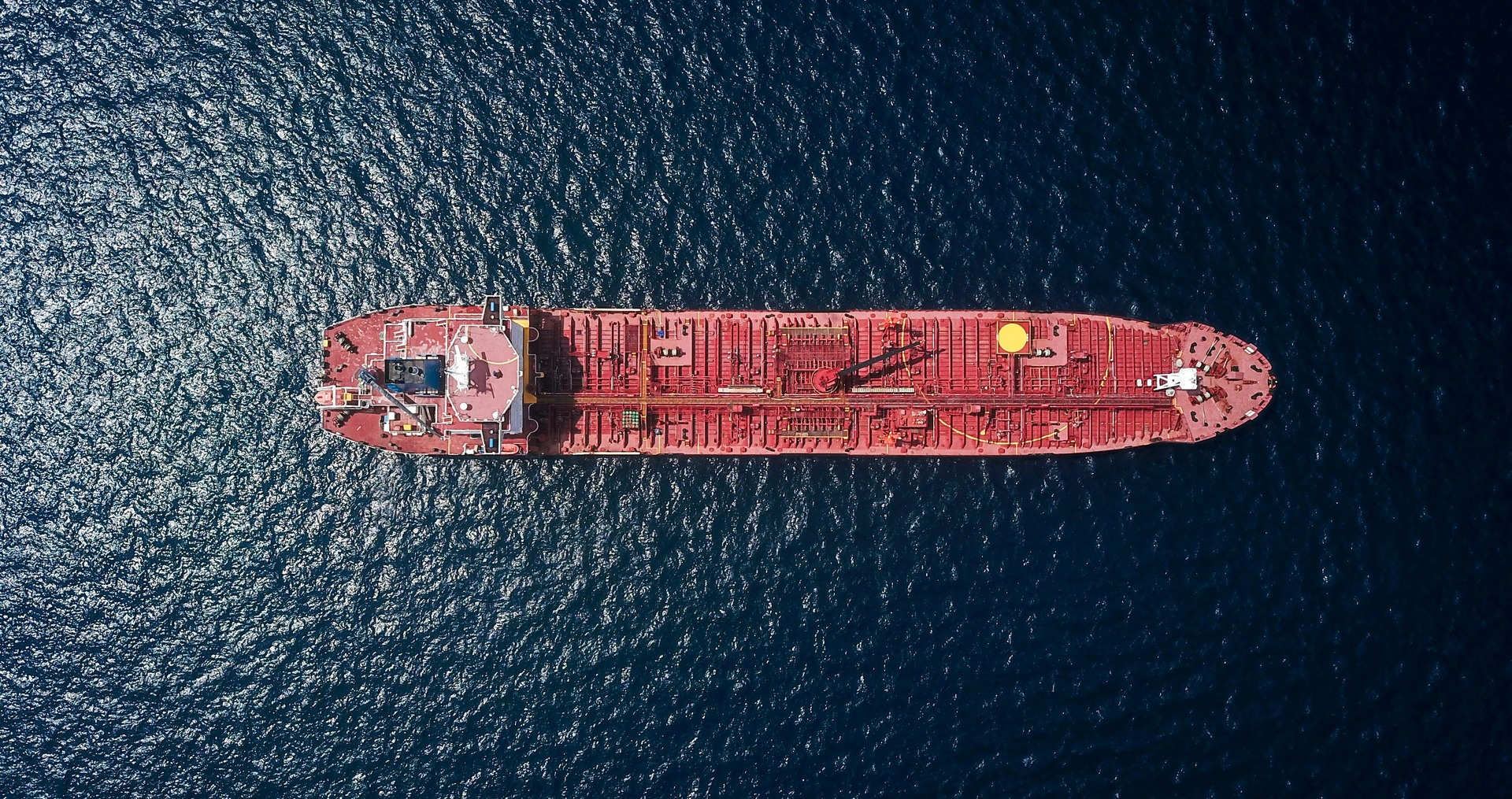
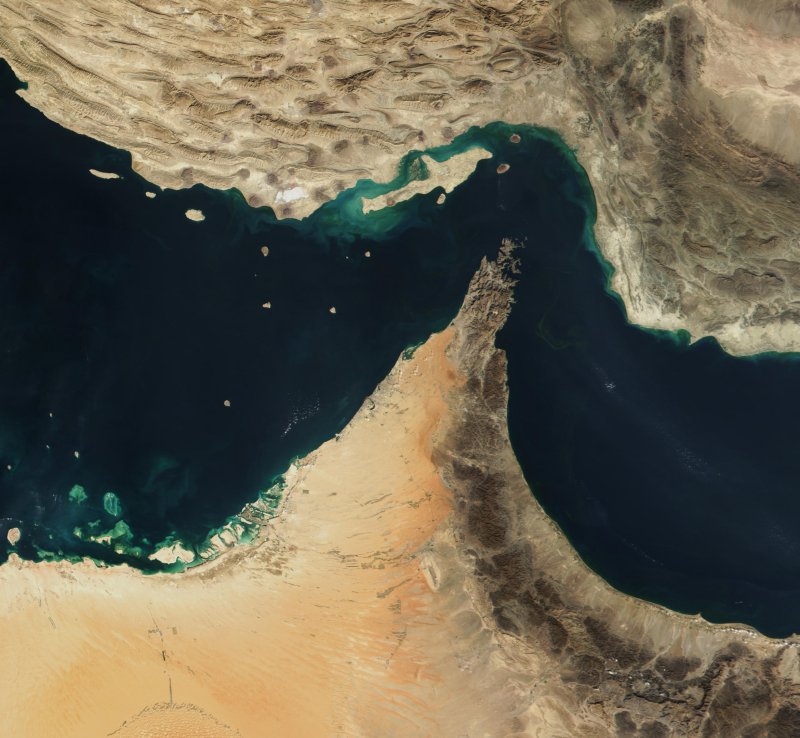
For decades, the Strait of Hormuz has been a line in the sand, a geopolitical tripwire of immense consequence. It is more than just a shipping lane; it is the aorta of the global energy system. Through this sliver of water, just 21 miles wide at its narrowest point, flows the lifeblood of modern civilization: nearly 20 million barrels of oil every single day, a staggering one-fifth of the world’s total consumption. It is the main artery for the oil-rich monarchies of Saudi Arabia, the UAE, and Iraq, and the sole export route for Qatar’s massive liquefied natural gas (LNG) facilities, which quench about 20% of the world’s LNG thirst.
To stand on the shores of Oman’s Musandam Peninsula is to witness a silent, ceaseless parade of supertankers, each a floating behemoth carrying a fortune in black gold. But this vital procession has always been shadowed by the proximity of Iran, whose coastline dominates the northern edge of the strait. The vulnerability of this chokepoint was never a secret, but it took the events of late February to transform a theoretical risk into a clear and present danger.
Panic on the Trading Floors
The first tremors of the crisis were felt not on the battlefield, but on the world’s trading floors. As news of the strikes flashed across terminal screens, the price of Brent crude, the global oil benchmark, exploded. Having hovered around a comfortable $61 per barrel at the close of 2025, it rocketed past $80 in a matter of hours, a price spike not seen in over a year. Traders, their faces illuminated by the green and red glow of market data, began pricing in a new reality. According to analysts at Goldman Sachs, a hefty $14 “fear premium” was instantly baked into every barrel of oil, a stark financial measure of the world’s anxiety.
But the real drama was unfolding on the high seas. In the maritime operations rooms of London, Singapore, and Houston, a terrifying new reality was setting in. With Iran declaring the strait a no-go zone and its proxies launching attacks, the world’s largest shipping companies faced an impossible choice. The risk was too high. One by one, the giants of the sea — Maersk, Hapag-Lloyd, CMA CGM — announced they were suspending all transits. War-risk insurance, the financial backstop for global shipping, became prohibitively expensive overnight, effectively closing the strait more completely than any naval blockade could. More than 150 tankers, laden with oil and gas, dropped anchor in the Gulf of Oman, their crews waiting in a state of suspended animation, a floating traffic jam of unprecedented scale.
“Insurance withdrawal is doing the work that physical blockade has not,” one Kpler analyst grimly observed. “The outcome for cargo flow is largely the same.”
| Metric | Pre-Conflict (Approx.) | Post-Conflict (Early March 2026) |
| Brent Crude Price | ~$61 / barrel | >$81 / barrel |
| Strait of Hormuz Traffic | ~20 mb/d oil, ~80 MTPA LNG | Near-zero |
| Geopolitical Risk Premium | Minimal | ~$14 / barrel (Goldman Sachs est.) |
| European Natural Gas (TTF) | ~€31 / MWh | >€70 / MWh (projected for 1-month closure) |
A World Adrift: The Supply Chain Nightmare
The paralysis of the Strait of Hormuz sent a shockwave that radiated far beyond the energy markets. It was a systemic seizure, a sudden blockage in the arteries of global trade. The first and most obvious casualty was the flow of refined fuels. The world’s airlines, already operating on razor-thin margins, watched in horror as the price of jet fuel soared, with nearly 20% of the global seaborne supply suddenly trapped.
Less visible, but no less critical, was the disruption to the global food supply. The petrochemical plants of the Persian Gulf are a primary source of the world’s fertilizers. With one-third of that trade now frozen, farmers from the plains of North America to the rice paddies of Southeast Asia faced the prospect of soaring costs and reduced yields, threatening to unleash a new wave of food inflation on a world still scarred by the shortages caused by the war in Ukraine.
The logistical nightmare was compounded by the renewed threat in the Red Sea. As if on cue, Yemen’s Houthi rebels, emboldened by their Iranian patrons, resumed their attacks on commercial shipping. This created a perfect storm: two of the world’s most critical maritime chokepoints were now effectively impassable. The world’s shipping fleet was forced into a massive, costly diversion, embarking on the long and arduous journey around Africa’s Cape of Good Hope. The weeks added to transit times and the astronomical rise in freight costs meant that everything from electronics to automobiles to clothing would be delayed, and their prices would inevitably rise.
The Economic Fallout and a World of Impossible Choices
In the corridors of power, from the White House to the European Central Bank, the crisis presented a series of impossible choices. The surge in energy prices was a textbook stagflationary shock, a toxic cocktail of rising inflation and slowing growth. While economists at institutions like Oxford Economics initially projected a relatively contained global GDP impact of just -0.1% from a short-term disruption, they warned that this was a best-case scenario. For energy-hungry emerging markets like India, which depends on the strait for half of its oil, the impact was immediate and severe, forcing the government to activate emergency contingency plans.
Central bankers in the West found themselves trapped. After a long and painful battle to bring post-pandemic inflation under control, they now faced a new inflationary wave. But raising interest rates further to combat it would risk tipping their economies into a deep recession. The pledges from OPEC+ to pump more oil, and from the International Energy Agency to release strategic reserves, offered little comfort. As Helima Croft of RBC Capital Markets pointed out, these were hollow promises if the oil couldn’t get to market. “The lion’s share of OPEC barrels in the region,” she wrote, “could essentially become stranded assets in an extended war scenario.”
Related Articles
Here is a list of articles selected by our Editorial Board that have gained significant interest from the public:
Three Futures for a World in Crisis
As the conflict entered its second week, the world stood at a crossroads, with three potential futures branching out before it.
The first path, and the most optimistic, is a swift de-escalation. In this scenario, back-channel diplomacy succeeds, a ceasefire is reached, and the guns fall silent. The conflict, though bloody, is short-lived. Shipping resumes, and oil prices retreat to the more comfortable territory of the mid-$60s. This is the world’s hope, but as the rhetoric from both sides remains fiery, it feels increasingly remote.
The second path is that of a grinding, protracted conflict. This seems the most likely trajectory. The war settles into a bloody stalemate lasting one to three months. Iran, unable to match the US in a conventional fight, wages a war of attrition, using its proxies and asymmetric tactics to keep the region on a knife’s edge. The Strait of Hormuz remains a high-risk zone, with only a trickle of traffic. Oil prices remain stubbornly high, in the $80–$100 per barrel range, and the global economy is slowly suffocated by sustained high energy costs.
The third path is the one that keeps strategists up at night: a full-blown regional war. The conflict spirals out of control, drawing in other nations. Iran, facing an existential threat, unleashes its full arsenal of disruptive capabilities, achieving a near-total and prolonged closure of the strait. In this nightmare scenario, oil prices would not just rise; they would skyrocket to well over $100 a barrel, perhaps even touching the once-unthinkable level of $150. The result would be a catastrophic global recession, widespread economic chaos, and a geopolitical realignment of historic proportions.
The Long Shadow of the Strait
The war of 2026 is a brutal lesson in the fragility of our interconnected world. It has exposed the fiction of energy independence and reminded us that the global economy remains profoundly dependent on the free flow of commerce through a handful of vulnerable waterways. The initial panic may have subsided into a tense watchfulness, but this is a fragile peace. The world’s economic stability is now hostage to the whims of a conflict thousands of miles away.
As we navigate this perilous new era, the world will be watching a few key indicators: the duration of the fighting, the status of the Strait of Hormuz, the actions of OPEC and the IEA, and, most critically, the political endgame in Iran. The crisis is a painful but necessary wake-up call, a stark reminder that in the 21st century, energy security and geopolitical security are two sides of the same coin. The long shadow of the Strait of Hormuz now falls across the entire global economy, and the world can only hope that a path back from the brink can be found.
Editor’s Note: The opinions expressed here by the authors are their own, not those of impakter.com — Cover Photo Credit: Shaah Shahidh.