
Organizations today face a common challenge: their workflows are spread across too many tools. Teams use one system for chat, another for documents, another for scheduling, and yet another for approvals. This fragmentation slows progress, increases the risk of errors, and makes it difficult for leaders to get a clear view of performance. To overcome these barriers, businesses are adopting project management tools that bring all essential functions into a single connected platform.
The impact of consolidation goes beyond convenience. When workflows are unified, communication moves directly into action, data supports decision-making in real time, and accountability is reinforced at every step. Instead of wasting time on coordination, teams focus on delivery, creating measurable gains in speed, clarity, and performance.
Lark Base: Turning plans into trackable progress
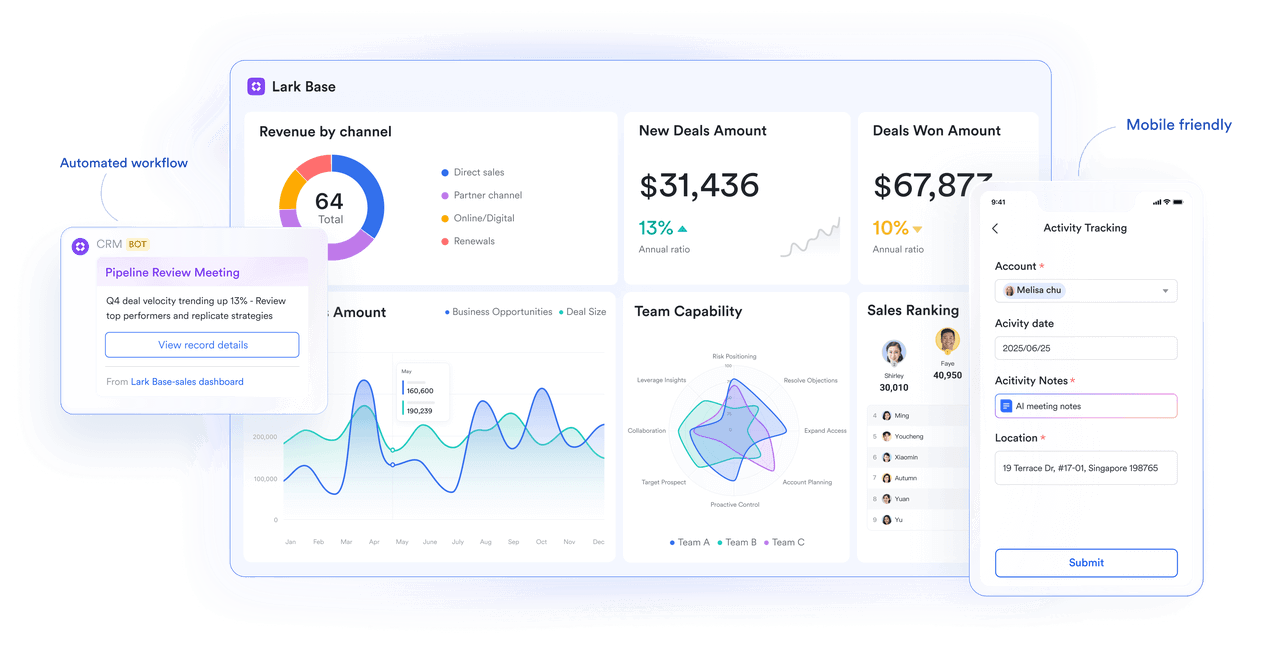
Every effective system starts with dependable access to well-structured information. Lark Base provides that backbone by bringing together project data, customer records, and decision histories in one organized workspace. With its no-code flexibility, Base can help you build a CRM app, with which teams keep workflows tied to accurate and accessible information.
Instead of scattering updates across spreadsheets or disconnected tools, teams create dynamic databases that link milestones to customers, approvals to projects, and updates to real-time dashboards. Managers gain faster clarity for decision-making, while employees know their work contributes directly to shared goals. By turning fragmented inputs into a single source of truth, Base reduces silos and drives execution forward.
Lark Messenger: Communication connected to outcomes
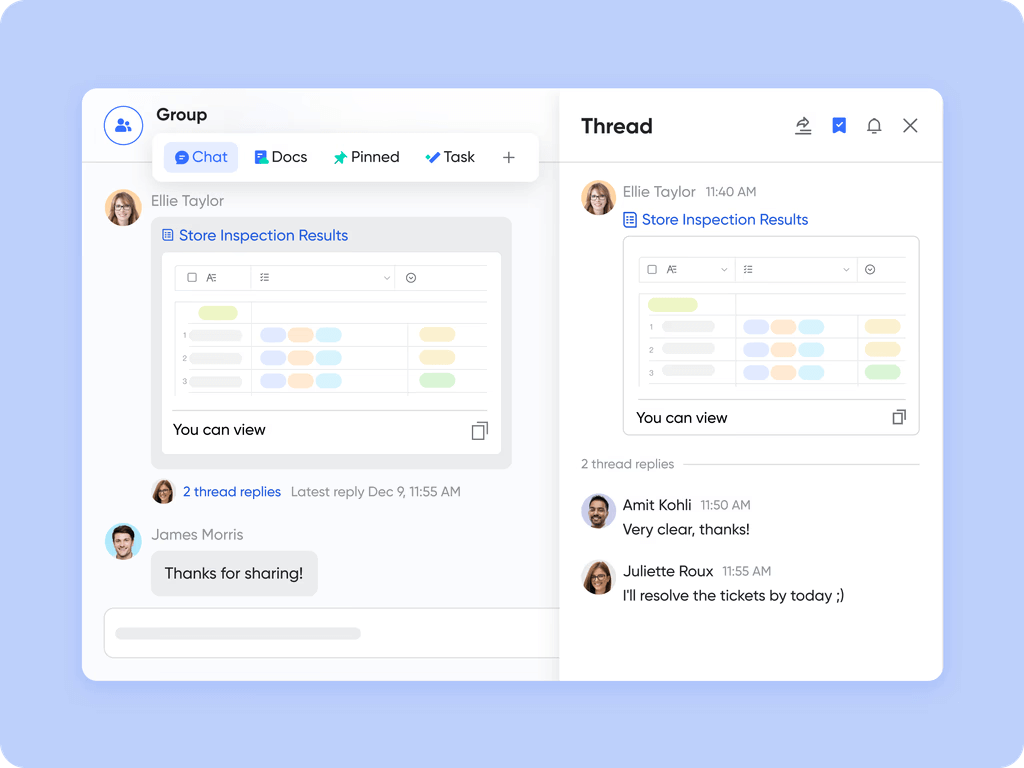
In fragmented workflows, communication can become disjointed in the shift from email, to chat apps, to task trackers. Lark Messenger solves this problem by adding conversations to the work flow. Messenger is not simply another chat app, it makes sure conversations are converted into results and linked to accountability and records.
Teams can exchange updates, deliberate on challenges and make decision, in real time, knowing their conversations are being saved for their decisionmaking process. Files and links are being shared in the relevant context, and when members need to recall critical decisions in future we have pinned messages. The persistent history means that when team members change, they will never lose the rationale of decisions made historically. Messenger, by embedding communication into the system where tasks and records are, means teams have not wasted time due to disjointed dialogue.
Lark Sheets: Data driving consolidated decision-making
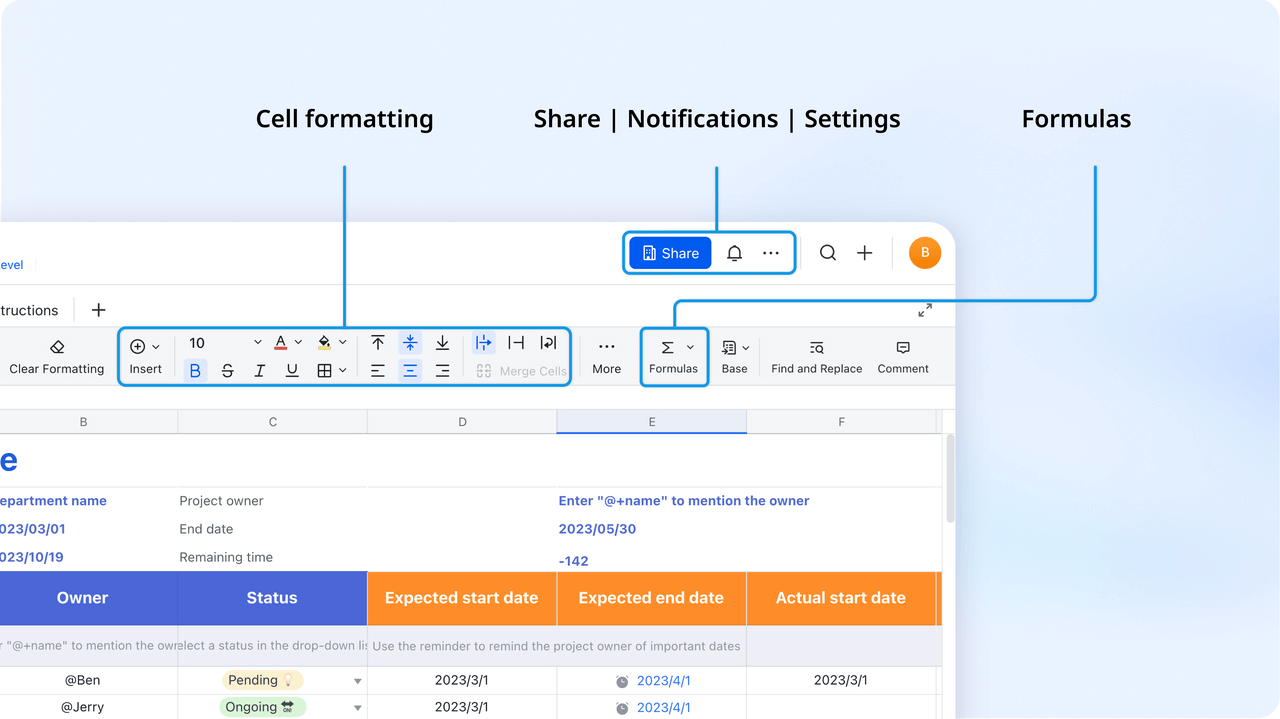
Data is at its most useful when it is available for when decisions need to be made. However, in fragmented systems, gathering this data often means pulling in numbers from multiple areas and platforms and reconciling them manually, which slows everyone down. Lark Sheets resolves this problem with live, real-time collaborative spreadsheets that keep data in sync with the workflow and updates it automatically.
Anything from project performance indicators to budgets or resource allocation can be recorded and tracked within Lark Sheets, giving a team the only shared single version of truth. Decision-makers will not spend more time waiting for a moment to look at static reports – As those metrics change, everyone will have the ability to look at the metrics live as they change. Charts and visual dashboards make the important and key insights more apparent, while auto-updated reporting saves effort and hours.
With Lark Sheets, you will create your entire data management methodology in one space, with each step in the decision-making process informed by accurate data and timelines that will align with execution.
Lark Meetings: Turning discussions into accountable actions
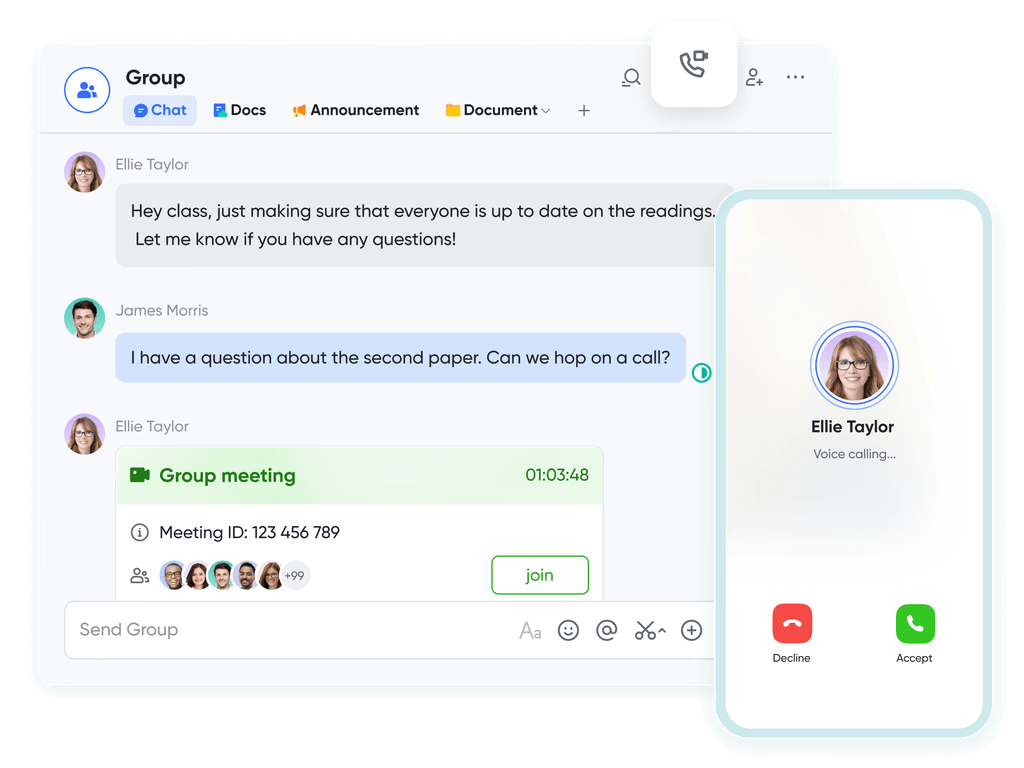
Meetings often highlight the weaknesses of fragmented workflows: decisions are discussed in one place, documented in another, and tracked in yet another. Lark Meetings addresses this by embedding communication and accountability directly into project workflows.
High-quality video and screen sharing allow teams to align quickly, while collaborative notes capture outcomes during the session. These notes remain connected to tasks and records, ensuring follow-up happens without delay. Recordings and replays provide continuity for absent participants, while action items flow directly into task tracking systems. By consolidating discussions with documentation and execution, Meetings ensures that time spent aligning directly strengthens delivery.
Lark Mail: Bridging external and internal workflows
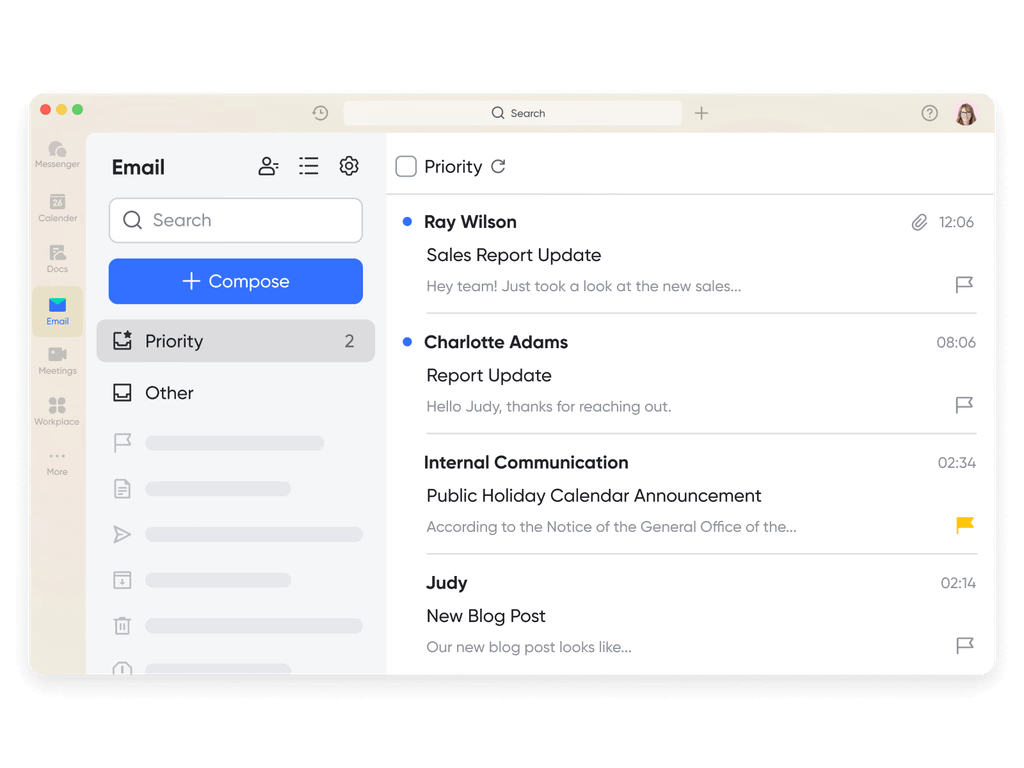
Work is continuous by nature. Each email from customers, partners, and regulators can influence managing a project, but when workflows become fragmented, organizations are siloed off from the communications used to facilitate their execution. The Lark Mail feature eliminates this siloe from external communications by integrating external correspondence in the same context as internal workflows.
Everyone on a project leverages shared inboxes to manage client or partner messaging together and utilize smart filters that highlight the most important requests. Lark Mail converts emails to tasks or associates an email with a record in Base, so that external contributions inform execution. The Lark Mail feature provides employees with everything they need to facilitate communication and take action within one flow, instead of switching back and forth between applications and context. Lark Mail allows mail to trigger continuity across all aspects of a project by removing the delays from managing the external and internal channels separately.
Lark Approval: Streamlining accountability with automated workflows
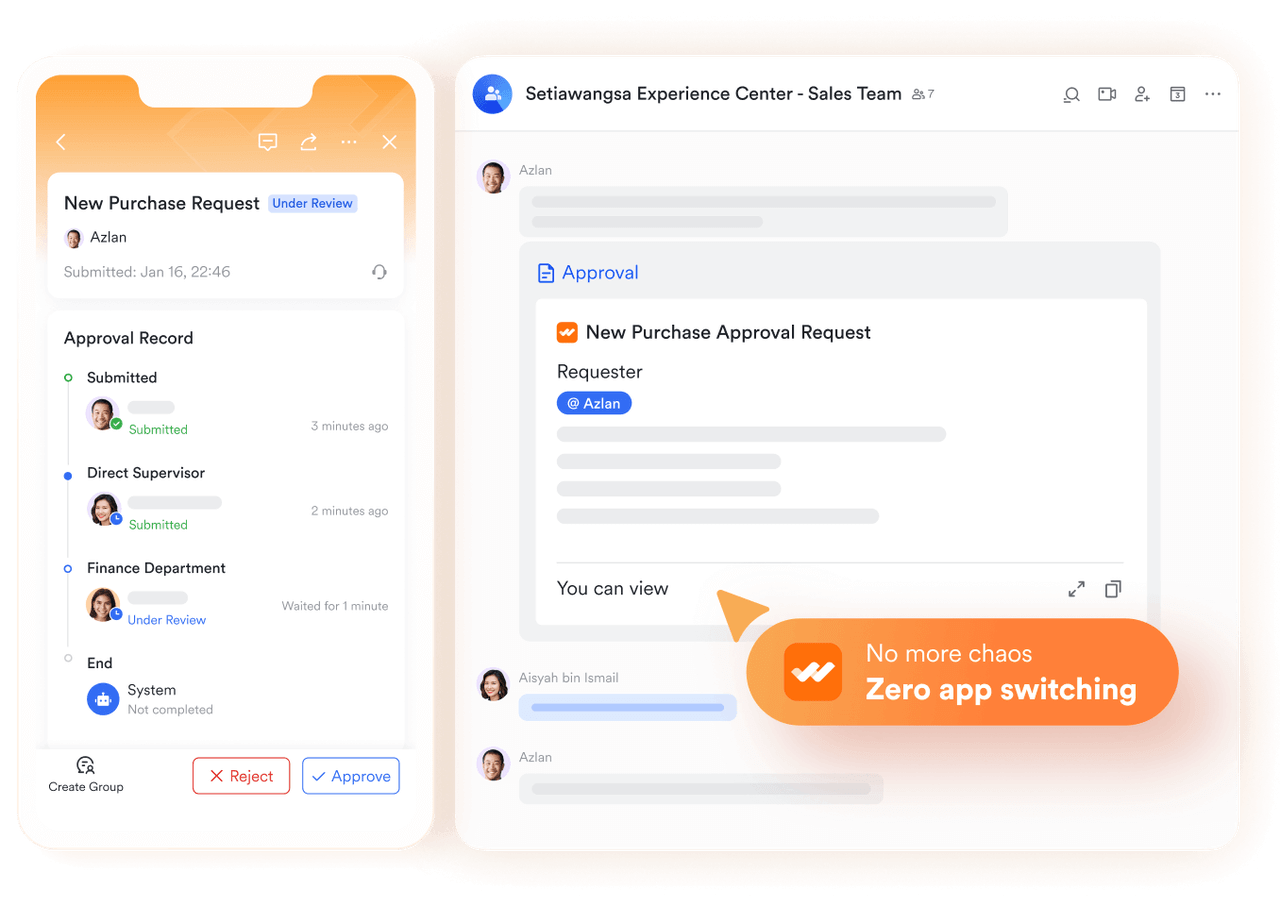
Approvals are one of the most common causes of project delays, particularly when workflows are scattered across systems. Lark Approval resolves this by consolidating approvals into a single structured process, where requests, sign-offs, and records remain visible to all stakeholders.
Employees submit requests in standardized formats that reduce confusion, while managers receive immediate notifications to review and act. The platform also supports an automated workflow that routes approvals to the right decision-makers instantly, eliminating delays caused by manual forwarding. Transparent logs provide accountability, while dashboards highlight pending items so bottlenecks can be resolved quickly. By embedding approvals into one platform, organizations prevent projects from stalling and reinforce accountability across the team.
Conclusion
The consequences of consolidating workflows into one platform are far-reaching. Base creates reliable data, Messenger moves communication into outputs, Sheets ties decisions with live metrics, Meetings translates discussions into actions, Mail connects our external and internal work, and Approvals clarifies accountability, creating a platform that seamlessly connects work.
Moving from disparate tools to a connected platform, organizations will experience speed, visibility and consistency. Teams spend less time reconciling systems, and more time thinking about results. Leaders have clarity in which to act decisively, and teams have confidence that every piece of the workflow is in sync. In times when there is a premium on efficiency and accountability in a successful economy, consolidating workflows on one platform gives businesses a significant competitive advantage.
Editor’s Note: The opinions expressed here by the authors are their own, not those of impakter.com — Cover Photo Credit: Knowledge Train