

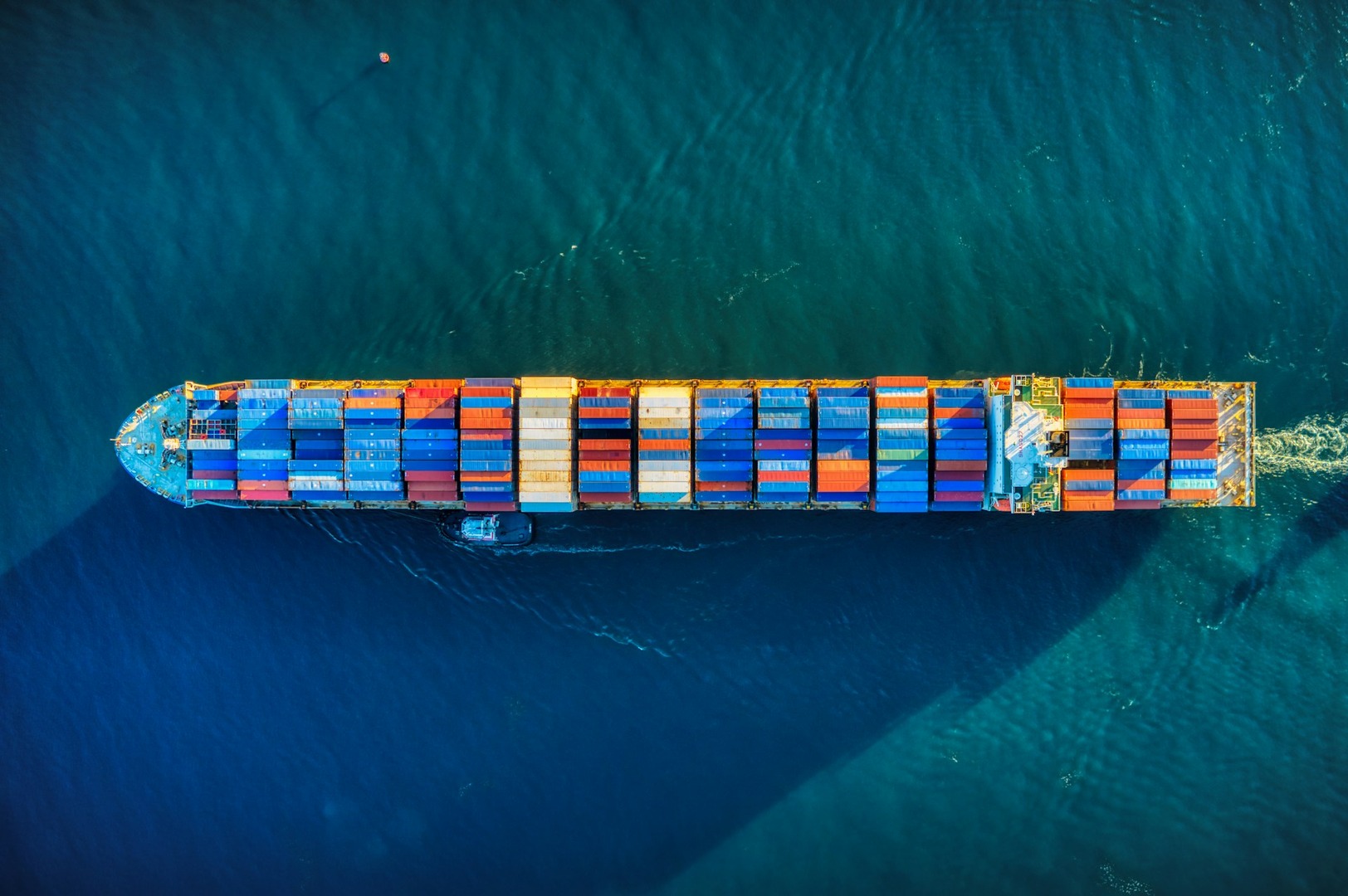
International shipping is a major source of air pollution. The sector accounts for around 3% of global carbon emissions, releasing 1,000 metric tonnes of CO2 into the atmosphere each year.
Last year, the International Maritime Organization (IMO) approved its Net-Zero Framework (NZF), outlining a path to decarbonization that could boost the uptake of zero-emissions fuels and technologies in the industry. In December, the IMO will vote on the NZF, which would make GHG pricing and emissions limits mandatory.
While no global standard has taken effect yet, the number of battery-equipped ships has grown worldwide. The Maritime Battery Forum reported that 2,052 battery-equipped ships are now in operation or on order. This new battery-powered fleet represents 2.4 GWh of capacity, enough to power 240,000 European households for a full day.
Founded in 2014, the Maritime Battery Forum (MBF) began as an “initiative by a group of Norwegian companies that wanted to collaborate and share knowledge and information on the best technology for the maritime industry,” says managing director Syb ten Cate Hoedemaker. “We have now grown to a global community of about 90 members, from battery manufacturers to system integrators, shipyards, shipowners, class societies, insurance companies, research institutes, basically any type of company that has some interest in electrification in the maritime industry.”
The MBF brings maritime experts together to discuss changing regulations and challenges, with the ultimate goal of developing solutions to lower the sector’s emissions. Impakter had the opportunity to speak with Hoedemaker and hear his perspective on the future of a battery-operated maritime industry.
The changing fleets
The MBF found that over 2,000 battery-equipped ships are either currently in operation or on order. The largest segment of battery-operated fleets are passenger ferries, accounting for 570 of the 2,052 battery-equipped ships. Other vessels include 313 offshore vessels, 265 cargo ships, 219 fishing boats, 149 workboats and more.
Hoedemaker spoke on this milestone, saying:
“By being able to show these numbers and make everyone aware of the large amount of battery-powered ships around the world, it’s helping people to realize that batteries are actually a feasible solution for all different types of ships.”
“A lot of people, when you talk about batteries in the maritime industry, think, ‘Oh, that’s only for small, short-range ferries,’ and those are the easiest ones to fully electrify. But it’s only a small portion of the maritime industry. What we’re showing with more than 2,000 ships globally is that it’s already happening, and it’s happening across all sectors in the maritime industry and in a lot of different ways,” he continued.
Hoedemaker mentioned the possibility of fully electric ships, with installations scaling up to 100 megawatt-hours per vessel, in a recent MBF press release. When asked what these installations would make possible, Hoedemaker said the most interesting sector for him is cargo.
“The example of the 100 megawatt-hour vessel: that’s going to be two container vessels that are going to sail between Oslo and Hamburg. They will have about 920-foot containers of cargo capacity, and they will be able to operate on that route fully electric.” The route between Oslo, Norway, and Hamburg, Germany, is about 533 nautical miles (986 km).
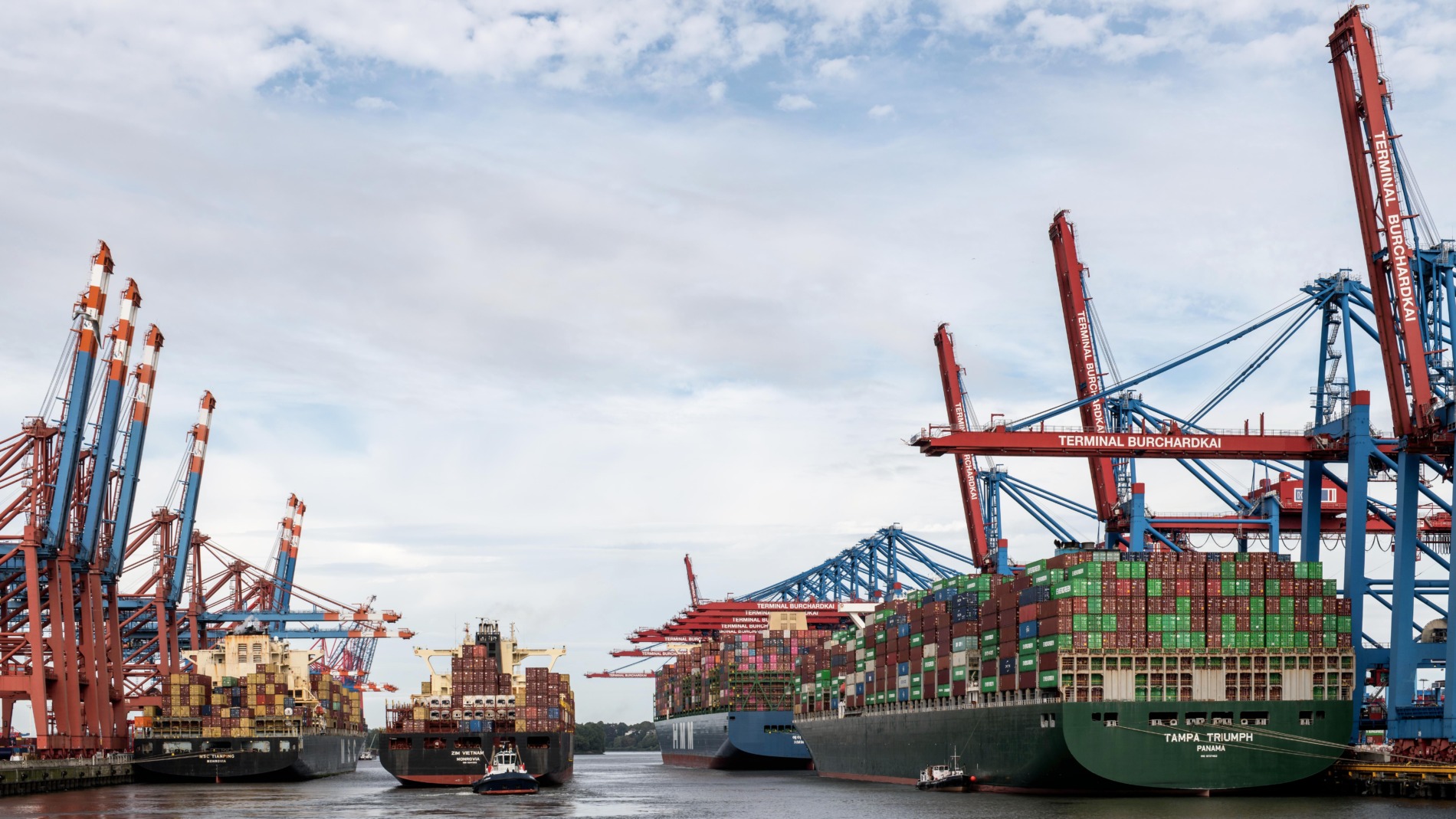
“The technology is already able to do more than that. Just looking at Europe, most of the coastal cargo vessels within Europe could be fully electrified. Similar [electrification] can be done in the Asia-Pacific, with Singapore as a base, going to places like Indonesia, Malaysia, the Philippines, and then up to Vietnam. On the other side of the world, for instance, between the U.S. and Canada, the technology is already there to fully electrify all the cargo being transported across the Great Lakes. Those are the types of ranges that, with the current technology, can be fully electrified already.”
The challenges of electrification
Some of the biggest challenges to electrifying the maritime sector are charging and port infrastructure.
“It is relatively easy to design and build a battery-powered ship. The challenge is how and where you are going to charge it.”
Hoedemaker mentioned charging in offshore wind farms as a current option for charging infrastructure. “If you have the availability to charge in your offshore wind farm, then it’s possible to electrify. That is a very exciting segment, but will be very much linked to further investments in offshore wind energy.”
While shore power has been around for a while, it does not have the capability to charge fully electric ships. “If you want to charge battery-powered vessels, you’re probably looking more into DC charging, and DC charging technology at that scale is still under development.”
Direct current (DC) charging is commonly known as fast charging. Unlike alternating current (AC) charging, which is prevalent in ports today, DC charging converts the alternating current from the power grid into direct current.
Getting this much-needed electricity to the ports is the biggest challenge. Hoedemaker pointed to Megawatt Charging Systems (MCS), high-powered charging systems typically used to charge electric trucks, which are being installed in ports. These charging systems, while promising, will need to power very large ships and require heavy-duty, multi-megawatt chargers.
“It’s also not just a maritime challenge. All industries and everything in the world is electrifying, and we’re all competing for that electricity with great congestion everywhere.”
Hoedemaker highlighted that AI data centers have been better at informing utilities how much power they need to run these centers. For the maritime industry, the needed capacity is still unclear.
“It’s all about which segments are going to electrify and where they are operating. Which ports need electricity?” He emphasized fluctuations in power demand. Some ships may just need a short recharge, while others might require 50 megawatts of charging capacity.
“Ports will have to become these integrated energy systems that can provide both ships, but also all the port equipment, industry, and land-based transportation with electricity.”
“The question now is who’s going to facilitate all this or who’s going to make sure that this is all happening in the right way, the right order and with the right priorities.”
When asked who should be funding these infrastructure upgrades, Hoedemaker speculated, “A lot of people look at ports and think ports should be the ones doing this. But there are a lot of different types of ports around the world. Some are very private operators, some public, some a bit of a mix. Some are very forward thinking and want to take the lead in electrifying their port. But others are more reluctant and just waiting until someone asks them to do an electrification project there.”
Last month, the MBF and the European onshore power supply association EOPSA published a paper called The Utility Trap, which called for more investment and a better alignment and understanding around what electrification truly means. The paper highlights the theory that organizations like the Maritime Battery Forum are forcing ports to transform into utility providers. Through raising awareness, the MBF hopes to support ports to build that capacity and encourage backing from policymakers and funding from investors.
Financing infrastructure upgrades is another challenge, especially with the small minority of battery-operated ships currently in operation. “If there’s just one ship or a couple of ships that require this infrastructure, every now and then, it will be difficult to make that business case.”
“Hybridization is, for a lot of ships, the way to go forward; to already become familiar with electrification of parts of the ship, while still keeping the flexibility of being able to bunker any type of fuel that you’re working with.”
Hybridization
While fully functional infrastructure for battery-powered ships is something to focus on for the future, the key now is hybridization.
“I think for quite some time, we’ll really see that hybrid is the preferred solution; maybe similar to what we see in the automotive industry. It helps people through this transition, giving them the flexibility of using different types of fuels.”
Related Articles
Here is a list of articles selected by our Editorial Board that have gained significant interest from the public:
Hybridization will not only alleviate stress on the electric grid, but it will give ship owners the ability to experiment with different fuels. Alternative fuels, such as hydrogen, methanol, ammonia and biofuels, while more sustainable, will be more expensive and have a lower energy density compared to traditional fuels. Batteries will help bridge the gap.
“Whatever [fuel] that you want to transition to, you want to use as little as possible. That’s where batteries come in handy. Together with other efficiency-increasing measures, batteries can help reduce the demand for any type of fuel, which will make it easier for people to implement different types of technologies.”
While hybrid ships might be the best option for the moment, “ship owners and ship designers have to think: how can we make our ship ready for the future when the future is a bit unclear to us?”
“What we’re seeing more and more is ships being designed with empty space in consideration for if they want to increase their battery capacity later, when a charging system might be available on their route or in the area where they’re operating.”
The future of the maritime industry
Hoedemaker is hopeful that the structure laid out in the Net-Zero Framework will strengthen confidence and lead to further investment and development in the sector. “A clear path forward would definitely help ship owners make the right decision. That is something that would help a lot within the industry.”
While we await the outcome of the vote in December, 2,000 battery-equipped ships are a push in the right direction for the maritime industry.
“The short sea coastal cargo ships, that is going to be the big game changer in electrification in the maritime industry. We already see a lot of them being hybridized, but now with battery prices decreasing and performance of batteries increasing, it is time to electrify those fully.”
Hoedemaker is positive about the future. “There’s a lot more that’s possible than what we are doing. So, plenty of room to increase the use of batteries in the maritime industry with the technology that we have today.”
Editor’s Note: The opinions expressed here by the authors are their own, not those of impakter.com — Cover Photo Credit: Venti Views.