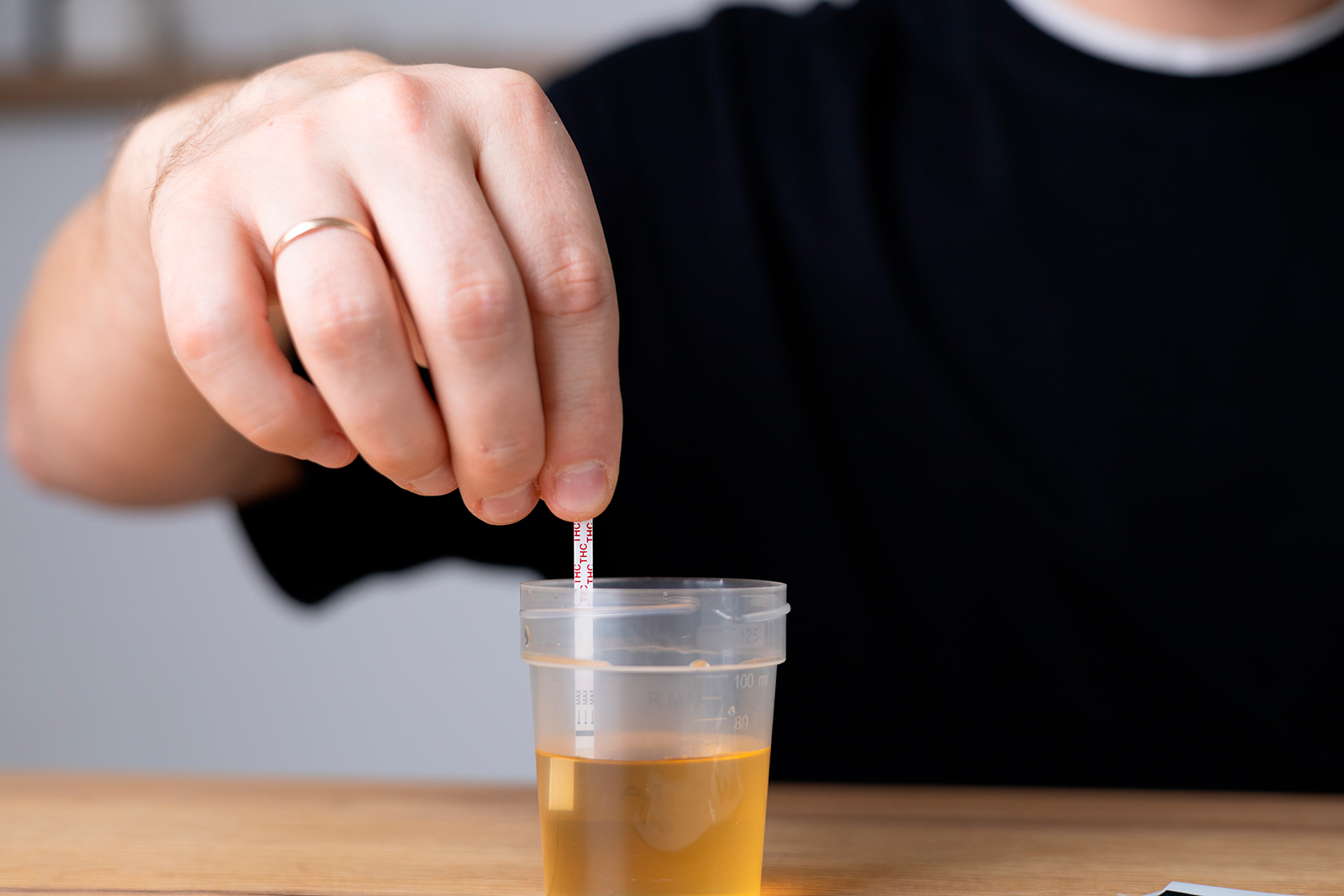
Whether you’re tracking your detox, want to know more about your status, or you have a drug test coming up at your workplace, testing for THC at home can be a practical way to monitor your status.
Modern medicine has come a long way with at-home testing accuracy, as well as the sole process of testing for THC at home. So, look at the essentials of THC testing at home and see how to do it properly, who needs it the most, and what to expect from the results.
What Is At-Home THC testing?
As the name suggests, we’re talking about THC drug testing, at your own home, at your leisure. When it comes to privacy, it’s the best way to check on the real state of things, without the hassle (or the anxiety) of going to a clinic.
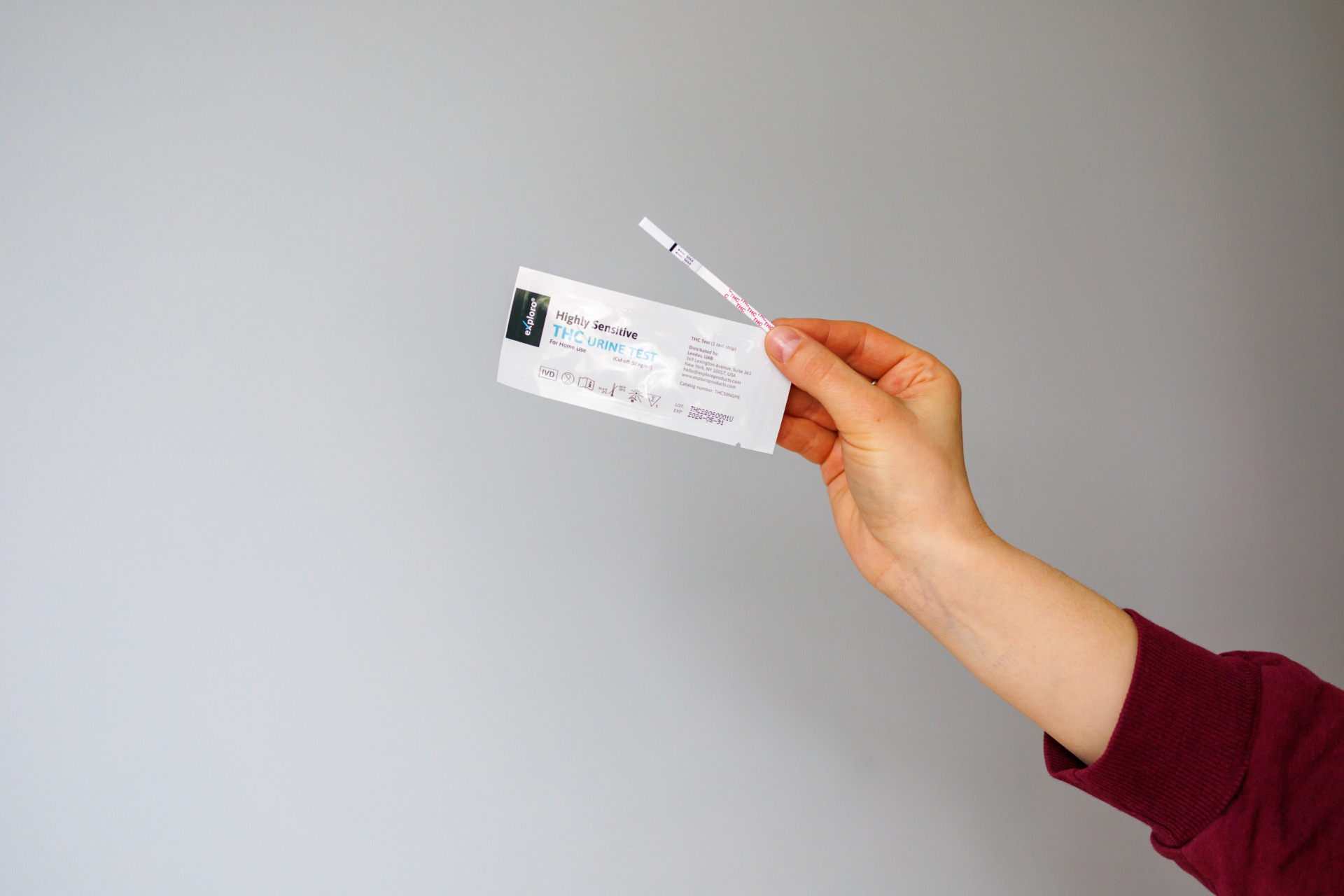
The standard method of testing for THC metabolites in your system at home is via THC urine test strips. This is an immunoassay type of test that detects metabolites from a urine sample that you collect on your own. The sample is collected into a clean cup (more on that later), and it takes a few minutes for the results to come in.
Immunoassay tests are also the core technology used as screening tests at the workplace, or during pre-employment drug testing.
Lastly, it’s important to note that at-home THC tests are of a qualitative nature. This means that the test can detect the presence or absence of THC metabolites, not the amount.
Who is this type of test best for?
There are several common reasons for testing for THC at home:
- Pre-employment or workplace drug testing preparation – think of the question “If I tested right now, would I pass?”
- Wellness and health self-checks – for people who use THC alongside medications, or checking on THC levels before surgery
- Abstinence and detox tracking – for former users or people on a tolerance break
- Legal self-monitoring – at-home testing is a nice way to have peace of mind for people on probation or parole
- Parental testing – young adults and teenagers can be tested in privacy, at home
Doing The Test
Now, let’s talk about the testing process itself. Before you get yourself a proper test, it’s always best practice to do some self-research. And that’s where this whole process begins.
-
Do some self-reflection
To get a better understanding of your habits, it’s best to do some research. To make things easier, try this THC detox calculator that will help you get a better look at how your body processes the metabolites. The calculator is for informational purposes only, and it will take into account different factors like:
- Your age, height, and weight
- Daily activity level
- Duration of use and usage frequency
- The method of THC consumption, as well as the dosage
- Other metabolic factors, like nicotine and alcohol use, and the quality of your diet
*Online calculators can provide estimates, but individual metabolism varies significantly.
-
Prepare
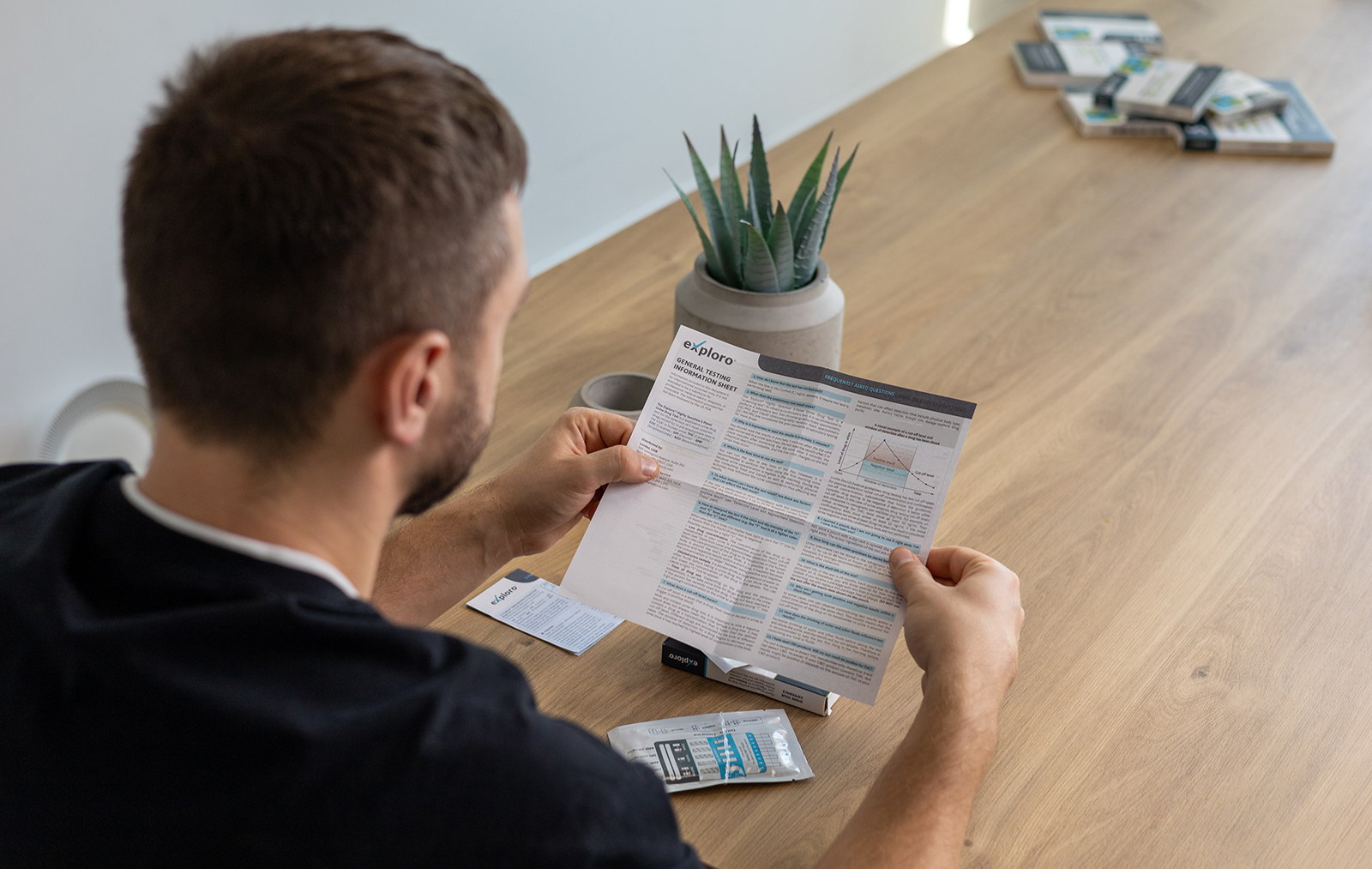
The very first part of the preparation process is to check the expiration date on the test. Expired tests do not give reliable results. Once you’ve got that done, it’s crucial to read through the instructions that came with it in the box. Different brands may come with different features (i.e., detection times and indicator style).
Another essential step of the preparation process is to make sure that you do the testing in a clean, dry environment and that you wash your hands thoroughly beforehand.
-
Collect the sample
Now that you’ve prepared everything, it’s time to collect the urine sample. If a sample collection cup came with the test, make sure to use that one. If not, you can either get one at your local pharmacy or you can use a deeply cleaned cup you have at home.
No matter which cup you get, it’s important to never touch the inside walls, because that can cause sample contamination.
-
Perform the test
After you prepared everything (and read the instructions carefully), it’s time to test the sample you collected. With most tests out there, all you have to do is dip the test strip into the sample up to the marked line. Then, just wait for the results to appear and interpret them.
-
Read the results (correctly)
The majority of at-home THC tests are similar to pregnancy tests – there is a test line and a control line (C and T). The control line should always appear if the test is valid (not damaged or expired).
If you see the test line appearing as well, that should mean that the result is negative. Even if the line is a bit transparent (faint line), the result is negative as well.
And, if the test line does not appear, that means that there are THC metabolites in your system, above the threshold (aka cutoff level) that the test is designed to detect.
Home Test Accuracy
As we mentioned before, with the immunoassay tech behind them, these tests detect the presence or the absence of metabolites, not the quantity. And they are quite good at it as well, with a 95-99% accuracy. Laboratory confirmatory tests are, of course, more precise and can rule out false positives.
But home THC tests are still pretty accurate, and if you do several (ideally an odd number of strips), you’ll get the real picture of things.
Testing threshold, aka cutoff levels
You can look at the cutoff level as the limit below which a test will come out negative, even if there are some metabolites in the sample. A standard cutoff level for a THC screening test is at 50 nanograms per milliliter (ng/ml). On the other hand, a confirmatory test will have a much stricter cutoff, at 15 ng/ml.
When can false positives occur?
Although rare, false positives can still happen in certain cases. When they do appear, it may be due to an interfering medication or a dietary factor.
Hemp-based food products and pain relievers can give you a false positive on the screening test. However, this is quite rare. But if you’re still unsure of what caused it, you can either get a home testing kit with a lower (15 ng/ml) cutoff or go to a lab for a confirmatory test.
Let’s Sum It Up
As you can see, at-home testing for THC isn’t all that difficult. The medical tech behind it really did advance quite a lot lately, so even the chances for false positives are slim.
Read the instructions carefully, make sure your testing environment is clean, perform several tests (ideally an odd number), and you’ll more likely get valid results.
Editor’s Note: The opinions expressed here by the authors are their own, not those of Impakter.com — In the Cover Photo: THC testing at home – how to Cover Photo Credit: wirestock