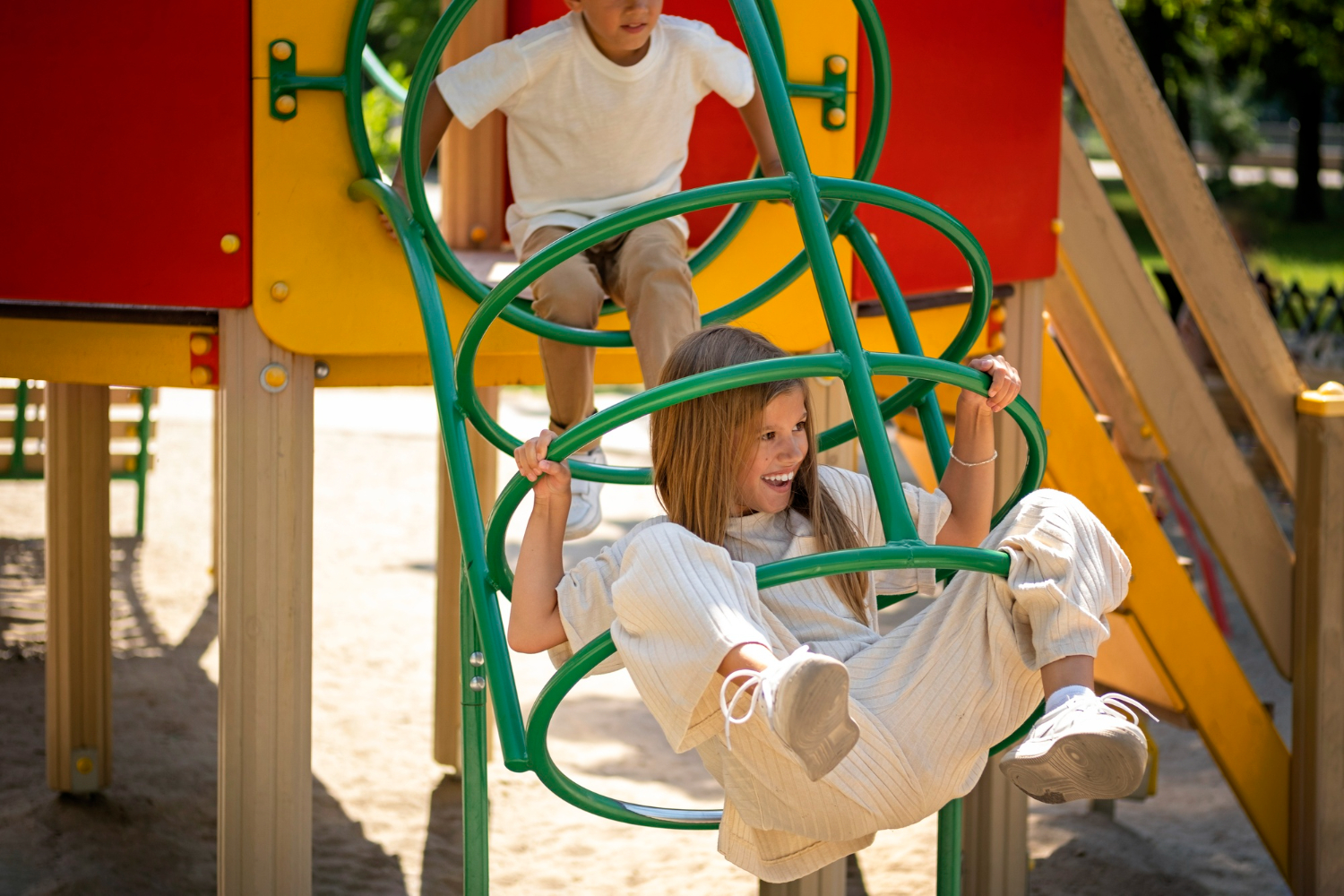
For those living in metropolitan areas, playgrounds are more of a refuge. Many families live in apartment buildings and condominiums that may not have a separate backyard area. Because of this, children’s play areas are limited. This can quickly lead to sedentary children who prefer to spend time indoors playing video games and watching movies rather they do seeing their friends.
Having a dedicated playground is vital for kids’ development, allowing them to run freely and play with their peers. It’s a safe space that is designed especially for them. Having a diverse array of commercial playground equipment means that they can grow with the area, continuously challenging themselves as they age.
For parents and caregivers, playgrounds become a centralized meeting destination. Families gather so their children can play, and they can chat and connect with others. This strengthens bonds and leads to a vibrant, inclusive community.
Playgrounds within a city neighborhood can also increase property values. Those moving into the area will appreciate the recreational space for their children, creating a higher demand for apartment units and homes within the area. There are also additional environmental benefits. Having a green space as opposed to another store or parking lot reduces traffic, air pollution, and noise. Adding sustainable elements to the playground is another great way to create an eco-friendly reprieve within a bustling city.
Types of Sustainable Materials to Consider for City Playgrounds
Sustainability is top of mind for many today, especially for those who live in a city. The desire for healthier, more livable urban environments is increasing as the need to address climate change continues to soar. As a result, new skyscrapers, hotels, and other city buildings are thinking about sustainability as part of their construction and design. Playgrounds can also be eco-conscious with the use of sustainable materials. Here are a few types of materials that playground designers and planners can consider.
Recycled and Composite Materials
Reuse, reduce, and recycle. That motto is paramount for city inhabitants, and recycled materials can also be utilized in playgrounds. Recycled plastics can be used for different play structures as well as seats and benches for bystanders. Recycled rubber is great for surfacing, bracing the stumbles and falls of children as they run around. It can be placed as tiles or as rubber mulch, either of which can last for years to come.
Another option is engineered wood, which is also made from a mix of recycled plastic as well as wood. It’s typically a loose fill material, meaning that it can be used as ground cover. Note, however, that engineered wood will need to be replaced more frequently as opposed to rubber tiles because it is a filler material.
Organic Materials
Using natural, organic materials is one way to reduce a playground’s carbon footprint, while also bringing natural elements to an urban space. Natural wood chips can be used as ground cover, while large stones can accent the area and act as stepping stones.
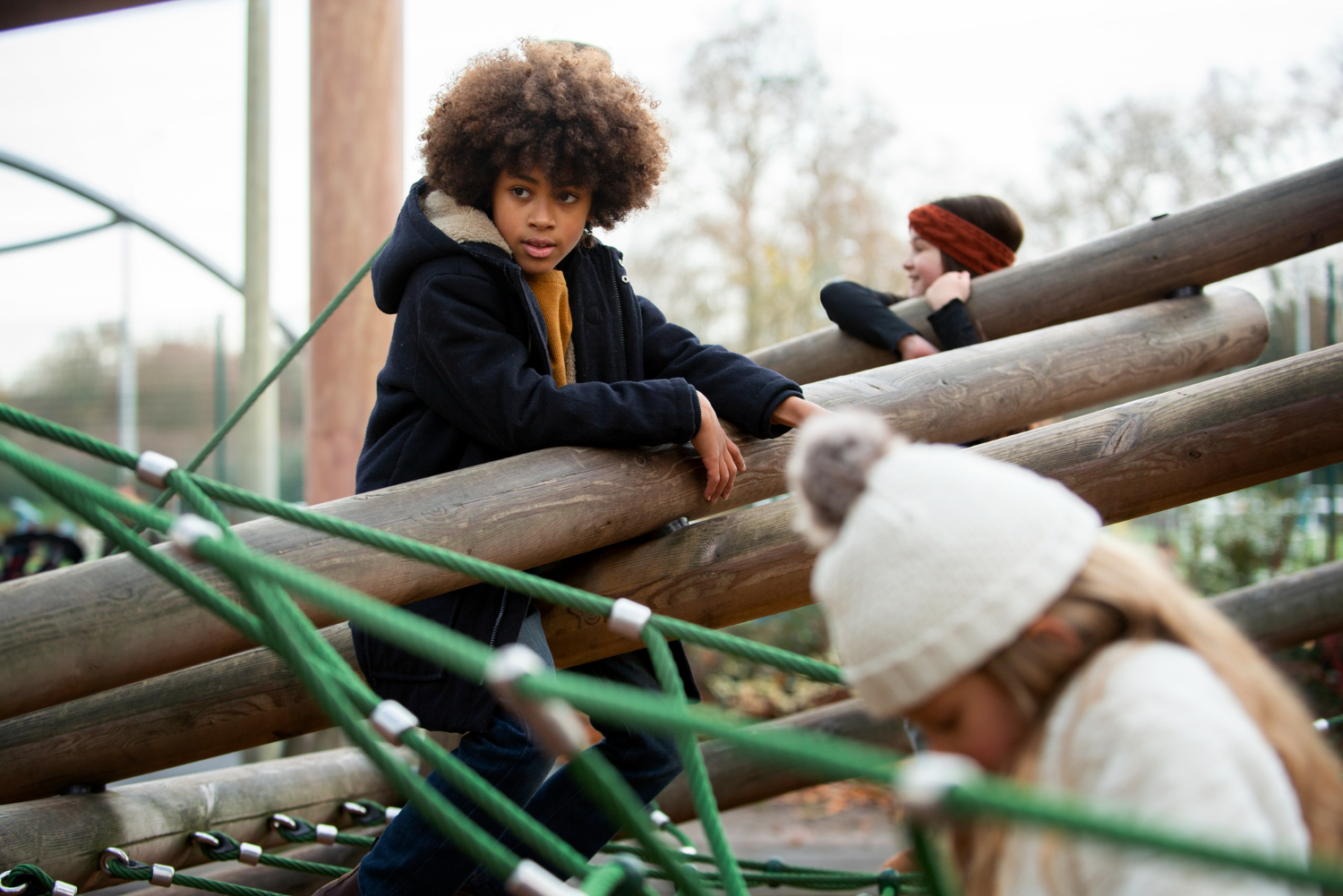
Incorporating logs, boulders, and sand is another way to increase the natural look and feel of an area. If the playground is within a park, consider leveraging elements already within the space rather than removing them. Trees can be used as shade, and logs are great for climbing. Native plants for landscaping will thrive and can support local ecosystems as well.
Design Elements to Take Into Account for City Playgrounds
Designing city playgrounds is different than designing a suburban playground. First, you’ll likely have limited space and probably more restrictions and laws to abide by. Second, you’ll also need to consider accessibility. A playground in a hard-to-get part of town won’t see as much foot traffic as opposed to one near several train and bus stations. And third, safety is top of mind as more cars, people, and potential hazards tend to be more prevalent in metropolitan areas.
When to comes to designing a city playground, you’ll want to think about how to get the best return on investment out of the project. This means creating a space that will ultimately become a destination for residents and tourists alike. The playground should ideally have different zones, allowing children of different age levels to play alongside each other.
It should also be inclusive, meaning children of all physical and cognitive ability levels should be able to enjoy the space. Large ramps and pathways allow for easy navigation for strollers and wheelchairs. Ground-level equipment, such as sandboxes and activity panels, can be accessed by everyone. Adaptive equipment, such as swings and merry-go-rounds, can be inclusive options for children with disabilities as well.
In terms of safety, the area should be gated or fenced in to ensure children are contained within the area. Lighting, such as solar panel lights, should be added to increase visibility and even deter crime during the night. Floodlights can also be added to highlight specific playground features, drawing attention to elements.
Even with all of these elements, the playground shouldn’t be an eyesore! The beauty of an urban playground is that you can design the space amongst other areas. Think creatively and dream up a theme that will resonate for those who call the city home.
Editor’s Note: The opinions expressed here by the authors are their own, not those of impakter.com — In The Cover Photo: Sustainable Playground Materials: Brother and sister having fun at the outdoors playground. Cover Photo Credit: