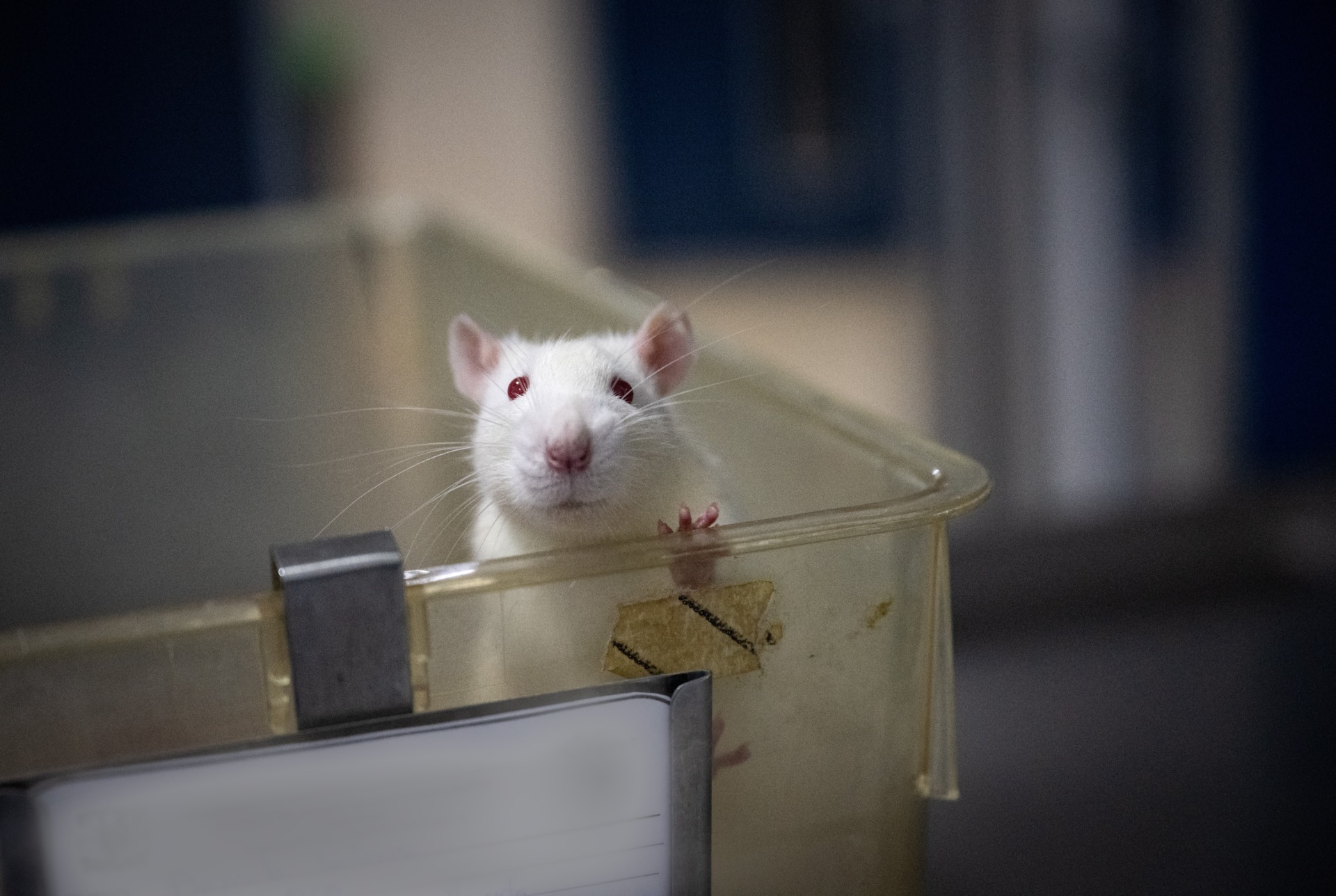
This year could mark a turning point for one of science’s most familiar animals: the laboratory mouse. For decades, mice and rats have been indispensable to biomedical research, underpinning everything from cancer biology to drug development.
But 2026 is set to usher in a regulatory and scientific shift that could begin to loosen their hold.
Across the UK, Europe and the United States, policymakers are moving towards phasing down animal testing, part of a broader World Health Organisation-led global effort to find alternatives that are both more humane and more relevant to human biology.
Few areas will feel this change more keenly than cancer research.
For much of the past half-century, cancer studies have relied on two principal tools. The simplest involves growing cancer cells in flat layers in petri dishes. These two-dimensional cultures are cheap, easy to maintain and amenable to large-scale experiments. But they are a poor stand-in for real tumours. In the body, cancer cells grow in three dimensions, interacting with neighbouring cells, blood vessels and immune signals in ways that profoundly shape their behaviour. Cells flattened onto plastic surfaces divide, migrate and respond to drugs differently, which helps explain why promising results in the lab so often fail to translate to patients.
Animal models, particularly mice, were meant to bridge that gap. Mouse tumours offer a living, three-dimensional system in which drugs can be tested before entering clinical trials. Yet this solution comes with its own problems. Mouse biology is not human biology, and differences in metabolism, immune responses and tumour evolution mean that treatments that shrink cancers in mice frequently disappoint in people. The result is an expensive, ethically fraught pipeline in which many drugs fall at the final hurdle.
The challenge is compounded by cancer’s inherent heterogeneity. Even tumours that look similar under a microscope can behave very differently from one patient to the next. Two tumours in the same patient may have different characteristics. A drug that works for one person may fail for another. This biological diversity has fuelled the push towards precision oncology, in which treatments are tailored to the individual. But achieving that goal requires experimental systems that capture the complexity of each patient’s disease.
Such systems may emerge from developments in organoid technology.
Organoids are three-dimensional structures grown from human stem cells or patient tissue that self-organise into miniature versions of real organs. When generated directly from tumour biopsies, they are known as patient-derived organoids, or PDOs. Often described as “mini-tumours in a dish”, these tiny structures retain many of the architectural and genetic features of the cancers from which they came.
Towards precision medicine
Crucially, PDOs allow researchers to do something that has long been impossible: test treatments on a living model of an individual patient’s tumour before those drugs are given in the clinic. A small biopsy can be coaxed into forming organoids within a few weeks. These can then be exposed to panels of chemotherapy agents, targeted drugs or experimental combinations. Scientists measure how the organoids respond—whether cells die, stop dividing or activate stress pathways—using molecular and imaging readouts.
The resulting drug-response profiles can reveal which therapies a tumour is likely to resist and which it may be vulnerable to. In principle, this shifts cancer treatment away from trial and error and towards a more functional form of precision medicine, guided not just by DNA sequencing but by direct testing on patient-derived tissue.
Evidence that this approach works is steadily accumulating. Studies over the past few years have shown that organoids grown from colorectal cancers and their metastases often mirror how those tumours behave in patients, including their responses to chemotherapy. Other work has demonstrated that large collections of tumour organoids—so-called living biobanks—can preserve the diversity of real-world cancers far better than conventional cell lines. These resources are increasingly being used to explore drug resistance, identify biomarkers and screen new therapies.
Organoid platforms are now being developed for a growing range of cancers, including breast, lung, prostate and ovarian tumours, raising hopes that the approach could be broadly applicable across oncology.
Related Articles
Here is a list of articles selected by our Editorial Board that have gained significant interest from the public:
Beyond their scientific promise, organoids also replace some animal experiments, particularly in early-stage drug screening and toxicity testing. With animal testing due for regulatory phase-down, they offer an alternative for researchers that aligns with the long-standing “3Rs” principle of animal research: replace, reduce and refine.
In some fields, such as cosmetics testing in the European Union, animal experiments have already been banned outright. The UK aims to stop using animals for tests for skin and eye irritation by the end of 2026.
While animal models will still be needed to answer certain whole-body questions, organoids can help ensure that only the most promising treatments progress to those stages.
That said, organoids are not a panacea.
Most organoids lack key components of the tumour microenvironment, such as blood vessels, immune cells and supportive fibroblasts, all of which influence how cancers grow and respond to therapy. Researchers are beginning to address this by developing co-culture systems that incorporate immune cells or by linking organoids to microfluidic devices that mimic blood flow. Standardisation remains another hurdle: differences in growth conditions and analytical methods can make results difficult to compare across laboratories.
Even so, progress is rapid. Organoid models are increasingly being integrated with genomic sequencing, artificial intelligence and high-throughput drug screening. Several clinical trials are now testing whether organoid-guided treatment decisions improve patient outcomes.
The mouse, once the unwitting martyr of cancer research, may soon recede from centre stage. In its place stands a humbler but more intimate proxy: a fragment of the patient’s own disease, growing silently in a dish.
** **
This article was originally published under Creative Commons by 360info™.
Editor’s Note: The opinions expressed here by the authors are their own, not those of Impakter.com — In the Cover Photo: A male rat bred for use in medical research looks out from the container he lives in at a breeding facility. The container lid had been removed to facilitate photographing and filming him. Undisclosed location, Mexico, 2025. Cover Photo Credit: Jo-Anne McArthur / Te Protejo / We Animals.