
Today’s ESG Updates:
- South Korea Enters Emergency Mode as Middle East Crisis Bites: South Korea has gone into emergency mode to shield its economy from mounting energy and supply shocks caused by the worsening Middle East crisis.
- India Buys First Iran LPG Cargo in Years After US Eases Sanctions: India buys its first Iranian LPG cargo in years to ease a severe domestic gas shortage.
- Climate Investors Give BP Until April 1 to Include Resolution or Risk Court Action: Climate investors led by “Follow This” have given BP until April 1 to add their climate resolution to the AGM agenda or face legal action.
- Residents and Wildlife Along Mexico’s Coast Bear the Brunt of Pemex Oil Spill: A spill from Pemex’s new Olmeca refinery is polluting nearby rivers, lagoons, and coastal ecosystems in Tabasco and Veracruz.
South Korea enters emergency mode as Middle East crisis bites
South Korea has shifted into economic “emergency mode” as the war in the Middle East disrupts oil and gas supplies, with President Lee Jae Myung ordering daily monitoring meetings at the Blue House and contingency planning for “worst-case scenarios.”
Officials warn the crisis could last “at least three months, and for up to six months,” with impacts that “will gradually swell” even after fighting stops, so a new emergency economy headquarters led by Prime Minister Kim Min-seok will coordinate five task groups on prices, crude supply, financial markets, support for vulnerable groups, and diplomatic responses.
Citing Korea’s record during the 1997 Asian crisis and the 2008 crash, Mr. Kim framed this as a chance to “turn the crisis into an opportunity” by strengthening supply chains, improving capital markets, and accelerating an energy transition.
To cushion the shock, Seoul has already imposed a fuel price cap for the first time in about 30 years, launched a 100 trillion won (US$66.5 billion) market stabilisation programme, and is preparing an extra 25 trillion won budget Bill due at the Cabinet on March 31.
***
Further reading: South Korea enters emergency mode as Middle East crisis bites
Klimado – Navigate climate complexity with a user-friendly platform that tracks global and local environmental changes for ESG-conscious decision-making. Perfect for investors, companies, and policymakers seeking actionable insights on sustainability trends.
India buys first Iran LPG cargo in years after US eases sanctions
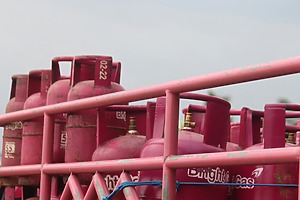
India has quietly resumed buying Iranian LPG with a sanctioned tanker called Aurora. The tanker is set to discharge a shared cargo for Indian Oil, Bharat Petroleum, and Hindustan Petroleum at Mangalore after Washington “temporarily removed sanctions on Tehran’s oil and refined fuels.”
The deal is paid for in rupees via a trader, and is India’s first Iranian LPG purchase since it “shunned energy purchases from Iran in 2019” under Western pressure, and comes as the country battles its “worst gas crisis in decades” triggered by the disruption of shipments through the Strait of Hormuz amid the US‑Israeli war with Iran.
Officially, however, a senior shipping ministry bureaucrat insisted “we have not heard of” any loaded Iranian cargoes. India, the world’s second‑largest LPG importer, used 33.15 million tonnes in 2025, with about 60% met by imports, roughly 90% of which came from the Middle East, and is now slowly moving stranded LPG ships like Shivalik and Nanda Devi out of the choke point.
***
Further reading: India buys first Iran LPG cargo in years after US eases sanctions, sources say
Related Articles
Here is a list of articles selected by our editorial board that have gained significant interest from the public:
Climate investors give BP until April 1 to include a resolution or risk court action
Climate activist investors led by “Follow This” are threatening legal action to force BP to add a climate resolution to its April 23 AGM agenda, after BP refused to include their call for disclosure of its long-term strategy under scenarios of falling oil and gas demand.
The group’s lawyers at Mishcon de Reya warned that “if the board fails to act… our client will have no choice but to pursue legal avenues,” giving BP until April 1 to comply. “Follow This” has also filed a similar resolution with Shell ahead of its May 19 AGM, whose agenda has not yet been published.
“Follow This” Founder Mark van Baal argues this is about UK “shareholder democracy,” warning that if BP can discard a “legitimate resolution without justification, then any corporation could follow suit. We will not allow that to happen.”
***
Further reading: Climate investors give BP until April 1 to include resolution or risk court action

Residents and wildlife along Mexico’s coast bear the brunt of the Pemex oil spill

A pre-dawn explosion at Pemex’s new Olmeca refinery on March 17 sent flames into the sky. It killed five people after oily water overflowed onto a nearby road and ignited, alarming residents of Puerto Ceiba in Tabasco. Pemex says it has recovered 549 cubic meters (about 3,453 barrels) of fossil fuels and installed containment barriers along the Rio Seco, which feeds into the Mecoacan lagoon, where local fishermen harvest oysters.
However, biologists warn “the currents are deceptive” and spilled oil could still reach the lagoon. Cash-strapped fishermen are planning to sell their catch over Easter despite fears of contamination. The accident is the most serious in a series of problems at the underperforming 340,000 bpd (barrels per day) refinery.
It comes on top of another early-March spill off Tabasco and Veracruz that authorities are still struggling to attribute. Meanwhile, along Veracruz’s coast, activists report oil along beaches, damage to mangroves, and at least seven sea turtles, two dolphins, two manatees, and one pelican found oiled, mostly dead.
***
Further reading: Residents and wildlife along Mexico’s coast bear the brunt of Pemex oil spill
Editor’s Note: The opinions expressed here by the authors are their own, not those of impakter.com — Cover Photo Credit: Daniel Bernard on Unsplash