Impakter
  • Environment
    • Biodiversity
    • Climate Change
    • Circular Economy
    • Energy
  • FINANCE
    • ESG News
    • Sustainable Finance
    • Business
  • TECH
    • Start-up
    • AI & Machine Learning
    • Green Tech
  • Industry News
    • Entertainment
    • Food and Agriculture
    • Health
    • Politics & Foreign Affairs
    • Philanthropy
    • Science
    • Sport
  • Editorial Series
    • SDGs Series
    • Shape Your Future
    • Sustainable Cities
      • Copenhagen
      • San Francisco
      • Seattle
      • Sydney
  • About us
    • Our Story
    • Team
    • Partners
    • Write for Impakter
    • Contact Us
    • Privacy Policy
No Result
View All Result
  • Environment
    • Biodiversity
    • Climate Change
    • Circular Economy
    • Energy
  • FINANCE
    • ESG News
    • Sustainable Finance
    • Business
  • TECH
    • Start-up
    • AI & Machine Learning
    • Green Tech
  • Industry News
    • Entertainment
    • Food and Agriculture
    • Health
    • Politics & Foreign Affairs
    • Philanthropy
    • Science
    • Sport
  • Editorial Series
    • SDGs Series
    • Shape Your Future
    • Sustainable Cities
      • Copenhagen
      • San Francisco
      • Seattle
      • Sydney
  • About us
    • Our Story
    • Team
    • Partners
    • Write for Impakter
    • Contact Us
    • Privacy Policy
No Result
View All Result
Impakter
No Result
View All Result
Saudi pipeline that bypasses Strait of Hormuz hits 7 million barrel capacity

The Red Sea route only partly offsets the hit to supply from shutting Hormuz, through which about 15 million barrels a day of crude shipments passed before the war.

Saudi Arabia’s Hormuz Bypass Pipeline Now Running Flat Out

Saudi Arabia has ramped its East-West pipeline to its full 7 million barrels a day, shifting crude exports to the Red Sea and cushioning global oil markets

byAriq Haidar
March 30, 2026
in ESG News

Today’s ESG Updates:

  • Saudi’s Hormuz Bypass Pipeline Now Running Flat Out: Saudi Arabia has maxed out its East-West pipeline capacity by rerouting crude to the Red Sea to offset the loss of oil flowing through the Strait of Hormuz.
  • Australia LNG Disruptions Continue After Storm Narelle: Storm Narelle has knocked out power for thousands in remote Western Australia and disrupted LNG plants, tightening an already stressed global gas market amid the Iran war–driven supply crunch.
  • Singapore’s 2025 Carbon Tax Revenue Holds Steady: Revenue is projected to stay flat despite a sharp rate hike, as generous transitory allowances continue to shield major emitters from paying the full tax.
  • Indonesia Pushes Downstream Strategy to Boost Economy: Indonesia is pursuing an agriculture-led downstream strategy to shift away from raw commodity exports and strengthen farmers’ incomes, food security, and energy independence.

Saudi Arabia’s Hormuz bypass pipeline now running flat out

Saudi Arabia has cranked its East-West pipeline to its full 7 million bpd (barrels per day) to reroute oil to the Red Sea and bypass the effectively closed Strait of Hormuz, which normally carries about 20% of global oil and LNG flows. 

Crude exports loaded at Yanbu have climbed to 5 million bpd, plus another 700,000 to 900,000 bpd in oil products, though this still leaves a shortfall of roughly 15 million bpd in crude oil that previously moved through Hormuz before the war. Of the oil sent through the pipe, 2 million barrels a day feed Saudi refineries, and this alternative route is a key reason oil prices have not spiked to past crisis highs even as flotillas of tankers divert to Yanbu. 

Analysts warn that with the Houthis “entering the war,” the Red Sea could become a new flashpoint, but so far they “have not given any indication” they will attack tankers in the Red Sea and Bab el-Mandeb, and there is “no sign of action in the area” yet.

***

Further reading: Saudi pipeline that bypasses Strait of Hormuz hits 7 million barrel capacity


Featured ESG Tool of the Week:
Klimado
– Navigate climate complexity with a user-friendly platform that tracks global and local environmental changes for ESG-conscious decision-making. Perfect for investors, companies, and policymakers seeking actionable insights on sustainability trends.

Australia LNG disruptions continue after storm Narelle
Australia LNG disruptions continue after storm Narelle, resulting thousands without power
The storm made landfall at the Western Australian town of Exmouth on March 27, also impacting the town of Karratha. Photo Credit: Diego F. Parra via Pexels 

Australia’s LNG output is still disrupted more than a week after storm Narelle, leaving thousands without power in remote north-west towns such as Exmouth near Perth, Western Australia. 

The storm-hit Karratha gas plant, which processes North West Shelf gas, remains partly offline, with Woodside saying it has “commenced remobilising” offshore staff and that production will restart only “once it is safe to do so.” 

Chevron is also working to restore output at its Gorgon and Wheatstone facilities; Gorgon alone can produce 15.6 million tonnes of LNG a year, while Wheatstone adds 8.9 million tonnes. The outages have worsened an already tight global market, after Qatar stopped exports due to damage from Iranian strikes, pushing Australia into the role of the world’s second‑largest LNG exporter. 

***
Further reading: Australia LNG disruptions continue after storm Narelle, thousands without power


Related Articles

Here is a list of articles selected by our editorial board that have gained significant interest from the public:

  • Hormuz Strait Blockade: How Energy Shocks Feed Into Fertilizer and Food Prices
  • How Europe Can Shield Consumers From Oil Price Shocks — Without Subsidizing Fossil Fuels

Singapore’s 2025 carbon tax revenue holds steady
Singapore’s 2025 carbon tax revenue holds steady, as exp erts say continued use of tax discounts likely
Companies may need more time and support to invest in cleaner and more energy-efficient technologies to reduce emissions. Photo Credit: Hu Chen on Unsplash

Singapore’s carbon tax revenue for 2025 is expected to be about $657.3 million, almost identical to 2024’s $658.8 million, despite a fivefold rate hike to $25 per tonne in 2024–2025 from $5 per tonne between 2019 and 2023, when revenue held at roughly $200 million a year. 

Experts say this plateau likely reflects generous transitory allowances that act as a tax “discount”, meaning “not all emissions are taxed at the full rate”, and so projected revenue of about $1 billion a year has not materialised. 

Around 50 large facilities, responsible for about 70% of national emissions, are liable for the tax, with more than 20 trade-exposed firms currently eligible for conditional allowances tied to efficiency and decarbonisation plans. 

Total national emissions rose from 53.87Mt in 2020 to 58.59Mt in 2022 and are projected to reach 62.21Mt in 2025, while the tax is set to climb to $45 in 2026–2027 and possibly $50–$80 by 2030, with the Government signalling it may tweak allowances and will publish aggregated allowance data in 2027.

***

Further reading: Singapore’s 2025 carbon tax revenue holds steady; experts say continued use of tax ‘discounts’ likely


LinkedIn  For the latest updates, visit our LinkedIn page

Indonesia pushes downstream strategy to boost economy

Indonesia pushes downstream strategy to boost economy and end raw exports
Amran warned that food security is critical, noting that a food crisis could trigger political instability and social conflict. Photo Credit: Wikimedia Commons

Indonesia’s agriculture minister Andi Amran Sulaiman pitches downstream processing as the way to “stop exporting raw commodities” and keep more value at home, especially from coconut, palm oil, and gambier. 

He notes that Indonesia is the world’s top coconut producer but mostly ships raw products, even though processing them into virgin coconut oil, coconut milk, and coconut water can increase their value by tens to hundreds of times. 

Indonesia also supplies about 80% of global gambier and over 60% of global CPO (Crude Palm Oil). Yet, other countries still capture much of the margin by processing it into goods such as margarine and cosmetics. 

Amran links downstreaming to higher farmer incomes, jobs, and “food and energy independence,” citing rice import cuts of up to 7 million tonnes (around Rp100 trillion) and a global rice price drop from US$660 to US$340 per tonne (about 44%). He also highlights the FAO Food Security Awards in 2024 and 2025 as proof that the strategy is working.

***

Further reading: Indonesia pushes downstream strategy to boost economy, end raw exports


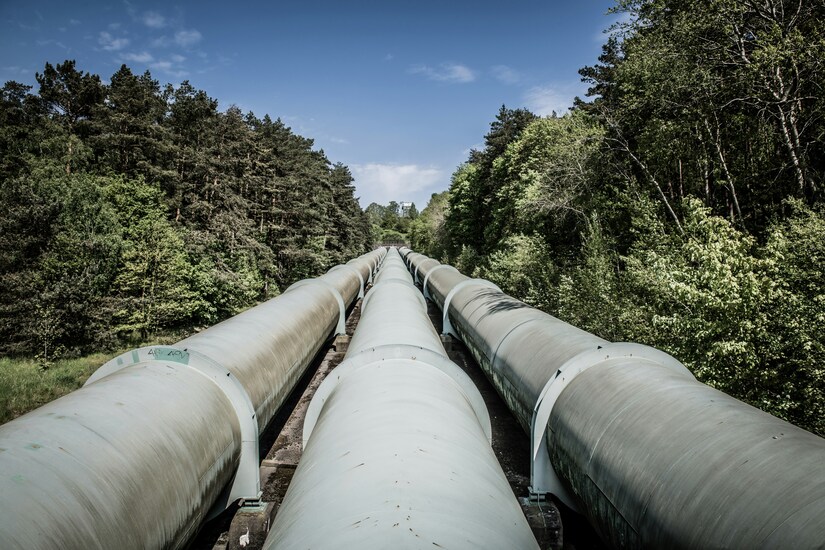
Editor’s Note: The opinions expressed here by the authors are their own, not those of impakter.com — In the Cover Photo: Oil Pipelines. Cover Photo Credit: Wolfgang Weiser on Unsplash

Tags: carbon taxdownstreamingenergyLNGOilStrait of Hormuz
Previous Post

The Courts of Last Resort: Do the ICC and ICJ Still Matter?

Related Posts

Regulators Say Age Checks Are Ineffective and Easily Bypassed, Iran’s Red Sea Strategy Could Trigger Global Oil Shock, Iran War Tests Clean Energy Transition Amid Global Oil Shock, Cornell Scientists Develop Ultra-Small Wireless Brain Sensor
ESG News

EU Charges Major Adult Platforms Over Child Safety Failures

March 27, 2026
Qatar LNG facility damage disrupting global gas supply during Iran war
ESG News

Iran War Disrupts Global LNG Supply and Asia Demand

March 26, 2026
South Korea enters emergency mode as Middle East crisis bites
ESG News

South Korea Enters Emergency Mode as Middle East Crisis Bites

March 26, 2026

Related News

Saudi pipeline that bypasses Strait of Hormuz hits 7 million barrel capacity

Saudi Arabia’s Hormuz Bypass Pipeline Now Running Flat Out

March 30, 2026
The Courts of Last Resort: Do the ICC and ICJ Still Matter?

The Courts of Last Resort: Do the ICC and ICJ Still Matter?

March 28, 2026

Impakter informs you through the ESG news site and empowers your business CSRD compliance and ESG compliance with its Klimado SaaS ESG assessment tool marketplace that can be found on: www.klimado.com

Registered Office Address

Klimado GmbH
Niddastrasse 63,

60329, Frankfurt am Main, Germany


IMPAKTER is a Klimado GmbH website

Impakter is a publication that is identified by the following International Standard Serial Number (ISSN) is the following 2515-9569 (Printed) and 2515-9577 (online – Website).


Office Hours - Monday to Friday

9.30am - 5.00pm CEST


Email

stories [at] impakter.com

By Audience

  • TECH
    • Start-up
    • AI & MACHINE LEARNING
    • Green Tech
  • ENVIRONMENT
    • Biodiversity
    • Energy
    • Circular Economy
    • Climate Change
  • INDUSTRY NEWS
    • Entertainment
    • Food and Agriculture
    • Health
    • Politics & Foreign Affairs
    • Philanthropy
    • Science
    • Sport
    • Editorial Series

ESG/Finance Daily

  • ESG News
  • Sustainable Finance
  • Business

About Us

  • Team
  • Partners
  • Write for Impakter
  • Contact Us
  • Privacy Policy

© 2026 IMPAKTER. All rights reserved.

No Result
View All Result
  • Environment
    • Biodiversity
    • Climate Change
    • Circular Economy
    • Energy
  • FINANCE
    • ESG News
    • Sustainable Finance
    • Business
  • TECH
    • Start-up
    • AI & Machine Learning
    • Green Tech
  • Industry News
    • Entertainment
    • Food and Agriculture
    • Health
    • Politics & Foreign Affairs
    • Philanthropy
    • Science
    • Sport
  • Editorial Series
    • SDGs Series
    • Shape Your Future
    • Sustainable Cities
      • Copenhagen
      • San Francisco
      • Seattle
      • Sydney
  • About us
    • Our Story
    • Team
    • Partners
    • Write for Impakter
    • Contact Us
    • Privacy Policy

© 2026 IMPAKTER. All rights reserved.