The power grid is the backbone of the energy revolution. Transitioning to clean energy can only go so far if the necessary infrastructure is not implemented to support the intermittent and decentralized nature of renewable energy sources (RES).
The growing global demand for energy, combined with the increasingly outdated technology of our electricity grids, puts the development and improvement of our power grids at the forefront of our agenda to reach all our climate goals.
What is wrong with our power grids?
Today’s energy grid structure is facing significant challenges and limitations that hinder the transition to renewable energy and pose risks to its reliability and resilience.
With the increasing demand for cleaner and more sustainable power sources, updating and expanding the power grid infrastructure is imperative.
Outdated system
The traditional power grid was designed to support centralised power plants, predominantly fueled by coal, gas, and nuclear sources.
Whenever more energy was needed, another plant would simply be built. That practice is clearly unsustainable and poses another challenge to the transition to RES: How can electricity be supplied during times of peak demand?
Energy storage technologies, although progressing quickly, are not yet efficient or durable enough to replace the grid.
Updating the grid is thus the most promising solution.
Weather
The grid is not adequately equipped to handle extreme weather events, which have become more frequent and severe in recent years, leading to widespread power outages.
Blackouts caused by extreme weather are not just inconvenient but can be very deadly. The Northeast power blackout of 2003 caused 90 excess deaths, according to recent research. More recently, in 2021, Texas experienced a power blackout causing the death of 246 individuals (although this number is believed to be much higher, around 700).
Avoiding the catastrophic consequences of power blackouts can only be done by improving our power grid to sustain much higher demands for electricity.
Does the power grid support renewable energy?
The current electricity grid structure struggles to adequately support renewable energy generation. Renewable sources such as solar and wind are intermittent and decentralised, presenting challenges for grid operators to balance supply and demand effectively.
Europe hopes to achieve a 45% cut in emissions by 2030, which would entail a high dependence on clean energy. To securely rely on those RES, the power grid must be able to provide electricity at any point in time, despite the intermittent nature of wind, solar, and other renewables.
By 2030, electrical grids will require twice the level of flexibility compared to their current state. Looking ahead to 2050, the world will necessitate a fourfold increase in generation capacity and the capability to transmit three times the amount of electricity.
Related Articles: IEA: Global Oil Demand to Peak By 2030 | EU and Chile Announce Collaboration on Lithium and Green Hydrogen Projects | Will the Wildfires in Canada Ignite Climate Activism in America?
Another important factor to consider regarding renewable energy sources is their geographical location. The geographical dispersion of wind and solar farms, often located in remote areas rich in renewable resources, requires significant upgrades in transmission infrastructure to transport the generated power to urban centres.
Unlike fossil fuels, solar power cannot just be put onto a truck and driven halfway across the country. Power grids need to be much more expansive and stretched out to supply households nation or even continent-wide.
Map shows the wind farms of Europe. The high number in Germany indicates political will to manage the "Energiewende" (transition to cleaner energy sources) I would argue. Source: https://t.co/2HOixTYxZu pic.twitter.com/Gvh65zuWgl
— Simon Kuestenmacher (@simongerman600) June 16, 2020
What is being done?
Various initiatives are already underway to address the shortcomings of the power grid and facilitate the integration of renewable energy.
Investments are being made to upgrade transmission infrastructure and develop power interconnectors, enabling the efficient exchange of renewable energy between regions.
Collaborative efforts, such as the Edge for Smart Secondary Substation Alliance (E4S), aim to leverage smart grid technologies to enhance the grid’s functionality and resilience.
In Europe, new infrastructure is coming into service, expanding the existing network drastically. For instance, in 2021, a record-breaking 720 jm, 1.4GW grid spanning from Norway to the UK called the North Sea Link was built, along with another infrastructure, the NordLink, between Norway and Germany.
These channels are essential to open up cross-border supply and exchange of energy. It is crucial to build more of these structures for a smoother and more efficient energy cross-border supply in the future.
What still needs to be done
To achieve a sustainable energy future, additional measures must be taken to modernise the power grid.
Although the pace and scale of investments is picking up, it still will not suffice to achieve our energy goals. Estimates by the International Energy Agency put the number of investments to around $600 billion annually through 2030.
“Investment in electricity grids needs to average around USD 600 billion annually through to 2030 to get on the Net Zero Scenario trajectory. This is almost double the current investment levels, at around USD 300 billion per year.”
This necessitates collaborative efforts from public and private sectors to innovate and work towards shared energy objectives. The European Commission estimates that Europe’s grid will require an investment of around €584 billion by 2030.
These investments would focus on expanding transmission capacity, constructing interconnections, and bolstering energy storage capabilities to improve grid flexibility.
The expansion of the grid is essential to supply our increasing demand for electricity. According to IEA, in order to maintain the 1.5C target, the renewable power generated needs to exceed triple its current capacity of 3,000 GW and reach over 10,000 GW by 2030.
With the vast majority of the focus remaining on the production of required energy, the infrastructure to distribute it remains in the backlog.
Indeed, many infrastructure projects for the expansion and improvement of the grid are not implemented due to bottlenecks. BloombergNEF estimated that in the UK, Spain and Italy, over 150 GW of wind and solar projects in each country are stuck in grid connection queues.
Bureaucracy and instalment fees further deter investments and worsen the already catastrophic bottlenecks.
The quantity of renewable energy available for use is vast, but connecting it to the grid poses a significant problem. In the US, there was a 40% increase in connection requests in 2022, according to the Lawrence Berkeley National Laboratory. These queued projects are high-voltage electricity networks coming from RES but cannot be implemented due to excessive bottlenecks and the incapacity of the grid to circulate this quantity of electricity.
As a result, the projects waiting to be implemented, totalling 2,000 GW, are much more powerful than the installed capacity of the entire US power plant fleet of 1.2 million MW.
Work Smarter, not Harder
Throughout the expansion and renovation of the power grid, it is important to adapt it specifically to renewable energy sources rather than power plants.
To do so, a smart grid must be built.
A smart grid optimises the use of renewable energy sources, addresses the variability of solar and wind power, and empowers consumers to manage their energy consumption.
By integrating advanced technologies, such as sensors, communication networks, and data analytics, the smart grid enables real-time monitoring and control of electricity flow, reducing the need for backup power plants and identifying distribution inefficiencies.
It also enhances consumer participation, improves grid resilience, and offers potential energy savings. However, challenges such as infrastructure upgrades, data privacy, and security must be addressed to fully realise the benefits of smart grid technology.
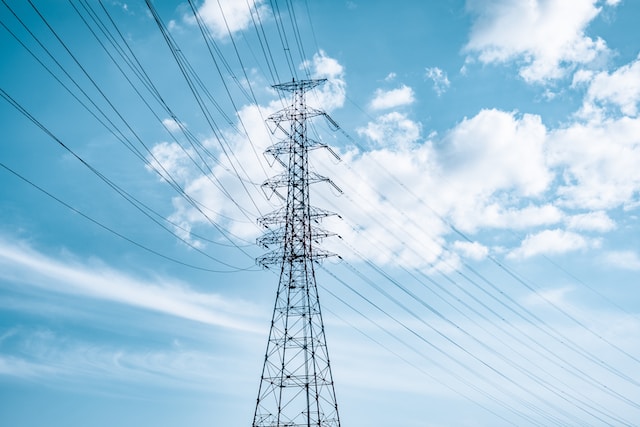
Editor’s Note: The opinions expressed here by the authors are their own, not those of Impakter.com — In the Featured Photo: Electric Tower Featured Photo Credit: Yuan Yang